Products

Related News

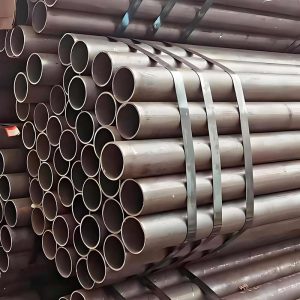
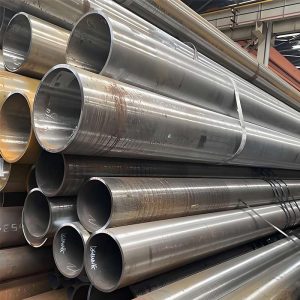
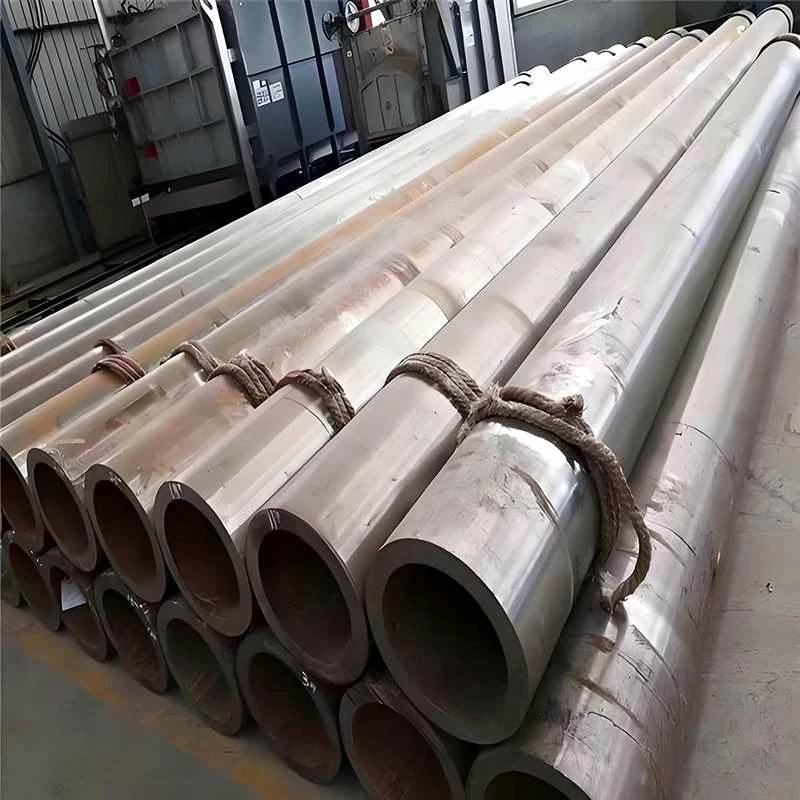
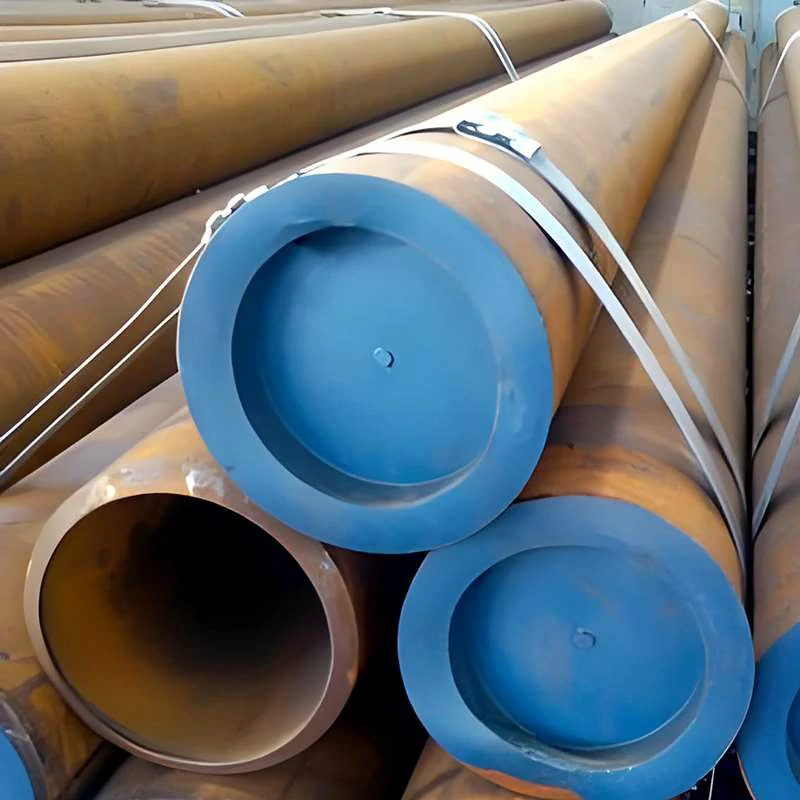
EN 10216 Seamless Steel Pipe

OD Range :

21.3 mm – 711 mm

WT Range :

2.0 mm – 60 mm

Length :

6 m、9 m、12 m

Tolerance :

Outer Diameter: ≤ 219 mm: ±1%; > 219 mm: ±0.75%,Wall Thickness: ±12.5%

Material :

EN 10216-1:P195TR1、P195TR2、P235TR1、P235TR2、P265TR1、P265TR2;EN 10216-2:P195GH、P235GH、P265GH、16Mo3;EN 10216-3:E275、E355;EN 10216-4:P215NL、P265NL

Standard :

EN 10216-1、EN 10216-2、EN 10216-3、EN 10216-4

Surface :

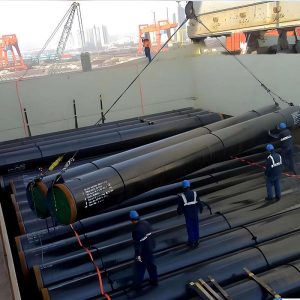
Black Painting、Anti-rust Oil、Shot Blasting、Hot-dip Galvanized、3PE / FBE

Application :

Oil and Gas Transmission Pipelines, Chemical Piping Systems, Boilers and Heat Exchangers, Pressure Vessel Piping, Power Industry Steam Lines, Industrial Fluid Transport

I. Overview of EN 10216 Seamless Steel Tubes

EN 10216 seamless steel tubes are seamless steel tubes intended for pressure purposes, manufactured in accordance with the European standard EN 10216. They are primarily utilized for conveying gaseous, steam, and liquid media in high-temperature, high-pressure, or low-temperature environments.
This standard specifies the chemical composition, mechanical properties, dimensional tolerances, and inspection requirements for these seamless steel tubes, thereby ensuring their safety and reliability within industrial piping systems.

II. Common Steel Grade Classifications for EN 10216 Seamless Steel Tubes

StandardCommon GradesCharacteristicsMain Applications
EN 10216-1P195TR1, P195TR2, P235TR1, P235TR2, P265TR1, P265TR2Non-alloy steel for pressure purposes, moderate strength, widely applicableGeneral industrial pipelines, fluid transportation, pressure equipment
EN 10216-2P195GH, P235GH, P265GH, 16Mo3Suitable for high-temperature service, good heat resistanceBoiler pipelines, steam pipelines, power plant equipment
EN 10216-3E275, E315, E355Fine-grain structural steel with high strength and toughnessMechanical structures, pressure equipment, engineering structures
EN 10216-4P215NL, P255QL, P265NLLow-temperature pressure steel with excellent impact toughness at low temperaturesLow-temperature pipelines, LNG systems, cryogenic storage and transportation

III. EN 10216 Seamless Steel Pipe Selection Guide

1. Normal Temperature and Low-Pressure Conditions

  • Application Scenarios: General industrial piping, cooling water lines, air lines, hydraulic fluid lines
  • Steel Grade Selection: EN 10216-1 P195TR2, P235TR2
  • Wall Thickness Selection: Thin-walled construction is sufficient; economical design
  • Surface Treatment: Black paint or anti-rust oil
  • Features: Moderate strength, low cost, meets general pressure conveyance requirements.

2. High-Temperature Steam Service Conditions

  • Application Scenarios: Power plant steam pipelines, boiler feedwater and return lines, thermal energy systems.
  • Steel Grade Selection: EN 10216-2 P235GH, P265GH.
  • Wall Thickness Selection: Medium to heavy wall; selected based on the design pressure.
  • Surface Treatment: Black paint or standard indoor anti-rust treatment is sufficient.
  • Additional Requirements: Must withstand high temperatures and comply with the high-temperature performance requirements specified in EN 10216-2.
  • Key Features: High-temperature resistance, creep resistance, and ensures the long-term safe operation of the pipeline system.

3. High-Temperature, High-Pressure Operating Conditions

  • Application Scenarios: Boiler tubes, high-temperature chemical pipelines, inlet and outlet piping for pressure vessels.
  • Steel Grade Selection: EN 10216-2 16Mo3
  • Wall Thickness Selection: Thick-walled; strictly selected based on design pressure requirements.
  • Surface Treatment: Anti-rust oil or specialized anti-corrosion coating.
  • Additional Requirements: High strength, excellent weldability, and high-temperature stability.
  • Key Features: Capable of withstanding high pressure and high temperatures, ensuring long-term safety and durability.

4. Low-Temperature Service Conditions

  • Application Scenarios: Liquefied Natural Gas (LNG) pipelines, cryogenic storage tanks, cryogenic transport pipelines
  • Steel Grade Selection: EN 10216-4 P215NL, P265NL
  • Wall Thickness Selection: Thick-walled pipes selected based on pressure rating
  • Surface Treatment: Black paint or anti-rust oil; anti-corrosion coating applied if necessary
  • Additional Requirements: Excellent low-temperature impact toughness; resistance to brittle fracture
  • Key Features: Ensures pipeline toughness and safety in low-temperature environments.

5. Oil and Natural Gas Transmission Applications

  • Application Scenarios: Long-distance oil and gas transmission pipelines, urban gas main lines
  • Steel Grade Selection: P265TR2 (ambient temperature), P265GH (high temperature), 16Mo3 (high temperature and high pressure)
  • Wall Thickness Selection: Medium-to-heavy wall or heavy wall, determined by pipe diameter and pressure rating
  • Surface Treatment: 3PE or FBE anti-corrosion coating; heat-shrinkable sleeves may be applied for buried pipelines
  • Additional Requirements: Corrosion resistance, pressure resistance, excellent weldability
  • Key Features: Long-term resistance to pressure and corrosion; suitable for buried or long-distance transmission projects.

6. Chemical and Industrial Fluid Applications

  • Application Scenarios: Chemical plants, industrial fluid pipelines, steam pipelines
  • Steel Grade Selection: P265GH, 16Mo3, E355 (Fine-grained steel)
  • Wall Thickness Selection: Determined based on design pressure, while balancing corrosion resistance and structural strength
  • Surface Treatment: Anti-corrosion methods selected according to the conveyed medium (e.g., internal coatings, external 3PE/FBE)
  • Additional Requirements: Corrosion resistance, high-temperature resistance, pressure resistance
  • Key Features: Suitable for the conveyance of chemicals, steam, and industrial fluids, ensuring the safe operation of pipelines.

Summary of Selection Principles

  • Select Steel Grade Based on Operating Conditions: Ambient Temperature → P235TR2; High Temperature → P265GH; Low Temperature → P215NL; High Temperature & High Pressure → 16Mo3.
  • Select Wall Thickness Based on Pressure Rating: The higher the design pressure, the greater the required wall thickness.
  • Select Anti-Corrosion Treatment Based on Medium: Water/Air → Black Paint/Rust-Preventive Oil; Oil/Gas → 3PE/FBE.
  • Select Special Properties Based on Environmental Conditions: High-Temperature Heat Resistance, Low-Temperature Toughness, and Corrosion Resistance.
Related Products

Outside Diameter (OD, mm) Wall Thickness (WT, mm) Standard Length (m) Common Grades
21.3 2.0 – 6.0 6 / 9 / 12 P195TR2, P235TR2
26.9 2.5 – 6.3 6 / 9 / 12 P195TR2, P235TR2
33.4 2.5 – 8.0 6 / 9 / 12 P195TR2, P235TR2
42.2 2.5 – 8.0 6 / 9 / 12 P235TR2, P265TR2
48.3 3.0 – 9.0 6 / 9 / 12 P235TR2, P265TR2
60.3 3.0 – 12.0 6 / 9 / 12 P235GH, P265GH
76.1 3.5 – 14.0 6 / 9 / 12 P235GH, P265GH
88.9 4.0 – 16.0 6 / 9 / 12 P265GH, 16Mo3
114.3 4.0 – 20.0 6 / 9 / 12 P265GH, 16Mo3
139.7 4.5 – 22.0 6 / 9 / 12 16Mo3, E355
168.3 5.0 – 25.0 6 / 9 / 12 16Mo3, E355
219.1 6.0 – 32.0 6 / 9 / 12 16Mo3, P265NL
273.0 7.0 – 36.0 6 / 9 / 12 P265NL, E355
323.9 8.0 – 40.0 6 / 9 / 12 P265NL, E355
355.6 8.0 – 45.0 6 / 9 / 12 P265NL, E355
406.4 10.0 – 50.0 6 / 9 / 12 P265NL, E355
508.0 12.0 – 60.0 6 / 9 / 12 P265NL, E355
711.0 12.0 – 60.0 6 / 9 / 12 P265NL, E355

EN 10216 Seamless Steel Tube Standards

1. Standard Titles

EN 10216-1: Seamless steel tubes for pressure purposes — Non-alloy steel (Ambient-temperature pressure piping)
EN 10216-2: Seamless steel tubes for pressure purposes — Non-alloy and alloy steel with specified elevated temperature properties (High-temperature steam/boiler piping)
EN 10216-3: Seamless steel tubes for pressure purposes — Alloy fine grain steel (Mechanical structures/High-strength applications)
EN 10216-4: Seamless steel tubes for pressure purposes — Non-alloy and alloy steel with specified low temperature properties (Low-temperature storage and transport piping, LNG)

2. Corresponding Steel Grades (by Standard)

Standard Common Grades Service Conditions
EN 10216-1 P195TR1, P195TR2, P235TR1, P235TR2, P265TR1, P265TR2 Pressure pipelines at ambient temperature
EN 10216-2 P195GH, P235GH, P265GH, 16Mo3 High-temperature steam pipelines and boiler systems
EN 10216-3 E275, E315, E355 High-strength mechanical structures and pressure equipment
EN 10216-4 P215NL, P265NL Low-temperature pipeline systems and LNG (liquefied natural gas) applications

3. Standard Content Description

Dimensions and Tolerances: Outside diameter, wall thickness, length, ovality, straightness
Mechanical Properties: Yield strength, tensile strength, elongation
Chemical Composition: Content of elements such as carbon, manganese, silicon, sulfur, phosphorus, etc.
Inspection and Testing: Chemical analysis, tensile testing, low-temperature impact testing, ultrasonic testing, hydrostatic testing
Marking and Documentation: Steel pipe identification, mill inspection reports, and certificates

4. Applicable Scenarios for Standards

EN 10216-1 → Industrial piping at ambient temperature
EN 10216-2 → High-temperature steam and boiler systems
EN 10216-3 → High-strength mechanical or pressure equipment
EN 10216-4 → Low-temperature or liquefied gas piping

EN 10216 Seamless Steel Pipe Production Process Flow

Billet Inspection

Heating

Piercing (Initial Rolling)

Hot Rolling / Cold Drawing

Sizing & Straightening

Heat Treatment (if required)

Dimensional Inspection

Non-Destructive Testing (NDT, e.g., UT)

Hydrostatic Test

Surface Treatment (Black Painting / Anti-Rust Oil / 3PE / FBE)

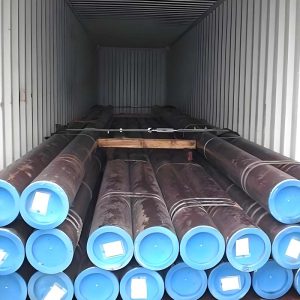
Final Inspection & Packaging

Inspection Item Test Content Technical Requirements / Standard Values Standard
Chemical Composition C, Mn, Si, P, S, etc. Controlled according to steel grade requirements, e.g.:• P235TR2: C ≤ 0.22%, Mn ≤ 1.60%, P ≤ 0.025%, S ≤ 0.015%• P265GH: C ≤ 0.22%, Mn ≤ 1.50%, P ≤ 0.025%, S ≤ 0.015% EN 10216-1/-2
Tensile Test Yield strength, tensile strength, elongation • P235TR2: Yield ≥ 235 MPa, Tensile 360–510 MPa, Elongation ≥ 22%• P265GH: Yield ≥ 265 MPa, Tensile 410–560 MPa, Elongation ≥ 20% EN 10216 / EN ISO 6892
Bend Test Bending performance 180° bending without cracks on the surface EN 10216 / EN ISO 7438
Impact Test Low-temperature impact toughness (KV) • P265NL: ≥ 27 J @ -50°C• P215NL: ≥ 27 J @ -50°C EN ISO 148
Non-Destructive Testing (UT) Ultrasonic testing Internal defects ≤ allowable limits of the standard EN 10246-1/-2
Hydrostatic Test Test pressure Test pressure = 1.5 × design pressure, maintained for 10–30 seconds, no leakage EN 10216-1/-2
Dimensional Inspection OD, WT, length, ovality, straightness • OD tolerance: ±1% (≤219 mm), ±0.75% (>219 mm)• WT tolerance: ±12.5%• Ovality ≤ 1%• Straightness ≤ 0.5% EN 10216-1/-2
Surface Inspection Surface quality of pipes Free from cracks, scratches, laps, pores, and other defects Visual inspection, in accordance with EN 10216

EN 10216 Seamless Steel Tube Selection: Common FAQ

1. How should I select the appropriate steel grade based on specific operating conditions?

Answer:
The selection of a steel grade is primarily determined by the operating temperature, pressure rating, and the conveyed medium.
Pressure piping for ambient temperature applications → P195TR2 / P235TR2
High-temperature steam / Boiler piping → P265GH / 16Mo3
Low-temperature operating conditions → P215NL / P265NL
High-strength mechanical applications → E355
The various parts of the EN 10216 standard (EN 10216-1/2/3/4) correspond to different steel grades; please select the appropriate grade based on your specific operating conditions.

2. How are the outer diameter and wall thickness of steel pipes determined?

Answer:
The outer diameter and wall thickness should be selected based on the design pressure, pipe diameter, conveyed medium, and installation environment:
Higher pressure → Requires steel pipes with thicker walls.
Conveying corrosive media → Wall thickness may be increased, or an anti-corrosion coating may be selected.
Standard Specifications: OD 21.3–711 mm; Wall Thickness 2–60 mm.

3. For which application fields are EN 10216 seamless steel tubes suitable?

Answer:
They are suitable for piping systems in sectors such as oil and gas, chemical processing, power generation, boiler and steam systems, liquefied gas transport, and pressure vessels.
The appropriate steel grade and anti-corrosion treatment should be selected based on specific operating conditions.

4. How do I select an anti-corrosion treatment method?

Answer:
Based on the service environment:
Indoor / Dry conditions → Black paint / Anti-rust oil.
Buried pipelines / Humid conditions → Hot-dip galvanizing, 3PE, FBE.
Resistance to chemical media → Internal and external coatings or specialized anti-corrosion treatments.

5. What are the differences between EN 10216 and other seamless steel pipe standards (such as ASTM A106)?

Answer:
EN 10216 is a European standard, primarily utilized for pressure piping systems, featuring a clear classification system based on operating conditions and steel grades.
ASTM A106 is an American standard for high-temperature seamless steel pipes, specifically geared toward applications involving steam and high-temperature environments.
When making a selection, one should base the choice on the project’s geographical location and the specific requirements mandated by the applicable standards.

6. How do you verify that the piping meets design requirements?

Answer:
Review the Mill Test Certificates (MTCs), which include:
Chemical composition
Mechanical properties (tensile, bending, impact)
Dimensional tolerances, ovality, and straightness
Hydrostatic test results
Ensure that every pipe has passed all tests prescribed by the EN 10216 standard.