
I. API 5L Steel Pipe Standard Overview
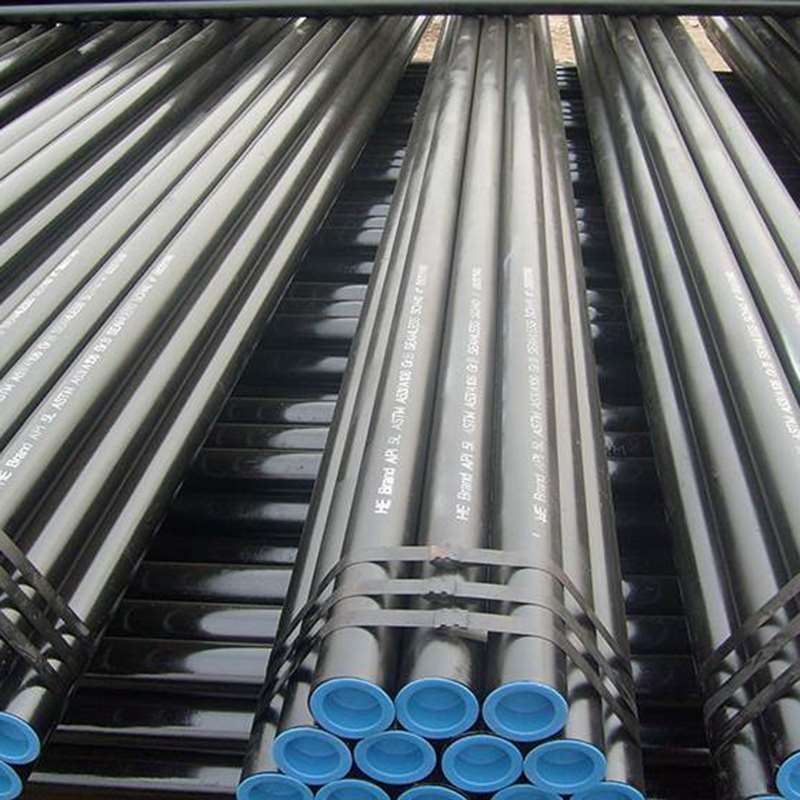
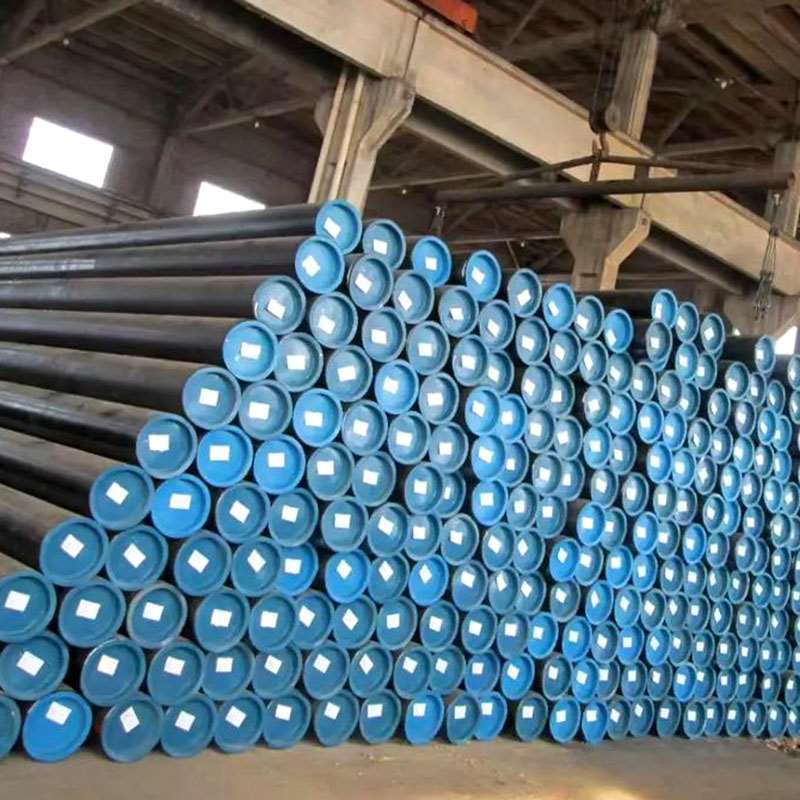
API 5L steel pipe is one of the most critical standards for line pipe in the oil and gas industry. Published by the American Petroleum Institute (API), it primarily governs pipeline systems used for the long-distance transportation of petroleum, natural gas, water, and other fluids.
API 5L is suitable for:
- Long-distance oil pipelines
- Natural gas pipelines
- City gas systems
- Offshore pipelines
- Industrial fluid transport pipelines
II. API 5L Steel Pipe Classification
i. Classified by product specifications and grades
| Category | English Name | Level Characteristics | Technical Requirements | Typical Applications |
|---|---|---|---|---|
| PSL1 | Product Specification Level 1 | Basic grade, general-purpose standard | Relatively relaxed chemical composition and inspection requirements; impact testing is generally not mandatory | General water pipelines, low-pressure transmission systems, standard engineering projects |
| PSL2 | Product Specification Level 2 | Higher grade with stricter requirements | Stricter control of chemical composition; mandatory impact testing and more comprehensive non-destructive testing (NDT) | Oil & gas trunk lines, high-pressure pipelines, low-temperature or corrosive service environments |
ii. Classification by steel grade (strength grade)
| Steel Grade | Yield Strength (Min Yield Strength) | Strength Level | Engineering Positioning | Typical Applications |
|---|---|---|---|---|
| Grade B | 241 MPa | Basic grade | Low-pressure / economy | Water pipelines, general structural pipes |
| X42 | 290 MPa | Low-medium strength | Economy pipeline grade | Low-to-medium pressure transmission |
| X46 | 317 MPa | Low-medium strength | Transitional grade | General fluid transportation |
| X52 | 359 MPa | Mainstream grade | Standard pipeline steel | City gas distribution, oil & gas pipelines |
| X56 | 386 MPa | Medium-high strength | High-performance grade | Medium-to-high pressure pipelines |
| X60 | 414 MPa | High strength | Trunk line grade | Oil & gas transmission pipelines |
| X65 | 448 MPa | High strength + toughness | Complex service environments | High-pressure, low-temperature, corrosive conditions |
| X70 | 483 MPa | Ultra-high strength | Premium engineering grade | Offshore pipelines, long-distance transmission |
| X80 | 552 MPa | Highest conventional grade | Extreme engineering applications | Ultra-high pressure, deepwater pipelines |
iii. Classification by manufacturing method
| Category | English Name | Manufacturing Method | Common Applications |
|---|---|---|---|
| Seamless Steel Pipe | Seamless Pipe | Steel billet is pierced and rolled without welding seam | High-pressure pipelines, critical oil & gas transmission |
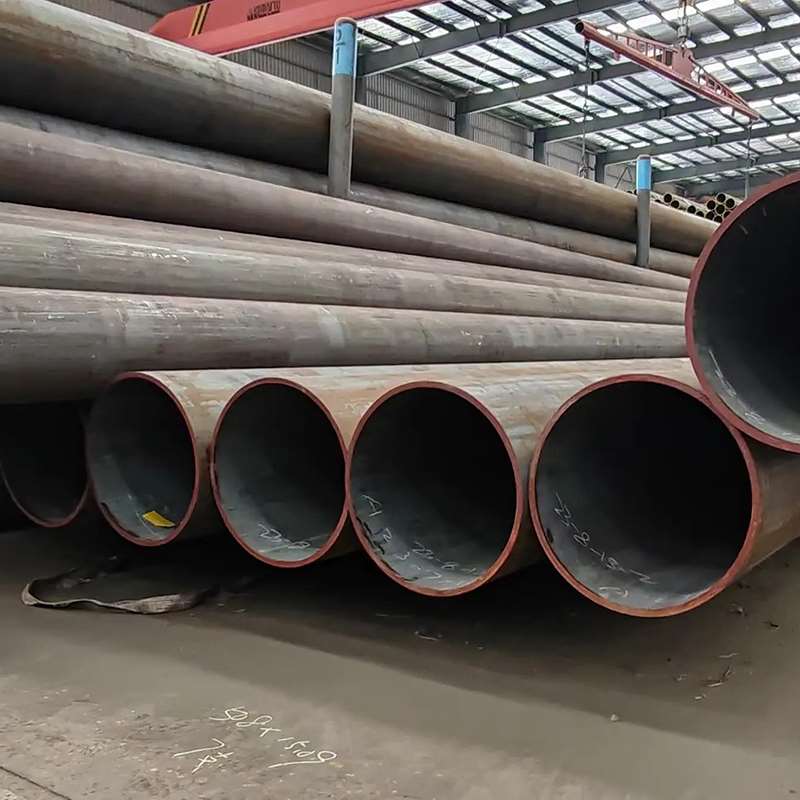
| Longitudinal Submerged Arc Welded Pipe | LSAW Pipe | Steel plate is formed into pipe and welded with longitudinal submerged arc welding | Oil & gas trunk lines, offshore pipelines |
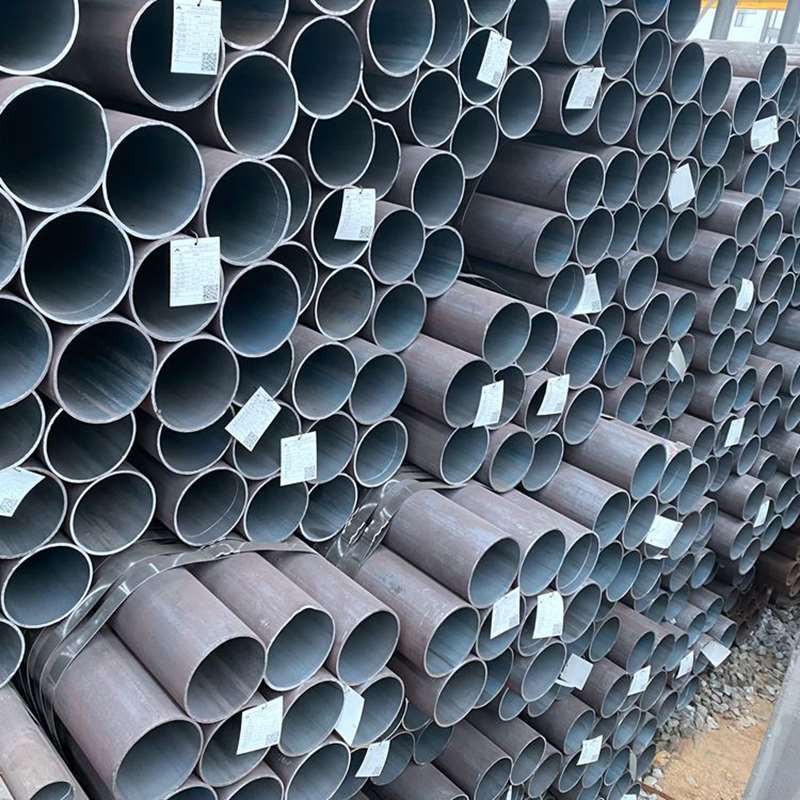
| Spiral Submerged Arc Welded Pipe | SSAW / HSAW Pipe | Steel strip is helically formed and welded | Water transmission projects, oil & gas pipelines |
| Electric Resistance Welded Pipe | ERW Pipe | High-frequency electric resistance welding forming | Urban gas distribution, low-pressure fluid transport |
III. API 5L Steel Pipe Chemical Composition and Mechanical Properties
i. Chemical Composition Table
| Steel Grade | C (Carbon) | Mn (Manganese) | P (Phosphorus) | S (Sulfur) | Si (Silicon) |
|---|---|---|---|---|---|
| Grade B | ≤ 0.26 | ≤ 1.20 | ≤ 0.030 | ≤ 0.030 | ≤ 0.40 |
| X42 | ≤ 0.26 | ≤ 1.30 | ≤ 0.030 | ≤ 0.030 | ≤ 0.40 |
| X46 | ≤ 0.26 | ≤ 1.40 | ≤ 0.030 | ≤ 0.030 | ≤ 0.45 |
| X52 | ≤ 0.26 | ≤ 1.40 | ≤ 0.025 | ≤ 0.015 | ≤ 0.45 |
| X56 | ≤ 0.26 | ≤ 1.50 | ≤ 0.025 | ≤ 0.015 | ≤ 0.45 |
| X60 | ≤ 0.24 | ≤ 1.60 | ≤ 0.020 | ≤ 0.010 | ≤ 0.45 |
| X65 | ≤ 0.22 | ≤ 1.70 | ≤ 0.020 | ≤ 0.010 | ≤ 0.45 |
| X70 | ≤ 0.22 | ≤ 1.80 | ≤ 0.020 | ≤ 0.010 | ≤ 0.45 |
| X80 | ≤ 0.20 | ≤ 2.00 | ≤ 0.020 | ≤ 0.005–0.010 | ≤ 0.45 |
ii. Mechanical Properties Table
| Steel Grade | Yield Strength (Min Yield Strength, MPa) | Tensile Strength (MPa) | Elongation (%) | Impact Toughness Requirement (PSL2) |
|---|---|---|---|---|
| Grade B | 241 | 414–758 | ≥ 23 | Not typically required |
| X42 | 290 | 414–758 | ≥ 23 | Impact test required under PSL2 |
| X46 | 317 | 434–758 | ≥ 23 | Impact test required under PSL2 |
| X52 | 359 | 455–758 | ≥ 21 | Impact test required under PSL2 |
| X56 | 386 | 490–758 | ≥ 21 | Impact test required under PSL2 |
| X60 | 414 | 517–758 | ≥ 20 | Impact test required under PSL2 |
| X65 | 448 | 531–758 | ≥ 18 | Mandatory under PSL2 |
| X70 | 483 | 565–758 | ≥ 17 | Mandatory under PSL2 |
| X80 | 552 | 621–827 | ≥ 16 | Mandatory under PSL2 |
IV. API 5L Steel Pipe Types: Seamless, ERW, LSAW and SSAW Comparison
| Comparison Item | Seamless Pipe | ERW Pipe (High-Frequency Electric Resistance Welded) | LSAW Pipe (Longitudinal Submerged Arc Welded Pipe) | SSAW Pipe (Spiral Submerged Arc Welded Pipe) |
|---|---|---|---|---|
| Production Process | Steel billet piercing + hot rolling/cold rolling | Steel strip forming + high-frequency resistance welding | Steel plate forming + longitudinal submerged arc welding (UOE/JCOE) | Steel strip spiral forming + submerged arc welding |
| Structural Form | Seamless (no weld seam) | Straight weld seam | Straight weld seam | Spiral weld seam |
| Outer Diameter Range | 10 – 660 mm | 21.3 – 660 mm | 406 – 1422 mm | 219 – 3500 mm |
| Wall Thickness Range | 2 – 100 mm | 1.5 – 20 mm | 6 – 60 mm | 6 – 25 mm |
| Normal Pressure Range | 10 – 50 MPa | 2 – 10 MPa | 6 – 25 MPa | 4 – 16 MPa |
| Maximum Pressure (High Grade) | Up to 60 MPa (API X70+) | Up to 12 MPa (high-grade ERW) | Up to 25–32 MPa (X70) | Up to 16–20 MPa (high-grade SSAW) |
| Pressure Resistance Ranking | Highest | Medium-Low | High | Medium |
| Weld Seam Risk | No weld seam risk | Weld seam is a weak zone | Stable weld quality (submerged arc welding) | Long weld seam but stress is well distributed |
| Quality Stability | Highest | High | Very high | High |
| Production Efficiency | Low | High | Medium | High |
| Material Utilization | Medium | High (85%–95%) | Medium (80%–90%) | Very high (90%–95%) |
| Cost Level | High | Low | Medium-High | Medium |
| Main Applications | High-pressure oil & gas, boilers, chemical industry | Structural construction, low-pressure fluid transport | Long-distance oil & gas pipelines (high pressure) | Municipal engineering, piling, water transmission, large-diameter pipelines |
| Representative Standards | API 5L / ASTM A106 | API 5L ERW | API 5L LSAW | API 5L SSAW |
V. API 5L pipes Production Process Flow
i. Seamless Steel Pipe Production Process Flow
Round billet → Heating in furnace → Piercing → Rolling on a three-roll or continuous rolling mill → Sizing/reduction → Cooling → Heat treatment (normalizing/quenching and tempering) → Straightening → Non-destructive testing (UT/ET) → Hydrostatic test → Cutting to length → Surface treatment (sandblasting/coating) → Finished product inspection and packaging
ii. Welded Steel Pipe Production Process
(1) ERW (High Frequency Resistance Welding) Steel Pipe Process
Strip uncoiling → Leveling → Forming → High Frequency Welding (ERW) → Weld Removal → Online Eddy Current Testing → Sizing → Cutting → Hydrostatic Test → Surface Treatment → Finished Product Inspection and Packaging
(2) LSAW (Straight Seam Submerged Arc Welding) Steel Pipe Process
Steel plate pre-bending → UOE or JCOE forming → Inner Welding (SAW) → Outer Welding (SAW) → Diameter Expansion → Heat Treatment → UT/RT Weld Inspection → Hydrostatic Test → Sandblasting and Coating → Finished Product Inspection and Packaging
(3) SSAW (Spiral Submerged Arc Welding) Steel Pipe Process
Strip uncoiling → Forming into a spiral angle → Inner Welding (SAW) → Outer Welding (SAW) → Weld UT/RT → Cutting to Length → Hydrostatic Test → Sandblasting/3PE Anti-corrosion → Finished Product Inspection and Packaging
VI. API 5L Steel Pipe Inspection & Testing Standards
| Inspection Item | Description | PSL1 Requirements | PSL2 Requirements | Purpose |
|---|---|---|---|---|
| Chemical Composition Analysis | Testing of C, Mn, P, S and micro-alloying elements | Basic requirements | Strict control (lower P and S limits) | Ensure weldability and material performance |
| Tensile Test | Determination of yield strength, tensile strength, and elongation | Required | Stricter consistency requirements | Ensure pressure-bearing capacity |
| Impact Test | Low-temperature Charpy V-notch impact testing | Usually not mandatory | Mandatory | Improve low-temperature toughness and safety |
| Non-Destructive Testing (NDT) | UT / RT / MT / ET inspection for defects | Basic sampling inspection | Full inspection | Detect internal and surface defects |
| Hydrostatic Test | Pressure testing (typically 1.5× design pressure) | 100% required | 100% required | Verify leakage resistance and strength |
| Dimensional Inspection | Outer diameter, wall thickness, length, ovality | Required | Tighter tolerance control | Ensure installation compatibility |
| Weld Inspection | Weld seam inspection using UT / RT methods | As required | Full mandatory inspection | Ensure weld quality |
| Surface Inspection | Checking cracks, pits, rust, and scratches | Required | Stricter control | Ensure surface quality and coating performance |
| Traceability | Heat number, batch identification, and MTC documentation | General requirement | Full traceability required | Support EPC quality management |
VII. Typical Application Areas of API 5L SSAW Line Pipes
API 5L steel pipes are widely used in oil, natural gas, and industrial transportation systems. Their selection is typically based on pressure rating, media corrosivity, temperature, terrain, and construction methods. The following are the main application scenarios and corresponding selection recommendations:
i. Long-distance Crude Oil and Natural Gas Pipelines
Characteristics: Long transportation distances, high pressures, complex environments.
Recommended Selection: PSL2 / High-grade (X52–X70), LSAW or SSAW (large diameter); seamless pipes are available for high-requirement applications.
ii. Buried Water Transmission and Urban Pipeline Network Projects
Characteristics: Mostly involves ambient temperature and low-corrosion media; long pipeline lengths.
Recommended Selection: ERW, SSAW, and LSAW are all acceptable; anti-corrosion coatings (3PE/FBE) are typically chosen.
iii. Gathering and Transmission Pipelines and In-Station Process Pipelines
Characteristics: Mostly located within oil fields and natural gas stations, with varying pressure levels.
Recommended Selection: PSL2 seamless pipes are suitable for medium and high pressures; ERW pipes are suitable for low pressures and conventional operating conditions.
iv. Marine Engineering Pipelines
Characteristics: High salt spray, strong corrosion, large temperature and pressure variations.
Recommended Selection: LSAW/SSAW high-strength steel grade (X60–X80) + heavy-duty anti-corrosion coating (3LPE/3LPP).
v. Pipelines for High-Sulfur (H₂S) and Highly Corrosive Media
Characteristics: Must meet NACE MR0175 / ISO 15156 requirements, resistant to sulfide stress cracking.
Recommended Selection: PSL2 / Sour Service grade (X42S, X52S, X60S).
vi. High-Pressure and Critical Industrial Pipelines
Characteristics: High-temperature and high-pressure environments such as refineries and chemical plants.
Recommended Selection: Seamless steel pipe, PSL2 grade.
VIII. API 5L Steel Pipe Coating Types
In oil and gas transmission systems, pipelines are often buried underground or installed in offshore environments. Therefore, corrosion protection coatings play a critical role in extending service life and preventing steel corrosion.
For API 5L steel pipes, the most commonly used coating systems in the industry are as follows:
1. 3PE Coating (Three-Layer Polyethylene)
This is currently the most widely used anti-corrosion system for long-distance oil and gas pipelines worldwide. It combines the excellent adhesion of epoxy with the mechanical protection of polyethylene.
Structure:
- Inner layer: FBE (Fusion Bonded Epoxy), providing strong adhesion and excellent resistance to cathodic disbondment
- Middle layer: Adhesive (AD), acting as a bonding layer between epoxy and polyethylene
- Outer layer: High-Density Polyethylene (HDPE), offering outstanding resistance to moisture, mechanical damage, and UV exposure
Advantages:
- Long service life (up to 50 years), excellent soil stress resistance, and superior waterproof performance.
2. FBE Coating (Fusion Bonded Epoxy)
FBE is a single-layer or dual-layer epoxy powder coating system.
Features:
- Epoxy powder is electrostatically applied onto preheated steel pipes, forming a tough and uniform protective film.
Advantages:
- Excellent adhesion to steel substrate
- Simple application process
- Better high-temperature resistance compared to 3PE
Applications:
- Commonly used as a primer layer for 3PE systems, or applied in pipeline sections such as crossings and valve stations where coating thickness requirements are lower.
3. TPEP Coating (External 3PE + Internal Epoxy)
TPEP is a composite coating system combining external and internal protection, mainly used in water transmission projects.
Structure:
- External surface: 3PE anti-corrosion coating
- Internal surface: Fusion Bonded Epoxy (FBE) lining
Advantages:
- Strong external corrosion resistance
- Smooth internal surface, reducing flow resistance
- Hygienic and non-scaling, suitable for water applications
4. Polyurethane Insulation Coating
This system is mainly used for pipelines requiring thermal insulation, such as crude oil transport or district heating systems.
Structure:
- API 5L steel pipe + rigid polyurethane foam insulation layer + HDPE outer jacket pipe
Applications:
- Oil and gas pipelines in cold regions
- Long-distance transport of viscous crude oil requiring heat retention
IX. API 5L Steel Pipe Selection Guide (Practical Edition for Engineering Procurement)
In engineering procurement, the key to selecting API 5L steel pipes is not simply “choosing a standard,” but rather making the right match based on project conditions, safety requirements, and cost control. An incorrect selection can result in increased costs at best, and at worst, compromise the safety of the entire piping system.
Below is a selection method that can be directly applied to actual projects.
Translated with DeepL.com (free version)
i. Identify the conveyed medium and operating conditions
Different media place vastly different demands on steel pipes, which serves as the starting point for selection.
- Water transmission projects → Low strength requirements; focus on corrosion resistance and cost
- Oil and gas transmission → High pressure + high safety standards
- Chemical media → Highly corrosive; requires stricter material control
- Long-distance pipelines → Greater emphasis on balancing strength and cost-effectiveness
In simple terms:
- The more hazardous the medium and the higher the pressure → The higher the steel pipe grade
ii. Determine the PSL level
PSL (Product Specification Level) is the most critical quality classification in API 5L.
- PSL 1: Basic level, suitable for general industrial and low-risk projects
- PSL 2: Advanced level, suitable for oil and gas, EPC, and high-demand engineering projects
Practical Guidelines:
- General water supply / industrial pipelines → PSL1
- Oil and gas pipelines / EPC projects / long-distance pipelines → PSL2 (default selection)
Engineering Experience:
- Whenever oil & gas or EPC projects are involved, always prioritize PSL2
iii. Select steel grade (Grade = strength class)
The steel grade directly determines the pressure-bearing capacity and is a key parameter in selecting the appropriate type.
| Steel Grade | Characteristics | Application |
|---|---|---|
| Gr.B | Basic strength | Water transmission, low-pressure systems |
| X42 / X46 | Medium strength | Industrial pipelines |
| X52 | Most commonly used grade | Main oil & gas projects |
| X60 | High strength | Long-distance transmission pipelines |
| X65 / X70 | Ultra-high strength | EPC trunk lines, high-pressure systems |
iv. Select a manufacturing process
Different manufacturing processes are suitable for different engineering applications:
- Seamless pipes: High-strength, small-diameter, high-pressure systems
- LSAW (Longitudinal Submerged Arc Welding): Large-diameter EPC trunk pipelines
- SSAW (Spiral Welded Pipes): Long-distance transportation, best value for money
Simple selection criteria:
- High-pressure, small-diameter → Seamless pipes
- EPC trunk lines → LSAW
- Long-distance, low-cost → SSAW
v. Verification Testing and Quality Requirements
Engineering procurement must verify the following:
- 100% hydrostatic testing
- Non-destructive testing (UT/RT weld inspection)
- Tensile testing
- Impact testing (required for PSL2)
- Material Test Certificate (MTC, with full traceability)
Key principle:
- No complete MTC + NDT report = Non-compliance with engineering-grade standards
vi. Consider environmental and additional requirements
Additional requirements for special environments:
- Low-temperature regions → Impact toughness requirements must be increased
- Marine environments → Anti-corrosion coating + PSL2
- Highly corrosive media → Stricter material control
- Long-distance pipelines → High-grade steel (X60 or higher) is preferred
X. API 5L Steel Pipe Selection Guide (FAQ)
1. What does API 5L steel pipe mean? How does it differ from ordinary steel pipe?
API 5L steel pipe is a line pipe manufactured in accordance with the American Petroleum Institute (API) 5L standard, primarily used in transportation systems for oil, natural gas, and water.
Compared to ordinary steel pipes, the key differences are:
- They have clearly defined strength grades (e.g., X42, X52, X60, X70)
- They have stricter requirements for chemical composition, impact toughness, and non-destructive testing
- They are better suited for high-pressure and long-distance transmission systems
Ordinary steel pipes are more commonly used in building structures or low-pressure transmission, while API 5L is a specialized industrial-grade standard for pipeline applications.
2. What are the types of API 5L steel pipes? How should one choose?
API 5L steel pipes are primarily divided into four types:
- Seamless Pipe
- ERW Pipe (Electric Resistance Welded Pipe)
- LSAW Pipe (Longitudinal Submerged Arc Welded Pipe)
- SSAW Pipe (Spiral Submerged Arc Welded Pipe)
The selection criteria are as follows:
- High pressure, high temperature → Seamless Pipe
- Small diameter, low to medium pressure → ERW Pipe
- Long-distance oil and gas transmission pipelines → LSAW Pipe
- Large diameter, municipal engineering → SSAW Pipe
The core principles for selection are: pressure rating + pipe diameter + project distance
3. What do API 5L X42, X52, X60, and X70 mean?
These are strength grades for steel pipes; the higher the number, the higher the strength.
- X42: The lowest grade, suitable for low-pressure transportation
- X52: A grade commonly used for standard oil and gas transportation
- X60: Medium- and high-pressure pipelines
- X70: High-pressure, long-distance transmission pipelines
Simple explanation:
- Number = Minimum yield strength (in ksi)
For example:
- X52 ≈ 52 ksi (approx. 358 MPa)
- X70 ≈ 70 ksi (approx. 483 MPa)
4. How to determine the pressure range for API 5L steel pipes?
API 5L does not specify fixed, uniform pressure values, but the industry commonly uses the following reference ranges:
- ERW pipes: approx. 2 – 10 MPa
- SSAW steel pipes: approx. 4 – 16 MPa
- LSAW pipes: approx. 6 – 25 MPa
- Seamless pipes: approx. 10 – 50 MPa (higher grades may exceed this)
Actual pressure-bearing capacity also depends on:
- Wall Thickness
- Steel Grade
- Conveyed Medium
- Safety Factor (typically 1.5 – 2.0)
5. What are the three most critical factors when selecting API 5L steel pipes?
When selecting pipes for an engineering project, the most important consideration is not “price,” but rather the following three points:
1) Design Pressure
- The higher the pressure, the more likely seamless or LSAW pipes will be selected.
2) Pipe Diameter
- Small diameter → ERW / Seamless
- Large diameter → SSAW / LSAW
3) Operating Environment
- Corrosive environments → 3PE coating or internal anti-corrosion treatment
- Long-distance transportation → LSAW preferred
- Municipal engineering → SSAW offers better cost-effectiveness
6. How can you determine if an API 5L steel pipe meets quality standards?
A qualified API 5L steel pipe must pass the following tests:
- Chemical composition analysis (C, Mn, S, P)
- Tensile testing (yield strength & tensile strength)
- Impact testing (low-temperature toughness)
- Ultrasonic/radiographic testing (UT/RT)
- Hydrostatic Test
- Dimensional Inspection (O.D., Wall Thickness, Ovality)
For international procurement, the most critical documents are:
- Mill Test Certificate (MTC / EN10204 3.1/3.2)
- API 5L Certificate
- Third-Party Inspection Report (SGS/BV)
XI. Summary
The API 5L standard holds a core position in global oil and gas and industrial pipeline transportation, serving as the preferred standard for long-distance pipelines, in-station process pipelines, and pipelines carrying special media.
The selection logic for seamless and welded steel pipes: A reasonable match should be made based on pressure rating, pipe diameter, process, corrosive media, and construction environment. Seamless steel pipes are suitable for high-pressure and harsh environments, while welded steel pipes are suitable for large-diameter, long-distance pipelines and economical projects.
The importance of correct grade, material, and process selection: Appropriate selection of PSL grade, steel grade, pipe type, and anti-corrosion coating not only ensures project safety but also reduces costs and extends pipeline life.
Core recommendation: A comprehensive selection based on project pressure, media type, buried or offshore environment, economics, and ease of construction, along with ensuring material certification and testing compliance, is essential to truly realize the value of API 5L steel pipes.