Products

Related News

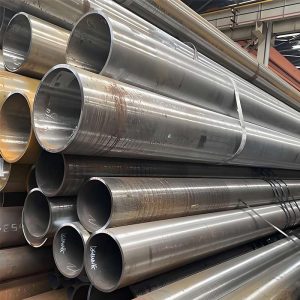
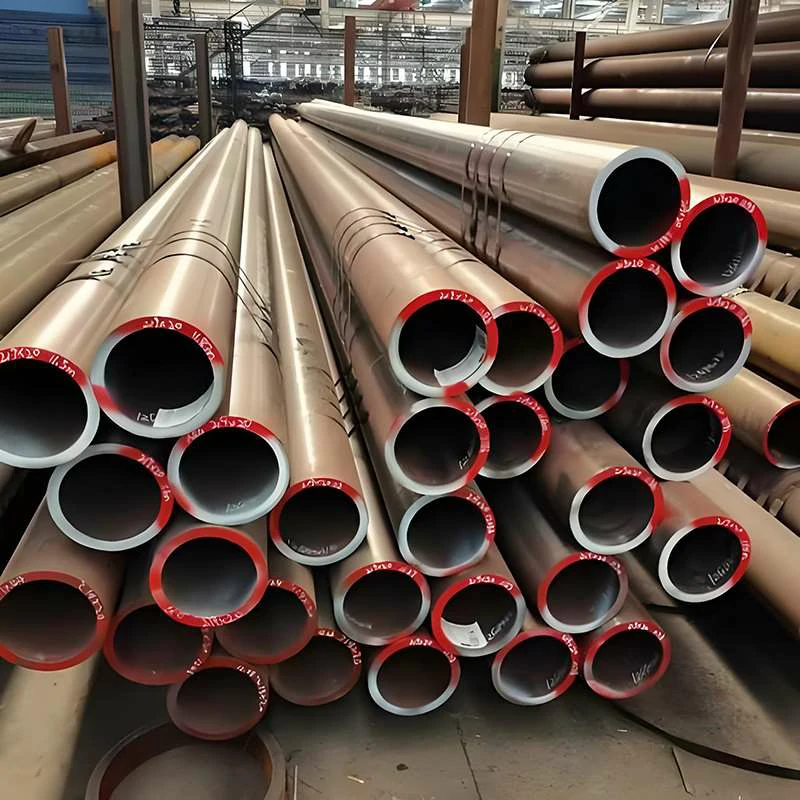
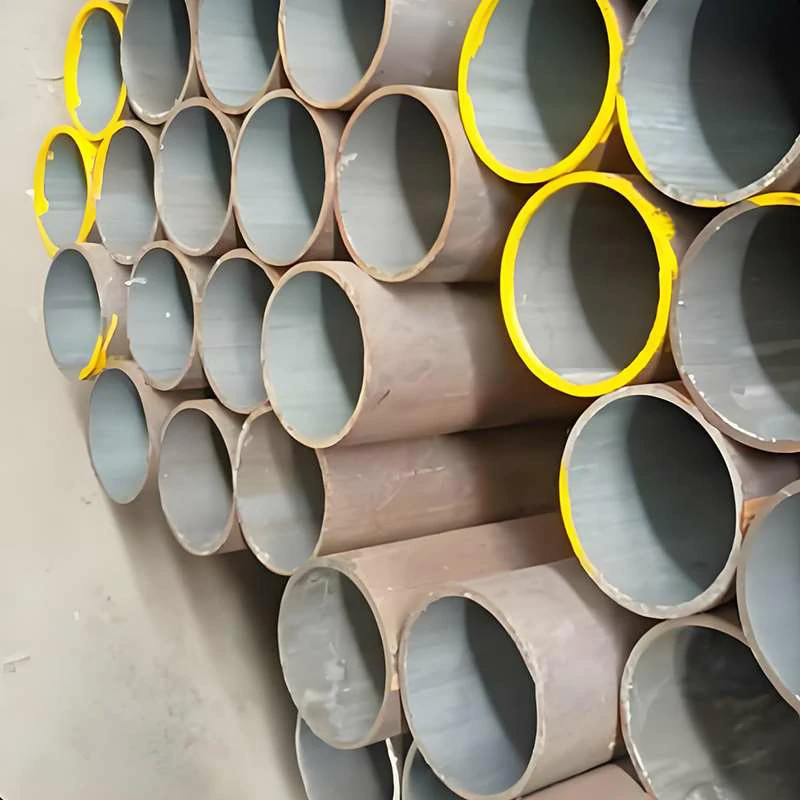
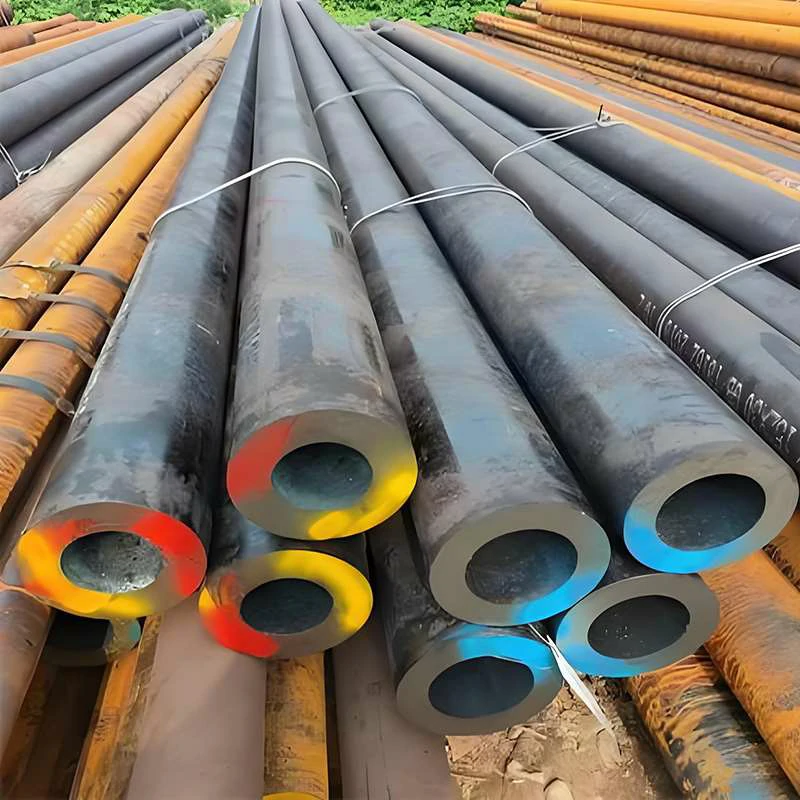
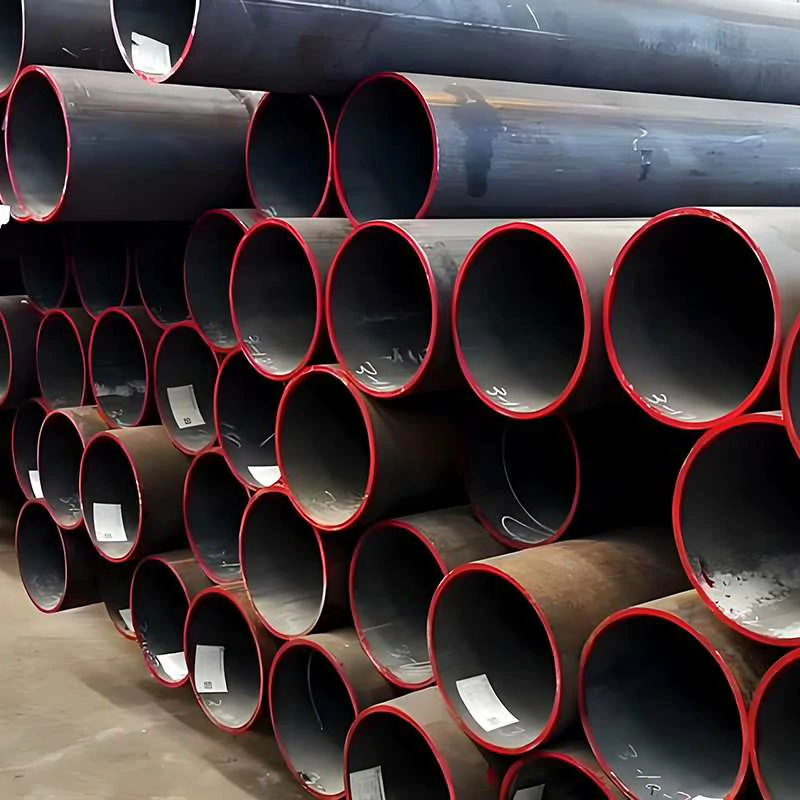
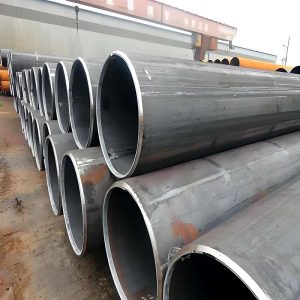
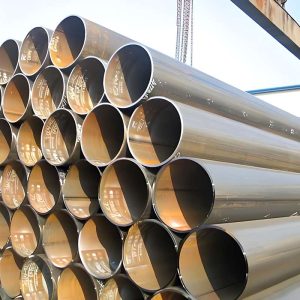
Alloy Steel Boiler Pipes P11 / P22

OD Range :

21 mm – 508 mm

WT Range :

2.6 mm – 25 mm

Length :

5.8 m / 6 m

Material :

Alloy steel P11, P22

Standard :

ASTM A335 / ASME SA335

Surface :

Black paint/black oil coating, anti-rust coating, PE/PP coating, shot blasting, phosphating

Application :

Industrial boilers, high-temperature and high-pressure steam systems, thermal power plants, heat exchangers, petrochemical and chemical pipelines, and other high-temperature and high-pressure applications.

Introduction :

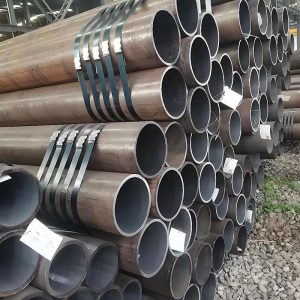
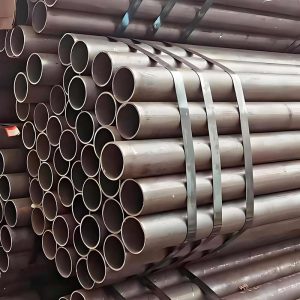
P11/P22 alloy steel boiler tubes are seamless chromium-molybdenum steel tubes according to ASTM A335/ASME SA335 standards.

I. Overview of Alloy Steel Boiler Tubes P11/P22

P11/P22 alloy steel boiler tubes are high-performance seamless steel tubes manufactured according to ASTM A335/ASME SA335 standards, primarily composed of chromium (Cr) and molybdenum (Mo) alloys.

P11 steel tubes are suitable for medium-temperature, medium-pressure boilers, while P22 steel tubes perform better under medium-high temperature, high-pressure conditions and are widely used in boiler main steam pipes, reheat pipes, superheated steam pipes, and heat exchanger piping.

II. Chemical Composition and Mechanical Properties of Alloy Steel Boiler Tubes P11/P22

i. Chemical composition

ElementP11 (%)P22 (%)
C (Carbon)0.05–0.150.05–0.15
Mn (Manganese)0.30–0.600.30–0.60
P (Phosphorus, Max)≤0.025≤0.025
S (Sulfur, Max)≤0.025≤0.025
Si (Silicon)0.50–1.00≤0.50
Cr (Chromium)1.00–1.501.90–2.60
Mo (Molybdenum)0.44–0.650.87–1.13

ii. Mechanical properties

Performance IndexP11P22
Tensile Strength (MPa)≥415≥415
Yield Strength (MPa)≥205≥200
Elongation (%)≥30≥30
Rockwell/BHN Hardness (Approx.)≤89 HRB≤89 HRB

III. Selection Flowcharts (P11 / P22)

Selection StepQuestionRecommended MaterialExplanation
Step 1: Working TemperatureIs the pipeline working temperature ≤ 540°C?P11Medium temperature and pressure pipelines, cost-effective choice
Is the pipeline working temperature > 540°C?P22Medium to high temperature, high-pressure pipelines, better creep resistance
Step 2: Working PressureIs the pipeline pressure medium pressure?P11Suitable for auxiliary steam or hot water pipelines
Is the pipeline pressure high pressure?P22Suitable for main steam pipes and high-pressure steam pipes
Step 3: Application ScenarioAuxiliary pipes, industrial boiler systems?P11Low cost, economical and practical
Main steam pipe, reheating pipe, high-temperature steam pipe?P22High-temperature, high-pressure environment, safe and reliable
Step 4: Long-term Use & ReliabilityGeneral life expectancy requirement?P11Suitable for general industrial use
High life expectancy and reliability requirements?P22Improved service life and safety
Step 5: Final ConfirmationConsider overall temperature, pressure, usage, and budgetP11 or P22Choose the most suitable material based on actual engineering needs

IV. Alloy Steel Boiler Tubes P11 / P22 Application Areas

  1. Main Steam Pipes and Reheat Pipes in Industrial Boilers:
    Used for conveying high-temperature steam in industrial boilers to ensure stable operation.
  2. High-Temperature and High-Pressure Piping in Thermal Power Plants:
    Suitable for main steam pipes, reheat pipes, and superheated steam pipelines in power plant boilers.
  3. Chemical and Petrochemical Piping Systems:
    Transporting high-temperature and high-pressure steam or hot media, with strong corrosion resistance.
  4. Heat Exchangers and Hot Water Circulation Systems:
    Selection of high-temperature and high-pressure piping materials for industrial heat exchange equipment and circulating hot water pipelines.
  5. Boiler Auxiliary Piping:
    Such as medium-temperature and medium-pressure steam pipes and feedwater pipes, P11 is commonly used for its economical and practical properties.
  6. Critical High-Temperature and High-Pressure Piping:
    Such as main steam pipes, reheat pipes, and other core pipelines, P22 is commonly used to ensure reliability and long service life.
  7. Differences between P11 and P22 in application
Comparison ItemP11P22
Working Temperature≤ 540°C≤ 580°C
Working PressureMedium pressureMedium to high pressure
Applicable PipelinesIndustrial boiler auxiliary pipes, reheating pipes, hot water pipelinesMain steam pipes, reheating pipes, high-temperature, high-pressure pipelines
Life & ReliabilityGeneral industrial conditions, cost-effectiveHigh-temperature, high-pressure pipelines, more reliable for long-term operation
CostLower, economical and practicalHigher, but better durability
Typical ApplicationsMedium-temperature steam pipes, hot water systems, auxiliary pipelinesMain steam pipes in thermal power plants, reheating pipes, chemical high-temperature, high-pressure pipelines

V. Alloy Steel Boiler Tube P11/P22 Corrosion Protection Solution

  1. Rust-proof Coating (Black Paint / Rust-proof Paint / Epoxy Coating)
  • Features: Simple construction, low cost; prevents minor oxidation during storage and transportation.
  • Application Recommendations: Suitable for indoor pipelines, general industrial environments, and medium-temperature, medium-pressure auxiliary steam pipelines; this solution is recommended if pipelines are exposed to air or low humidity environments for extended periods.
  1. Plastic Coating (PE/PP Coated Pipe)
  • Features: Excellent waterproof, moisture-proof, and corrosion-resistant properties; strong weather resistance, suitable for outdoor use.
  • Application Recommendations: Suitable for open-air pipelines, humid environments, and long-distance steam or hot water transmission pipelines; also suitable for chemical or petrochemical environments to prevent external corrosion.
  1. Surface Treatment Process (Shot Blasting / Phosphating)
  • Features: Removes oxide scale and impurities, improves coating or wrapping adhesion; enhances surface corrosion resistance.
  • Application Recommendations: Suitable for all pipelines requiring coating or wrapping, especially medium-, high-temperature, and high-pressure steam pipelines; pre-treatment of the pipeline surface can prolong the corrosion protection effect.
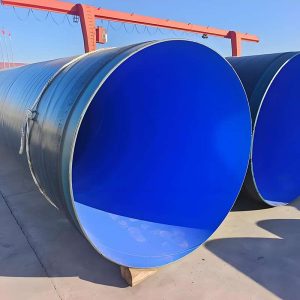
  1. Internal Corrosion Protection Treatment (Epoxy Lining / Ceramic Lining)
  • Features: Protects the interior of the pipeline from corrosion by high-temperature steam or chemical media; extends pipeline service life.
  • Application Recommendations: Suitable for pipelines conveying corrosive steam, chemical liquids, or high-temperature heat media; particularly suitable for main steam pipes and reheat pipes in thermal power plants and chemical and petrochemical industries.
  1. Corrosion Protection Maintenance Measures
  • Features: Ensures long-term effectiveness of the anti-corrosion coating through regular inspection and maintenance.
  • Application Recommendations: Regularly inspect the coating or covering for damage; ensure proper support spacing and good drainage for outdoor pipelines; perform local repairs or recoating as necessary.
Related Products

Outer Diameter (OD) (mm) Wall Thickness (WT) (mm) Standard Length (m) Material/Grade Remarks
21.3 2.6 – 3.2 5.8 – 6 P11 / P22 Small diameter, commonly used
26.9 2.6 – 3.5 5.8 – 6 P11 / P22 Common pipe diameter
33.7 3.2 – 4.5 5.8 – 6 P11 / P22 Suitable for medium-low pressure pipelines
48.3 3.6 – 6.0 5.8 – 6 P11 / P22 Medium diameter industrial pipelines
60.3 3.6 – 6.5 5.8 – 6 P11 / P22 Medium temperature and pressure applications
76.1 4.0 – 7.0 5.8 – 6 P11 / P22 Common in industrial boilers
89.0 4.5 – 8.0 5.8 – 6 P11 / P22 Customizable length
114.3 5.0 – 10.0 5.8 – 6 P11 / P22 Medium to high temperature pipelines
168.3 6.0 – 12.0 5.8 – 6 P11 / P22 High-temperature, high-pressure applications
219.1 6.5 – 14.0 5.8 – 6 P11 / P22 Main steam pipe
273.0 7.0 – 16.0 5.8 – 6 P11 / P22 High-pressure steam pipelines
323.9 8.0 – 18.0 5.8 – 6 P11 / P22 Power plant boiler pipes
355.6 10.0 – 20.0 5.8 – 6 P11 / P22 High-pressure boiler main steam pipe
406.4 12.0 – 22.0 5.8 – 6 P11 / P22 Special high-pressure applications
508.0 14.0 – 25.0 5.8 – 6 P11 / P22 Largest commonly used pipe diameter

Selection Tips:

  • Outer diameter should be selected based on design flow rate and installation space.
  • Wall thickness should be calculated based on pipe pressure and temperature to meet strength requirements.
  • Standard length is 5.8–6 m, or custom lengths of 11–12 m can be made to reduce welding.
  • Material selection: P11 → Medium-temperature, medium-pressure auxiliary piping; P22 → Medium-temperature, high-pressure main steam pipe.

Alloy Steel Boiler Tubes P11 / P22 — Standard Information

1. Dimensions and Specifications

  • Outer Diameter (OD): 21.3 – 508 mm
  • Wall Thickness (WT): 2.6 – 25 mm, customizable to Schedule/Customer Requirements
  • Length: Standard 5.8–6 m, customizable 11–12 m or longer
  • Tolerances:
  • Small Diameter: ±1% or ±0.79 mm
    Large Diameter: ±0.4–2 mm
  • Note: Dimensions and tolerances strictly conform to ASTM A335 / ASME SA335 standards. For domestic reference, please refer to GB/T 5310-2017.

2. Testing and Quality Control

  • Chemical Analysis: Ensure the alloy element content of the pipes meets standards.
  • Mechanical Property Testing: Tensile strength, impact strength, hardness (provided in other tabs, can be briefly described).
  • Non-Destructive Testing:
    Ultrasonic Testing (UT)
    Radiological Testing (RT)
    Magnetic Particle Testing (MT)
  • Production and Outgoing Control: Strictly manufacture and inspect according to standards to ensure the reliable quality of each pipe.
  • Certifications: ISO 9001 / Certificate of Conformity.

3. Surface Treatment / Corrosion Protection Specifications

  • Indoor Piping: Rust-preventive paint / black paint coating.
  • Outdoor or Humid Environments: PE/PP coated pipe.
  • High Temperature and High Pressure Piping: Shot blasting or phosphating treatment to improve coating adhesion.
  • Internal Corrosion Protection: Epoxy or ceramic lining can be used for pipes conveying corrosive steam or liquids.

4. Application Scope and Standard Correspondence

  • P11: Medium-temperature and medium-pressure auxiliary steam pipes, industrial boiler feedwater pipes, hot water system piping.
  • P22: Medium-temperature and high-pressure main steam pipes, reheat pipes, power plant boiler piping, chemical high-temperature and high-pressure pipelines.
  • Standard Correspondence:
    ASTM A335 / ASME SA335: International standards, widely used in boilers and steam piping.
    GB/T 5310-2017: Domestic standard, for reference regarding chemical composition, mechanical properties, and dimensional requirements.
Step Name Brief Description
1 Raw Material Preparation Select high-quality chromium-molybdenum alloy steel ingots, ensuring chemical composition meets standard requirements.
2 Chemical Analysis Conduct spectral or chemical analysis on the steel ingot to confirm the content of elements such as C, Cr, Mo, etc., meets standards.
3 Forging / Hot Rolling Heat the steel ingot and use forging or hot rolling methods to form the pipe billet, ensuring grain refinement and uniform structure.
4 Seamless Pipe Forming Use extrusion, hot rolling, or continuous rolling to process the pipe billet into a seamless pipe blank, controlling internal stress.
5 Heat Treatment Normalize or normalize + temper to adjust the steel structure, improve mechanical properties and toughness, and eliminate internal stress.
6 Size Processing Perform cold drawing or grinding on the outer diameter and wall thickness, process to design dimensions, and cut to required lengths.
7 Surface Treatment Apply anti-rust paint, shot blasting, phosphating, or PE/PP coating on the outer surface; epoxy or ceramic lining can be applied to the inner surface.
8 Inspection and Quality Control Includes chemical composition testing, mechanical performance testing (tensile, impact, hardness), and non-destructive testing (UT/RT/MT).
9 Packaging and Shipping Rust-proof packaging with paint, paper film, bundling, or pallet packaging, shipped according to customer requirements.
Inspection Category Inspection Items Purpose Inspection Method
Chemical Composition C, Mn, Si, P, S, Cr, Mo Ensure the chemical composition meets standard requirements Spectral Analysis (OES) / Chemical Analysis
Mechanical Properties Tensile Strength (Rm), Yield Strength (ReH), Elongation (A%), Impact Toughness (KV), Hardness (HB) Verify the pipe’s load-bearing capacity and plasticity Tensile Test / Impact Test / Hardness Test
Non-Destructive Testing (NDT) Internal Defects, Surface Defects Ensure the pipe is defect-free and enhance safety UT (Ultrasonic) / RT (Radiographic) / MT (Magnetic Particle)
Dimensions & Tolerances Outer Diameter, Wall Thickness, Length, Surface Defects Ensure the pipe meets design requirements Dimensional Measurement / Visual Inspection
Factory Inspection Certificate of Conformance (MTC) including chemical, mechanical, non-destructive, and dimensional reports Ensure the product complies with contract and standard requirements Document Review


Common FAQs about Alloy Steel Boiler Tubes P11/P22

Q1: Are P11 and P22 tubes prone to cracking under high temperature and pressure?

A: Correctly selecting the tube grade and controlling the welding process can reduce the risk of cracking. P22 tubes are suitable for high-temperature and high-pressure critical pipelines. Welding and heat treatment must be strictly performed according to standards, while avoiding rapid cooling and localized stress concentration.

Q2: How to prevent internal corrosion of the pipeline?

A: For pipelines transporting steam or water, internal anti-corrosion measures can be adopted, such as epoxy lining or ceramic coating. For outdoor environments, PE/PP cladding or anti-rust paint is recommended, along with regular inspection and maintenance.

Q3: How to ensure mechanical properties after welding?

A: Post-weld heat treatment (PWHT) is required to ensure that the weld and heat-affected zone reach the specified strength and toughness, avoiding cracking or deformation caused by residual welding stress.

Q4: What if the dimensions and tolerances of P11/P22 pipes are inconsistent?

A: Pipe dimensions should strictly conform to ASTM/ASME/GB standards. If deviations are found, confirm with the supplier whether it falls within the allowable tolerance range or whether reprocessing is necessary to avoid affecting pipe installation and sealing.

Q5: Will pipes experience creep or deformation during long-term use?

A: P22 pipes have good creep resistance under high temperature and pressure, but slight creep may still occur under overload operation or large temperature fluctuations. It is recommended to select the appropriate grade according to the operating conditions and conduct regular online inspections and pressure tests.

Q6: How to determine if a pipe needs replacement?

A: Primarily judged by the following indicators:
Severe internal wall corrosion or scaling
External cracks or weld cracks
Significantly reduced pipe diameter affecting flow rate
Regular ultrasonic thickness checks or reaching the design lifespan
Timely replacement can prevent accidents and production losses.