
Based on the actual procurement process, this article outlines the key specifications that must be confirmed before ordering spiral steel pipes, as well as the points to which buyers should pay special attention when requesting quotes and placing orders.
I. Determining Application and Applicable Standards
When purchasing spiral-welded steel pipes, the first step is to clearly define their intended use. Different applications may require different product standards, material specifications, inspection items, and corrosion protection solutions.
For example:
- Water Supply and Drainage Projects: The pressure-bearing conditions of the steel pipes, internal and external corrosion protection solutions, and relevant inspection requirements must be confirmed based on design specifications.
- Piling and foundation projects: Key considerations include the structural load-bearing requirements of the pipes, steel properties, wall thickness, length, and on-site piling methods.
- Oil and natural gas transmission: It is typically necessary to specify the applicable pipeline steel standards, steel grades, weld inspection requirements, and other technical conditions stipulated by the project.
- Bridge and steel structure projects: Material grades, dimensional tolerances, connection methods, and fabrication requirements should be confirmed based on the structural design.
Common relevant standards include API 5L, GB/T 9711, SY/T 5037, GB/T 3091, and ASTM A252, among others; however, the scope of application for these standards varies, and they cannot be substituted for one another simply because their names are similar.
Before placing an order, the following should be confirmed:
- The specific application and operating environment of the steel pipes;
- The applicable standards and their versions;
- Any special requirements in the project drawings and technical specifications;
- Whether third-party inspection or on-site witness by the client is required.
Procurement Recommendations: If the client provides technical specifications or drawings, priority should be given to verifying compliance with the requirements outlined in those documents. Do not simply inform the manufacturer that the pipes are “for water conveyance” or “for piling”; instead, provide specific standards and technical requirements whenever possible.
II. Specifying Outside Diameter (OD) and Wall Thickness (WT)
1. Outside Diameter (OD)
For example, when requesting a quote, you can specify:
- Outside Diameter: 610 mm
- Outside Diameter: 1,220 mm
- Outside Diameter: 2,620 mm
Please note that DN refers to the nominal diameter, which does not necessarily equal the actual outer diameter of the steel pipe. Therefore, when dimensions directly affect installation and connections, the actual outer diameter should be clearly specified rather than providing only the DN value.
For large-diameter spiral welded steel pipes, attention should also be paid to the pipe’s roundness, end dimensions, and related tolerances, as these factors can affect on-site alignment and welding.
2. Wall Thickness (WT)
Wall thickness is typically expressed in millimeters, such as 8 mm, 10 mm, 12 mm, 16 mm, or thicker.
Wall thickness affects a steel pipe’s structural load-bearing capacity, applicable pressure conditions, unit weight, and procurement cost. It should be determined based on engineering design, operating conditions, and applicable standards; the required wall thickness cannot be determined solely based on the pipe diameter.
3. Dimensional Tolerances
In addition to the nominal dimensions, the following should also be confirmed:
- Permissible deviations in outer diameter;
- Permissible deviations in wall thickness;
- Roundness of the pipe body and end dimension requirements;
- Whether there are any project-specific tolerances that are stricter than those in the product standard.
Purchasing Recommendations: It is recommended to uniformly use the “Outer Diameter × Wall Thickness” format when specifying dimensions, for example, OD 1,220 mm × WT 12 mm. If the project has special requirements regarding pipe end dimensions or butt-welding accuracy, these should be specified in the request for quotation.
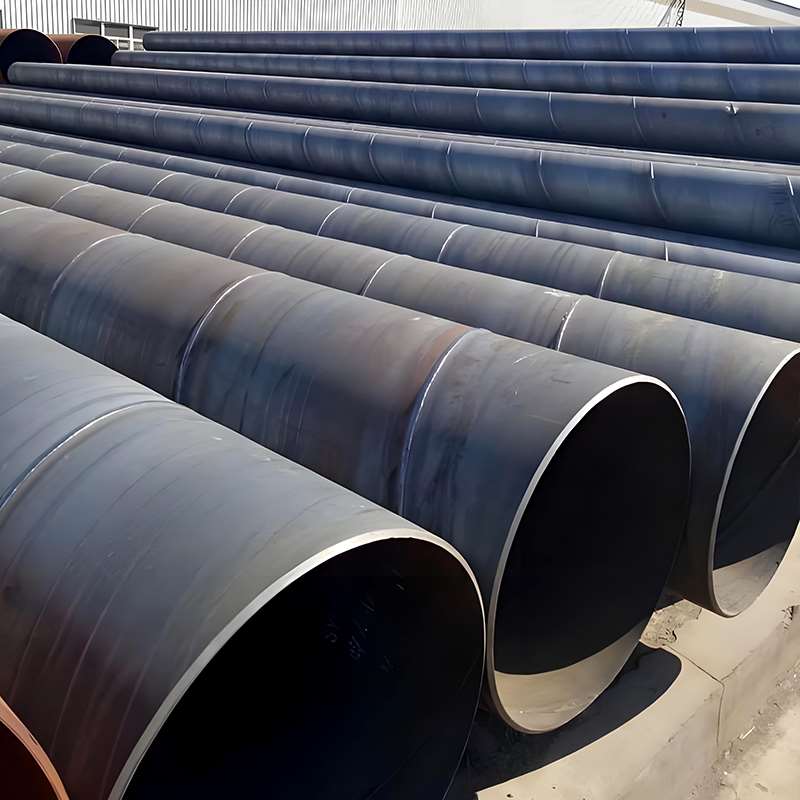
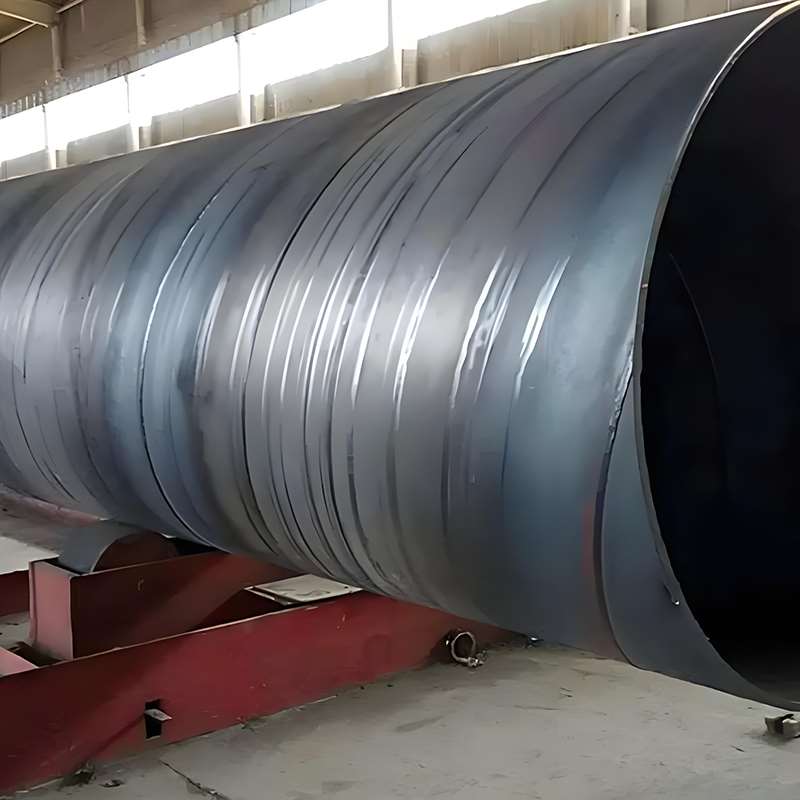
III. Confirming Steel Pipe Lengths and Length Tolerances
The length of steel pipes affects production scheduling, the number of pipes to be connected on-site, loading and unloading methods, and transportation costs.
Common length requirements include:
- Fixed-length pipes: Each steel pipe is manufactured to a specified length, such as 6 m, 11.8 m, or 12 m.
- Length Range: Steel pipes may be delivered within a range agreed upon by both parties, between a minimum and maximum length.
- Special Lengths: Steel pipes of varying lengths are provided according to engineering design specifications.
The following should be confirmed before placing an order:
- The target length for each steel pipe;
- Permissible length deviations;
- Whether the same order may include different lengths;
- Whether special beveling or other end-processing is required;
- Whether the lengths comply with the restrictions of the mode of transport, loading space, and unloading conditions.
For export orders, the mode of transportation should also be determined in advance. Container shipping, breakbulk shipping, and other methods may have different requirements regarding steel pipe length, loading, and securing methods.
Purchasing Recommendation: If a project includes multiple lengths, do not provide only the total tonnage. It is best to provide the length and quantity for each specification to facilitate the manufacturer’s calculation of production plans, material requirements, and transportation arrangements.
IV. Confirming Steel Grades and Material Requirements
The steel grade determines the properties that steel pipes must meet, including chemical composition, yield strength, tensile strength, and impact toughness as specified by relevant standards or project requirements.
Common materials include:
- Q235B, Q355B: Suitable for general structural applications, piling, and other engineering projects that comply with relevant standards and design requirements.
- API 5L Gr. B, X42, X52, X60, etc.: Used for pipeline steel products as applicable, depending on project requirements.
- ASTM A252 Grade 1, Grade 2, Grade 3: Used for steel pipe pile products that meet the requirements of this standard.
These steel grades should not be considered interchangeable. Even if certain materials have similar strength properties, their chemical compositions, toughness requirements, inspection items, and certification requirements may differ.
For carbon steel spiral-welded pipes, purchasers should specify the exact steel grade and applicable standards, rather than simply writing “carbon steel” or “general-purpose steel.”
It is also important to confirm whether the project has any additional requirements, such as:
- Chemical composition limits;
- Impact testing and test temperatures;
- Specific mechanical property specifications;
- Additional material re-testing or third-party inspections.
Procurement Recommendation: If a customer specifies a particular steel grade, do not substitute the material without written consent from the customer or the design firm. Confirming the material specifications before submitting a quote can reduce the risk of subsequent price revisions and technical changes.
V. Confirmation of Production Standards and Inspection Requirements
Applicable standards not only specify the basic technical requirements for products but also affect dimensional tolerances, weld inspections, mechanical property tests, and product acceptance procedures.
Standards relevant to the procurement of spiral welded steel pipes may include:
- API 5L, GB/T 9711: Standards for pipeline steel pipes used in the oil and gas industry.
- SY/T 5037: Standard for spiral-welded submerged-arc-welded steel pipes for general fluid conveyance.
- GB/T 3091: Standard for welded steel pipes for low-pressure fluid conveyance; specific product applicability should be verified.
- ASTM A252: Standard for steel pipe pile products.
The specific standard to be adopted should be determined based on the pipe’s intended use, design documents, and contract requirements. The standards listed above are not interchangeable general options.
In addition to product standards, specific inspection requirements should be confirmed in advance, such as:
- Whether ultrasonic testing (UT) is required;
- Whether radiographic testing (RT) is required;
- Whether hydrostatic testing is required;
- Whether testing is to be conducted on a per-pipe basis or via specified sampling;
- Whether third-party inspection is required;
- Requirements for the repair and re-inspection of non-conforming products.
Procurement Recommendation: Do not simply specify “100% inspection” without detailing the inspection methods and scope. Clearly define the inspection items, acceptance criteria, and reporting requirements to avoid misunderstandings between both parties regarding the scope of inspection.
VI. Confirmation of Internal and External Corrosion Protection and Coating Requirements
The environment in which the steel pipes are located, the transported medium, and the design service life all influence the selection of the corrosion protection system.
Common external corrosion protection solutions include:
- 3PE/2PE: A polyethylene corrosion protection system; the specific structure and thickness are determined based on relevant standards and project requirements.
- FBE: Fusion-bonded epoxy powder coating, suitable for corrosion protection applications that meet design requirements.
- Epoxy coatings, polyurethane coatings, and other coatings: Selected based on the operating environment and technical specifications.
Common internal corrosion protection or lining solutions include:
- Liquid epoxy coatings: May be used for water transmission or industrial pipelines, depending on the coating system and certification requirements.
- Cement mortar linings: May be used for applications such as water transmission pipelines that meet design requirements.
- Other lining systems: To be determined based on the transported medium, abrasion conditions, and corrosion resistance requirements.
The following should be clarified during procurement:
- Whether external anti-corrosion protection is required;
- Whether the inner wall requires a coating or lining;
- Coating type and design thickness;
- Surface preparation and adhesion requirements;
- Whether electrical spark leak detection is required;
- Whether uncoated areas are to be left at the pipe ends;
- Coating inspection reports and repair requirements.
For example, the acceptance inspection of 3PE anti-corrosion steel pipes should not be based solely on the appearance of the coating; it should also include checks on thickness, adhesion or delamination performance, leak detection results, and other items in accordance with applicable standards.
Procurement recommendation: Do not simply state “anti-corrosion treatment required.” Specify the systems to be used for both the inner and outer walls, and provide the specified thicknesses and inspection requirements. Construction methods and acceptance criteria may vary among different coating systems; therefore, a single set of parameters cannot be used for acceptance.
VII. Confirmation of Pipe End Types, Markings, and Delivery Requirements
The method of pipe end processing affects the connection, installation, and on-site construction of steel pipes.
Common pipe end types include:
- Plain End: The pipe end is not machined with a weld bevel; this is suitable for connections or subsequent processing as required by the design.
- Beveled End: The pipe end is machined to a specified angle and dimensions to facilitate on-site butt welding.
- Other Special Finishes: Specific connection configurations or pipe end types provided according to project design.
If a beveled end is required, the bevel angle, root face dimensions, and relevant tolerances must be specified; simply stating “bevel required” is insufficient. Specific processing requirements shall be based on the welding procedure and project specifications.
In addition, the following should be confirmed:
- Whether plastic protective caps or other protective measures are required for the pipe ends;
- Whether markings need to be spray-painted on the steel pipe surface;
- Whether the markings should include specifications, material, standards, furnace lot number, or pipe number;
- What protective requirements apply during packaging, lifting, and transportation;
- The delivery location, delivery time, and shipping method;
- What quality documentation must accompany the shipment.
Procurement Recommendations: If the steel pipes are to be exported, confirm in advance the requirements for pipe end protection, coating protection, loading methods, and markings. Mechanical damage during transportation may also affect final acceptance.
VIII. Pre-Order Procurement Checklist
Before sending a request for quotation (RFQ) to a manufacturer or signing a purchase contract, it is recommended that you compile the following information.
| Procurement Item | Details to Confirm |
|---|---|
| Product Name | Spiral Submerged Arc Welded Steel Pipe (SSAW) |
| Application | Water transmission, drainage, piling, oil and gas transmission, or other engineering projects |
| Dimensions | Outside Diameter (OD) and Wall Thickness (WT) |
| Length | Length per pipe, length tolerances, and quantity |
| Material | Specific steel grade and any additional mechanical property requirements |
| Applicable Standard | Standard number, edition, and relevant technical grade |
| Anti-Corrosion Requirements | Internal and external coating types, coating thickness, and inspection items |
| Pipe Ends | Plain ends, beveled ends, or other end preparation requirements |
| Inspection Requirements | UT, RT, hydrostatic testing, and other agreed inspection items |
| Quality Documentation | Material Test Certificates (MTCs), inspection reports, and other mill documentation |
| Delivery Requirements | Packaging, marking, transportation method, delivery location, and delivery schedule |
For example, a request for quotation might be written as follows:
- Product: Spiral-seam submerged-arc welded steel pipe
- Specifications: OD 1,220 mm × WT 12 mm
- Length: 12 m per pipe
- Material: As specified by the project
- Applicable Standards: As per the project technical specifications
- Corrosion Protection: Internal and external coating systems to be confirmed according to design requirements
- Pipe Ends: Grooved
- Inspection: In accordance with applicable standards and contractual agreements
- Quantity: Specify the number of pieces for each specification or the total tonnage
The above is merely an example of how to complete a request for quotation; actual material, standards, corrosion protection, and inspection requirements should be determined based on the specific project.