
In large-scale engineering projects, oil and gas transportation, and structural construction, the choice of steel pipe directly affects project safety, service life, and overall budget. When faced with commonly used steel pipe types such as LSAW (Longitudinal Submerged Arc Welded Pipe), SSAW (Spiral Submerged Arc Welded Pipe), and Seamless Steel Pipe, procurement professionals and engineers often face challenges when selecting the most suitable option.
This article provides a comprehensive comparison of the manufacturing processes, mechanical properties, cost-effectiveness, and application scenarios of these three major types of steel pipe, helping you make a well-informed purchasing decision.
I. Why Is Choosing the Right Steel Pipe So Important?
Steel pipes are not only used to transport fluids but also serve as load-bearing components in many large-scale engineering projects.
Safety Risks: Using pipes with insufficient pressure resistance under high-pressure or harsh operating conditions can easily lead to leakage or even pipe rupture.
Cost Control: Pursuing unnecessarily high specifications—for example, using expensive seamless pipes for low-pressure water transmission projects—can result in unnecessary budget expenditure.
Project Compatibility: Different types of steel pipes vary significantly in diameter, wall thickness, tensile strength, and weldability. Therefore, pipe selection must be precisely matched to the project’s operating conditions.
II. What Are LSAW, SSAW, and Seamless Steel Pipes?
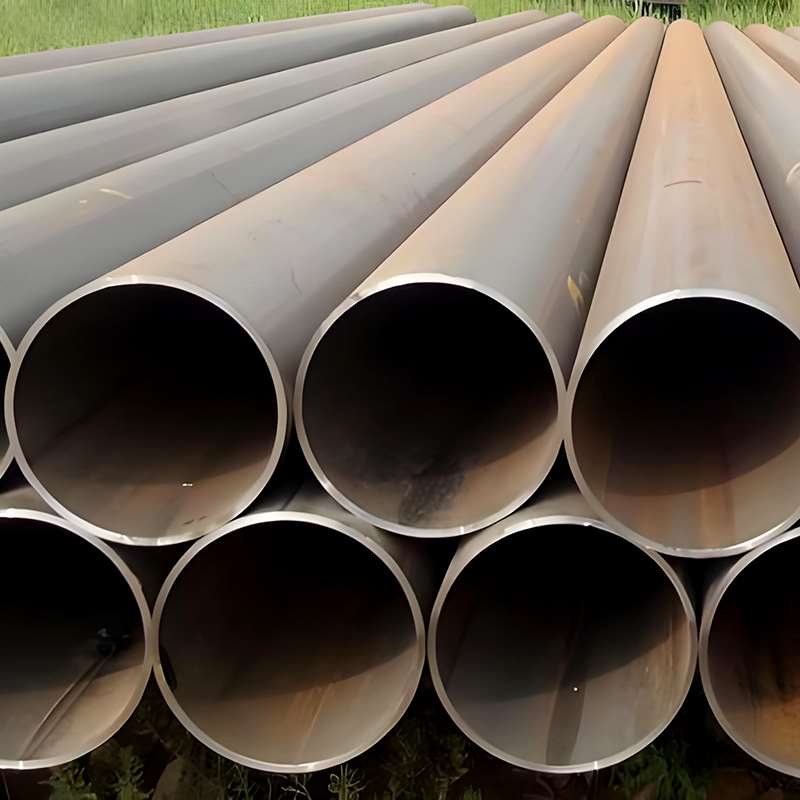
LSAW Steel Pipe (Longitudinal Submerged Arc Welded Pipe): A high-strength steel pipe manufactured from a single medium- and heavy-gauge steel plate. The plate is formed using the JCOE or UOE process and then welded by double-sided submerged arc welding to create a single longitudinal straight weld seam.
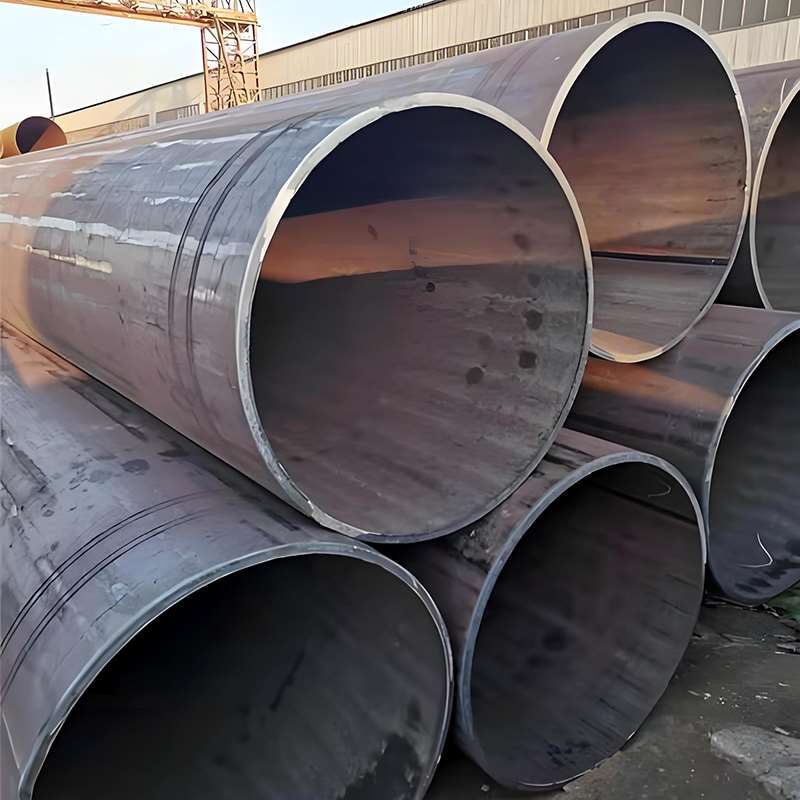
SSAW Steel Pipe (Spiral Submerged Arc Welded Pipe): A steel pipe manufactured from hot-rolled steel coil. The coil is formed into a pipe with the weld seam arranged in a spiral pattern, followed by double-sided submerged arc welding.
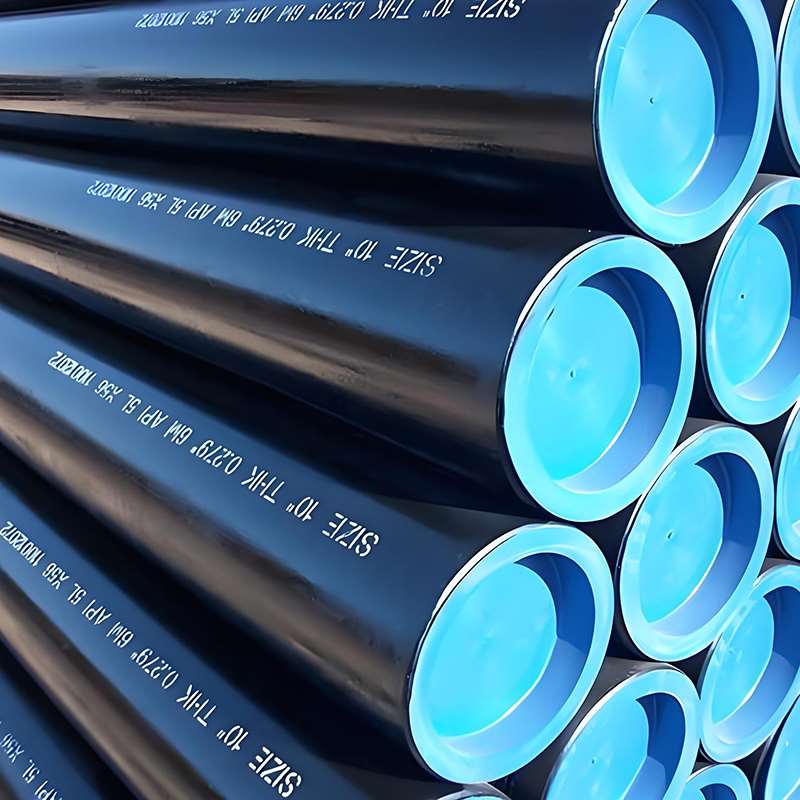
Seamless Steel Pipe: A steel pipe manufactured from solid round steel billets through hot piercing, rolling, or cold drawing processes. The entire pipe body is seamless, with no weld seam.
III. Differences in manufacturing processes
| Comparison | LSAW Steel Pipe | SSAW Steel Pipe | Seamless Steel Pipe |
|---|---|---|---|
| Starting Material | Single medium- and heavy-gauge steel plate | Hot-rolled steel coil | Solid round billet |
| Forming Process | Progressive JCOE or UOE forming | Continuous spiral forming | Hot piercing + continuous rolling/drawing |
| Weld Seam | Single longitudinal straight weld seam | Continuous spiral weld seam | Completely seamless |
| Size Range | Large outer diameter and extra-thick wall (up to 60 mm+) | Large outer diameter and medium wall thickness (generally ≤ 25 mm) | Limited outer diameter (typically ≤ 24″), with a wide range of wall thicknesses |
IV. Comparison of Mechanical Properties
1. Pressure Resistance
Seamless Steel Pipe: Its uniform structure and absence of weld seams eliminate potential weak points, giving it the strongest resistance to internal pressure and fatigue.
LSAW Steel Pipe: Its clear stress distribution, combined with full-length mechanical expansion to eliminate residual stress, gives it pressure resistance and seismic performance close to those of seamless pipe.
SSAW Steel Pipe: The weld seam is 30%–50% longer than that of LSAW pipe, and the principal stress is at an angle to the weld seam. Therefore, its safety margin under high-pressure conditions is relatively lower.
2. Dimensional Accuracy and Geometric Control
LSAW Steel Pipe: Mechanical expansion provides high roundness, straightness, and wall-thickness uniformity.
SSAW Steel Pipe: Continuous forming provides good straightness, but controlling the forming accuracy at the pipe ends is somewhat more challenging.
Seamless Steel Pipe: Hot-rolled seamless pipes generally have relatively larger wall-thickness tolerances, while cold-drawn seamless pipes offer higher dimensional accuracy but at a higher cost.
V. Applications of the Three Types of Steel Pipe
LSAW Steel Pipe: High-pressure onshore oil and gas trunk pipelines, deepwater/shallow-water subsea pipelines, offshore drilling platform jacket structures, heavy-duty bridge pile foundations, and steel structures for large-span buildings.
SSAW Steel Pipe: Long-distance low- to medium-pressure water transmission projects, urban district heating and natural gas pipeline networks, onshore piling projects, and structural support columns.
Seamless Steel Pipe: High-pressure boiler tubes, oil drilling pipes and oil casing, high-temperature and high-pressure petrochemical refining pipelines, and precision structural components for automobiles and machinery.