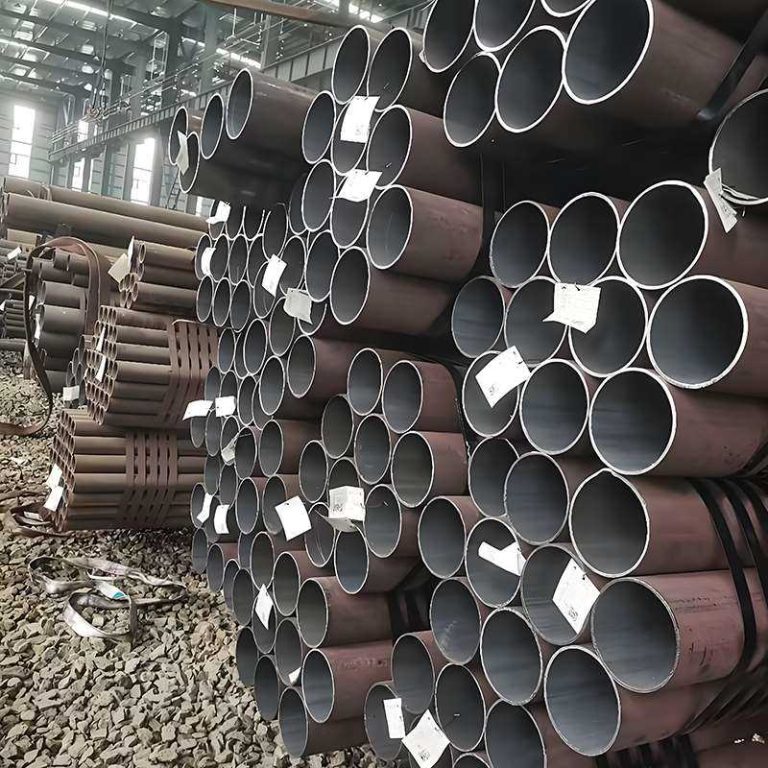
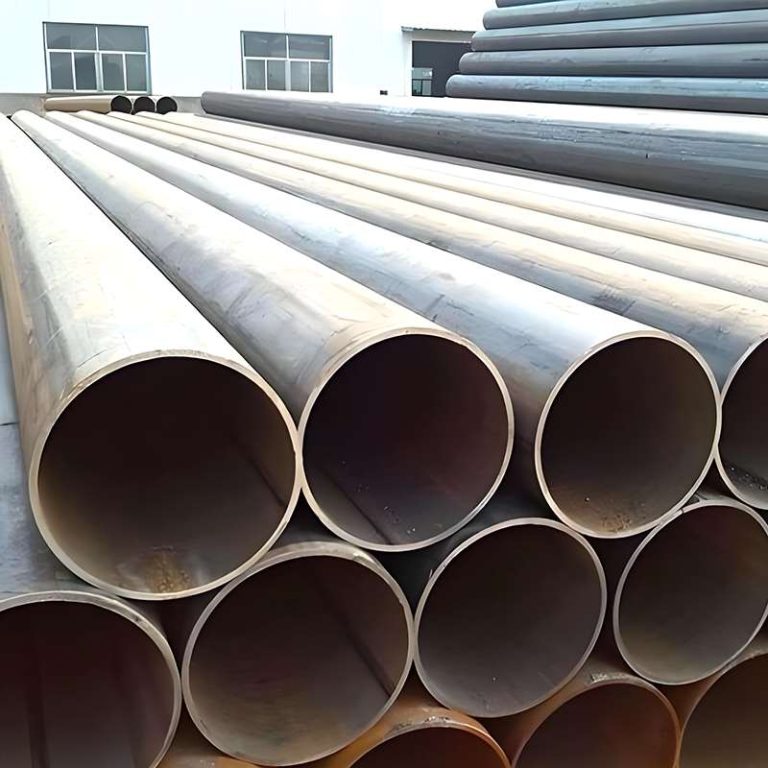
I. What Are ERW Steel Pipes?
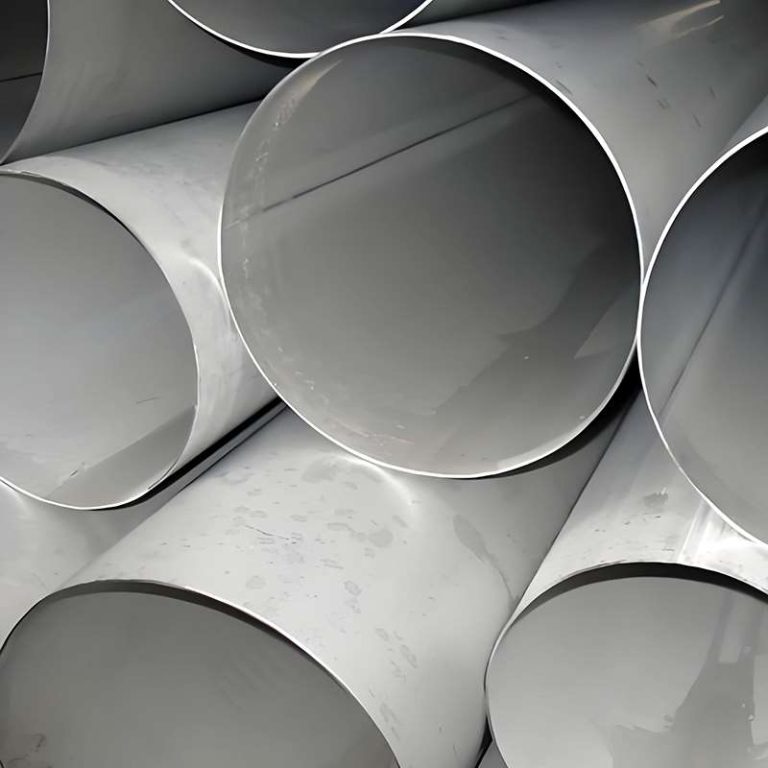
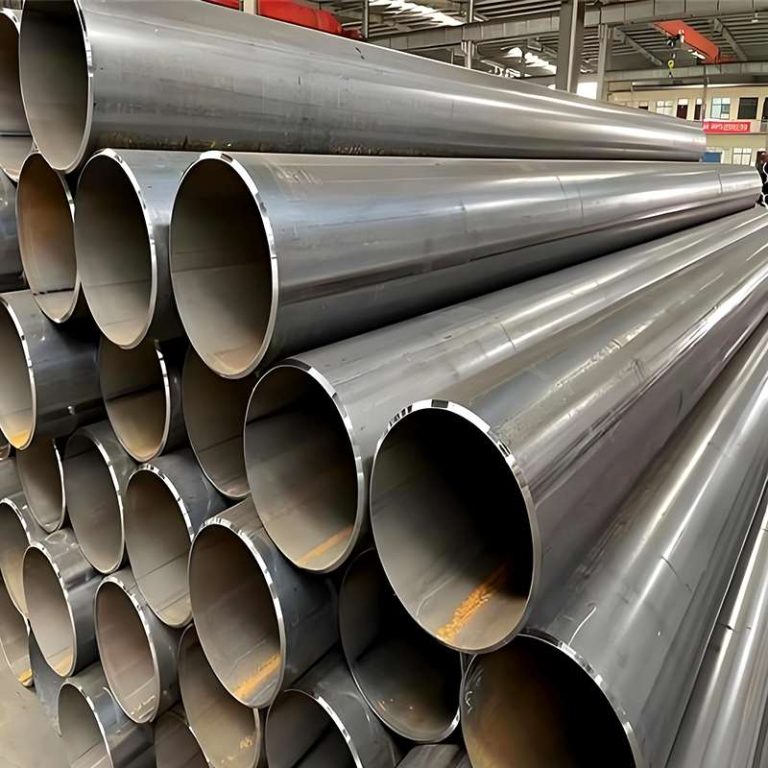
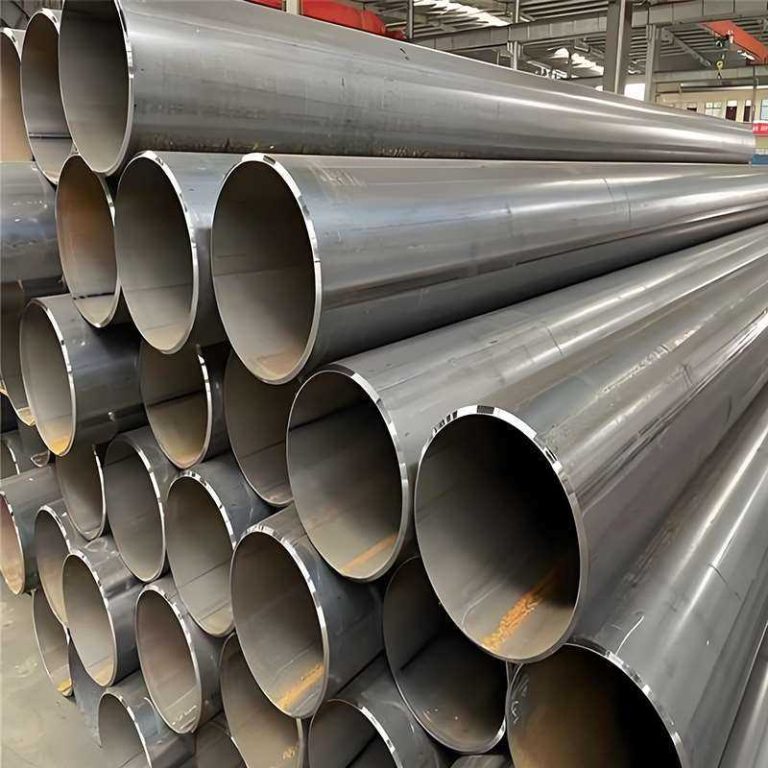
ERW steel pipes are steel pipe products manufactured by rolling steel strips into a tubular shape and then fusing the seam using a resistance welding process.
This process does not use filler material; instead, it generates heat by passing an electric current through the edges of the steel strips and completes the welding under pressure. As a result, the weld seam is uniform, production efficiency is high, and the process is relatively cost-effective.
II. ERW Steel Pipe Production Process
Coil uncoiling and surface treatment → Strip forming → High-frequency resistance welding → Weld treatment and heat treatment → Sizing and shaping → Cutting to length → Non-destructive testing and hydrostatic testing → Final inspection and packaging
1. Impact of the Process on Performance
- Continuous and uniform weld → Improves overall structural stability
- No filler material → Reduces the introduction of impurities and improves consistency
- High-frequency heating and welding → Weld strength接近 that of the base metal
- Precise dimensional control → Suitable for pipeline network projects and standardized construction
Therefore, ERW steel pipes are typically suitable for medium- and low-pressure conveyance systems, such as water, gas, and structural engineering
2. Relationship Between the Process and Scope of Application
- Suitable for: Water conveyance, medium- and low-pressure gas pipeline networks, building structures
- Suitable for: General industrial fluid systems
- Not recommended for: Ultra-high pressure, high temperature, or extreme operating conditions (seamless pipes are typically selected)
3. Engineering Advantages of the Process
- High production efficiency, suitable for large-scale engineering projects
- Lower costs, suitable for long-distance pipeline construction
- High degree of standardization in specifications, facilitating construction and installation
Can be used with anti-corrosion coatings (3PE/FBE) for buried pipeline systems
4. Key Aspects of Quality Control
- Non-destructive testing of welds (UT/ET)
- Hydrostatic pressure testing
- Dimensional and straightness control
- Surface quality inspection
These inspections ensure the reliability of the product during long-term operation.
III. Common Specifications for ERW Steel Pipes
The specifications of ERW steel pipes are not merely dimensional parameters; rather, they serve as a critical basis directly related to engineering pressure ratings, construction methods, and operational safety. In actual projects, specifications should be selected based on the specific application scenario, rather than solely on dimensions.
1. Selection of Outer Diameter: Determines Conveyance Capacity and Project Scale
- Small diameters (e.g., DN15–DN100): Suitable for building water supply and drainage, and low-pressure fluid conveyance
- Medium diameters (DN100–DN400): Suitable for industrial pipeline networks, municipal water supply, and general conveyance systems
- Large diameters (DN400 and above): Suitable for structural support and certain long-distance conveyance projects
Selection Recommendations:
- The larger the outer diameter, the greater the conveyance capacity; however, this also places higher demands on construction equipment and costs.
2. Wall Thickness Selection: Directly Determines Pressure-Bearing Capacity
- Thin-walled pipes: Suitable for low-pressure conveyance and structural applications
- Medium-walled pipes: Suitable for general industrial fluids and municipal engineering
- Thick-walled pipes: Suitable for higher pressures or special operating conditions
Selection Recommendations:
- If the pressure rating is unclear, wall thickness should be determined primarily based on design standards (e.g., API 5L / ASTM) rather than solely on price.
3. Length Selection: Affects Construction Efficiency and Material Waste
Common lengths for ERW steel pipes include:
- Fixed-length pipes: Facilitate construction splicing and reduce waste
- Random-length pipes: Suitable for cost control or non-standard projects
Selection Recommendations:
- For long-distance pipeline projects, fixed-length pipes are recommended to minimize weld points and improve construction efficiency.
4. Steel Grade Standards: Determine Strength and Suitable Environments
Selection Recommendations:
- Higher steel grades offer greater strength but also incur higher costs; the grade should be selected based on pressure and safety requirements.
5. End Types: Affect Construction Methods and Connection Methods
- Plain End: Suitable for welded connections
- Beveled End: Suitable for butt welding
- Threaded End: Suitable for small-diameter quick-installation systems
Selection Recommendations:
- The end type must be consistent with the on-site construction method; otherwise, installation costs will increase.
IV. Application Areas of ERW Steel Pipes
1. Oil and Natural Gas Transportation (Medium- and Low-Pressure Pipelines)
ERW steel pipes are commonly used in medium- and low-pressure sections or gathering and transportation networks within oil and gas transmission systems.
Reasons for Suitability:
- Consistent weld quality
- Lower cost, suitable for long-distance installation
- Meets the requirements of standards such as API 5L
Note:
- Not suitable for high-pressure main long-distance transmission pipelines (seamless steel pipes or high-grade pipeline steel are typically preferred).
2. Municipal Water Supply and Drainage Systems
ERW steel pipes are widely used in municipal water systems.
Reasons for Suitability:
- Cost-effective, suitable for large-scale installation
- Standardized specifications, facilitating construction
- Compatible with anti-corrosion coatings (e.g., 3PE/FBE)
3. Building Structural Engineering
In the construction industry, ERW steel pipes are commonly used in steel structural support systems.
Reasons for Suitability:
- High dimensional accuracy, facilitating installation
- Strength meets structural load requirements
- Easy to process (cutting, welding)
4. Pile Foundations and Foundation Engineering
ERW steel pipes can be used in projects such as building foundation piles and retaining structures.
Reasons for Suitability:
- Stable load-bearing capacity
- Large-diameter specifications available upon request
- Suitable for deep foundation construction environments
5. Industrial Fluid Conveyance Systems
Used for conveying general industrial media, such as:
- Water
- Air
- Oils (low pressure)
- Industrial cooling systems
V. ERW Steel Pipe vs. Seamless Steel Pipe
| Comparison Aspect |
ERW Steel Pipe (Electric Resistance Welded) |
Seamless Steel Pipe |
| Manufacturing Method |
Steel plate formed and high-frequency electric resistance welded, with a weld seam |
Solid steel billet pierced and hot-rolled, no weld seam |
| Structural Characteristics |
Has a weld seam, but continuous and uniform |
Monolithic structure, no welding weak point |
| Pressure Bearing Capacity |
Suitable for medium to low-pressure systems |
Suitable for high-pressure and high-temperature conditions |
| Cost Level |
Lower cost, high cost-performance ratio |
Higher cost |
| Dimensional Accuracy |
High precision, suitable for standardized production |
Relatively average (depends on manufacturing process) |
| Main Advantages |
Economical, fast delivery, suitable for large-scale projects |
High strength, greater safety margin |
| Typical Applications |
Water systems, low/medium-pressure gas pipelines, structural engineering |
Oil high-pressure pipelines, boilers, high-temperature and high-pressure systems |
VI. Quality Standards and Testing Systems for ERW Steel Pipes
1. Commonly Used International Standards
- API 5L: Primarily used for oil and natural gas pipeline systems; this is a pipeline standard with relatively high requirements.
- ASTM A53: Steel pipes for general structural and fluid conveyance applications; suitable for industrial and construction sectors.
- EN 10219 / EN 10217: European standards widely used in structural engineering and pressure pipeline systems.
Selection Recommendations:
- Oil and gas projects → Prioritize API 5L
- Construction and industrial fluid applications → ASTM A53
- European projects or structural engineering → EN standards
2. Why Are Standards Important?
- Different requirements for chemical composition
- Different requirements for mechanical properties
- Different requirements for weld quality
- Different requirements for testing intensity
3. Key Inspection Items for ERW Steel Pipes
(1) Hydrostatic Pressure Test
Used to test the pipe’s overall pressure-bearing capacity to ensure no leaks or ruptures occur.
(2) Non-Destructive Testing (UT / ET)
Detects internal defects in the weld to avoid “risks invisible to the naked eye.”
(3) Dimensional Accuracy Inspection
Ensures that the outer diameter and wall thickness meet design requirements, guaranteeing installation compatibility.
(4) Weld Quality Inspection
Focuses on checking weld continuity and strength; this is a critical step in ERW steel pipe production.
(5) Surface Quality Inspection
Ensures the absence of defects that could affect usage, such as cracks, scratches, and corrosion.
4. What Do These Inspections Mean?
- Preventing leaks during pipeline operation
- Ensuring long-term pressure stability
- Guaranteeing that welds do not become weak points
- Enhancing the overall safety level of the project
VII. Why Choose Our ERW Steel Pipes?
As a professional manufacturer and exporter of ERW steel pipes, we not only provide products but also offer stable and reliable engineering solutions, ensuring that every batch of steel pipes meets international engineering standards and long-term service requirements.
1. Direct Supply from the Manufacturer, with Transparent and Controllable Pricing
We operate a direct supply model from the manufacturer, eliminating intermediaries to enable customers to obtain more competitive procurement costs while ensuring stable supply.
2. Strict Quality Control System (Traceable)
From raw material procurement to finished product shipment, every batch of ERW steel pipes undergoes a comprehensive quality control process, including:
- Non-destructive testing of welds (UT/ET)
- Hydrostatic pressure testing
- Dimension and wall thickness inspection
- Test reports are provided for all products to ensure traceability.
3. Compliance with International Standards (Suitable for Engineering Approval)
Products are manufactured in strict accordance with the following standards:
- API 5L Line Pipe Standard
- ASTM A53 / A106
- EN 10219 / EN 10217
They meet the requirements of most international engineering projects and tenders.
4. Support for Custom Specifications and Engineering-Specific Production
Customization services are available to meet project requirements, including:
- Custom outer diameter and wall thickness
- Steel grade selection
- End processing (beveling/threading)
- Anti-corrosion and galvanizing treatments
5. Extensive Export Experience to Mitigate Procurement Risks
- Our products have been exported to multiple international markets. We are familiar with engineering standards and procurement processes in various countries and can assist customers in reducing communication and technical compatibility costs.
6. Engineering-Grade Delivery Capabilities
In addition to steel pipe products, we also provide:
- Anti-corrosion coatings (3PE / FBE)
- Galvanizing
- Logistics and export packaging solutions
VIII. Frequently Asked Questions (FAQ)
Q1: What are the primary applications of ERW steel pipes?
A:
ERW steel pipes are primarily used in medium- and low-pressure fluid conveyance and structural engineering applications, such as:
Oil and natural gas gathering and transmission pipelines (medium and low pressure)
- Municipal water supply and drainage systems
- Building structures and support systems
- General industrial fluid conveyance systems
Selection Guidelines:
- For high-pressure long-distance transmission or high-temperature applications, it is generally necessary to evaluate whether seamless steel pipes should be used instead.
Q2: Are ERW steel pipes suitable for high-pressure environments?
A:
Generally, ERW steel pipes are not recommended for extremely high-pressure or high-temperature environments.
Reasons:
- ERW steel pipes have a welded seam structure
- Extreme pressure conditions require a higher safety margin
Engineering Recommendations:
- Low- to medium-pressure systems → ERW steel pipes
- High-pressure/high-temperature systems → Seamless steel pipes
Q3: What is the difference between ERW and SSAW steel pipes?
A:
The main differences between the two lie in their welding methods and applicable scenarios:
- ERW steel pipes: Longitudinal high-frequency welding; suitable for small- to medium-diameter and medium- to low-pressure systems
- SSAW steel pipes: Spiral welding; suitable for large-diameter, long-distance transmission pipelines
In simple terms:
- ERW = High precision, suitable for small- to medium-diameter applications
- SSAW = Suitable for large-diameter, long-distance transmission
Q4: Can ERW steel pipes undergo anti-corrosion treatment?
A:
Yes, ERW steel pipes are widely used in anti-corrosion pipeline systems. Common methods include:
- 3PE anti-corrosion coating (commonly used for buried pipelines)
- FBE epoxy powder coating (high corrosion resistance)
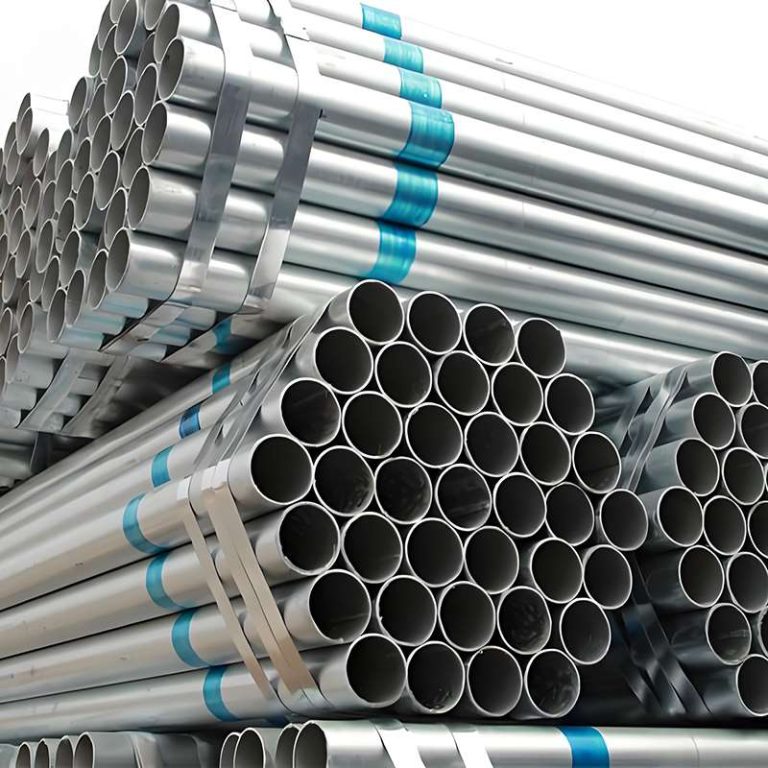
- Galvanizing (for construction and structural applications)
Selection Tips:
- The anti-corrosion method should be selected based on the burial environment, type of medium, and service life requirements.