Products

Related News

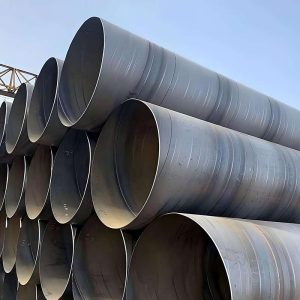
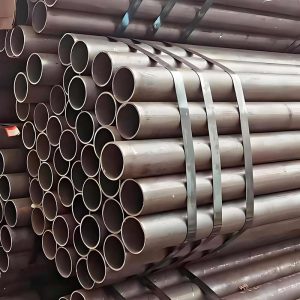
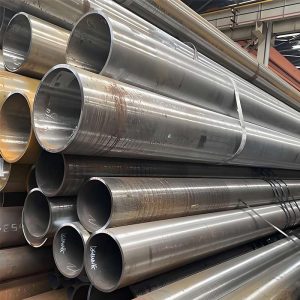
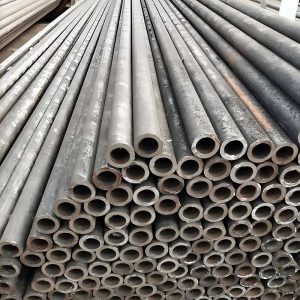
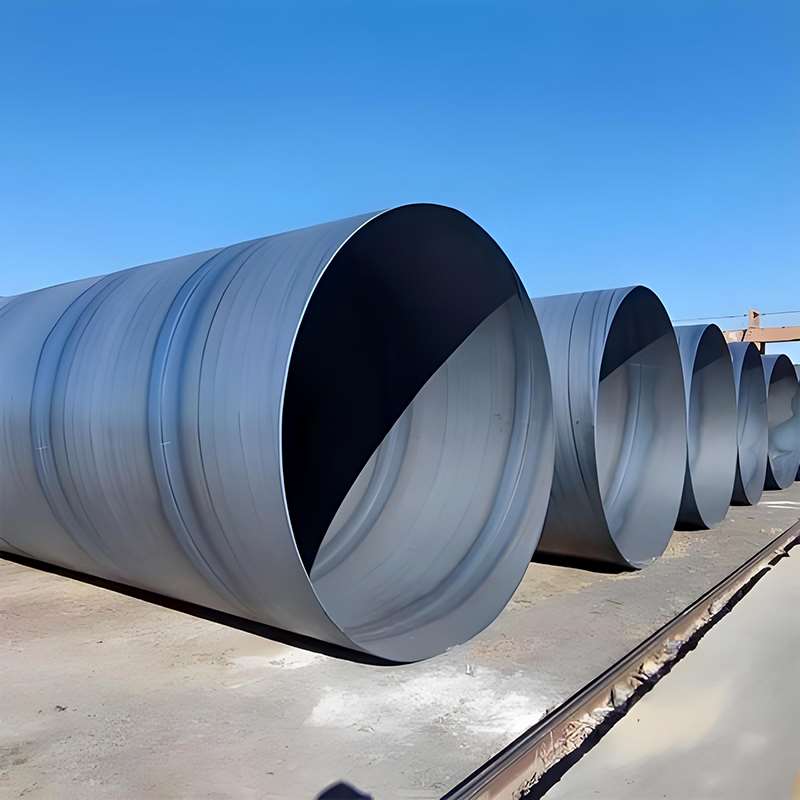
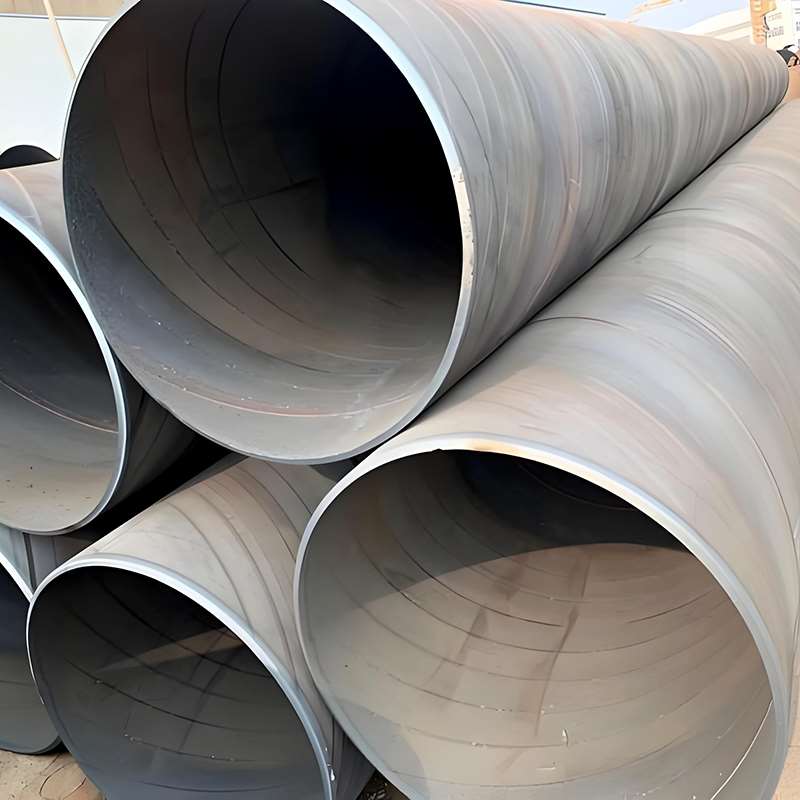
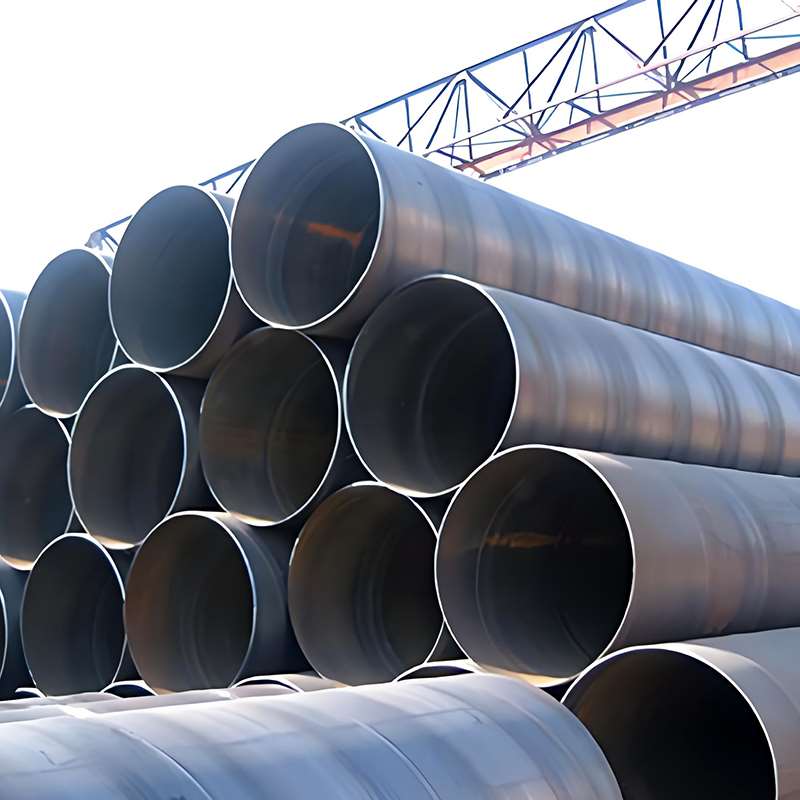
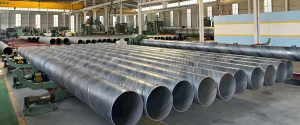
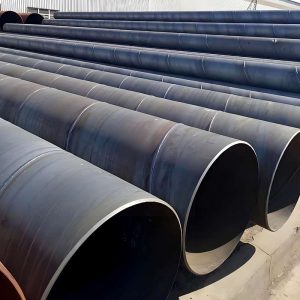
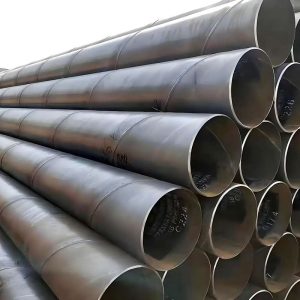
Carbon Steel Spiral Pipe

OD Range :

219mm – 3000mm

WT Range :

4mm – 40mm

Length :

6m – 12m

Tolerance :

Outer diameter ±2%, wall thickness ±10%

Material :

API 5L Gr.B / X42 – X70 / ASTM A252 Gr.1 – Gr.3

Standard :

API 5L, ASTM A252, EN 10217-1

Surface :

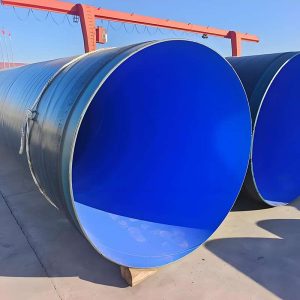
Black Paint, Hot-Dip Galvanizing, FBE Epoxy Coating

Application :

Oil and natural gas transmission pipelines, water conservancy projects, urban gas distribution networks, structural engineering

Introduction :

Spiral-welded carbon steel pipes (SSAW) are suitable for long-distance transportation of liquids or gases.

I. Overview of Carbon Steel Spiral Welded Pipes

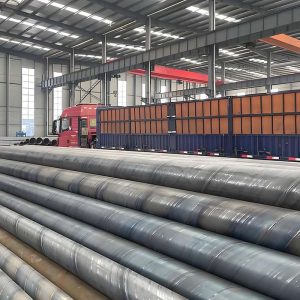
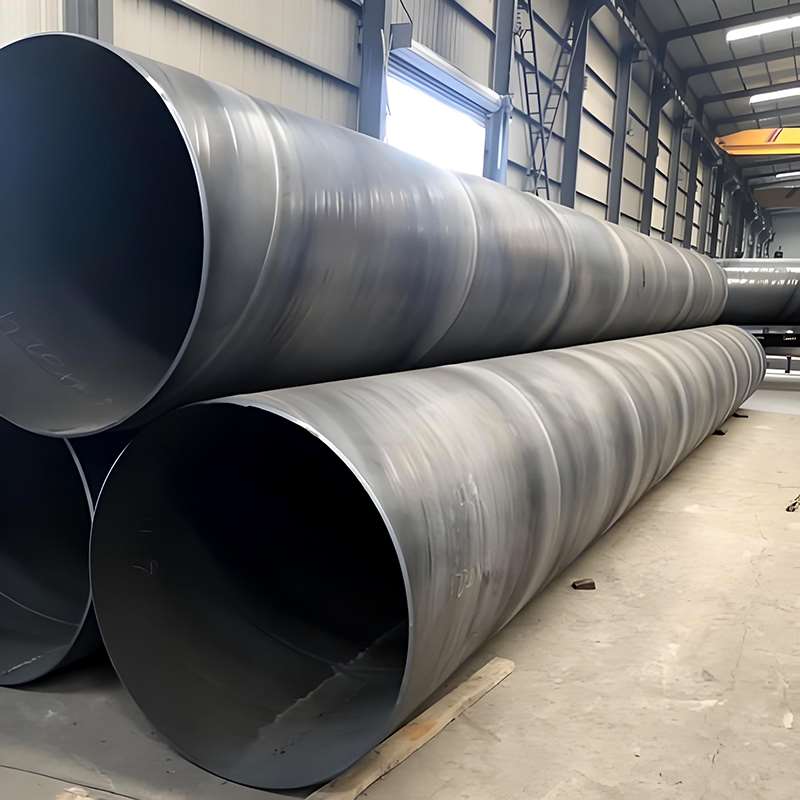
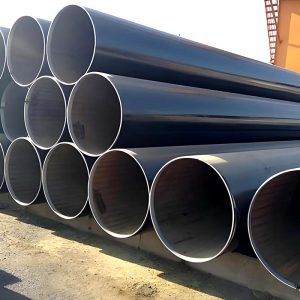
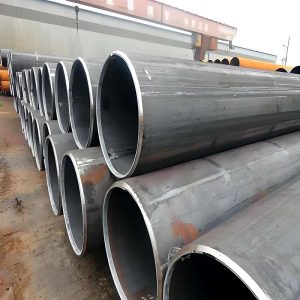
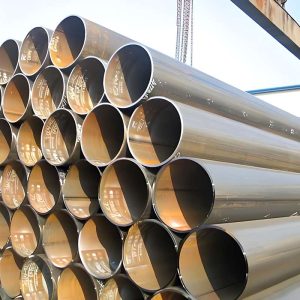
Carbon steel spiral pipes (SSAW) are manufactured from high-quality carbon steel using a spiral welding process and are widely used in long-distance transmission pipelines for oil and gas, water conservancy, and urban gas networks.
They feature uniform wall thickness, high strength, and excellent pressure resistance, and can be hot-dip galvanized or coated with epoxy as needed to enhance corrosion resistance.
Available in a wide range of sizes, these pipes meet the requirements of various engineering projects regarding diameter, length, and pressure-bearing capacity, making them an ideal choice for industrial transmission pipelines and structural engineering.

II. Chemical Composition and Mechanical Properties of Carbon Steel Spiral Welded Pipes

1. Chemical Composition Table (Common Grades: API 5L Gr. B / X42 – X70)

GradeC (%)Mn (%)P (%)S (%)Si (%)
API 5L Gr.B≤0.260.95≤0.03≤0.030.15–0.35
API 5L X42≤0.221.20≤0.03≤0.030.15–0.35
API 5L X52≤0.221.40≤0.03≤0.030.15–0.35
API 5L X60≤0.261.60≤0.03≤0.030.15–0.35
API 5L X65≤0.261.60–1.80≤0.03≤0.030.15–0.35
API 5L X70≤0.261.70–1.90≤0.03≤0.030.15–0.35

2. Mechanical Properties Table (API 5L Standard)

GradeYield Strength (MPa)Tensile Strength (MPa)Elongation (%)Applicable Pressure
API 5L Gr.B≥ 241415–550≥ 30Medium–Low pressure transmission
API 5L X42≥ 290415–530≥ 25Medium–Low pressure pipelines
API 5L X52≥ 345455–585≥ 22Medium pressure pipelines
API 5L X60≥ 414485–620≥ 20High pressure pipelines
API 5L X65≥ 448510–690≥ 18High-pressure long-distance pipelines
API 5L X70≥ 483540–710≥ 16High-strength, high-pressure pipelines

III. Selection Guide for Carbon Steel Spiral Welded Pipes

When selecting carbon steel spiral welded pipes, you should take into account the conveyed medium, pipeline pressure, length, environmental conditions, and budget. Detailed guidelines based on key factors are provided below:

1. Select the grade based on the conveyed medium

Medium TypeRecommended GradeDescription
WaterAPI 5L Gr.B / X42Medium–low pressure water supply and municipal pipelines
Natural GasAPI 5L X42 – X52Medium–low pressure gas pipelines with good weldability
Crude Oil / Petroleum ProductsAPI 5L X52 – X60Medium–high pressure long-distance pipelines with high strength
High-Pressure Oil & GasAPI 5L X60 – X70High-pressure long-distance pipelines with strong pressure resistance

2. Select wall thickness based on operating pressure and pipe length

  • Low- and medium-pressure pipes (≤4 MPa): Wall thickness options: 4–10 mm
  • Medium-pressure pipes (4–10 MPa): Wall thickness options: 10–20 mm
  • High-pressure pipes (>10 MPa): Wall thickness options: 20–40 mm

3. Select the surface finish based on the installation environment

Environmental ConditionRecommended Surface TreatmentDescription
Indoor, dry environmentBlack paintBasic corrosion protection
Outdoor, long-term exposureHot-dip galvanizingImproves corrosion resistance and extends service life
Corrosive media or soilFBE epoxy coatingExcellent corrosion protection, suitable for buried pipelines

4. Size Selection Guide

  • Outer Diameter Range: 219 mm – 3000 mm
  • Length: 6–12 m (custom lengths available)
  • Tolerances: Outer Diameter ±2%, Wall Thickness ±10%

5. Standards and Certifications

  • API 5L: Common standard for oil and gas transmission
  • ASTM A252 / EN 10217-1: Recommended for municipal, water, or industrial piping

6. Comprehensive Selection Recommendations

  • Identify the medium → Select the appropriate steel grade
  • Determine operating pressure and pipe length → Select the appropriate wall thickness
  • Assess environmental conditions → Determine surface corrosion protection
  • Confirm standard requirements → Ensure product acceptance
  • Budget and construction → Balance cost and ease of installation

IV. Installation and Usage Guide for Carbon Steel Spiral Welded Pipes

i. Precautions for Pipe Laying

  • Site Preparation: Clear the construction site before laying the pipes to ensure the ground is level, firm, and free of sharp objects to prevent damage to the pipes.
  • Support and Securing: Pipes should be evenly supported on brackets or supports to prevent bending or uneven stress distribution.
  • Slope Control: Pipelines carrying liquids should maintain an appropriate slope to facilitate drainage and emptying.
  • Transportation and Handling: Use lifting equipment or rollers for handling to avoid direct impact or dropping.

ii. Welding and Joining Methods

Common joining methods for carbon steel spiral welded pipes include:

Connection MethodDescriptionApplicable Scenario
Socket WeldingOne pipe end is inserted into another and welded for fixation; suitable for small-diameter or low-pressure pipelinesLow-pressure water supply, gas pipelines
Flanged ConnectionPipes are connected using flanges and bolts, allowing easy disassembly and maintenanceMedium to high-pressure pipelines, equipment connections
Butt WeldingPipe ends are directly aligned and welded; provides high strength, suitable for high-pressure and long-distance pipelinesOil & gas transmission, long-distance pipelines

Welding Precautions:

  • Ensure that the welding surfaces are clean and free of oil, rust, or moisture.
  • Welds should be uniform and continuous to prevent defects.
  • For high-strength pipe welding, it is recommended to use certified welders and approved welding procedures.

iii. Corrosion Prevention and Protection Recommendations

  1. Pipe Surface Treatment:
  • Indoor or dry environments: Apply black paint
  • Outdoor exposed environments: Hot-dip galvanizing or fluidized bed epoxy (FBE) coating
  • Buried pipes or corrosive environments: FBE epoxy coating + external protective layer is recommended
  1. Protective Measures:
  • Avoid impacts and scratches to the coating during pipeline transportation and installation
  • For buried pipelines, keep the trench dry and inspect the coating for integrity before backfilling
  • Regularly inspect the pipeline coating and supports to promptly detect corrosion or damage
Related Products

Nominal Size (inch) Outer Diameter (mm) Wall Thickness (mm) Theoretical Weight (kg/m) Tolerance
8″ 219 4, 5, 6, 7, 8, 9, 10 20.0 – 48.0 OD ±2%, WT ±10%
10″ 273 4, 5, 6, 7, 8, 9, 10, 12 24.0 – 62.0 OD ±2%, WT ±10%
12″ 323 4, 5, 6, 7, 8, 9, 10, 12, 14 28.0 – 80.0 OD ±2%, WT ±10%
14″ 355 5, 6, 7, 8, 9, 10, 12, 14, 16 35.0 – 95.0 OD ±2%, WT ±10%
16″ 406 5, 6, 7, 8, 9, 10, 12, 14, 16, 18 40.0 – 120.0 OD ±2%, WT ±10%
18″ 457 6, 7, 8, 9, 10, 12, 14, 16, 18, 20 50.0 – 150.0 OD ±2%, WT ±10%
20″ 508 6, 7, 8, 9, 10, 12, 14, 16, 18, 20, 22 55.0 – 180.0 OD ±2%, WT ±10%
24″ 610 8, 9, 10, 12, 14, 16, 18, 20, 22, 24 75.0 – 260.0 OD ±2%, WT ±10%
30″ 762 10, 12, 14, 16, 18, 20, 22, 24, 26 120.0 – 400.0 OD ±2%, WT ±10%
36″ 914 12, 14, 16, 18, 20, 22, 24, 26, 28, 30 180.0 – 580.0 OD ±2%, WT ±10%
40″ 1016 14, 16, 18, 20, 22, 24, 26, 28, 30, 32 220.0 – 700.0 OD ±2%, WT ±10%
48″ 1219 16, 18, 20, 22, 24, 26, 28, 30, 32, 34, 36 320.0 – 1000.0 OD ±2%, WT ±10%
60″ 1524 18, 20, 22, 24, 26, 28, 30, 32, 34, 36, 38, 40 450.0 – 1450.0 OD ±2%, WT ±10%


Standard Type Standard No. / Name Applicable Scope and Description
API Standard API 5L Oil and gas transmission pipelines, covering pressure and strength requirements
ASTM Standard ASTM A252 / ASTM A135 / ASTM A139 Industrial pipelines, structural/support pipes, and general transmission pipelines; suitable for medium–low pressure applications
EN Standard EN 10217-1 Steel pipes for European industrial and municipal engineering; includes welded pipes and structural pipes
GB / China Standard GB/T 9711 Chinese standard for long-distance oil and gas pipelines and spiral steel pipes
ISO Standard ISO 3183 International standard for oil and gas pipelines; applicable for design and inspection

Note:

  • API 5L is the most commonly used international standard for oil and gas pipelines, covering requirements for spiral-welded pipes (SSAW) and electric resistance welded pipes (ERW).
  • ASTM standards are suitable for industrial, construction, and municipal engineering applications, with an emphasis on general transportation and support purposes.
  • EN and ISO standards facilitate exports to European and international markets and meet global quality requirements.
  • GB/T 9711 is a Chinese national standard that provides guidance on material grades, wall thicknesses, and welding requirements.


Process Description
1. Raw Material Preparation Select high-quality carbon steel coils; check chemical composition and mechanical properties to ensure compliance with API/ASTM standards
2. Uncoiling & Cutting Uncoil and level the steel coil, then cut it into strips according to the required pipe diameter
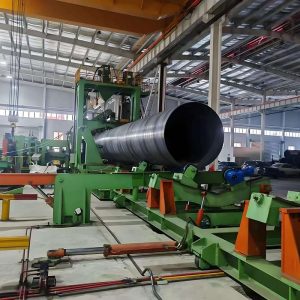
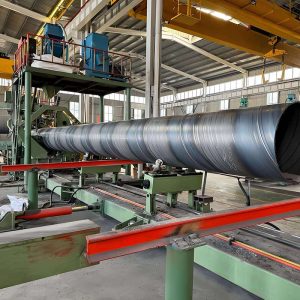
3. Forming Form the steel strip into a round pipe blank along a spiral direction using a forming machine, creating the spiral angle
4. Welding Use automatic Submerged Arc Welding (SAW) to weld the seam, ensuring a strong and uniform weld
5. Dimensional Correction Adjust outer diameter and straightness using a straightening machine to ensure uniform wall thickness
6. Non-Destructive Testing (NDT) Perform radiographic or ultrasonic testing on the weld seam to ensure it meets quality standards
7. Surface Treatment Apply black paint, anti-rust oil, hot-dip galvanizing, or FBE epoxy coating to improve corrosion resistance
8. Cutting to Length Cut pipes to the required length (usually 6–12 m, customizable)
9. End Finishing Process pipe ends into socket, flange, or welding ends for easy installation
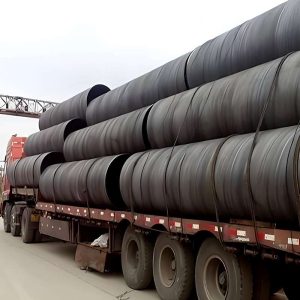
10. Packaging & Storage Secure with wooden pallets or steel straps to prevent damage during transportation; store or deliver to the project site
Inspection Item Test Method Standard Value / Requirement Applicable Standards
Chemical Composition Spectral analysis / Chemical analysis C, Mn, P, S, Si content shall meet grade requirements API 5L, ASTM, GB/T 9711
Yield Strength Tensile test ≥ specified value of the grade (MPa) API 5L, ASTM, GB/T 9711
Tensile Strength Tensile test ≥ specified value of the grade (MPa) API 5L, ASTM, GB/T 9711
Elongation Tensile test ≥ specified value of the grade (%) API 5L, ASTM, GB/T 9711
Weld Quality Radiographic Testing (RT) / Ultrasonic Testing (UT) No cracks, lack of fusion, porosity, or weld defects API 5L, ASTM, EN 10217
Outer Diameter & Wall Thickness Diameter measurement, ultrasonic thickness measurement OD ±2%, WT ±10% API 5L, ASTM, GB/T 9711
Bending Performance Bending test No cracking or delamination API 5L, ASTM, GB/T 9711
Hardness Rockwell or Brinell hardness test ≤ specified value of the grade ASTM, GB/T 9711
Coating Thickness (FBE / Galvanizing) Coating thickness gauge FBE ≥ 250 μm, Hot-dip galvanizing ≥ 60 μm ISO 21809, ASTM
Hydrostatic Test Hydrostatic or pneumatic test No leakage under pressure API 5L, ASTM, GB/T 9711
Foreign Material Inspection Visual inspection or ultrasonic testing No welding slag, sand, or foreign materials inside the pipe API 5L, ASTM


FAQ on Selecting Carbon Steel Spiral Welded Pipes

1. Q: What is the difference between carbon steel spiral welded pipes (SSAW) and straight seam welded pipes (ERW), and when should each be chosen?

A:
Differences: SSAW pipes feature spiral welds and are suitable for large-diameter, long-distance transmission pipelines; ERW pipes feature straight-seam welds and are suitable for small- to medium-diameter, short-distance, or low-pressure pipelines.
Selection Recommendations:
Large-diameter, long-distance oil and gas pipelines → Prioritize SSAW to enhance structural strength and reduce costs.
Small- to medium-diameter, low-pressure applications → ERW pipes offer easier installation and lower costs.

2. Q: Why are different steel grades (X42/X52/X60) required for the same pipeline project? How should they be selected?

A:
The steel grade determines strength and pressure resistance: the higher the grade, the higher the yield strength and tensile strength, making it suitable for pipelines operating at higher pressures.
Selection principles:
Calculate the required strength based on the design pressure.
Consider pipeline length and terrain conditions; higher steel grades are recommended for long-distance pipelines.
Higher steel grades are more expensive, so project budgets must be balanced.

3. Q: How should the outer diameter and wall thickness of a pipe be selected? Is a thicker wall always better?

A:
Outer diameter selection: Calculate based on the flow rate and velocity to ensure the pipe meets the design flow capacity.
Wall thickness selection: Must meet working pressure and welding process requirements. Excessive thickness increases costs and construction difficulty, while insufficient thickness may result in inadequate pressure resistance.
Practical tip: Select standard wall thickness based on pressure rating and length; optimize through pipe strength calculations if necessary.

4. Q: How should corrosion protection methods be selected for buried and above-ground pipelines?

A:
Buried pipelines: Prioritize FBE epoxy coating + corrosion-resistant casing or sand backfill to ensure long-term corrosion resistance.
Above-ground pipelines: Hot-dip galvanizing or epoxy coating may be used, depending on climate and environmental corrosiveness.
Note: Avoid scratching the coating during transportation and construction, as this will significantly reduce the effectiveness of the corrosion protection.

5. Q: Are different standards (API, ASTM, EN, GB) interchangeable?

A:
Principle: Different standards vary in chemical composition, mechanical properties, and tolerances, so they are not fully interchangeable.
Practical Recommendations:
Use GB/T 9711 for domestic projects; refer to API 5L or EN 10217-1 for export or international projects.
Confirm project specification requirements before procurement to avoid acceptance issues caused by non-compliance with standards.

6. Q: What are some common issues with welding and installation in long-distance pipelines?

A:
Common Issues: Uneven welds, weld cracks, pipe deformation, and leaks at joints.
Solutions:
Use qualified welders and strictly follow welding procedures.
Conduct radiographic or ultrasonic testing after welding to ensure weld quality.
Use supports to evenly bear the load during pipe laying to prevent sagging or deformation.
Inspect the integrity of the pipe’s anti-corrosion coating before installation and repair it on-site if necessary.