
I. Standard Overview
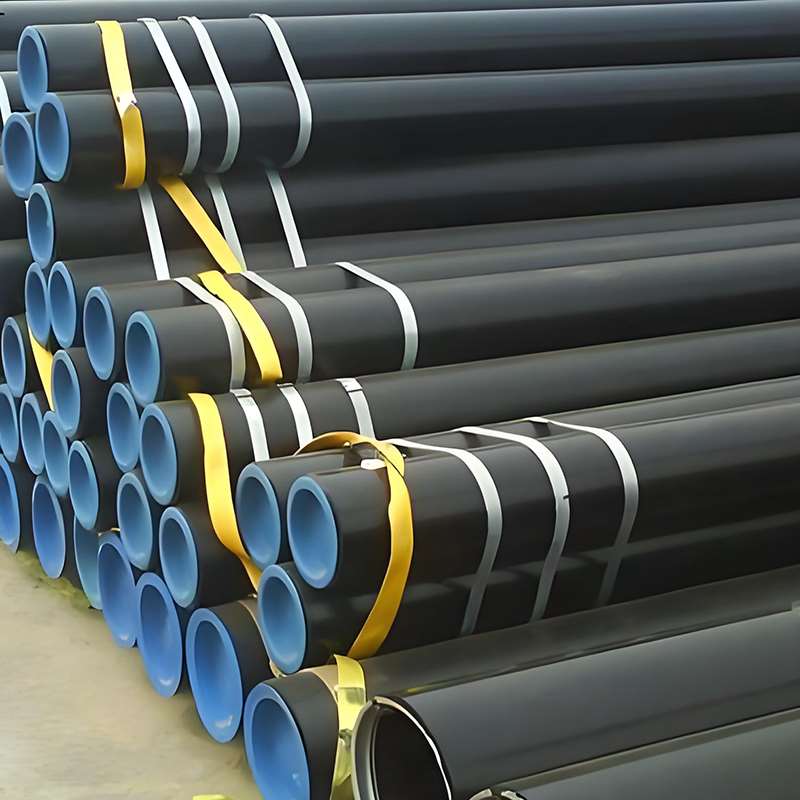
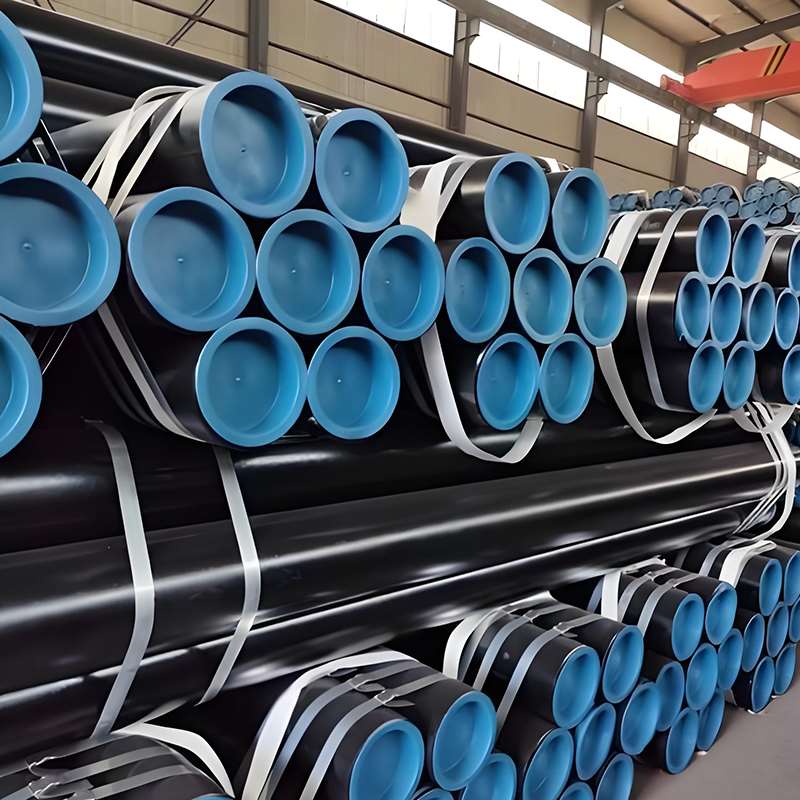
ASTM A106 is a standard for seamless pipes used in high-temperature services. It primarily specifies the manufacturing, chemical composition, mechanical properties, and inspection requirements for the pipes.
ASTM A106 covers only seamless steel pipes, classifying them into Grade A, Grade B, and Grade C based on performance and strength. Different grades are suitable for different temperature and pressure conditions.
This standard is suitable for various industrial boilers, heat exchange equipment, steam pipelines, and high-temperature fluid transport systems, and is one of the most commonly used pipe specifications in high-temperature piping engineering.
II. Material and Mechanical Properties
ASTM A106 seamless pipes are classified into Grade A, Grade B, and Grade C. Each grade has specific requirements for chemical composition and mechanical properties to ensure the reliability of the pipes under high temperature and high pressure environments.
i. Chemical Composition (Main Elements)
| Grade | Carbon (C) | Manganese (Mn) | Phosphorus (P) | Sulfur (S) | Silicon (Si) |
|---|---|---|---|---|---|
| Grade A | ≤ 0.30% | 0.29–1.06% | ≤ 0.035% | ≤ 0.035% | 0.10–0.35% |
| Grade B | ≤ 0.30% | 0.29–1.06% | ≤ 0.035% | ≤ 0.035% | 0.10–0.35% |
| Grade C | ≤ 0.35% | 0.29–1.06% | ≤ 0.035% | ≤ 0.035% | 0.10–0.35% |
ii. Mechanical properties
| Grade | Yield Strength (MPa) | Tensile Strength (MPa) | Elongation (%) |
| Grade A | ≥ 205 | 330–480 | ≥ 30 |
| Grade B | ≥ 240 | 415–540 | ≥ 25 |
| Grade C | ≥ 260 | 455–590 | ≥ 20 |
Note: Specific values may vary depending on pipe diameter and wall thickness. Users should refer to actual working conditions when selecting a model.
III. Specifications and Dimensions
ASTM A106 seamless carbon steel pipes are commonly used for transporting high-temperature steam, oil, and natural gas. A variety of pipe specifications are available, covering different diameters and wall thicknesses to meet diverse operating conditions. The table below lists the commonly used specification ranges:
| NPS (inch) | Outer Diameter OD (mm) | Wall Thickness Range WT (mm) | Standard Length (m) | Theoretical Weight Range (kg/m) |
|---|---|---|---|---|
| 1/2″ | 21.3 | 2.11–2.87 | 6–12 | 2.5–3.2 |
| 3/4″ | 26.7 | 2.11–3.38 | 6–12 | 3.2–4.3 |
| 1″ | 33.4 | 2.77–4.55 | 6–12 | 4.3–6.0 |
| 1 1/4″ | 42.2 | 2.87–4.85 | 6–12 | 5.4–7.6 |
| 1 1/2″ | 48.3 | 2.77–5.54 | 6–12 | 6.2–9.1 |
| 2″ | 60.3 | 3.91–6.02 | 6–12 | 9.0–12.7 |
| 2 1/2″ | 73.0 | 4.19–7.11 | 6–12 | 12.5–17.0 |
| 3″ | 88.9 | 4.57–7.62 | 6–12 | 16.2–23.0 |
| 4″ | 114.3 | 4.78–9.53 | 6–12 | 22.6–33.7 |
| 6″ | 168.3 | 6.35–12.70 | 6–12 | 40.0–64.0 |
| 8″ | 219.1 | 7.11–15.09 | 6–12 | 61.0–96.0 |
| 10″ | 273.0 | 7.11–17.48 | 6–12 | 83.0–130.0 |
| 12″ | 323.9 | 7.92–19.05 | 6–12 | 104.0–168.0 |
IV. Production Process and Characteristics
i. ASTM A106 Seamless Pipe Manufacturing Process (Hot Rolling/Cold Drawing)
Bill Preparation → Heating → Piercing → Hot Rolling/Drawing → Annealing or Normalizing → Cold Drawing and Shaping (Optional) → Straightening → Cutting → Inspection → Packaging and Shipping
Billet Preparation: Select carbon steel round bars or ingots that meet the chemical composition requirements.
Heating: Heat the billet to a suitable high temperature for deformation.
Piercing: Pierce the core through a piercing machine to form a tube.
Hot Rolling/Drawing: After heating, hot roll or draw the tube to the finished size.
Annealing or Normalizing: Improve the microstructure, toughness, and machinability.
Cold Drawing (Optional): Used to improve dimensional accuracy and surface finish.
Straightening: Ensure the straightness of the tube.
Cutting: Cut to standard or fixed lengths according to customer requirements.
Inspection: Perform chemical composition, mechanical properties, dimensional, surface defects, and non-destructive testing (such as UT) checks.
Packaging and Shipping: Finished tubes are packaged according to standard packaging for easy transportation and on-site installation.
ii. Process Characteristics and Their Impact on Performance
Seamless: High pressure resistance, suitable for high-temperature and high-pressure conditions.
Hot-rolled: Stable mechanical properties, suitable for medium and large diameter pipelines.
Cold-drawn: High dimensional accuracy and smooth surface, suitable for small-diameter, high-precision pipelines.
Heat treatment: Improves toughness and tensile strength, ensuring long-term high-temperature stability of the pipeline.
V. Application Scenarios and Selection Recommendations
1. Oil and Gas Transportation
Operating Conditions: Involves the transportation of high-pressure crude oil or refined petroleum products.
- Pipelines may traverse environments with significant temperature variations and must withstand dynamic pressure surges from the internal fluid.
Selection Recommendations:
- Grade Selection: ASTM A106 Grade B is recommended as the top choice, offering the best balance of cost and performance. Its strength (tensile strength ≥ 415 MPa) is sufficient to meet the requirements of most long-distance transmission pipelines.
- Wall Thickness Specifications: Should be strictly calculated based on the pressure rating (Schedule), typically using Sch 40 or Sch 80.
2. Power Plants and Boiler Systems
Operating Conditions:
- Extremely high-temperature environments (typically between 350°C and 450°C).
- Transportation of superheated steam, feedwater, or condensate, which places extremely high demands on the creep strength and thermal expansion stability of steel pipes.
Selection Recommendations:
- Grade Selection: If the operating temperature approaches the upper limit (approximately 425°C or higher), Grade C is recommended. This grade has a higher carbon and manganese content, providing greater tensile strength (≥ 485 MPa).
- Surface Treatment: For boiler tubes, acid pickling to remove scale or anti-corrosion treatment is recommended to ensure a smooth inner wall and reduce flow resistance.
3. Process Piping for Chemical and Refinery Plants
Operating Conditions:
- The process media are somewhat corrosive and subject to frequent pressure fluctuations.
- Reaction processes such as cracking and hydrogenation must be conducted at high temperatures.
Selection Recommendations:
- Grade Selection: Grade B is commonly used.
- Special Treatment: For corrosive environments, although A106 is carbon steel, it is recommended to apply 3PE (three-layer polyethylene) or FBE (fusion-bonded epoxy powder) anti-corrosion coatings to extend service life in buried or outdoor environments.
4. Mechanical Structures and Shipbuilding
Operating Conditions:
- Serving as a load-bearing structural component or a circulating system within a pressure vessel.
- The pipes require excellent mechanical properties and good weldability to prevent brittle fracture under vibration.
Selection Recommendations:
- Processing Recommendations: A106 offers good cold bending and flanging performance (bending performance). For structures requiring large-angle bending, Grade B is the ideal choice.
- Inspection Requirements: NDT (non-destructive testing), such as ultrasonic or eddy current testing, is recommended to ensure no hidden defects are present when welded to the structural component.
VI. ASTM A106 Seamless Steel Pipe Testing Standard
| Inspection Category | Inspection Item | Method / Standard | Acceptable Parameters / Criteria |
|---|---|---|---|
| Chemical Composition | Carbon (C) | Spectroscopy / Chemical Analysis | Grade A/B ≤ 0.30%, Grade C ≤ 0.35% |
| Manganese (Mn) | Spectroscopy / Chemical Analysis | 0.29–1.06% | |
| Phosphorus (P) | Spectroscopy / Chemical Analysis | ≤ 0.035% | |
| Sulfur (S) | Spectroscopy / Chemical Analysis | ≤ 0.035% | |
| Silicon (Si) | Spectroscopy / Chemical Analysis | 0.10–0.35% | |
| Mechanical Properties | Yield Strength | Tensile Test | Grade A ≥ 205 MPa, Grade B ≥ 240 MPa, Grade C ≥ 260 MPa |
| Tensile Strength | Tensile Test | Grade A 330–480 MPa, Grade B 415–540 MPa, Grade C 455–590 MPa | |
| Elongation (%) | Tensile Test | Grade A ≥ 30%, Grade B ≥ 25%, Grade C ≥ 20% | |
| Dimensional & Visual | Outer Diameter (OD) / Wall Thickness (WT) | Vernier Caliper / Steel Ruler | Meet nominal size ± standard tolerance |
| Length | Steel Ruler / Tape Measure | According to order ± tolerance | |
| End Treatment | Visual / Standard Inspection | Plain End / Beveled End | |
| Surface Defects | Visual / Standard Inspection | No cracks, pits, or obvious scratches | |
| Non-Destructive Testing | Pipe Body & Critical Areas | Ultrasonic Testing (UT) | No cracks, laminations, porosity, or defects |
| Surface Defects | Magnetic Particle Testing (MT) / Penetrant Testing (PT) | No defects in welded or machined areas | |
| Pressure Test | Hydrostatic / Pneumatic Test | Hydrostatic Test / Pneumatic Test | Pass sampling according to design pressure rating |
VII. FAQ
1. What is the fundamental difference between ASTM A106 Grades A, B, and C?
Answer:
The key difference lies in the variations in mechanical strength resulting from differences in chemical composition (carbon and manganese content).
- Grade A: Lowest carbon content (≤ 0.25%), offering low strength but excellent ductility, making it suitable for specialized processes requiring deep cold bending or flanging.
- Grade B: The most versatile grade (carbon ≤ 0.30%). It strikes a perfect balance between strength (tensile strength ≥ 415 MPa) and formability, accounting for over 90% of the market share.
- Grade C: Highest carbon and manganese content, offering the highest strength (tensile strength ≥ 485 MPa), but relatively hard, potentially requiring stricter preheating during welding.
2. Are ASTM A106 and ASTM A53 truly interchangeable?
Answer:
This is one of the most common questions in the industry.
- The conclusion is: A106 can cover A53, but A53 cannot fully replace A106.
- Differences in Application: A106 is specifically designed for high-temperature environments (up to 425°C), while A53 is primarily used for atmospheric pressure and general fluid conveyance.
- Manufacturing Process: A106 must be manufactured as seamless pipe, whereas A53 includes both electric resistance welded (ERW) and seamless varieties.
- Chemical Requirements: A106 mandates “killed steel” treatment, meaning it contains fewer internal impurities and is more stable at high temperatures. If a contract specifies A106, it must never be substituted with A53.
3. What are the limitations of using ASTM A106 Seamless Pipe at high temperatures?
Answer:
Although A106 is marketed as a high-temperature pipe, it has one critical weakness:
- Tendency to graphitize: When used for extended periods in environments above 427°C (800°F), the carbides in carbon steel may transform into graphite. This causes the steel to become brittle and prone to sudden fracture.
- Recommendation: If operating temperatures consistently exceed 425°C, it is recommended to upgrade to alloy steel pipes from the ASTM A335 series (such as P11 or P22), which contain chromium and molybdenum and effectively resist graphitization.
4. Why do ASTM A106 Seamless Pipe usually look black? Do they require corrosion protection?
Answer:
Reason for the black color: A106 pipes typically leave the factory coated with a layer of black paint (Black Vanish) or varnish. This is primarily to prevent surface rust during shipping and storage, and is not intended as permanent corrosion protection.
- Corrosion Protection Recommendations: For underground applications, high-salt-fog environments, or chemical environments, black paint is insufficient. Additional treatment is usually required depending on the environment:
- Outer Wall: 3PE coating, epoxy coal tar, or hot-dip galvanizing.
- Inner Wall: Epoxy resin coating or cement mortar lining to prevent erosion corrosion of the pipe wall caused by the flowing fluid.
5. How can you identify high-quality ASTM A106 Seamless Pipe with the naked eye or using simple methods?
Answer:
Although strict determination requires physical testing (tensile testing) and chemical composition analysis, you can pay attention to the following details during procurement:
- Inner wall smoothness: Genuine seamless steel pipes have no weld seams on the inner wall (even ground weld seams usually exhibit subtle color differences).
- Wall Thickness Uniformity: High-quality A106 steel pipes have high concentricity, so one side will not be extremely thick while the other is extremely thin.
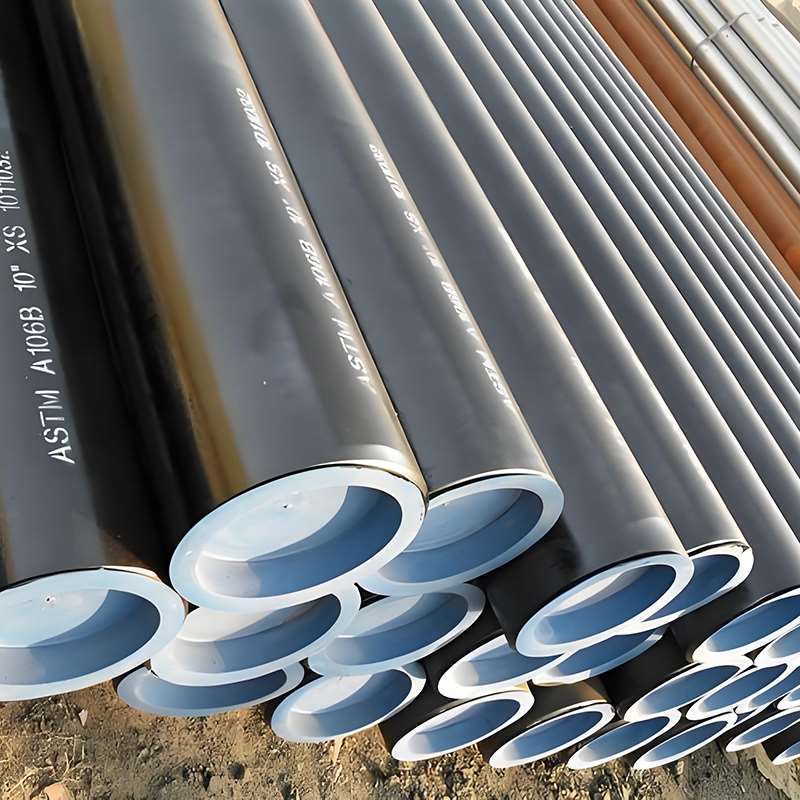
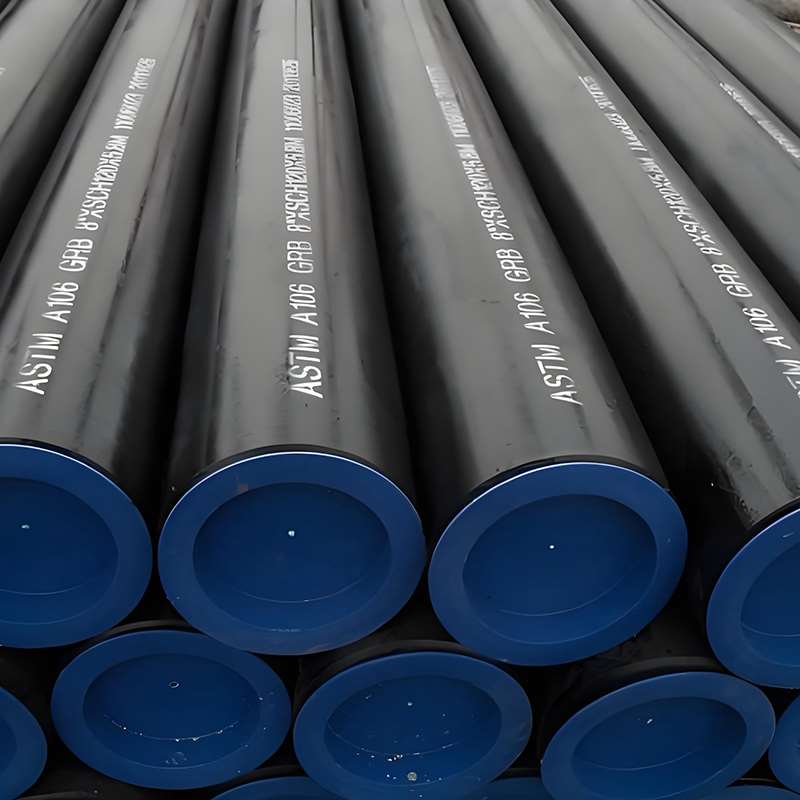
- End Markings: Reputable manufacturers will clearly spray-paint the standard, grade, specification (e.g., ASTM A106 Gr.B SCH40), heat number (Heat No.), and manufacturer’s logo.
- Material Test Certificate (MTC): The manufacturer must provide a material test certificate compliant with EN 10204 3.1. Verify the proportions of carbon (C), manganese (Mn), and silicon (Si) in the chemical composition.
6. What are the welding properties of ASTM A106 Seamless Pipe? Are there any precautions to take?
Answer:
A106 Grade B has excellent welding properties and falls within the typical range of low-carbon steel welding.
- Welding consumables: E7018 electrodes or ER70S-6 welding wire are typically used, as the strength of these consumables is perfectly matched to that of A106.
- Effect of Wall Thickness: If the pipe wall thickness exceeds 20 mm (heavy-wall pipes), preheating (approximately 100–150°C) is recommended prior to welding to prevent weld cracks.
- Groove Preparation: Use a V-groove to ensure proper root fusion, which is critical for the safety of high-pressure systems.