
Buried steel pipelines are continuously exposed to soil moisture, microorganisms, acids, alkalis, salts, and stray electrical currents throughout their service life. Selecting the right external anti-corrosion coating is therefore one of the most important decisions affecting pipeline durability and long-term operating costs.
Today, three external coating systems are widely recognized and used worldwide for buried steel pipelines. The best choice depends on the project budget, pipe diameter, operating conditions, and soil environment.
I. 3PE Coating (Three-Layer Polyethylene Coating)
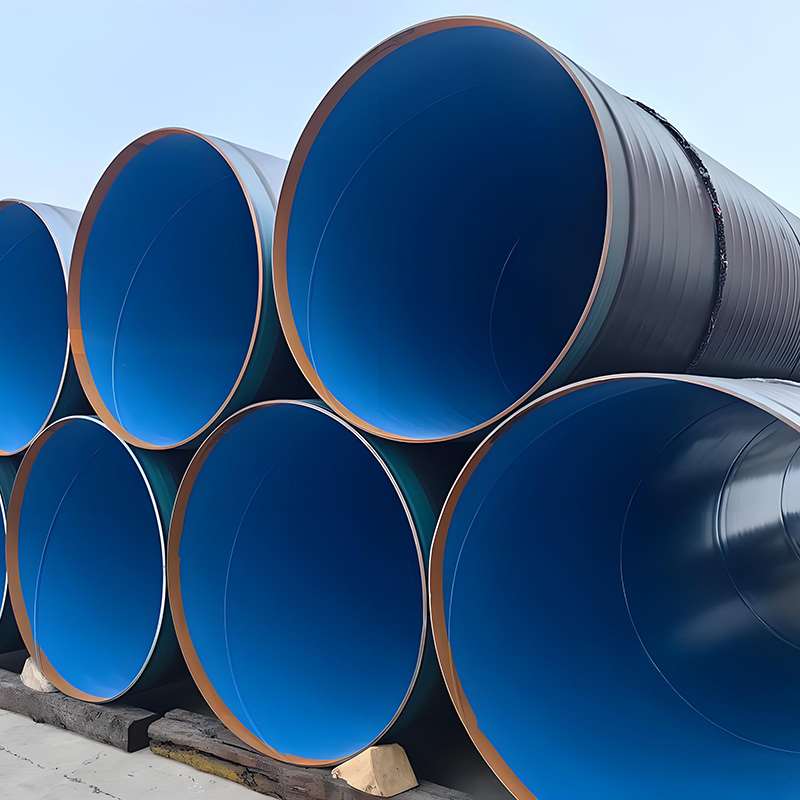
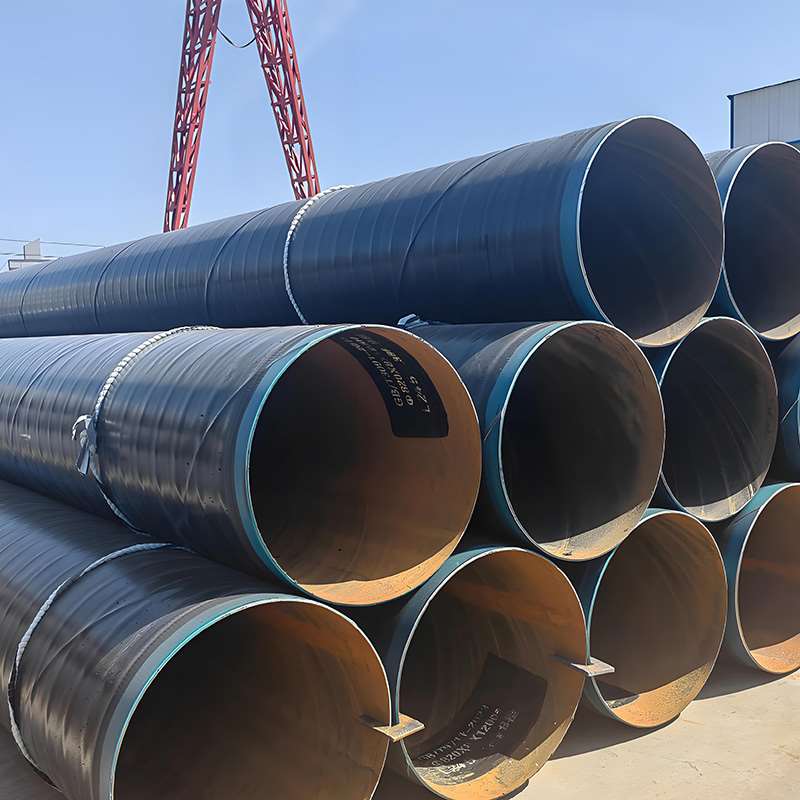
3PE coating is the industry’s preferred solution for buried oil & gas pipelines and high-pressure water transmission systems. It combines the excellent corrosion resistance of fusion-bonded epoxy with the superior mechanical protection of polyethylene.
Coating Structure (Inside to Outside)
Fusion Bonded Epoxy (FBE) Primer
A minimum thickness of 100 μm. The epoxy layer is bonded directly to the steel surface, providing outstanding corrosion resistance and excellent resistance to cathodic disbondment.
Adhesive Layer (AD)
A copolymer adhesive layer, typically 170–250 μm thick, permanently bonds the epoxy primer to the polyethylene outer layer.
High-Density Polyethylene (HDPE) Outer Layer
Typically 1.5–3.0 mm thick, the HDPE layer provides excellent mechanical protection against soil stress, impact damage, plant root penetration, and moisture while delivering outstanding electrical insulation.
Typical Applications
- Long-distance oil and gas transmission pipelines
- Cross-country and cross-border pipeline projects
- Buried municipal water transmission mains
- High-pressure underground water pipelines
Key Advantages
- Excellent electrical insulation
- Outstanding mechanical strength
- Superior resistance to soil stress and underground corrosion
- Long service life under harsh burial conditions
Limitations
Standard 3PE coating is generally recommended for continuous operating temperatures below 70°C. High-temperature modified 3PE systems are available but are considerably more expensive.
II. FBE (Fusion Bonded Epoxy Coating)
Fusion Bonded Epoxy (FBE) is a thermosetting powder coating that is electrostatically applied to steel pipes preheated to temperatures above 200°C, where it melts and chemically cures to form a highly adherent protective layer.
FBE coatings are available in both single-layer and dual-layer systems.
Typical Applications
- Pipelines operating at elevated temperatures
- Oil and gas projects in hot, dry climates such as the Middle East and Africa
- Pipeline crossing sections
- Large fittings, elbows, and fabricated components
Key Advantages
- Excellent adhesion to steel
- Outstanding resistance to cathodic disbondment
- Superior high-temperature performance
- Good long-term corrosion protection
Limitations
FBE coatings are relatively thin, typically measured in microns rather than millimeters. Consequently, their resistance to mechanical impact and abrasion is significantly lower than that of 3PE coatings.
For buried pipelines installed in rocky backfill or areas containing sharp stones, a single-layer FBE coating alone is generally not recommended without additional mechanical protection.
III. Liquid Epoxy Coating: A Cost-Effective Solution for Large-Diameter Pipes and Complex Fittings
For large-diameter steel pipes—particularly large-diameter SSAW steel pipes—or irregular fittings that cannot be processed through an automatic coating production line, liquid epoxy coating provides a practical and economical corrosion protection solution.
These coatings are typically manufactured in accordance with AWWA C210 or EN 10289.
Coating Structure
Liquid epoxy systems generally consist of a two-component heavy-duty epoxy coating applied by spray or brush. Typical dry film thickness ranges from 400 to 600 μm.
Typical Applications
- Municipal buried water transmission and drainage pipelines
- Field joint coating after pipeline welding
- Corrosion protection for fittings, reducers, bends, and other fabricated components
Key Advantages
- Highly flexible application process
- Suitable for both factory and field application
- No large heating or automated coating line required
- Lower equipment investment and production cost
Limitations
Because curing takes place under ambient conditions, coating performance can be affected by temperature and humidity during application.
Compared with 3PE and FBE systems, liquid epoxy coatings generally offer lower coating density, reduced abrasion resistance, and weaker protection against mechanical damage, making them less suitable for severe underground service conditions.
IV. Quantitative Comparison Table of External Anti-corrosion Coatings for Buried Steel Pipes
| Property / Key Performance Indicator | 3PE Coating (DIN 30670 / GB/T 23257) | Fusion Bonded Epoxy (FBE) Coating (API RP 5L9 / AWWA C213) | Liquid Epoxy Heavy-Duty Coating (AWWA C210 / EN 10289) |
|---|---|---|---|
| Design Service Life | 30–50 years | 25–40 years | 15–25 years |
| Typical Total Coating Thickness | 2.5–3.7 mm (depending on pipe diameter and coating class) | 0.35–0.52 mm (350–520 μm) | 0.40–0.60 mm (400–600 μm) |
| Maximum Continuous Operating Temperature | ≤ 70°C (up to 80°C with modified polyethylene) | ≤ 115°C (excellent high-temperature resistance) | ≤ 75°C (depending on curing agent formulation) |
| Impact Resistance | ≥ 15 J/mm (excellent mechanical protection and high resistance to rock impact) | ≥ 3.0 J (hard but relatively brittle coating) | ≥ 1.5 J (more susceptible to scratches and mechanical damage) |
| Cathodic Disbondment Resistance (28 days at 20°C) | ≤ 7 mm | ≤ 4.5 mm (strongest adhesion to the steel substrate) | ≤ 8.5 mm |
| Electrical Insulation Resistance | ≥ 1 × 10⁸ Ω·m² | ≥ 1 × 10⁷ Ω·m² | ≥ 1 × 10⁶ Ω·m² |
| Application Flexibility | Factory-applied only using dedicated coating production lines. Field application is not possible; suitable only for straight pipes. | Approximately 95% of applications are factory-applied by electrostatic powder spraying. More difficult to apply on elbows and complex fittings. | Can be applied both in the factory and on-site by spray or brush. Ideal for complex fittings, valves, and irregular components. |
| Relative Overall Cost | High (approximately 1.6–2.2× the cost of liquid epoxy coating) | Medium (approximately 1.3–1.5× the cost of liquid epoxy coating) | Low (lower material cost and minimal on-site equipment investment) |