
I. Standard Overview
GB/T 3087 “Boiler Steel Tubes” is a key Chinese standard for seamless steel tubes used in low- and medium-pressure boilers. It primarily specifies the technical requirements, dimensional ranges, chemical composition, mechanical properties, and testing methods for steel tubes used in boilers and related equipment.
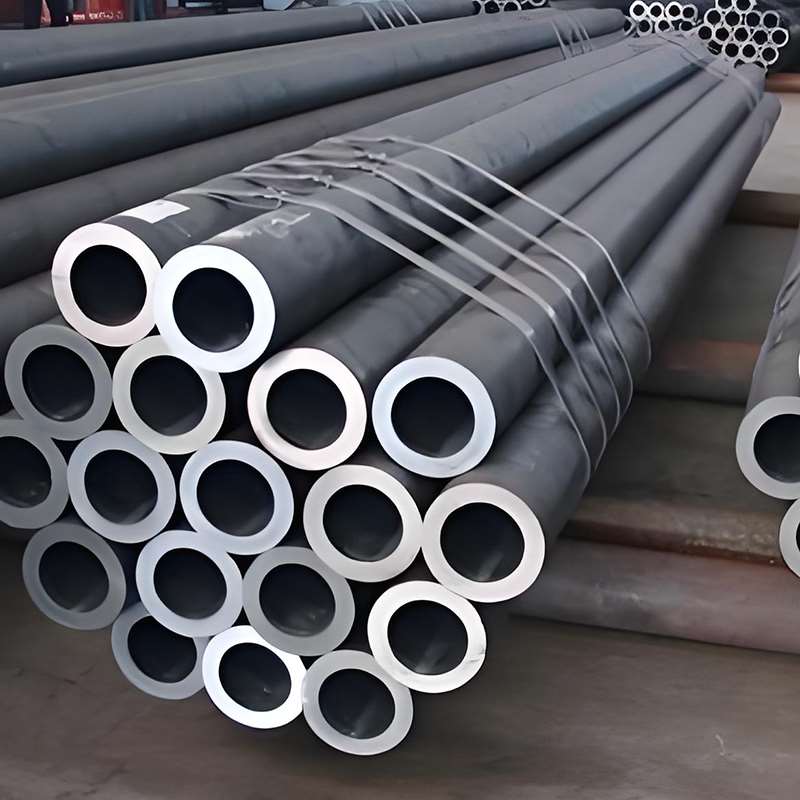
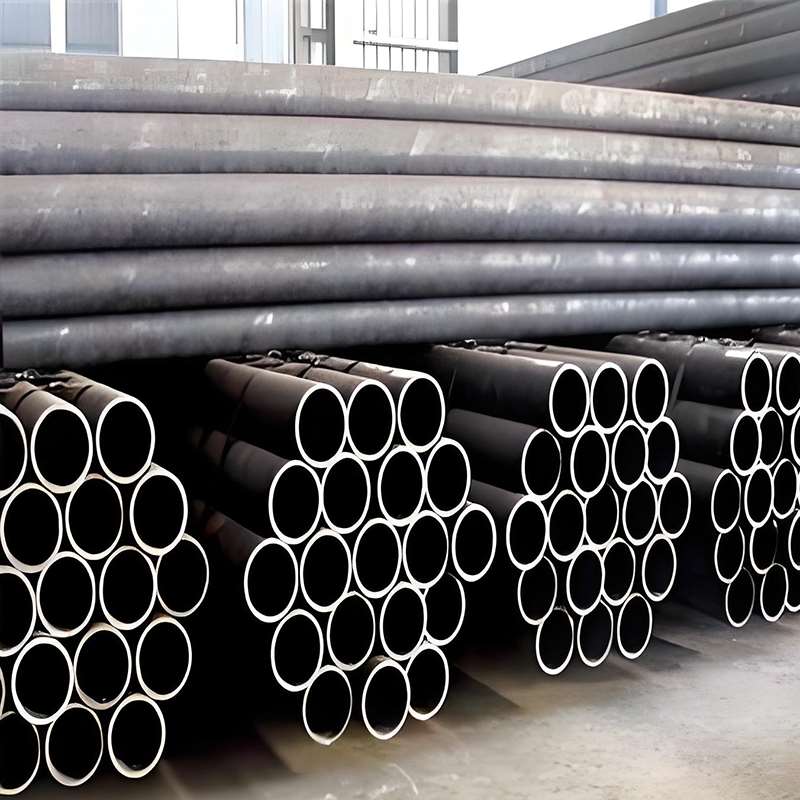
II. GB/T 3087 Boiler Steel Tube Size & Dimension Table
| Inch | OD (mm) | WT (mm) | Length (mm) | Tolerance |
|---|---|---|---|---|
| 3/8″ | 10 | 1.5 – 3.0 | 3000 – 12500 | OD ±1.5% / WT ±12.5% |
| 1/2″ | 12 | 1.5 – 2.5 | 3000 – 12500 | OD ±1.5% / WT ±12.5% |
| 5/8″ | 16 | 1.5 – 3.0 | 3000 – 12500 | OD ±1.5% / WT ±12.5% |
| 3/4″ | 20 | 2.0 – 3.5 | 3000 – 12500 | OD ±1.5% / WT ±12.5% |
| 7/8″ | 22 | 2.0 – 3.5 | 3000 – 12500 | OD ±1.5% / WT ±12.5% |
| 1″ | 25 | 3.0 – 4.0 | 4000 – 12000 | OD ±1.0% / WT ±10% |
| 1-1/8″ | 28 | 3.0 – 4.5 | 4000 – 12000 | OD ±1.0% / WT ±10% |
| 1-1/4″ | 32 | 3.0 – 5.0 | 4000 – 12000 | OD ±1.0% / WT ±10% |
| 1-1/2″ | 38 | 3.0 – 6.0 | 4000 – 12000 | OD ±1.0% / WT ±10% |
| 1-5/8″ | 42 | 3.5 – 6.0 | 4000 – 12000 | OD ±1.0% / WT ±10% |
| 1-3/4″ | 45 | 3.5 – 6.0 | 4000 – 12000 | OD ±1.0% / WT ±10% |
| 2″ | 51 | 3.5 – 8.0 | 4000 – 12000 | OD ±1.0% / WT ±10% |
| 2-1/4″ | 57 | 3.5 – 8.0 | 4000 – 12000 | OD ±1.0% / WT ±10% |
| 2-3/8″ | 60 | 4.0 – 8.0 | 4000 – 12000 | OD ±1.0% / WT ±10% |
| 3″ | 76 | 4.0 – 10.0 | 4000 – 12000 | OD ±1.0% / WT ±10% |
| 3-1/2″ | 89 | 4.0 – 12.0 | 5000 – 12000 | OD ±0.8% / WT ±8% |
| 4″ | 108 | 4.0 – 12.0 | 5000 – 12000 | OD ±0.8% / WT ±8% |
| 5″ | 133 | 5.0 – 14.0 | 5000 – 12000 | OD ±0.8% / WT ±8% |
| 6″ | 159 | 6.0 – 16.0 | 5000 – 12000 | OD ±0.8% / WT ±8% |
| 6-5/8″ | 168 | 6.0 – 18.0 | 6000 – 12000 | OD ±0.6% / WT ±7% |
| 8-5/8″ | 219 | 6.0 – 20.0 | 6000 – 12000 | OD ±0.6% / WT ±7% |
| 10-3/4″ | 273 | 6.0 – 22.0 | 6000 – 12000 | OD ±0.6% / WT ±7% |
| 12-3/4″ | 325 | 8.0 – 26.0 | 6000 – 12000 | OD ±0.5% / WT ±5% |
| 16-3/4″ | 426 | 8.0 – 26.0 | 6000 – 12000 | OD ±0.5% / WT ±5% |
III. GB/T 3087-2022 Chemical Composition of Seamless Steel Tubes for Boilers
| Grade | Carbon (C) % | Silicon (Si) % | Manganese (Mn) % | Phosphorus (P) % | Sulfur (S) % | Other Element Limits |
|---|---|---|---|---|---|---|
| 20 Steel (Grade 20) | 0.17–0.24 | 0.17–0.37 | 0.35–0.65 | ≤0.025 | ≤0.02 | Cr ≤0.25%, Ni ≤0.3%, Cu ≤0.2% |
| 20G | ≤0.20 | ≥0.10 | 0.50–0.90 | ≤0.035 | ≤0.035 | Strict limits on impurity elements (to reduce hot brittleness / cold brittleness) |
| 20MnG | ≤0.20 | ≥0.10 | 0.80–1.20 | ≤0.035 | ≤0.035 | Higher Mn content improves thermal fatigue resistance |
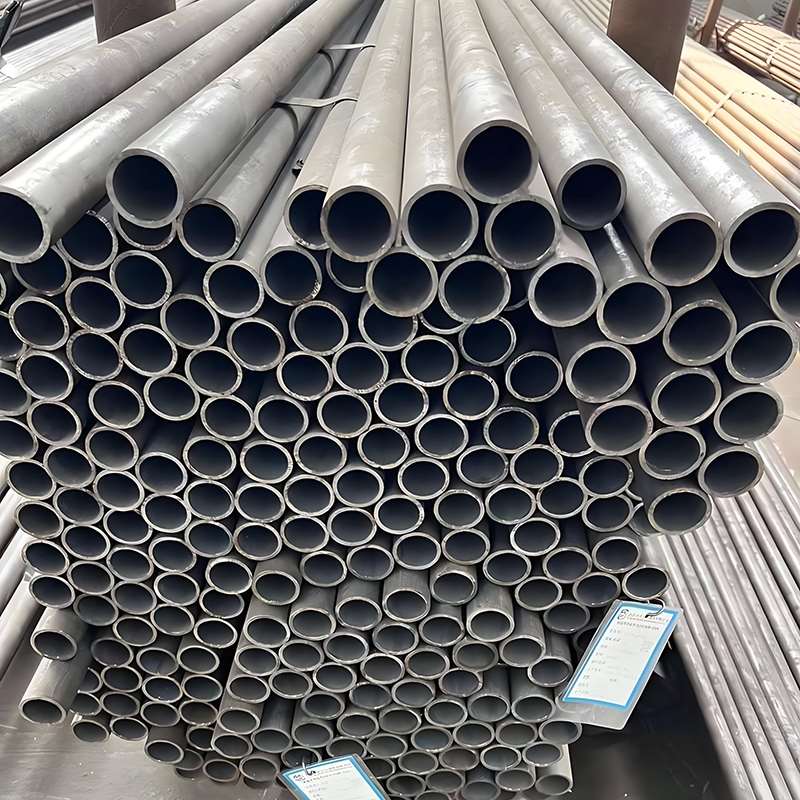
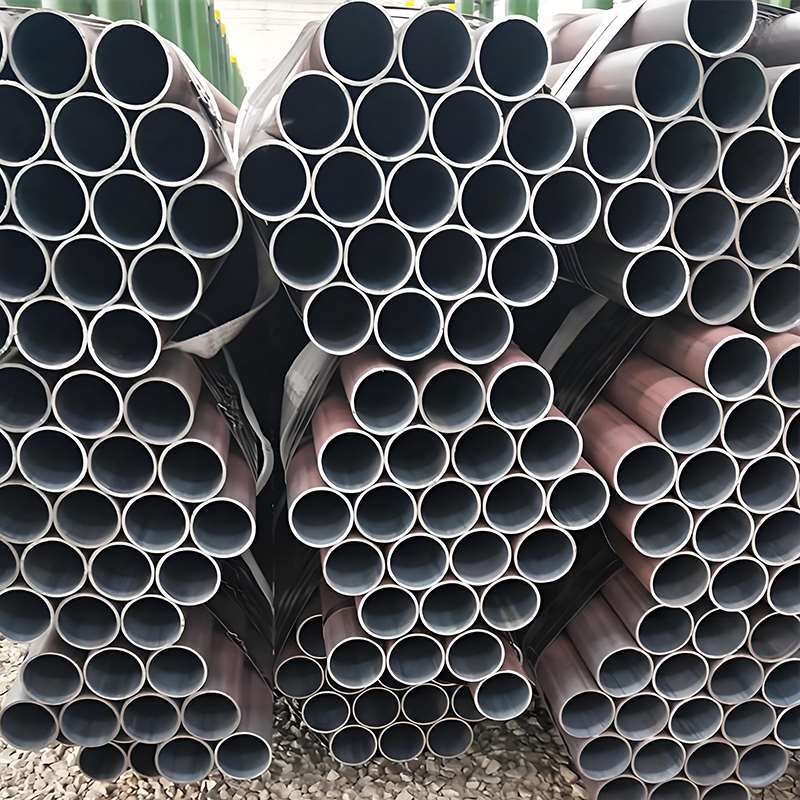
IV. GB/T 3087-2022 Mechanical Properties of Seamless Steel Tubes for Boilers
| Grade | Tensile Strength (MPa) | Yield Strength (MPa) | Elongation (%) | Impact Absorbed Energy (J/cm²) | High-Temperature Performance (300°C / 450°C) |
|---|---|---|---|---|---|
| 20 Steel (Grade 20) | 410–550 | ≥245 | ≥20 | ≥27 (at 0°C) | ≥149 MPa at 300°C; ≥132 MPa at 450°C |
| 20G | ≥410 | ≥245 | ≥24 | ≥27 (at 0°C) | Improved high-temperature strength and toughness |
| 20MnG | ≥450 | ≥275 | ≥22 | ≥27 (at 0°C) | Manganese enhances thermal fatigue resistance |
V. GB/T 3087 Boiler Steel Tubes: Main Applications
GB/T 3087 Boiler Steel Tubes are primarily used in low- and medium-pressure boiler systems.
They are suitable for industrial operating environments with moderate temperatures and general pressure conditions.
1. Industrial Boiler Manufacturing Industry
If you are a manufacturer of boiler equipment, this standard is widely used.
Applicable equipment includes:
- Small steam boilers
- Hot water boilers
- Industrial heating boilers
Selection recommendations:
- Generally choose 20 or 20G
- Suitable for projects requiring stable operation and cost control
2. Industrial Energy and Heating Systems
Suitable for various internal heating systems in industrial facilities.
For example:
- Textile mill steam systems
- Food processing cooking systems
- Chemical plant hot water circulation systems
Selection Recommendations:
- General operating conditions: 20 steel
- Stable operation/slightly higher temperatures: 20G
3. Power Plant Auxiliary Systems
Used in auxiliary boilers or low-pressure systems at power plants.
For example:
- Auxiliary steam piping
- Low-pressure heat exchange systems
- Waste heat recovery systems
Selection Recommendations:
- Prioritize 20G / 20MnG
- Better strength and stability
4. Heat Exchangers and Thermal Equipment
Suitable for various types of heat exchange equipment.
For example:
- Industrial heat exchangers
- Waste heat recovery units
- Hot water heat exchange systems
Selection Recommendations:
- Moderate operating conditions: 20G
- High temperatures or continuous operation: 20MnG
5. Steam Transmission and Pipeline Systems
Used for low-pressure steam transmission pipelines.
For example:
- Factory steam mains
- Hot water circulation pipelines
- Low-pressure energy transmission systems
Selection Recommendations:
- Short distances/low pressure: Grade 20 steel
- Stable operation: Grade 20G
6. Unsuitable Applications (Important)
If your project falls under any of the following categories, GB/T 3087 is not recommended:
- High-pressure boiler systems (select GB/T 5310)
- Long-distance oil and gas transmission pipelines (select API 5L)
- High-temperature, high-pressure chemical processing plants
- Environments with highly corrosive media
VI. GB/T 3087-2022 Inspection Standard for Seamless Steel Pipes
| Inspection Item | Test Method / Standard Requirements | Key Indicators (Example for 20G Steel) |
|---|---|---|
| Chemical composition | Direct-reading spectrometer or chemical analysis | C ≤ 0.20%, Mn 0.50–0.90%, Si ≥ 0.10%, P ≤ 0.035%, S ≤ 0.035% |
| Tensile test | Universal testing machine; measures tensile strength, yield strength, elongation | Tensile strength ≥ 410 MPa; yield strength ≥ 245 MPa; elongation ≥ 24% |
| Hardness test | Brinell hardness tester (HBW) | Hardness range: 156–217 HBW |
| Flattening test | Hydraulic press, compressed to 2/3 of the outside diameter; inspect for cracks / delamination | No cracks or delamination |
| Flaring test | Expand radially by 15%; examine end cracking | No cracking |
| Cold bending test | Bend diameter = 4D (D = nominal OD), bend 180° | No cracks |
| Geometrical dimensions | Vernier caliper / micrometer measurement of OD, wall thickness, ovality, straightness | OD tolerance ±10% (for D ≤ 57 mm), wall thickness tolerance ±10% |
| Surface quality | Visual inspection or magnetic particle testing for defects (cracks, laps, scratches) | Defect depth < 0.05 mm |
| Nondestructive testing | Eddy current testing (OD ≤ 100 mm) or ultrasonic testing (WT > 5 mm) | No internal porosity, inclusions, or cracks |
| Hydrostatic test | Hydrostatic pressure test: pressure = 2.5× working pressure (≥15 MPa), holding time ≥10 s | No leakage; no plastic deformation |
VII. GB/T 3087 Boiler Steel Tube – Common FAQs
Q1: What operating conditions are GB/T 3087 Boiler Steel Tubes suitable for?
GB/T 3087 steel tubes are primarily used in low- and medium-pressure boiler systems.
They are suitable for environments with moderate temperatures and pressures.
Common applications include:
- Industrial steam boilers
- Hot water boiler systems
- Heat exchangers and waste heat recovery systems
For high-pressure boilers or ultra-high-temperature systems, GB/T 5310 should be selected.
Q2: How should one choose between 20, 20G, and 20MnG?
The main differences between these three grades lie in their strength and high-temperature resistance.
- 20 steel: For general applications; lowest cost
- 20G: Most commonly used; best overall performance
- 20MnG: Higher strength; suitable for more stable or higher-load operations
For general engineering applications, 20G is the recommended first choice.
Q3: Can GB/T 3087 be used for high-pressure boilers?
No.
- GB/T 3087 is designed for low- and medium-pressure boilers.
- It is not suitable for high-pressure or ultra-high-pressure boiler systems.
High-pressure boilers should use:
- GB/T 5310 (High-Pressure Boiler Tubes)
Q4: How do I determine whether 20MnG is required instead of 20G?
If your system has the following characteristics, 20MnG is recommended:
- Long-term continuous operation
- Higher operating temperatures
- Higher safety requirements
- Heavy equipment loads
For standard industrial boilers, 20G is sufficient.
Q5: What is the typical service life of GB/T 3087 steel pipes?
Service life depends on operating conditions and maintenance.
General guidelines:
- Normal operating conditions: 8–15 years
- Good maintenance: Longer
- High-temperature or corrosive environments: Service life will be shorter
Key influencing factors: Water quality, temperature, pressure, and operating frequency.
Q6: What are the most important factors to consider when purchasing GB/T 3087 steel pipes?
We recommend focusing on four key points:
- Material grade (20 / 20G / 20MnG)
- Whether the wall thickness meets pressure requirements
- Availability of complete test reports (UT, hydrostatic testing, chemical analysis)
- Compliance with official standards (GB/T 3087-2022)
Many issues stem not from the steel pipes themselves, but from “inappropriate selection.”