
Choosing a reliable spiral steel pipe manufacturer is key to ensuring engineering quality, controlling project costs, and meeting project deadlines. SSAW steel pipes are widely used in high-standard applications such as oil and gas transportation, water conservancy projects, pile foundations, and steel-structured bridges, and their quality directly impacts project safety.
To help you identify partners with genuine capabilities among the many suppliers, we recommend conducting a systematic evaluation based on the following five core criteria.
I. Factory Production Capacity
- Production Lines and Forming Processes: Determine the number of spiral submerged arc welding (SSAW) steel pipe production lines the factory possesses and the forming methods used. Advanced equipment ensures the stability and continuity of the steel strip during the spiral forming process.
- Specification Range: Confirm the range of outer diameters (OD) and wall thicknesses (WT) that can be produced. Established manufacturers typically offer a full product line ranging from small to large diameters and various wall thicknesses.
- Material and Steel Grade Compatibility: Confirm the manufacturer’s ability to consistently supply and process steel strips of various materials, such as common low-carbon steels (Q235B, Q355B/C/D) and steel grades compliant with international standards (e.g., API 5L Gr. B through X80, ASTM A252, etc.).
- Annual Production Capacity and Equipment Redundancy: Evaluate the total annual output and the daily output per machine. These metrics reflect the scale of the facility and determine its ability to deliver consistently when handling large-volume orders.
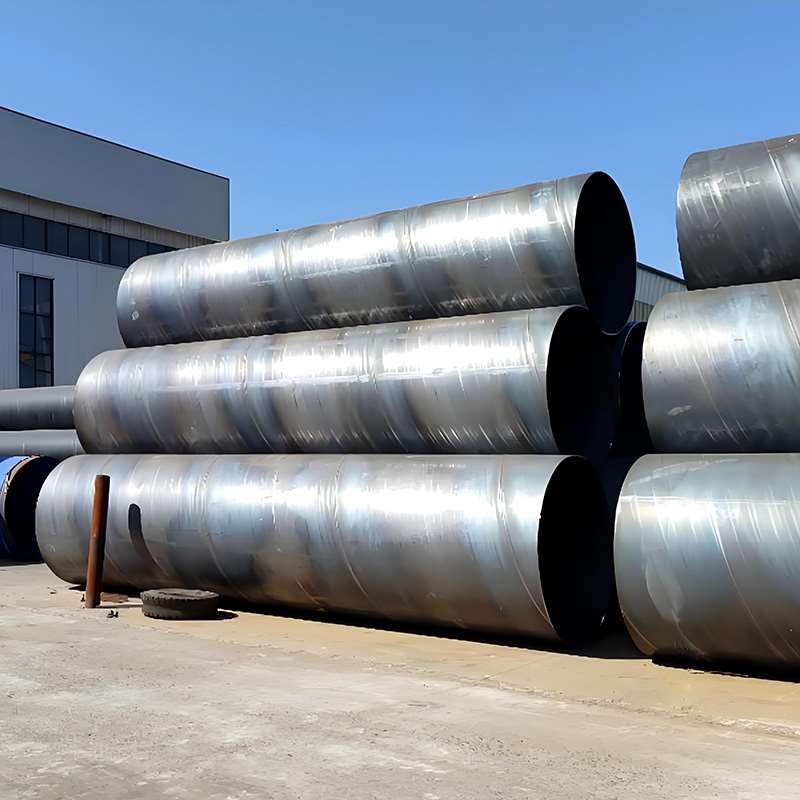
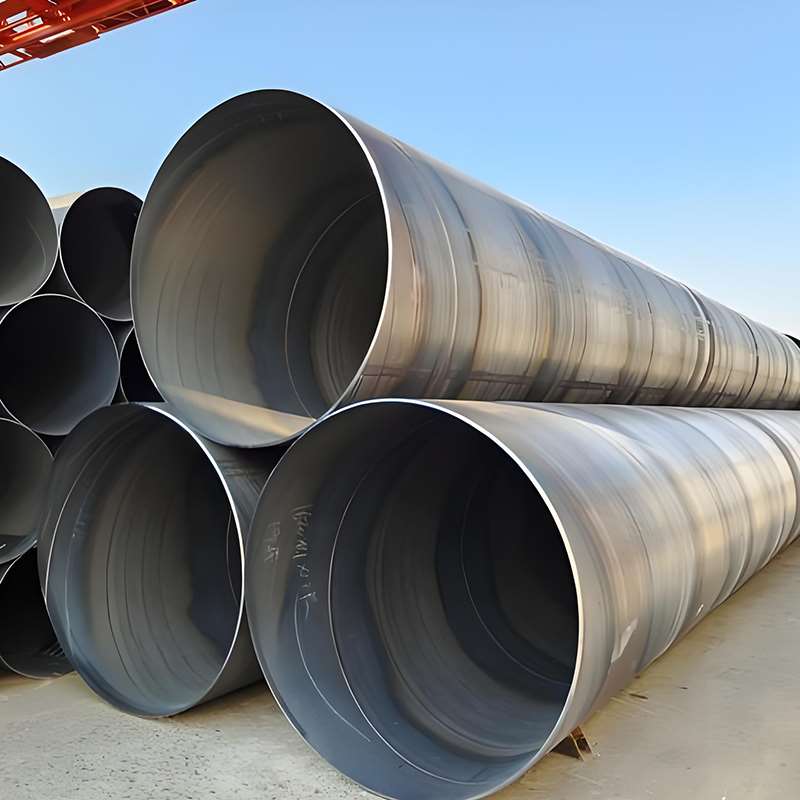
II. Quality Inspection
- Raw Material Inspection: High-quality manufacturers conduct rigorous re-testing of the physical and chemical properties of steel plates and coils upon arrival at the plant to ensure compliance at the source.
- Production Process Monitoring: Check whether the facility is equipped with an online ultrasonic testing (UT) system to monitor weld quality in real time during the welding process; verify that automated welding equipment has stable current, voltage, and welding speed control systems to ensure proper penetration depth and aesthetic weld bead formation in submerged arc welding (SAW).
- Physical and Mechanical Property Testing of Finished Products: The facility should have a well-equipped laboratory capable of conducting hydrostatic pressure tests, real-time X-ray imaging or industrial CT flaw detection, Charpy impact tests, flattening tests, and tensile tests; it should also perform precise measurements of the steel pipe’s outer diameter, wall thickness, ovality, straightness, and bevel angle.
- Corrosion Protection Capabilities: Determine whether the facility possesses the application and inspection capabilities for mainstream corrosion protection processes, such as 3PE/2PE, FBE, epoxy coal tar anti-corrosion, and internal cement mortar lining.
III. Qualifications and Certifications
- Quality Management System Certification: The facility must hold at least ISO 9001 quality management system certification; it may also hold ISO 14001 and ISO 45001 certifications.
- Core Industry Qualifications: If the product is used for oil and gas transportation, verify whether it has obtained API 5L certification; if exported to Europe, the United States, or specific international markets, ensure compliance with CE certification, ASTM standards (such as ASTM A53 and ASTM A252) or DIN standards (such as DIN 30670).
- Third-Party Testing Reports: Reputable manufacturers are typically willing to provide factory audit reports or product batch inspection reports issued by internationally recognized testing organizations such as SGS, BV, and TÜV.
IV. Manufacturing and Industry Experience
- Project Performance Examples: Review the manufacturer’s track record on landmark projects, such as long-distance water transmission pipelines, power plant cooling water pipelines, port pile driving projects, and foundation piles for cross-sea bridges. Factories with experience supplying materials for large-scale domestic and international projects often have a deeper understanding of complex standards.
- Technical Support and Communication Efficiency: Excellent manufacturers do more than just sell steel pipes; they also provide professional technical consulting. Based on customer drawings and operating conditions, they assist in recommending cost-effective steel pipe wall thicknesses, steel grades, and corrosion protection solutions.
- Overseas Export Experience: For international procurement, manufacturers must be familiar with export packaging specifications (such as pipe end caps, steel banding, and rain and moisture protection), customs declaration and clearance document requirements, and loading optimization for international ocean freight (bulk carriers or containers) to ensure that goods arrive undamaged after long-distance transport.
V. Delivery Capability and Supply Chain Resilience
- Inventory and Production Scheduling Flexibility: Evaluate the manufacturer’s ability to maintain stock of standard specifications and the efficiency of production scheduling for custom orders. Assess whether the factory can shorten delivery lead times through scientific scheduling when faced with urgent deadlines.
- Geographic Location and Logistics Convenience: Examine the factory’s proximity to major highways, rail freight yards, or seaports. Manufacturers located near large, comprehensive ports often enjoy advantages in logistics costs and efficiency when organizing the maritime transport of bulk and general cargo.
- Packaging and Loading/Unloading Safeguards: For large-diameter SSAW pipes, does the factory possess specialized lifting equipment, proven bundling techniques, and scientific protective measures against impact to ensure safety during loading, unloading, and transportation?