Products

Related News

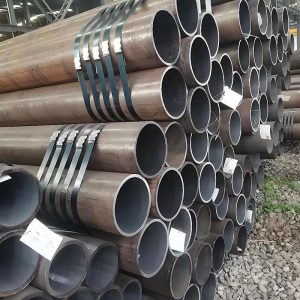
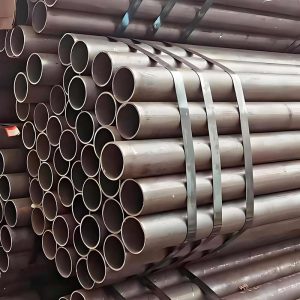
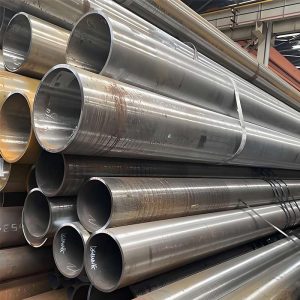
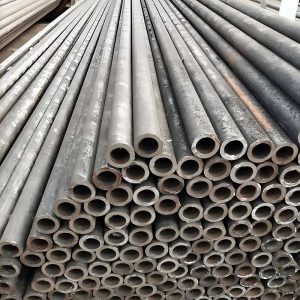
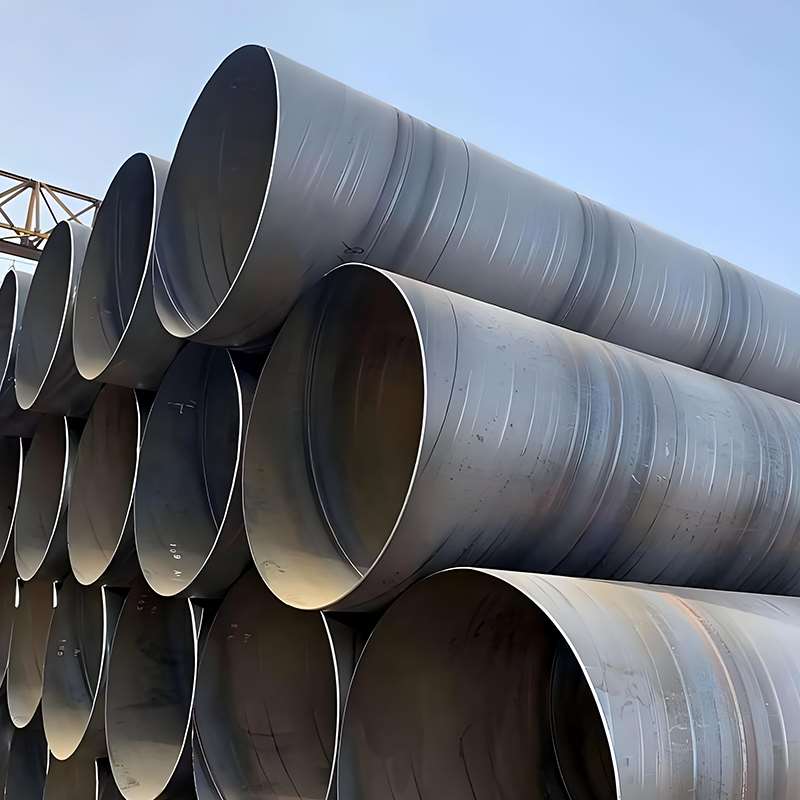
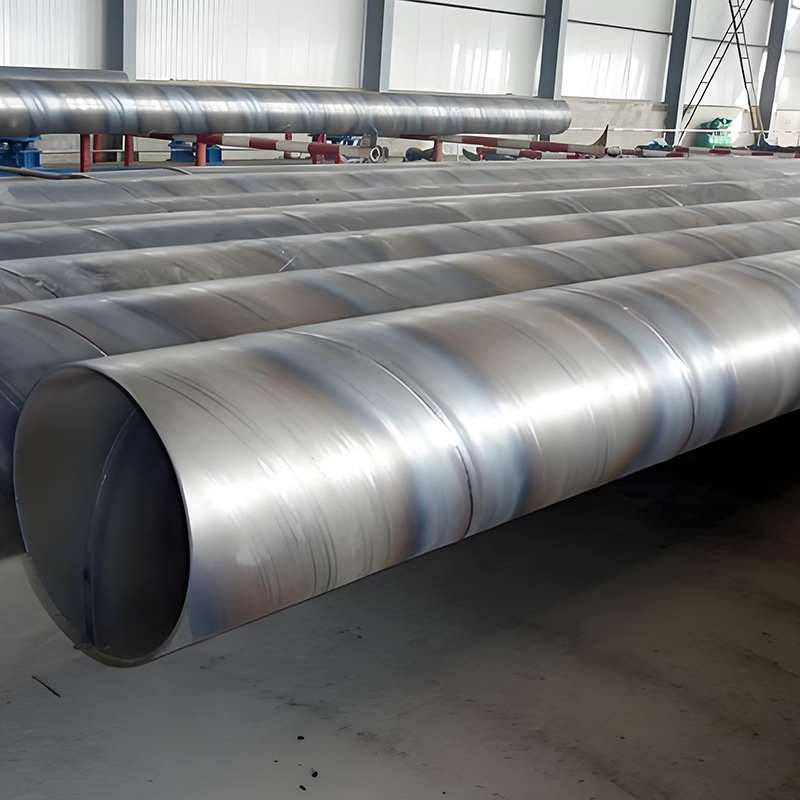
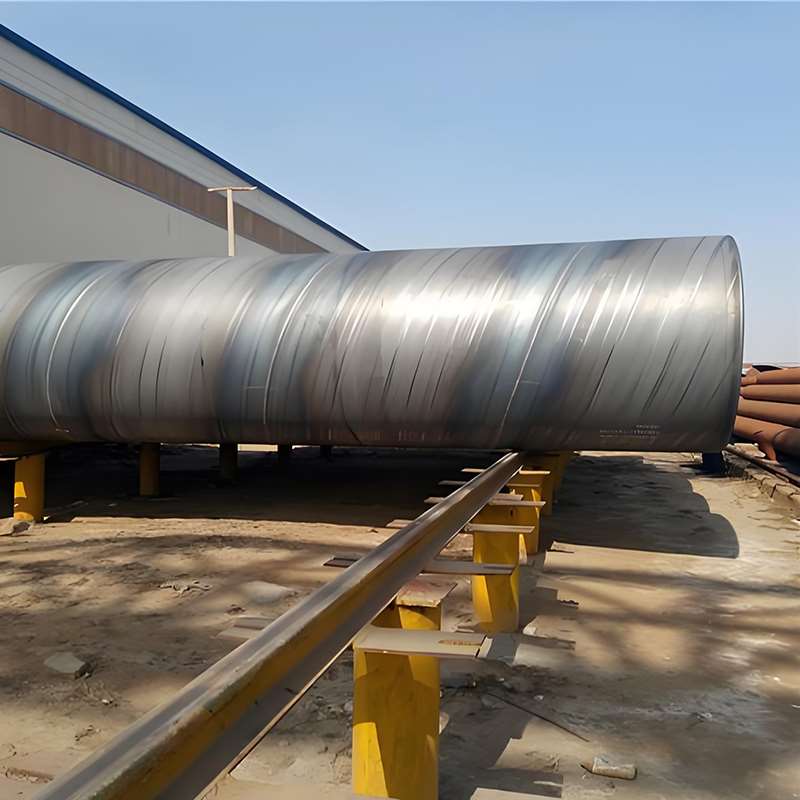
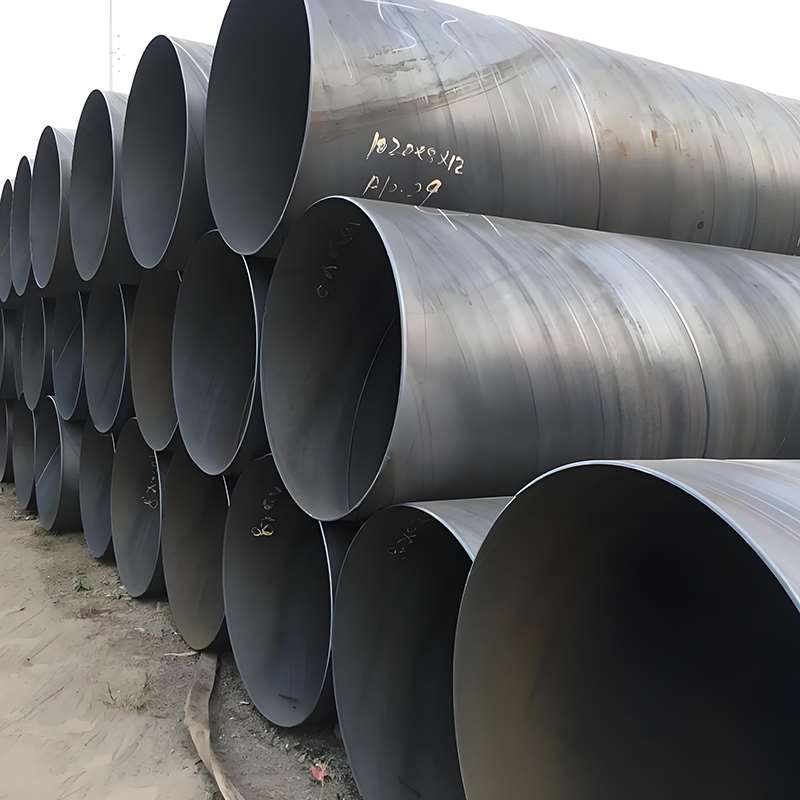
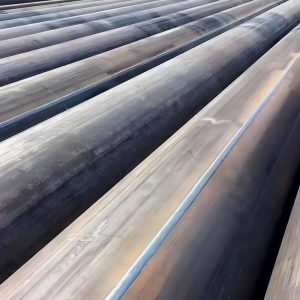
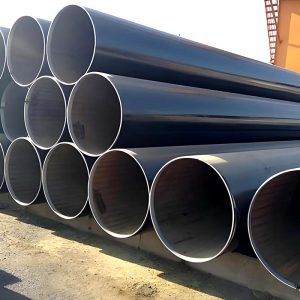
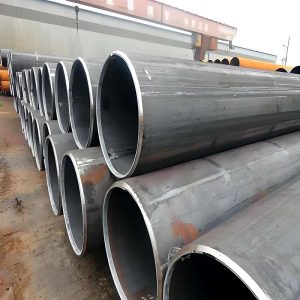
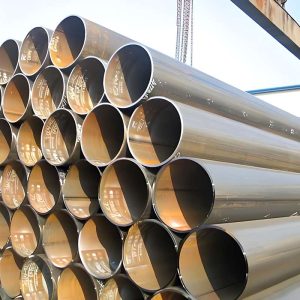
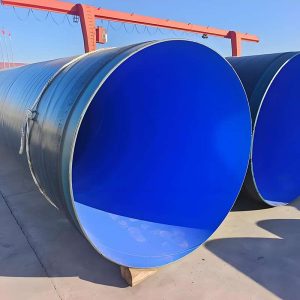
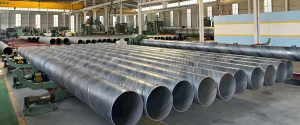
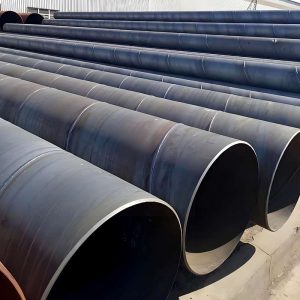
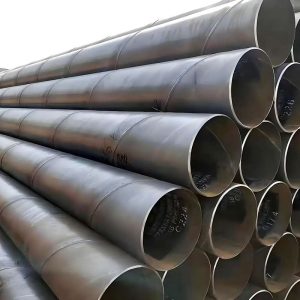
Spiral Steel Pipe for Water Supply

OD Range :

219 mm – 1620 mm

WT Range :

6 mm – 40 mm

Length :

6 m – 12 m (Customizable)

Tolerance :

Outer diameter ±2%, wall thickness ±10%, length ±50 mm

Material :

Q235B, Q345B API 5L:X42, X46, X52, X56, X60, X65, X70

Standard :

API 5L, ASTM A252, ASTM A53, GB/T 9711-2017, EN 10219

Application :

Oil pipelines, natural gas pipelines, water transmission projects, building pile foundations, industrial transmission pipelines

Introduction :

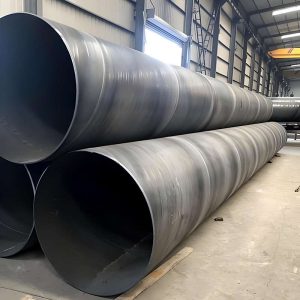
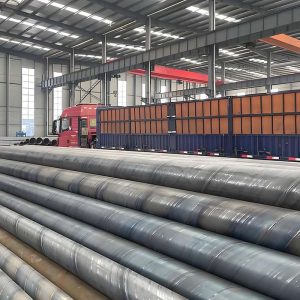
Spiral steel pipes are manufactured using a spiral welding process, possessing excellent pressure resistance, corrosion resistance, and mechanical strength, making them suitable for oil and gas, water conservancy, construction, and industrial pipeline projects.

I. Overview of Spiral Steel Pipe

Spiral steel pipe is manufactured using a spiral welding process and features high strength, excellent pressure resistance, and high dimensional accuracy.
It is suitable for applications in the oil and gas, water conservancy, building pile foundations, and industrial piping sectors. It supports customization in multiple specifications and complies with international standards such as API 5L, ASTM, and GB/T.

II. Classification of Spiral Welded Steel Pipe Material Grades

Material GradeTypeApplication
ASTM A252 Gr.1 / Gr.2 / Gr.3Carbon SteelPiles, structural applications, low-pressure water pipes
ASTM A53 Gr.BCarbon SteelWater transmission, low-pressure steam pipes
API 5L B / X42 / X46 / X52 / X56 / X60 / X65 / X70Carbon Steel / Low Alloy SteelOil and gas pipelines
ASTM A106 Gr.B / Gr.CSeamless high-temperature pipesHigh-temperature steam, oil, and gas pipelines
Q235 / Q345Carbon Steel / Low Alloy SteelStructural applications, bridges, and buildings

Note: API 5L X42–X70 grades are commonly used for export-grade spiral pipes, while Q235/Q345 grades are typically used for domestic construction or low-pressure pipes.

III. Chemical Composition Table (Using API 5L Carbon Steel Spiral Welded Pipe as an Example)

Material GradeC (%)Mn (%)P (%)S (%)Si (%)
X420.18–0.221.20≤0.030≤0.0300.15–0.35
X460.18–0.221.30≤0.030≤0.0300.15–0.35
X520.18–0.221.40≤0.030≤0.0300.15–0.35
X560.18–0.221.50≤0.030≤0.0300.15–0.35
X600.18–0.221.50≤0.030≤0.0300.20–0.35
X650.20–0.261.50≤0.030≤0.0300.20–0.35
X700.22–0.281.50≤0.030≤0.0300.20–0.35

IV. Mechanical Properties Table (API 5L Spiral Welded Steel Pipe)

Material GradeYield Strength σs (MPa)Tensile Strength σb (MPa)Elongation δ5 (%)Impact Value KV (J)
X42≥ 290415–530≥ 23≥ 34
X46≥ 315415–535≥ 22≥ 34
X52≥ 359450–580≥ 21≥ 34
X56≥ 379485–620≥ 20≥ 34
X60≥ 414485–625≥ 20≥ 34
X65≥ 448510–690≥ 19≥ 34
X70≥ 483540–710≥ 18≥ 34

V. Main Production Processes for Spiral Welded Steel Pipes

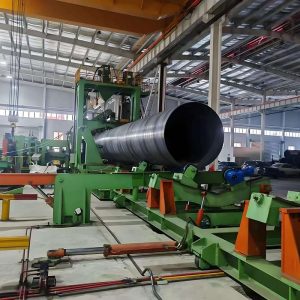
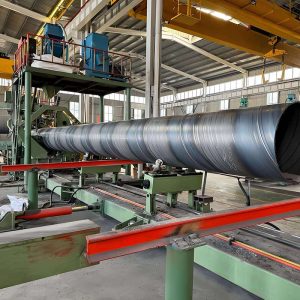
1. Spiral Submerged Arc Welding (SSAW / HSAW)

Principle: A steel strip is coiled into a pipe blank at a spiral angle, and then submerged arc welding is performed along the seam.
Features:

  • Capable of producing large-diameter pipes (typically with an outer diameter ≥ 219 mm, up to 3000 mm or more)
  • Flexible pipe lengths, customizable to customer requirements
  • The weld seam is distributed spirally, ensuring uniform pressure distribution

Applications: Long-distance oil and gas pipelines, water conservancy projects, bridge pile pipes, and large-diameter structural pipes

2. Multi-pass Welding Technology (Optional)

For thick-walled spiral pipes, multi-pass welding (internal + external welding) may be employed to enhance weld strength and pressure resistance.
Features: Improves pipeline safety and reliability, particularly suitable for high-pressure pipelines.

VI. Types of Corrosion Protection for Spiral-Welded Steel Pipes and Their Applicable Environments

Spiral-welded steel pipes are used in projects such as oil and gas transmission, water supply, bridge construction, and building construction. Since they are constantly exposed to water, soil, air, or chemical media, they are prone to corrosion; therefore, selecting an appropriate corrosion protection method is crucial.

1. Paint Coating

  • Features: Applying anti-rust paint or epoxy paint to the surface of steel pipes to form a physical barrier.
  • Applicable Conditions:
    Outdoor environments, under normal atmospheric conditions
    Slightly humid environments, without direct contact with chemical media
  • Advantages: Simple application, low cost
  • Disadvantages: Moderate durability, requires periodic maintenance
  • Common Types: Primer + topcoat, epoxy coal tar paint
  • Examples: Paint coating can be used for urban water supply pipes and spiral-welded pipes in bridge structures.

2. Epoxy Powder Coating (FBE / Fusion-Bonded Epoxy)

  • Features: An epoxy powder coating is applied to the surface of steel pipes via electrostatic spraying and cured in an oven, resulting in a coating with strong adhesion.
  • Applications:
    Buried or underground pipelines
    Medium- and low-pressure oil and gas transmission pipelines
    Groundwater or damp soil environments
  • Advantages: Excellent corrosion resistance, wear resistance, and chemical resistance
  • Disadvantages: Demands high-quality weld preparation; requires specialized equipment for application
  • Typical thickness: 250–500 μm
  • Examples: Long-distance natural gas pipelines, urban gas pipelines.

3. Hot-Dip Galvanizing

  • Features: A zinc layer is formed on the surface of the steel pipe through hot-dip galvanizing; the zinc acts as a sacrificial anode to protect the steel pipe.
  • Suitable Applications:
    Outdoor atmospheric environments
    Humid or neutral (non-acidic/non-alkaline) environments
    Applications not directly exposed to high-pressure media
  • Advantages: Excellent durability and weather resistance
  • Disadvantages: Not suitable for high-temperature environments; high-pressure pipelines require additional corrosion protection measures
  • Common thickness: 50–100 μm
  • Examples: Water supply pipelines, structural steel pipes in construction.

4. Internal Corrosion Protection (Epoxy Lining / PE Lining)

  • Features: The inner walls of the pipeline are coated with epoxy or polyethylene (PE) to prevent corrosion by the transported medium.
  • Applications:
    Water supply pipes, drinking water pipes
    Transportation of corrosive liquids
    Prevention of sediment buildup
  • Advantages: Extends pipeline service life and prevents fluid corrosion
  • Disadvantages: Higher construction costs; requires a clean and smooth inner surface
  • Examples: Municipal water supply systems, seawater transmission pipelines.

5. Polyurethane/Glass Flake Composite Corrosion Protection (PU / GRP / FBE + Polyurethane)

  • Features: Combines an epoxy coating with polyurethane or glass flake materials to form a composite protective layer
  • Applications:
    Highly corrosive environments (seawater, acidic or alkaline soils, chemical media)
    High-pressure long-distance pipelines
  • Advantages: Corrosion resistance, high-temperature resistance, abrasion resistance
  • Disadvantages: Complex application process, relatively high cost
  • Examples: Subsea pipelines, chemical pipelines, pipelines for transporting acidic or alkaline liquids.

6. Conclusion

Coating TypeMain FeaturesApplicable Environment / Service ConditionsAdvantagesDisadvantages
Paint / Epoxy PaintSurface coatingOutdoor, normal temperature, mildly humidLow cost, easy to applyModerate durability, requires maintenance
FBE PowderEpoxy powder filmBuried, oil & gas pipelines, moist soilExcellent corrosion resistance, wear-resistantHigh welding seam treatment requirements
Hot-Dip GalvanizingSacrificial zinc layer protectionOutdoor atmosphere, humid environmentGood weather resistance, durableNot suitable for high temperatures, needs auxiliary protection for high pressure
Internal Epoxy / PE LiningInternal corrosion protectionWater pipelines, corrosive liquidsCorrosion-resistant, medium-resistantHigh cost, high construction requirements
PU / Glass Flake CompositeComposite protectionHigh corrosion, high pressure, seawater, chemicalCorrosion-resistant, wear-resistant, high temperature-resistantComplex application, high cost

Related Products

Outer Diameter OD (mm) Wall Thickness WT (mm) Pipe Length L (m) Theoretical Weight (kg/m) Applicable Pressure Rating Remarks
219 6–20 6–12 24–70 Low / Medium Pressure Common municipal and structural pipes
273 6–22 6–12 30–90 Low / Medium Pressure Standard medium-diameter pipelines
325 6–25 6–12 40–120 Medium Pressure Water and gas pipelines
377 6–28 6–12 50–150 Medium Pressure Common medium-diameter pipes
426 6–30 6–12 60–180 Medium Pressure Long-distance pipelines, bridge piles
478 8–32 6–12 80–220 Medium-High Pressure Oil and gas transport
530 8–35 6–12 90–260 Medium-High Pressure Long-distance pipelines
630 10–40 6–12 120–350 High Pressure Oil and gas pipelines
720 10–45 6–12 150–420 High Pressure Large-diameter trunk pipelines
820 12–50 6–12 200–500 High Pressure Offshore, chemical pipelines
1020 12–60 6–12 300–750 High Pressure Extra-large diameter long-distance pipelines
1220 14–70 6–12 450–1100 High Pressure Extra-large diameter engineering pipes


Spiral steel pipes are primarily categorized into pipeline pipes and structural/engineering pipes, with different standards applying to each application.

Application Material Grade Standard Country / Region Applicable Scope Description
Oil & Gas Pipelines B, X42, X46, X52, X56, X60, X65, X70 API 5L USA Oil and gas pipelines Widely used internationally; common standard for export
Oil & Gas Pipelines X42, X46, X52, X56, X60, X65, X70 GB/T 9711 China Oil, gas, and water pipelines Domestic standard, similar to API 5L, suitable for local projects
Oil & Gas Pipelines L245, L290, L320, L360, L415 DIN 1626 / EN 10208 Germany / Europe Oil and gas pipelines European standard, used in some export projects
Building Structure / Piles Gr.1, Gr.2, Gr.3 ASTM A252 USA Piles, structural pipes, bridge piles Standard for structural steel pipes
Building Structure / Piles Q235, Q345 GB/T 12771 / GB/T 6728 China Piles, building structures Domestic structural steel pipe standard
Building Structure / Piles S235, S275, S355 EN 10219 Europe Rectangular / round structural pipes European structural steel pipe standard
High-Temperature / High-Pressure Steam Pipes Gr.B, Gr.C ASTM A106 USA High-temperature steam, oil, chemical Can be spiral-welded, but seamless is more common
High-Temperature / High-Pressure Steam Pipes 20#, 16Mn GB/T 5310 China High-temperature steam pipes Domestic boiler and chemical high-temperature pipeline standard
Corrosion Protection Epoxy coating, polyethylene ISO 21809 International External corrosion coating Standards for FBE, polyethylene, and epoxy coatings
Corrosion Protection Epoxy paint, anti-corrosion paint GB/T 18252 / GB/T 23257 China Surface corrosion protection Common domestic corrosion protection requirement
Corrosion Protection Hot-dip galvanizing ASTM A938 / A674 USA Hot-dip galvanized steel pipes Reference standard for steel pipe galvanizing


No. Process Step Main Content Notes / Key Points
1 Raw Material Preparation Select carbon steel / low alloy steel plates or strips Surface cleaning, leveling, cutting; must meet standards
2 Pipe Blank Forming Roll the steel strip into a pipe blank along the spiral angle Accurate spiral angle calculation to ensure uniform weld stress
3 Weld Seam Submerged Arc Welding (SAW) of the spiral seam For thick-walled pipes, inner + outer weld; multi-layer welding improves strength
4 Pipe End Processing Cutting, deburring, chamfering Facilitates installation and jointing
5 Straightening & Inspection Ensure straightness; check OD, wall thickness, and weld quality Ultrasonic or radiographic testing can be used
6 Heat Treatment (Optional) Normalizing or tempering Improves mechanical properties and internal microstructure
7 Corrosion Protection External coatings (FBE, epoxy paint, hot-dip galvanizing, PU) or internal lining (epoxy, PE) Selected according to application and environment
8 Finished Product Inspection Check dimensions, welds, coating thickness, and pressure test Ensures quality, safety, and reliability
9 Marking & Packaging Mark material grade, specification, standard, batch number Protect from rain and rust
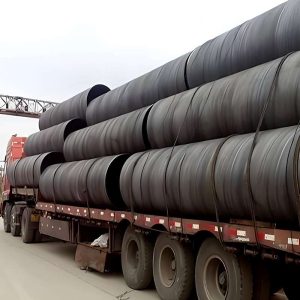
10 Storage / Shipment Stack or bundle, prepare for transport Ship according to specifications, ensure integrity
Inspection Item Standard Applicable Scope Description / Purpose
Visual Inspection API 5L / GB/T 9711 / ASTM A252 All spiral steel pipes Check surface defects, weld appearance, rust, cracks, etc.
Dimensional Measurement GB/T 17395 / ASTM A53 All pipe sizes Verify outer diameter, wall thickness, pipe length, and tolerances meet standards
Weld Inspection ASTM A578 / GB/T 2975 SAW spiral steel pipes Use ultrasonic or radiographic testing to ensure weld quality
Pressure Test API 5L / GB/T 9711 Oil & gas pipelines Hydrostatic or pneumatic test to verify pressure-bearing capacity
Chemical Composition Analysis GB/T 223 / ASTM A370 According to material grade Spectroscopy or chemical analysis to confirm C, Mn, Si, S, P, etc.
Mechanical Properties Test GB/T 228 / ASTM A370 According to material grade Test tensile strength, yield strength, elongation, and impact value
Coating Thickness ISO 21809 / GB/T 18252 Coated / corrosion-protected pipes Measure thickness and adhesion of FBE, epoxy paint, hot-dip galvanizing, PU, etc.
Internal & External Surface Smoothness GB/T 9711 All spiral steel pipes Ensure smoothness of inner and outer surfaces to prevent fluid erosion or installation issues
Bending & Straightness GB/T 17395 / ASTM A53 All spiral steel pipes Ensure straightness within allowable limits for easier installation
Marking Check API 5L / GB/T 9711 All spiral steel pipes Verify material grade, specification, production standard, batch number, and manufacturer mark


Frequently Asked Questions About Spiral Welded Steel Pipes

1. What is the difference between spiral welded steel pipes and longitudinal welded steel pipes?

Answer:
Spiral welded steel pipes (SSAW/HSAW) are formed by rolling and welding steel strips at a spiral angle, while longitudinal welded steel pipes (ERW/LSAW) are welded along the longitudinal axis.
Key Differences:

  • Spiral welded steel pipes: Suitable for large diameters and long lengths; the weld seam is distributed in a spiral pattern, ensuring uniform pressure distribution.
  • Longitudinal welded steel pipes: Suitable for small to medium diameters; the wall thickness is uniform, and the weld seam runs along the pipe axis, offering high precision.
  • Recommendation: Spiral welded steel pipes should be the preferred choice for long-distance oil and gas transmission and water supply pipelines.

2. How should the material of spiral welded steel pipes be selected based on the conveyed medium?

Answer:
Water, steam: Q235, Q345, ASTM A106 Gr. B/C; optional internal epoxy or PE anti-corrosion coating;
Oil and natural gas: API 5L X42–X70; consider transport pressure and temperature; recommended external corrosion protection: FBE powder coating or polyethylene;
Chemical media: Select corrosion-resistant alloy steel or pipes lined with epoxy or polyurethane composites.
Recommendation: First, determine the properties of the medium (acidity/alkalinity, moisture content, temperature) before selecting the material to ensure the service life of the pipeline.

3. How should one choose between large-diameter spiral welded steel pipes and small-diameter steel pipes?

Answer:
Spiral welded steel pipes excel in large diameters (≥219 mm) and can be used to manufacture extra-large-diameter long-distance transmission pipelines;
For small-diameter pipes (≤168 mm), ERW (electric resistance welded) straight-seam pipes are recommended, as they offer lower costs and higher precision.
Recommendation: Prioritize spiral welded steel pipes for large-diameter long-distance transmission pipelines; use straight-seam pipes for small-diameter short pipelines or structural pipes.

4. What are the differences in corrosion protection selection between buried and overhead pipelines?

Answer:
Buried pipelines: Damp soil, severe corrosion → External corrosion protection: FBE powder + PE or polyurethane + cathodic protection;
Overhead pipelines: Minimal atmospheric corrosion → Epoxy paint or hot-dip galvanizing is sufficient;
Highly corrosive environments (coastal areas, chemical plants) require composite corrosion protection or glass flake coatings.

5. How should transportation and installation be considered when selecting spiral steel pipes?

Answer:

  • Large-diameter, long pipes → Heavy weight, high transportation and hoisting costs; require transportation in sections or on-site splicing;
  • Ease of construction → Choose standard lengths (6–12 m) whenever possible to avoid excessive on-site cutting or welding;
  • Installation conditions → An increase in the number of bends and joints will affect flow rate and cost.

Recommendation: Consult with the contractor before purchasing. Take into account pipe diameter, length, weight, and on-site conditions to optimize selection and installation costs.

6. How to select the appropriate spiral welded steel pipe specifications for a project?

Answer:
Key considerations for selecting spiral welded steel pipe specifications include:

  • Conveyed medium: oil, gas, water, or chemical liquids;
  • Pressure rating: determines wall thickness and material strength;
  • Pipe diameter and length: based on flow rate and construction requirements;
  • Environmental conditions: indoor/outdoor, soil corrosiveness, temperature;
  • Corrosion protection requirements: appropriate protection methods must be selected for buried applications, seawater, and highly corrosive environments.

Recommendation: Select specifications comprehensively by considering material grade, standards, pressure, environment, and corrosion protection to avoid premature pipe damage or waste.