Products

Related News

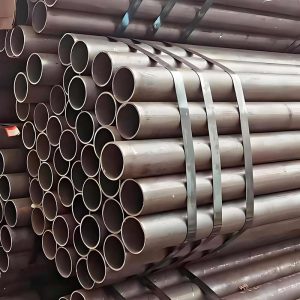
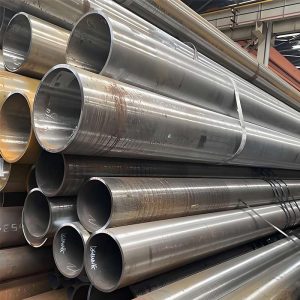
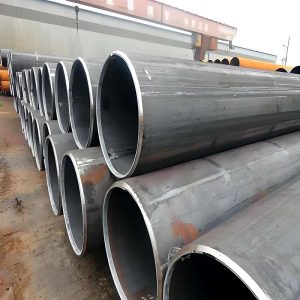
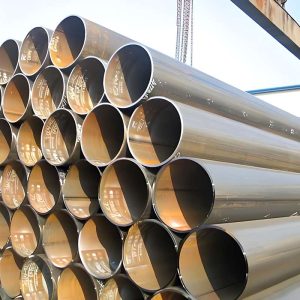
API 5L ERW Steel Pipe

OD Range :

21.3 mm – 610 mm(1/2″ – 24″)

WT Range :

2.0 mm – 40.0 mm

Length :

6 m、9 m、12 m

Tolerance :

Outer diameter ±1%, wall thickness ±12.5%, length ±50 mm

Material :

B级、X42、X52、X56、X60

Standard :

API 5L / ASTM A53 / ASTM A106

Surface :

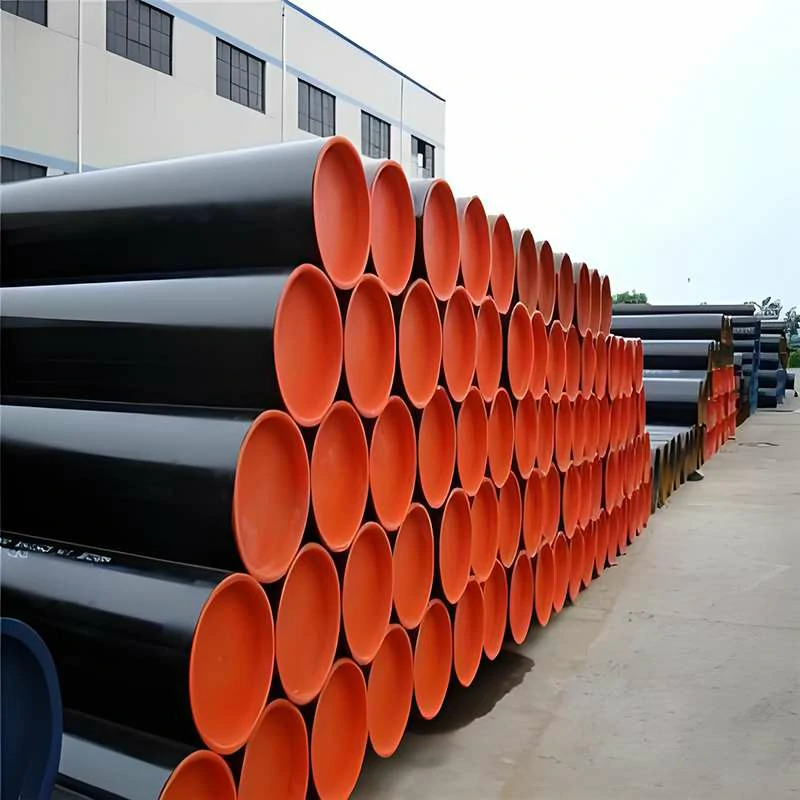
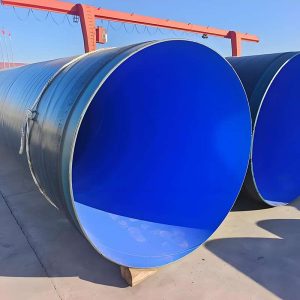
Black paint, rust-preventive oil, 3PE or FBE anti-corrosion coating (optional)

Application :

Oil pipeline, natural gas pipeline, city gas, industrial fluid transportation, long-distance pipeline projects

Introduction :

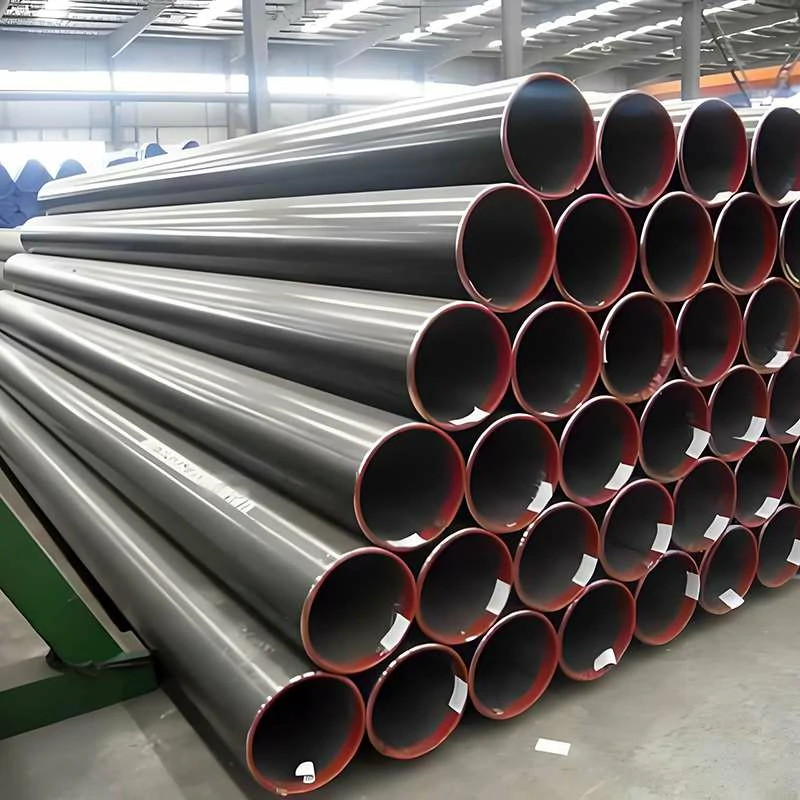
API 5L ERW Steel Pipe is a high-strength straight seam resistance welded pipe, formed by resistance welding from high-quality steel strip.

I. Overview of API 5L ERW Steel Pipes

API 5L ERW steel pipes are welded line pipes manufactured according to API 5L standards, widely used in the transportation of oil, natural gas, city gas, and industrial fluids.
ERW steel pipes are made from high-quality steel strips and welded using high-frequency resistance welding technology, featuring uniform welds, high strength, and good dimensional accuracy.
Compared to seamless steel pipes, ERW steel pipes have higher production efficiency and lower cost, making them ideal for small to medium diameter, low- to medium-pressure pipeline projects.

Product Features

High Strength and Good Toughness: Meets the mechanical performance requirements of API 5L standards, ensuring pipeline safety and reliability.
Excellent Weldability: Uniform pipe body and high-quality welds, suitable for various pipeline construction methods.
Diverse Specifications: Wide range of outer diameters (21.3–610 mm) and selectable wall thicknesses (2–40 mm) to meet different project needs.
Optional Corrosion Resistance: Can be combined with 3PE, FBE, or anti-rust oil surface treatments to extend pipeline service life.
Economical and Efficient: High production efficiency and more competitive pricing compared to seamless steel pipes.

Typical Applications

Oil transmission pipelines
Long-distance natural gas pipelines
Urban gas trunk networks
Industrial fluid transmission pipelines
Medium and low pressure small-diameter pipeline projects

II. API 5L ERW Steel Pipe Chemical Composition and Mechanical Properties

i. Chemical Composition Table

Steel GradeC ≤Mn ≤P ≤S ≤Si ≤Remarks
B0.26%1.20%0.03%0.03%0.30%General transportation pipelines
X420.26%1.20%0.03%0.03%0.30%Medium- and low-pressure pipelines
X520.26%1.30%0.03%0.03%0.30%Common oil & gas pipelines
X560.26%1.40%0.03%0.03%0.30%Medium-pressure projects
X600.26%1.40%0.03%0.03%0.30%High-pressure oil pipelines

ii. Mechanical Properties Table

Steel GradeYield Strength (MPa)Tensile Strength (MPa)Impact Toughness (20℃, J)Application
B245415≥27Small-diameter medium- and low-pressure pipelines
X42290430≥27Medium- and low-pressure pipelines, city gas
X52360455≥27Common oil & gas transmission pipelines
X56380470≥27Medium-pressure engineering projects
X60415485≥27High-pressure long-distance oil & gas pipelines

III. API 5L ERW Steel Pipe Application and Selection Guide

1. Oil and Gas Transmission Pipeline Projects

Project Characteristics: Long-distance transportation of crude oil or natural gas at low to medium-high pressures, requiring reliable pipeline strength and corrosion resistance.
Recommended Product: API 5L ERW steel pipe, grade X52 or X56, with optional FBE or 3PE anti-corrosion coating.
Selection Suggestions: Choose the appropriate wall thickness based on pipe diameter and design pressure; long-distance pipelines should select steel grades with high yield strength and good toughness to ensure safety and durability.

2. Urban Gas Trunk Pipelines

Project Characteristics: Small to medium diameter, low to medium pressure gas pipeline networks, complex construction environments, requiring convenient and reliable pipeline installation.
Recommended Product: API 5L ERW steel pipe, grade B or X42, surface treatment with black paint or anti-rust oil is sufficient.
Selection recommendation: Prioritize standard length (6–12 meters) and easy-to-weld pipes. The wall thickness can be reasonably proportioned according to the pressure rating to reduce costs.

3. Industrial Fluid Transportation Engineering

Project Characteristics: Transporting water, chemical liquids, or low-pressure oil and gas media within factories or industrial parks, requiring pressure-resistant and corrosion-resistant pipes.
Recommended Product: API 5L ERW steel pipe, grade B or X42. Depending on the corrosiveness of the medium, FBE or anti-rust oil can be added.
Selection Suggestions: Select steel grade and wall thickness based on fluid type and operating temperature to ensure pipeline lifespan and ease of construction.

4. Medium and Low Pressure Small Diameter Engineering Projects

Project Characteristics: Commonly used in oil and natural gas distribution stations, supporting pipeline networks, farmland irrigation, or small industrial pipelines. Pressure is not high, but cost-effectiveness and durability are required.
Recommended Product: API 5L ERW steel pipe, grade B or X42. Standard length is sufficient; low cost and quick installation.
Selection Suggestions: Wall thickness can be slightly thinner, but must meet design pressure; choose products from manufacturers with stable welding quality to ensure construction quality.

5. Long-Distance Oil or Natural Gas Pipelines

Project Characteristics: High-pressure, long-distance transportation; pipelines are greatly affected by the environment, requiring pipe materials with high pressure resistance and good toughness.
Recommended Product: API 5L ERW steel pipe, steel grade X52–X60, with matching FBE or 3PE coating.
Selection Suggestions: Pipe diameter and wall thickness should be designed according to pressure; if conditions permit, consider using LSAW pipe instead of ERW pipe to obtain a higher safety factor; weld quality must be strictly inspected.

Selection Summary and Recommendations

  1. Select Steel Grade Based on Project Type:
    Small Diameter Low Pressure → Grade B / X42
    Medium Pressure Oil and Gas Pipeline → X52 / X56
    High Pressure Long-Distance Transmission → X60
  2. Select Surface Treatment Based on Construction Environment:
    Indoor or Dry Environment → Black Paint or Rust-Preventive Oil
    Buried or Humid Environment → FBE / 3PE Coating
  3. Select Wall Thickness Based on Pipe Diameter and Pressure:
    High Design Pressure → Increase Wall Thickness or Select High Yield Strength Steel Grade
    Cost Sensitive → Select the Most Economical Steel Grade + Reasonable Wall Thickness
    Prioritize Standard Lengths and Reliable Manufacturers to Ensure Easy Welding, Fast Construction, and Reduced On-Site Processing Difficulty
Related Products

Outside Diameter (mm) Wall Thickness (mm) Length (m)
21.3 2.0 – 3.5 6 / 9 / 12
26.9 2.0 – 4.0 6 / 9 / 12
33.7 2.0 – 4.5 6 / 9 / 12
42.4 2.0 – 5.0 6 / 9 / 12
48.3 2.5 – 5.5 6 / 9 / 12
60.3 2.5 – 6.0 6 / 9 / 12
73.0 3.0 – 6.5 6 / 9 / 12
88.9 3.0 – 7.0 6 / 9 / 12
114.3 3.5 – 8.0 6 / 9 / 12
139.7 4.0 – 9.0 6 / 9 / 12
168.3 4.5 – 10.0 6 / 9 / 12
219.1 5.0 – 12.0 6 / 12
273.0 5.5 – 14.0 6 / 12
323.9 6.0 – 16.0 6 / 12
355.6 6.0 – 18.0 6 / 12
406.4 7.0 – 20.0 6 / 12
508.0 8.0 – 25.0 6 / 12
610.0 9.0 – 30.0 6 / 12
Category Key Details
Application Range ERW (Electric Resistance Welded) pipes for oil, gas, and industrial pipelines; from small to medium-large diameter; medium- and low-pressure to medium-pressure pipeline projects
Steel Grades & Chemical Composition Grade B, X42, X52, X56, X60; strict control of elements such as C, Mn, P, S, Si to ensure strength and toughness
Mechanical Properties Yield strength, tensile strength, and impact toughness meet the requirements of the corresponding steel grade, ensuring design pressure and low-temperature safety
Dimensions & Tolerances Outside diameter ±1%, wall thickness ±12.5%, length ±50 mm
Welding & Process Requirements High-frequency electric resistance welding; uniform, high-strength weld seam; straight pipe body; strict control of sizing and straightening
Inspection & Acceptance Visual inspection (no cracks, folds, or laminations), hydrostatic testing, non-destructive testing (UT/ET), chemical composition and mechanical property testing
Application Value Meets requirements for long-distance oil & gas pipelines, city gas distribution, and industrial fluid transportation; steel grade, wall thickness, and dimensions can be flexibly selected according to project needs

Steel strip inspection → Coiling and forming → High-frequency resistance welding (ERW) → Sizing and straightening → Pipe cutting to length → Hydrostatic testing → Non-destructive testing (UT/ET) → Surface treatment (rust-preventive oil/FBE/3PE) → Packaging and shipping

Process Description:

1. Steel Strip Inspection: Inspect the chemical composition and surface quality of the raw materials.
2. Rolling and Forming: Roll the steel strip into a circle for welding.
3. High-Frequency Resistance Welding: Form a straight seam welded pipe, ensuring uniform weld seam and high strength.
4. Sizing and Straightening: Ensure the dimensional accuracy and straightness of the pipe body.
5. Pipe Cutting and Length Measurement: Cut the pipe to standard lengths according to customer requirements.
6. Hydrostatic Testing: Test the pipe’s pressure resistance, ensuring no leakage or permanent deformation.
7. Non-Destructive Testing: Use ultrasonic or eddy current testing to detect defects in the weld seam and internal pipe body.
8. Surface Treatment: Apply black paint, rust-preventive oil, or anti-corrosion coating to improve service life.
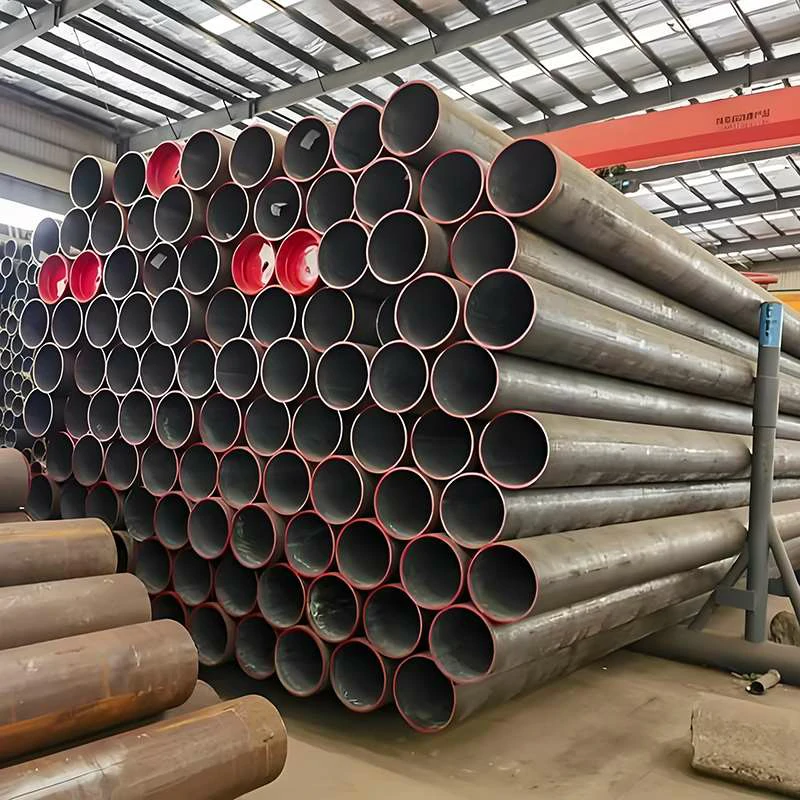
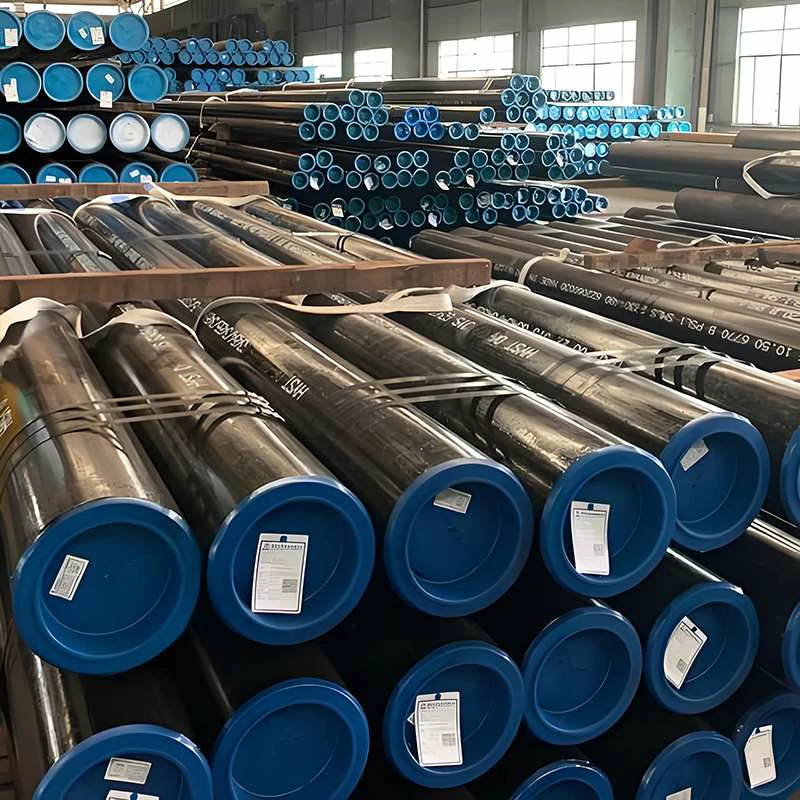
9. Packaging and Shipping: Stack the pipes neatly, ready for transport to the customer’s site.

Inspection Item Inspection Content Measured Value / Requirement
Visual Inspection Pipe surface flatness, weld quality, presence of cracks, folds, laminations, or zinc blisters Visual check, no visible defects
Dimensional Inspection Outside diameter, wall thickness, length, ovality, straightness OD ±1%, wall thickness ±12.5%, length ±50 mm, ovality ≤1%, straightness ≤1%
Chemical Composition Analysis Main elements such as C, Mn, P, S, Si Must meet steel grade standards (B, X42, X52, X56, X60)
Mechanical Properties Testing Yield strength, tensile strength, elongation, impact toughness Yield and tensile strength must meet steel grade requirements; impact toughness ≥27 J (20℃)
Hydrostatic Test Pipe pressure-bearing capacity No leakage or permanent deformation; pressure according to design requirements
Non-Destructive Testing (UT/ET) Welds and internal pipe defects Welds uniform, no cracks, laminations, porosity, or inclusions
Coating Thickness and Adhesion Test (for FBE/3PE anti-corrosion layer) Coating uniformity, adhesion, scratch resistance FBE: ≥250 µm, adhesion ≥ grade 3; 3PE: ≥350 µm, adhesion ≥ grade 3

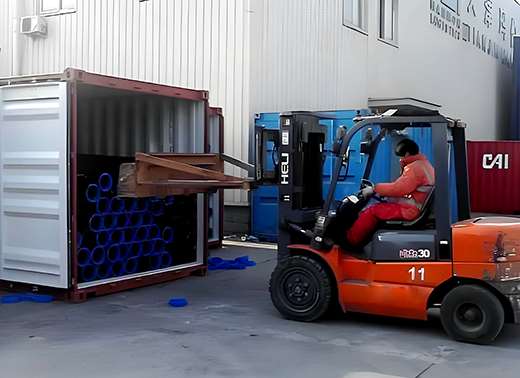
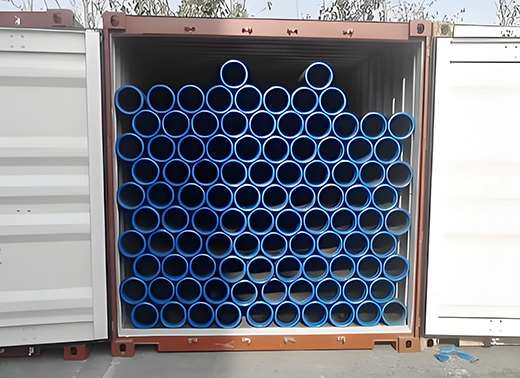
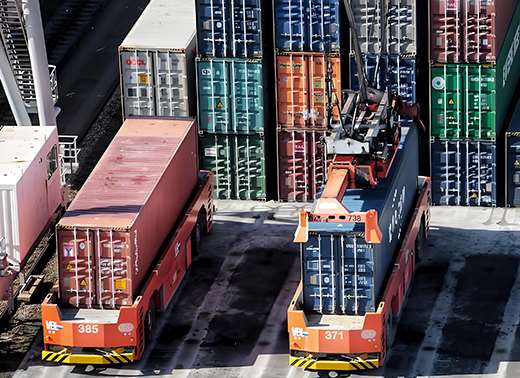
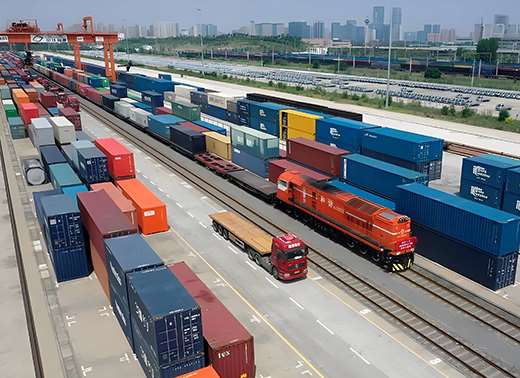
Shipment of Anti-Corrosion Seamless Carbon Steel Pipes Seamless Carbon Steel Pipe Packing

Seamless Carbon Steel Pipe Sea Freight

API 5L ERW Steel Pipe FAQ

1. What pressure ratings are suitable for API 5L ERW steel pipes?

A:
These steel pipes are suitable for medium-low to medium-pressure pipeline projects. Commonly used steel grades are B, X42, X52, X56, and X60.
For small-diameter urban gas or industrial fluid pipelines, grade B or X42 can be selected. For large-diameter long-distance oil and natural gas pipelines, X52–X60 can be selected to meet design pressure and safety factor requirements.

2. Are the welds of ERW steel pipes reliable and can they withstand the pressure of long-distance pipelines?

A:
API 5L ERW steel pipes are manufactured using high-frequency resistance welding (ERW). The welds are uniform and high-strength, and have been verified by hydrostatic testing and non-destructive testing (UT/ET).
For small- and medium-diameter pipelines, the weld reliability fully meets the requirements of oil and gas transmission projects. For high-pressure long-distance pipeline projects, higher steel grades and appropriate wall thicknesses can be considered in the design.

3. Is it safe to use ERW steel pipes in low-temperature environments?

A:
The steel grade and impact toughness design of the pipes take low-temperature environments into account. Generally, the impact toughness of the steel grade is ≥27 J (20℃), which allows for safe use in common low-temperature environments.
If the project temperature is extremely low, a high-toughness steel grade (such as X52/X56) can be selected, and the weld and pipe body performance should be rigorously tested.

4. How to ensure pipeline corrosion and protection?

A:
For buried or humid environments, it is recommended to choose an FBE single-layer epoxy coating or a 3PE three-layer anti-corrosion coating to enhance corrosion resistance.
For outdoor or dry environments, rust-preventive oil or black paint can be used. Appropriate coating selection can significantly extend the pipeline’s lifespan.

5. How to select pipe size and wall thickness?

A:
Pipe size needs to be determined based on the flow rate, pressure, and construction conditions of the transported medium:
Small diameter low pressure → Class B/X42, thinner wall thickness is acceptable
Medium pressure oil/natural gas transport → X52/X56, moderate wall thickness
High pressure long-distance transport → X60, high yield strength + thicker wall thickness
Standardize pipe length standardization (6–12 m) for transportation and installation.

6. What precautions should be taken during installation and welding?

A:
ERW steel pipes have good straightness and are easy to install, but welding still requires ensuring weld cleanliness and qualified welding process.
For long-distance pipelines, welded joints should undergo non-destructive testing (UT/ET) to ensure no internal cracks or delamination.
For anti-corrosion coated pipelines, after welding, joints need local recoating or sleeve treatment to ensure overall anti-corrosion performance.