
When selecting steel pipes for water supply systems, pressure resistance is only one part of the equation. Equal attention must be given to both the internal lining and external anti-corrosion protection to ensure long-term performance and service life.
When evaluating steel pipe specifications for a water pipeline project, focus on the following four key areas.
I. Manufacturing Process and Applicable Standards
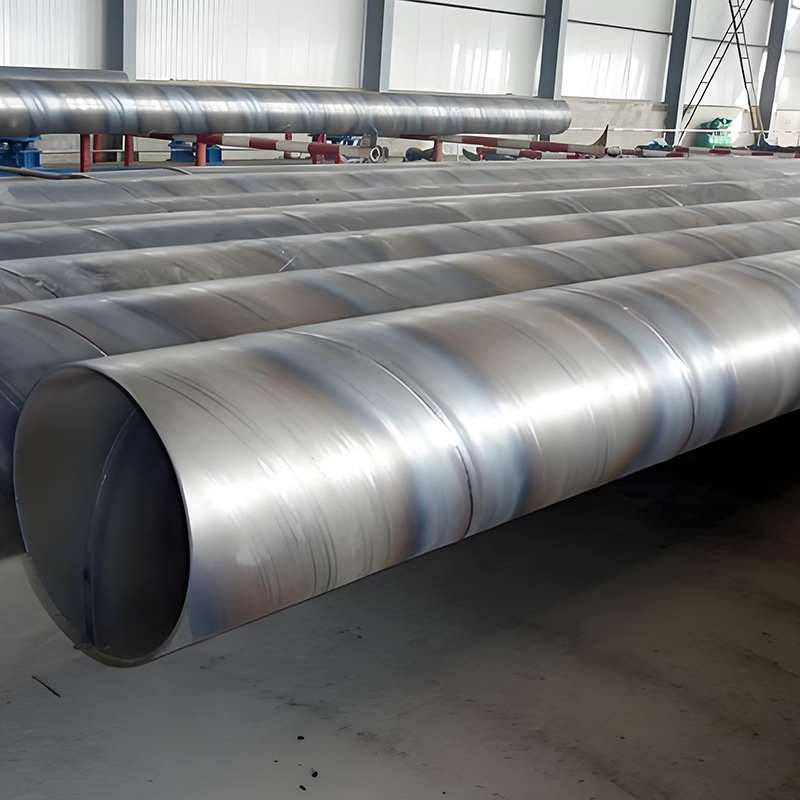
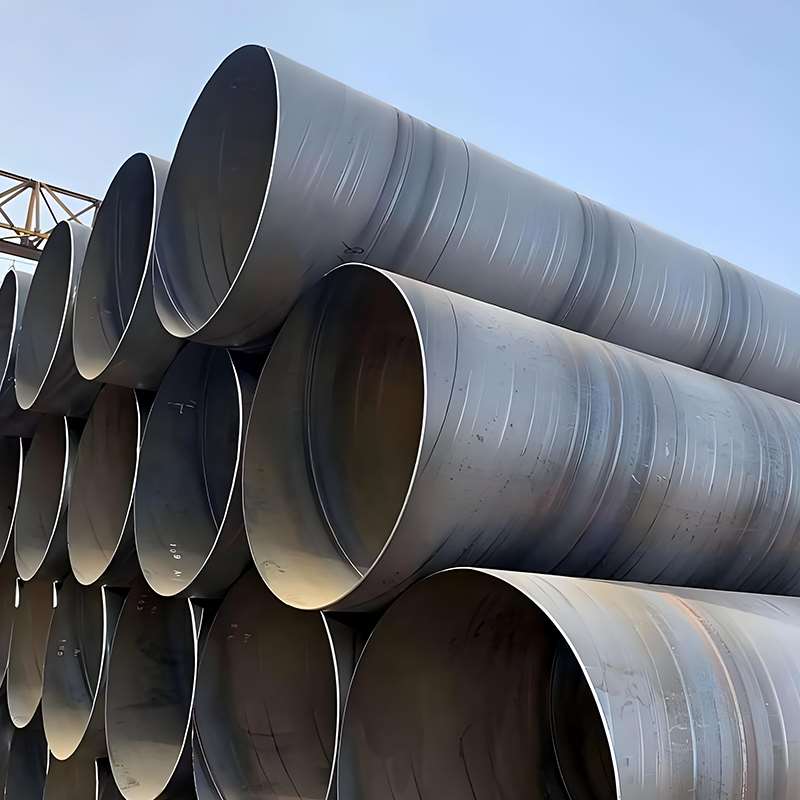
Water transmission pipelines are typically large in diameter and are therefore manufactured using welded pipe. Seamless steel pipes are generally reserved for high-pressure applications, such as vertical risers in high-rise buildings or critical mechanical equipment rooms.
Recommended Pipe Types
- Large-diameter transmission pipelines (OD > 406 mm / 16″)
SSAW and LSAW steel pipes are the preferred options. Among them, SSAW steel pipe offers excellent cost-effectiveness and is widely used for long-distance municipal water transmission systems. - Small and medium-diameter distribution pipelines (OD < 406 mm)
ERW steel pipe is commonly selected. - High-pressure systems and critical mechanical rooms
Seamless steel pipe is recommended due to its superior pressure-bearing capability.
Applicable Standards
International Standards
- AWWA C200 – Steel Water Pipe Standard published by the American Water Works Association
- ASTM A53 Grade B
Chinese Standards
- GB/T 3091 – Welded Steel Pipes for Low-Pressure Fluid Transportation
- GB/T 9711 – Commonly used for higher-pressure water transmission pipelines
II. Steel Grade and Material Selection
Unlike oil and gas pipelines, water transmission projects generally do not require ultra-high-strength steel grades. Medium-strength carbon steel typically provides sufficient performance while offering excellent weldability and toughness.
Common Materials
- Q235B
- Q345B
- ASTM Grade B
- API 5L X42
Material Selection Guidelines
For conventional municipal water supply systems operating at 1.0–1.6 MPa, Q235B or Grade B is generally sufficient.
For long-distance water transmission pipelines, mountain-crossing projects, or high-pressure pump station outlets, Q345B or API 5L X52 is recommended to provide higher pressure resistance and improved structural rigidity.
III. Pipe Dimensions and Joint Configuration
Wall Thickness Selection
Because water transmission pipelines are often large in diameter, wall thickness must be sufficient to withstand external soil loads after burial and prevent pipe deformation.
For example, a DN1000 (40-inch) pipeline typically uses a wall thickness between 10 mm and 12 mm.
The purchase contract should clearly specify that wall thickness must either be supplied at full nominal thickness or be limited to a maximum tolerance of ±5%, depending on project requirements.
Pipe End Connections
Butt-Welded Connection
Beveled pipe ends are required for field welding. A bevel angle of 30° to 35° is commonly specified to facilitate root-pass welding and ensure reliable joint integrity.
Bell-and-Spigot Connection
For large-diameter SSAW steel pipes, some municipal projects specify bell-and-spigot joints. During installation, one pipe end is inserted into the next, followed by circumferential welding on both the inside and outside of the joint, allowing for faster field installation.
IV. Internal Lining and External Coating Requirements
Internal and external corrosion protection is one of the most important factors affecting the service life of a water pipeline, which is typically designed for 30 to 50 years.
Bare steel pipe should never be used for drinking water transportation or direct underground installation.
Internal Lining
The internal lining should comply with drinking water safety requirements and be certified for potable water contact, such as NSF/ANSI 61.
Liquid Epoxy Lining
Manufactured in accordance with AWWA C210, liquid epoxy provides a smooth interior surface that minimizes bacterial growth and reduces hydraulic resistance. It is currently one of the most widely used internal linings for potable water pipelines.
Cement Mortar Lining
Manufactured in accordance with AWWA C205, cement mortar lining creates a passive alkaline protective layer that effectively reduces internal corrosion.
It is a cost-effective solution for large-diameter water transmission pipelines, although it slightly increases the overall pipe weight.
External Coating
The appropriate external coating should be selected according to the installation environment.
Buried Pipelines
For underground water transmission pipelines, 3PE (Three-Layer Polyethylene) coating is the preferred solution.
The coating should comply with DIN 30670 or GB/T 23257 and provides excellent resistance to soil corrosion, moisture, electrochemical corrosion, and plant root intrusion.
Above-Ground Pipelines
For exposed installations, hot-dip galvanizing or a coating system consisting of an epoxy zinc-rich primer followed by a polyurethane topcoat is commonly recommended to provide long-term protection against ultraviolet radiation and atmospheric corrosion.