Products

Related News

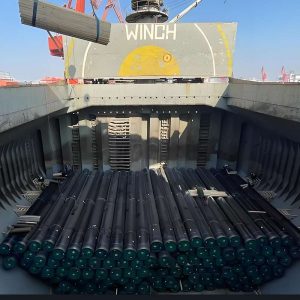
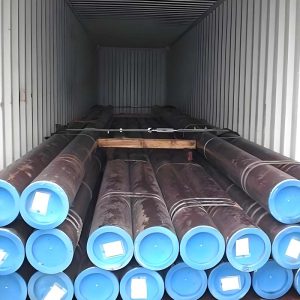
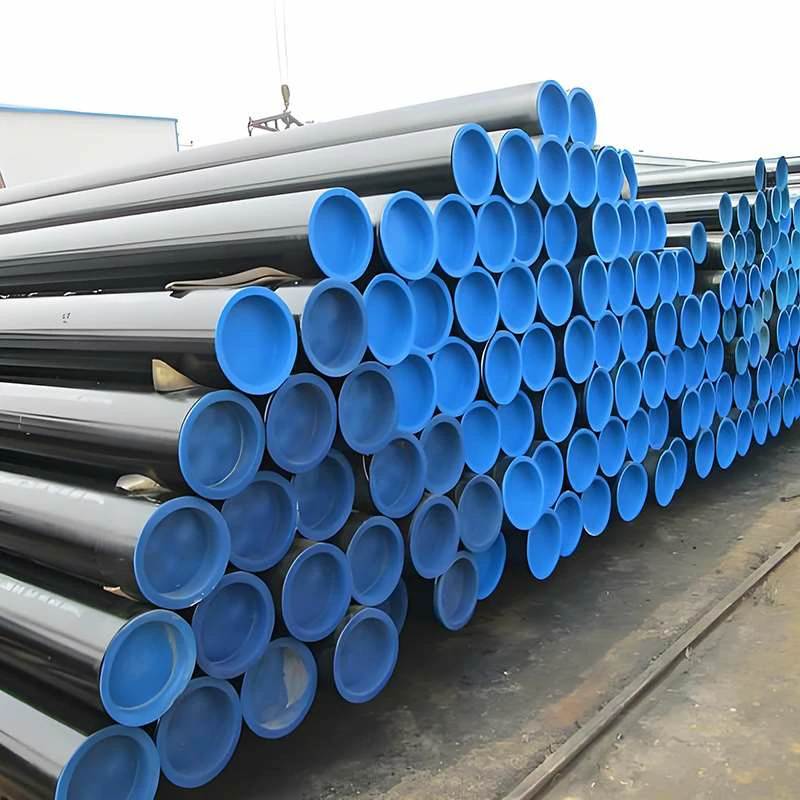
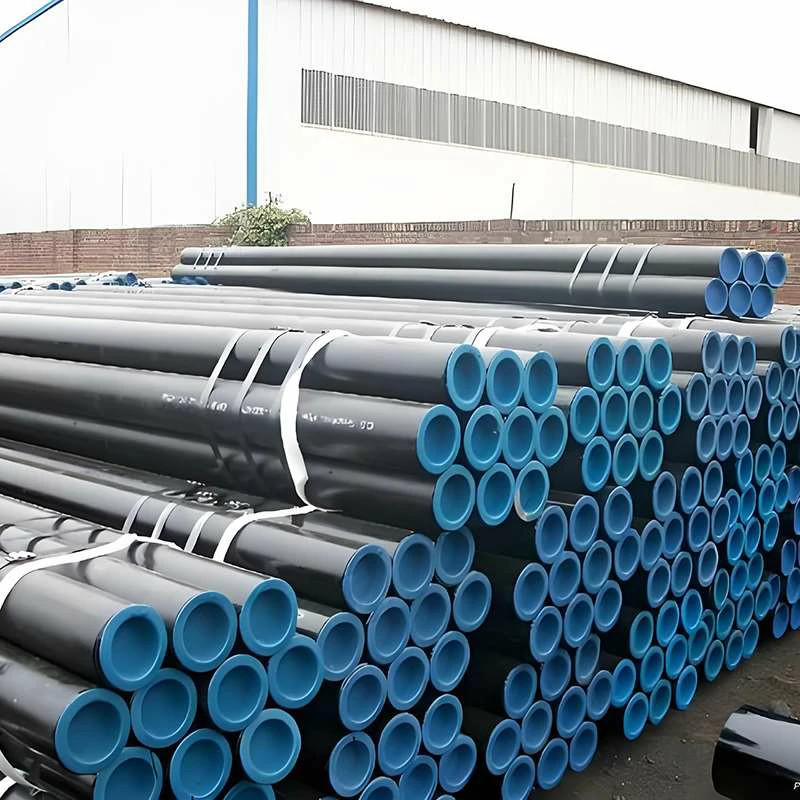
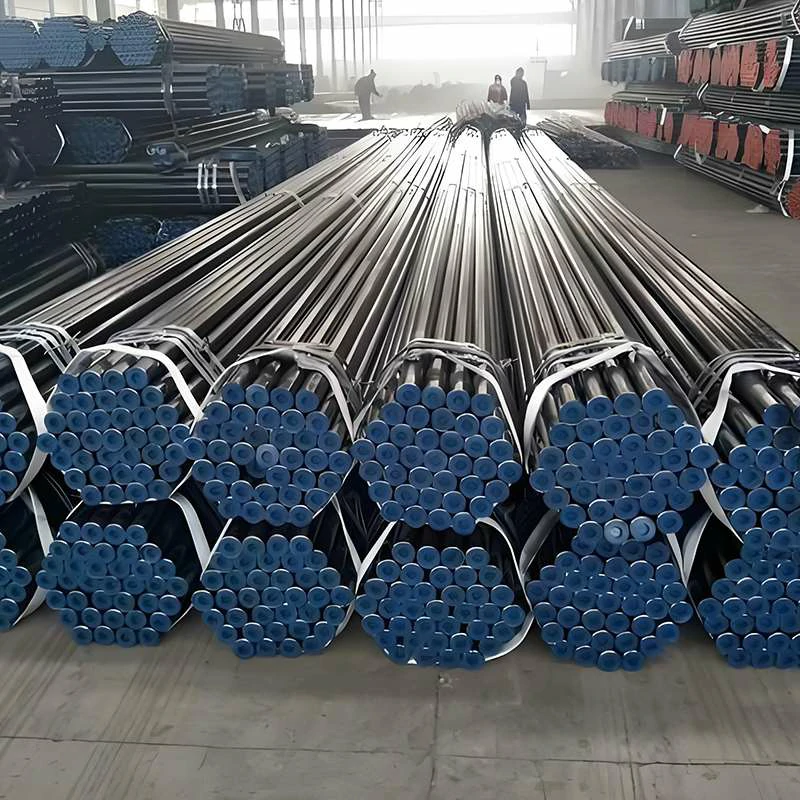
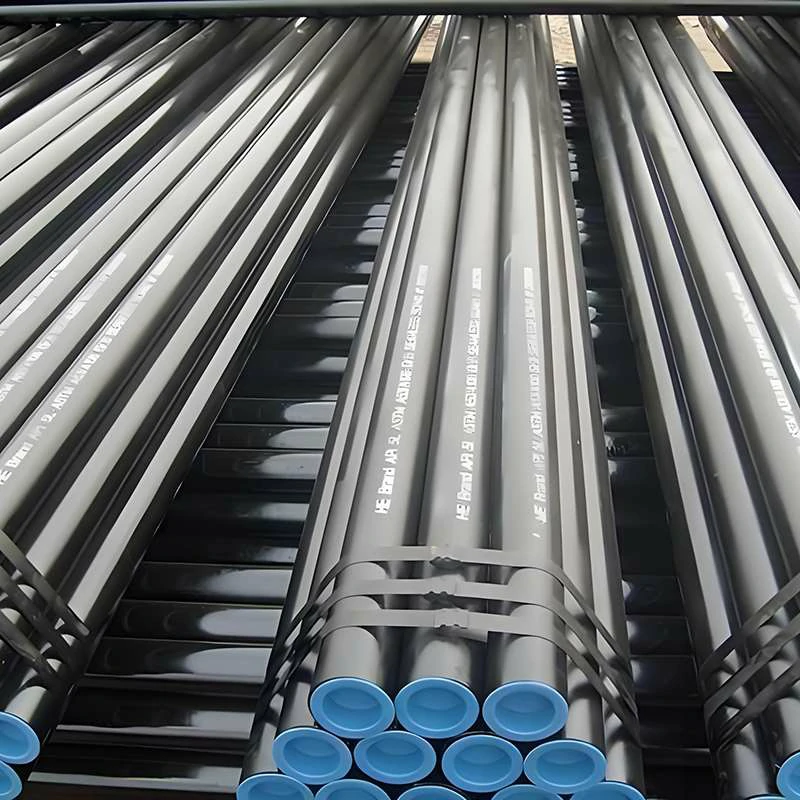
API 5L Seamless Steel Pipe

OD Range :

1/2″ – 40″

WT Range :

SCH10 – SCH160

Length :

5–12 m

Tolerance :

Outside diameter ±1% or ±1.5 mm, wall thickness ±12.5%, length ±50 mm or ±0.5%, ovality ≤1%, straightness ≤0.2%.

Material :

Grade B、X42、X52、X56、X60、X65、X70、X80

Standard :

API 5L / ISO 3183,PSL1 / PSL2

Surface :

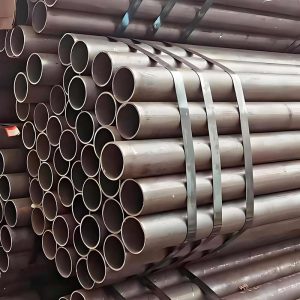
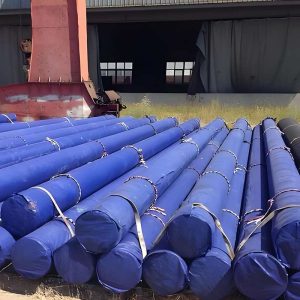
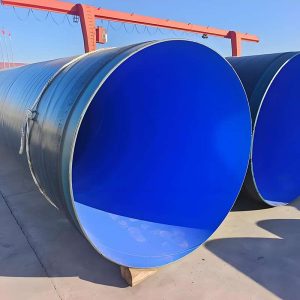
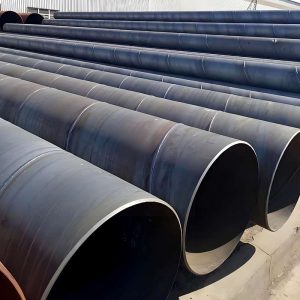
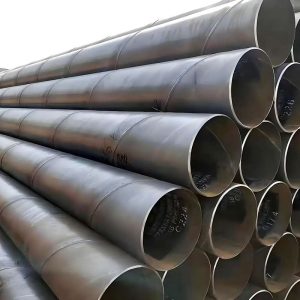
Black paint, oil paint, FBE/3PE/3LPE anti-corrosion, hot-dip galvanizing

Application :

Oil and gas long-distance pipelines, urban gas supply, liquid transportation, and chemical industry pipelines

Introduction :

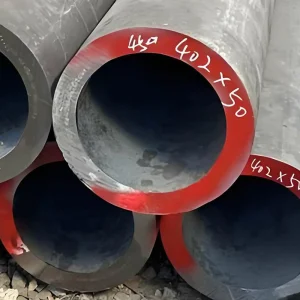
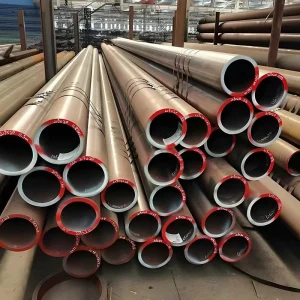
Seamless high-strength steel pipes manufactured to API 5L standards are used for transporting oil, gas, water, and industrial liquids.

I. Overview of API 5L Seamless Steel Pipe

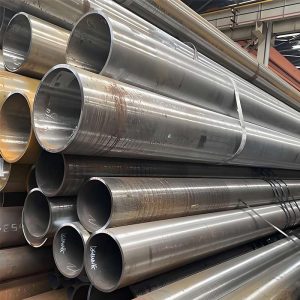
API 5L seamless steel pipe is a high-strength carbon steel pipe manufactured according to API Spec 5L / ISO 3183 standards.
Compared to welded pipe, seamless steel pipe has no weld seams, resulting in better overall strength and toughness, and can withstand high pressure, high torque, and harsh environments.

Key Features

High Strength and Toughness: Seamless construction, strong pressure resistance, suitable for deep wells and high-pressure pipelines.
Multiple Steel Grades Available: Common steel grades include Grade B, X42, X52, X56, X60, X65, X70, and X80, meeting various engineering design requirements.
Standard Compliance: Manufactured according to API 5L PSL1/PSL2 standards, ensuring chemical composition, mechanical properties, and traceability.
Multiple Corrosion Protection Treatments: Surface can be coated with black paint, oil paint, FBE, 3PE/3LPE, or hot-dip galvanizing for extended service life.
Wide Applications: Suitable for long-distance oil and gas pipelines, city gas, chemical and industrial liquid transportation, and power and energy infrastructure pipelines.

II. Chemical Composition and Mechanical Properties of Common Grades of API 5L Seamless Steel Pipes

i. Chemical Composition

Steel GradeC ≤Mn ≤P ≤S ≤Si ≤
Grade B0.281.200.0300.0300.40
X420.261.300.0300.0300.40
X520.241.400.0300.0300.45
X560.241.400.0300.0300.45
X600.221.400.0300.0300.45
X650.201.450.0300.0300.45
X700.201.650.0300.0300.45
X800.181.800.0300.0300.45

ii. Mechanical properties

Steel GradeMinimum Yield Strength (MPa)Minimum Tensile Strength (MPa)Elongation ≥
Grade B24541522%
X4229041521%
X5235945520%
X5638649020%
X6041452020%
X6544853518%
X7048356518%
X8055262516%

III. API 5L Seamless Steel Pipe Selection Guide

When selecting API 5L seamless steel pipes, it is necessary to comprehensively consider the transported medium, design pressure, pipe length, engineering environment, and safety level. Different project types typically correspond to different recommended steel grades.

Project TypeRecommended Steel GradeApplication Characteristics
General Industrial Fluid TransportationGrade B / X42Moderate strength and lower cost, suitable for water, steam, and general industrial liquid transportation
City Gas PipelineX42 / X52Good strength and weldability, suitable for medium- and low-pressure gas transmission
Oil and Gas Gathering PipelinesX52 / X56Good pressure resistance, suitable for internal transportation systems in oilfields or gas fields
Medium and Long Distance Oil & Gas PipelinesX60 / X65High strength and good toughness, suitable for long-distance and high-pressure transmission
Large Oil & Gas Transmission ProjectsX65 / X70High-strength steel grades that can reduce wall thickness and pipeline weight
High-Pressure Natural Gas Transmission PipelinesX70 / X80Ultra-high-strength steel grades suitable for large-diameter and high-pressure gas pipelines

Key factors to consider when selecting a pipe type:

  1. Delivery Pressure
    Low-pressure pipeline → Grade B / X42
    Medium-pressure pipeline → X52 / X56
    High-pressure pipeline → X60 and above
  2. Delivery Distance
    Short-distance pipeline → Lower steel grade is sufficient
    Long-distance pipeline → Typically X60 and above are selected
  3. Pipe Diameter
    Small-diameter pipes → Grade B / X42
    Large-diameter pipes → X60 / X65 / X70
  4. Engineering Safety Level
    Large-scale energy projects typically use:
    PSL2 + High-strength steel grade (X65 / X70)

Engineering Experience Recommendations:

Urban Gas Projects: X52 is the most commonly used.
International Oil and Gas Pipeline Projects: X60 / X65 are common.
Large Transnational Gas Pipelines: X70 / X80 are increasingly used.
Selecting the appropriate steel grade not only ensures the safe operation of the pipeline but also reduces material costs and construction difficulty.
Related Products

Nominal Pipe Size (NPS) Outside Diameter (mm) Common Wall Thickness Range (mm)
1/2″ 21.3 2.77, 3.73, 4.78
3/4″ 26.7 2.87, 3.91, 5.56
1″ 33.4 3.38, 4.55, 6.35
1-1/4″ 42.2 3.56, 4.85, 6.35
1-1/2″ 48.3 3.68, 5.08, 7.14
2″ 60.3 3.91, 5.54, 8.74
2-1/2″ 73.0 5.16, 7.01, 9.53
3″ 88.9 5.49, 7.62, 11.13
4″ 114.3 6.02, 8.56, 13.49
5″ 141.3 6.55, 9.53, 15.88
6″ 168.3 7.11, 10.97, 18.26
8″ 219.1 8.18, 12.70, 23.01
10″ 273.0 9.27, 15.09, 28.58
12″ 323.9 9.53, 17.48, 33.32
14″ 355.6 9.53, 19.05, 35.71
16″ 406.4 9.53, 21.44, 40.49
18″ 457.0 9.53, 23.83, 45.24
20″ 508.0 9.53, 26.19, 50.01
24″ 610.0 9.53, 30.96, 59.54

Specifications
Outer Diameter Standard: Based on ASME B36.10 / API 5L
Wall Thickness Series: Corresponds to SCH10, SCH20, SCH40, SCH80, SCH160, etc.
Length: Typically 6m, 9m, 12m or fixed length
Maximum Seamless Tube Outer Diameter: Generally approximately 610 mm (24″)

Key contents of API 5L standard

Standard Item Description
Standard Name API Spec 5L Line Pipe
Issuing Organization American Petroleum Institute (API)
Applicable Products Seamless steel pipe, ERW welded pipe, LSAW (Longitudinal Submerged Arc Welded) pipe, SSAW (Spiral Submerged Arc Welded) pipe
Product Application Pipelines for the transportation of oil, natural gas, water, and other fluids
Product Specification Level PSL1, PSL2
Common Steel Grades Grade B, X42, X52, X56, X60, X65, X70, X80
Size Range From small-diameter to large-diameter line pipes
Inspection Requirements Chemical composition analysis, mechanical property testing, non-destructive testing (NDT), hydrostatic testing, etc.

Differences between PSL1 and PSL2

Item PSL1 PSL2
Quality Level Basic quality level Higher quality level
Chemical Composition Control Basic requirements More stringent requirements
Impact Test Generally not required Mandatory
Non-Destructive Testing As required Usually stricter requirements
Application General transportation pipelines Long-distance oil and gas pipelines

API 5L Comparison Table with Other Piping Standards

Standard Main Application
API 5L Oil and gas pipelines
ASTM A106 High-temperature pipelines
ASTM A53 General structural and fluid transportation
ASTM A333 Low-temperature pipelines


Raw Material Inspection

Billet Heating (about 1200 °C)

Piercing (forming hollow shell)

Continuous Rolling / Hot Rolling Forming

Sizing / Reducing

Cooling and Straightening

Pipe Cutting to Length

Heat Treatment (Normalizing / Quenching & Tempering, depending on steel grade)

Non-Destructive Testing (UT, RT, ET)

Hydrostatic Test

Dimensional and Visual Inspection

Surface Treatment (Black Paint / Anti-rust Oil / Anti-corrosion Coating)

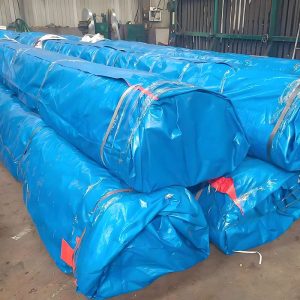
Marking and Packaging

Warehousing and Shipment

API 5L Seamless Steel Pipe Testing Standard

Inspection Item Inspection Content Standard Technical Requirement
Visual Inspection Check whether the pipe surface has cracks, folds, laminations, scabs, or other defects API 5L No defects that affect service performance
Outside Diameter Inspection Measurement of the pipe outside diameter API 5L OD tolerance ±1% (minimum ±0.5 mm)
Wall Thickness Inspection Measurement of pipe wall thickness API 5L Wall thickness tolerance ±12.5%
Length Inspection Measurement of specified pipe length API 5L Length tolerance ±50 mm
Ovality Inspection Difference between maximum and minimum outside diameter API 5L ≤ 1% of OD
Hydrostatic Test Test the pressure resistance of the pipe API 5L No leakage or deformation
Ultrasonic Testing (UT) Detection of internal defects API 5L / ASTM A435 No cracks, inclusions, or similar defects
Eddy Current Testing (ET) Detection of surface and near-surface defects ASTM E309 No continuous defects allowed
Chemical Composition Analysis Analysis of elements such as C, Mn, P, S API 5L Must meet the requirements of the corresponding steel grade
Tensile Test Yield strength and tensile strength testing API 5L Must meet the specified steel grade properties
Impact Test Low-temperature impact toughness testing API 5L ≥ 27 J (common requirement)
Bend Test Pipe plasticity testing API 5L No cracks allowed
Flattening Test Pipe deformation capability testing API 5L No cracking after flattening

Common nondestructive testing ratios

Inspection Method Inspection Ratio Description
Ultrasonic Testing (UT) 100% Detect internal cracks and inclusions
Hydrostatic Test 100% Ensure the pressure-bearing capacity of the steel pipe
Visual and Dimensional Inspection 100% Ensure dimensions comply with the standard
Chemical Composition Analysis Once per heat Ensure material composition stability
Mechanical Properties Testing Once per batch Verify the performance of the steel grade

Common Questions about API 5L Seamless Steel Pipes

1. What are the differences between API 5L grade B, X52, and X65 steel pipes?

The main difference lies in their strength grades. The number in the steel grade indicates the minimum yield strength of the steel pipe (unit: ksi).

Steel Grade Minimum Yield Strength Characteristics
Grade B 245 MPa Lower strength, suitable for general transportation pipelines
X52 360 MPa Higher strength, commonly used for medium- and long-distance pipelines
X65 450 MPa High-strength steel grade, suitable for high-pressure transportation projects

Generally speaking, the higher the steel grade, the stronger the pressure-bearing capacity, which can reduce the pipe wall thickness and lower the project cost.

2. What engineering projects are API 5L seamless steel pipes mainly used in?

API 5L seamless steel pipes are mainly used in oil and gas pipeline engineering. Common applications include:
Long-distance crude oil pipelines
Long-distance natural gas pipelines
Urban gas trunk networks
Refinery and oilfield gathering pipelines
Offshore platform pipelines
Among them, X52 and X65 are often used in large-scale oil and gas pipeline projects.

3. What are the differences between API 5L seamless steel pipes and welded pipes?

Type Characteristics
Seamless Steel Pipe No weld seam, high overall strength, strong pressure resistance
Welded Steel Pipe Has weld seam, lower production cost

For high-pressure oil and gas transportation or critical pipelines, API 5L seamless steel pipes are generally preferred.

4. What is the difference between API 5L PSL1 and PSL2?

The API 5L standard is divided into two product specification levels: PSL1 and PSL2.

Item PSL1 PSL2
Quality Requirement Basic requirement Stricter requirement
Chemical Composition General control Stricter control
Impact Test Not necessarily required Mandatory
Non-Destructive Testing As applicable Usually required

Oil and gas pipeline projects typically require a PSL2 rating.

5. What is the common specification range for API 5L seamless steel pipes?

Item Specification Range
Outside Diameter 21.3 mm – 660 mm
Wall Thickness 2 mm – 60 mm
Length 6 m – 12 m

6. Does API 5L seamless steel pipe require anti-corrosion treatment?

For buried or marine pipeline projects, anti-corrosion treatment is usually required to extend service life.
Common anti-corrosion methods include:
3PE anti-corrosion coating (commonly used in oil and gas pipelines)
FBE epoxy powder coating
Epoxy coal tar anti-corrosion layer
Hot-dip galvanizing (generally used in water transmission projects)
With anti-corrosion treatment, the service life of the pipeline can typically reach over 30 years.