Products

Related News

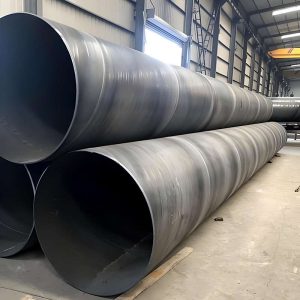
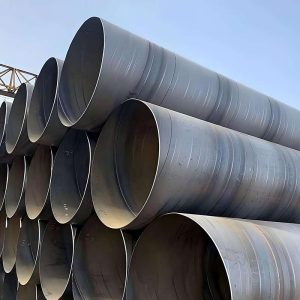
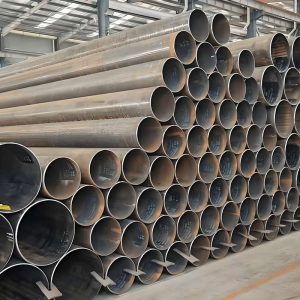
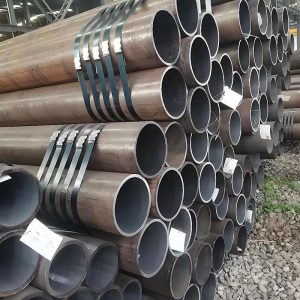
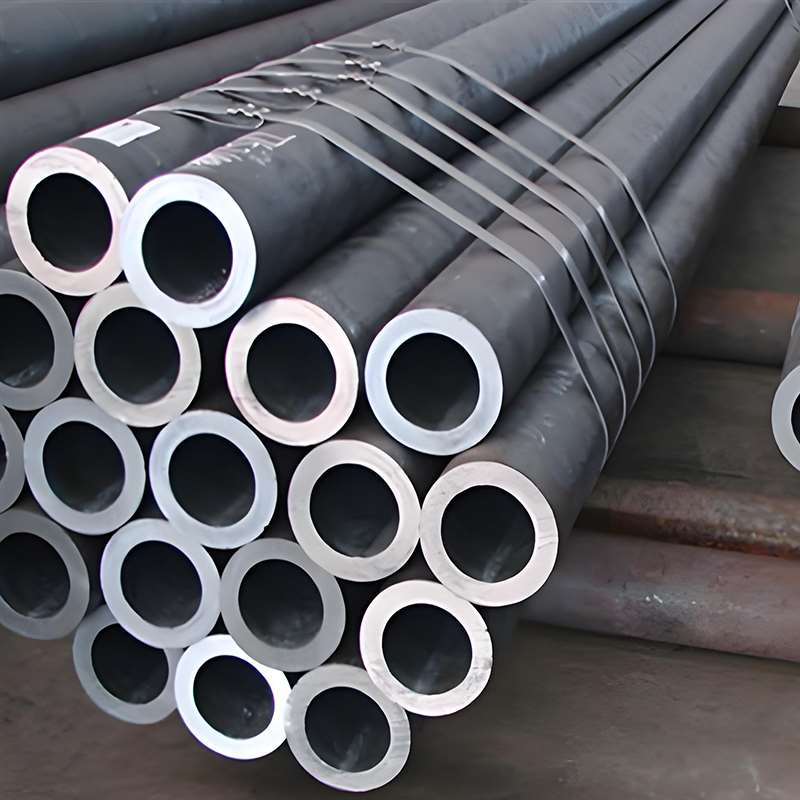
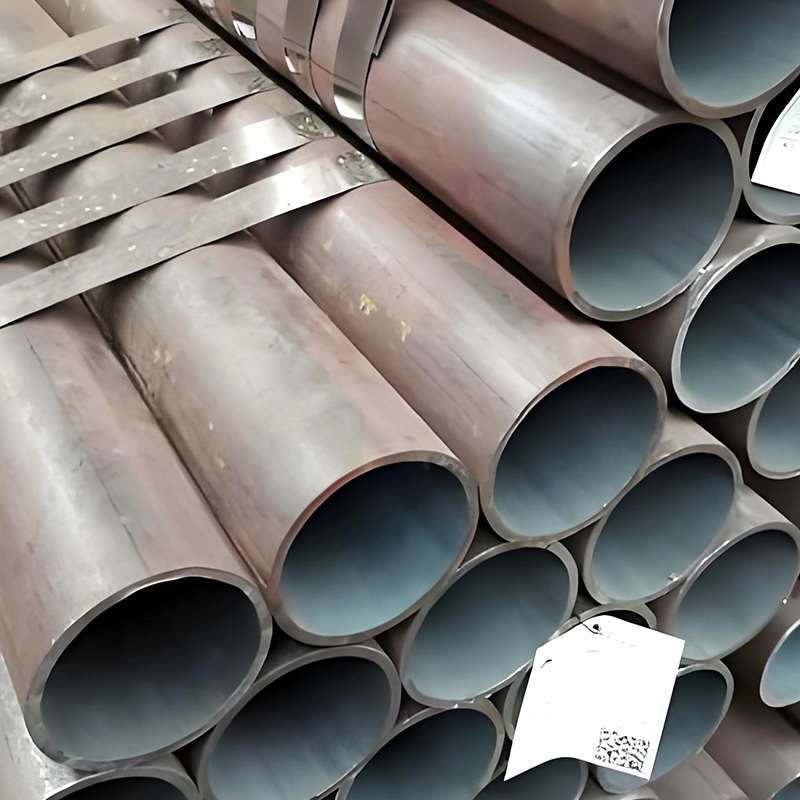
DIN 2448 Seamless Steel Pipe

OD Range :

10 – 610 mm

WT Range :

1 – 50 mm

Length :

6 m、12 m

Tolerance :

Outer diameter ±0.8% / Wall thickness ±12.5%

Material :

Carbon steel: ST37, ST44, ST52 Alloy steel: 16Mo3, 13CrMo44, etc.

Standard :

DIN 2448

Surface :

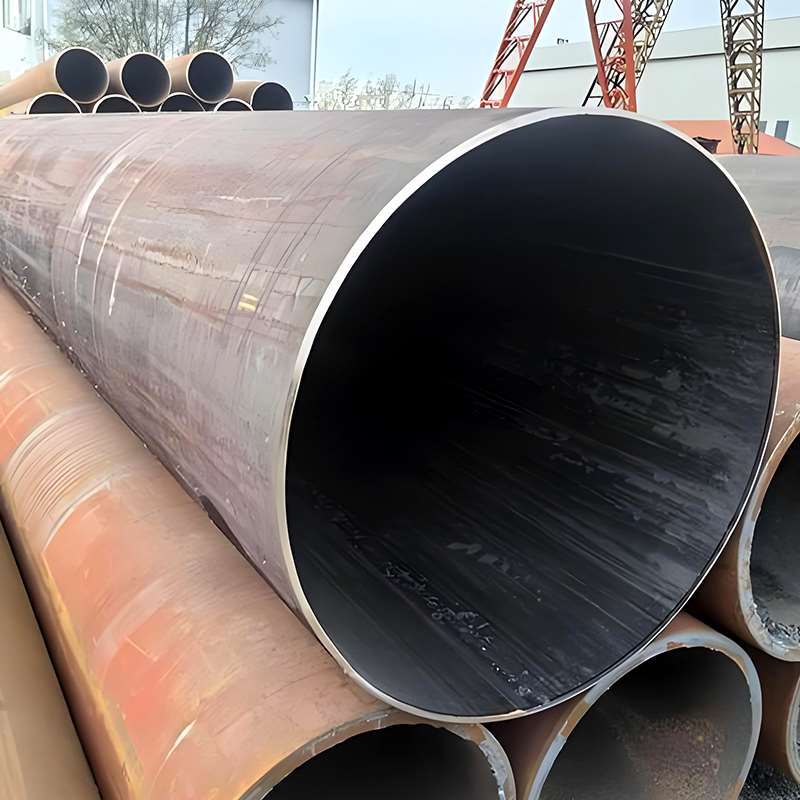
Black pipe / Anti-rust oil / Hot-dip galvanizing / Sandblasting

Application :

Building structures, bridges, mechanical equipment, pipeline engineering, industrial plants, energy facilities

Introduction :

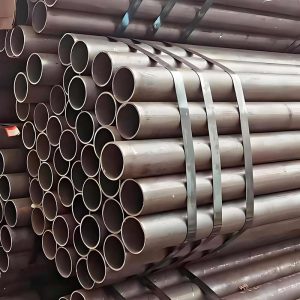
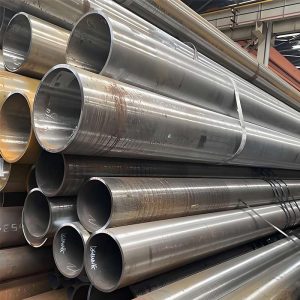
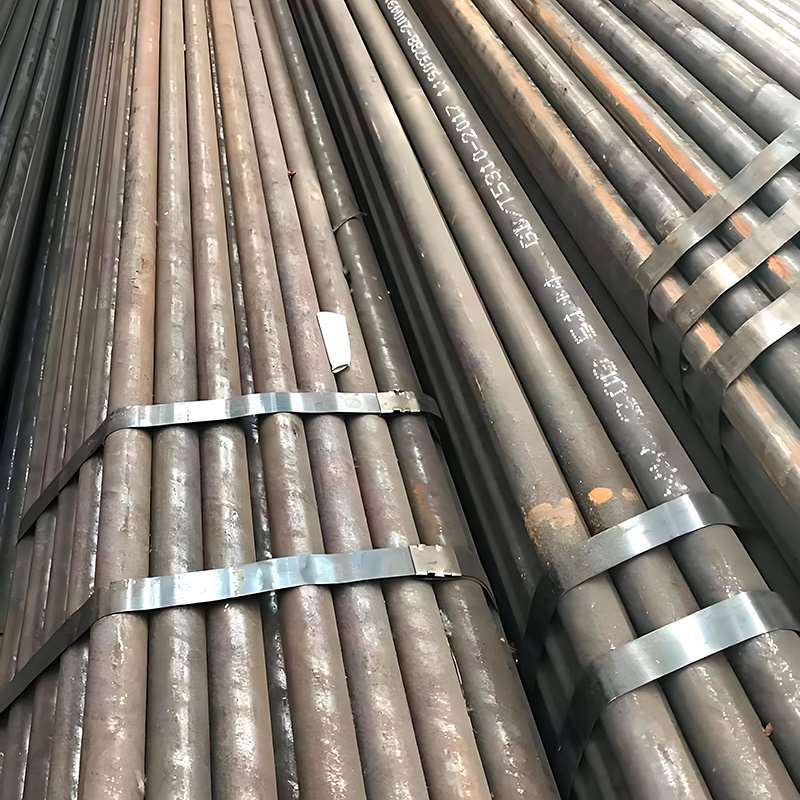
DIN 2448 seamless steel pipes are manufactured using hot rolling or cold drawing processes and feature high strength and high dimensional accuracy.

I. Overview of DIN 2448 Seamless Steel Pipes

DIN 2448 seamless steel pipes are a long-standing European standard used for the production of high-precision, structurally reliable carbon steel and alloy steel seamless pipes.
They are widely used in building structures, mechanical equipment, bridge engineering, and industrial piping systems, and are favored by engineering projects worldwide due to their high strength, good processing performance, and reliable dimensional accuracy.

II. DIN 2448 Seamless Steel Pipe Material and Steel Grade Comparison Table

Material CategorySteel GradeYield Strength (MPa)Tensile Strength (MPa)CharacteristicsTypical Applications
Carbon SteelST37235360 – 510Low-carbon steel with good weldability, high ductility, and cost efficiencyGeneral building structures, light industrial piping
ST44275430 – 580Medium-carbon steel with higher strength than ST37 and better load-bearing capacityIndustrial pipelines, mechanical supports
ST52355490 – 630High-strength steel with high yield strength, suitable for load-bearing structuresHeavy structures, bridges, machinery equipment
Low Alloy Steel16Mo3275 – 295410 – 540Mo alloyed steel with improved high-temperature strength and pressure resistanceHigh-temperature boiler piping, chemical process pipelines
13CrMo44290 – 320430 – 570Cr-Mo alloy steel with excellent high-temperature and high-pressure performanceHigh-temperature, high-pressure steam pipelines, energy transmission lines
Special Alloy Steel (Optional / Custom)10CrMo9-10, etc.300 – 350450 – 600Excellent creep resistance and corrosion resistance at high temperaturesPower plants, chemical and petrochemical high-temperature pipelines

III. Surface Treatment

Depending on the specific engineering environment, DIN 2448 seamless steel pipes can undergo various surface treatments:

  1. Black pipe: Economical and practical, used indoors or in non-corrosive environments.
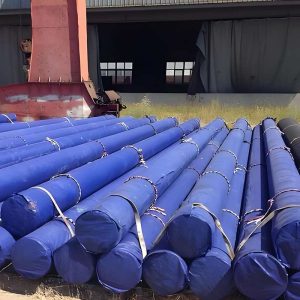
  2. Anti-rust oil coating: Suitable for short-term storage or transportation.
  3. Hot-dip galvanizing: Suitable for outdoor or corrosive environments.
  4. Sandblasting or painting: Used for decorative purposes or special corrosion protection requirements.

IV. Application Areas

  • Building Structures: Factory buildings, warehouses, commercial building frames
  • Bridge Engineering: Bridge supports, guardrails, maintenance walkways
  • Mechanical Equipment: Equipment bases, supports, frames
  • Industrial Pipelines: Steam pipelines, pressure pipelines, chemical and energy systems often use carbon steel pipes for their strength and durability.
  • Public Facilities: Power transmission towers, photovoltaic supports, pipe rack supports

V.DIN 2448 Seamless Steel Pipe Selection and Procurement Recommendations

  1. Select Steel Grade Based on Load Requirements
  • Light load/General structure: ST37, low cost, easy to weld
  • Medium load/Industrial pipelines: ST44 / ST52, high strength, good load-bearing capacity
  • Heavy load/High temperature and high pressure: 16Mo3 / 13CrMo44, suitable for boilers and steam pipelines
  1. Select Appropriate Size and Wall Thickness
  • Outer diameter: 10 – 610 mm
  • Wall thickness: 2 – 25 mm (commonly used)
  • Do not blindly increase wall thickness; select the cross-section according to the engineering load to save costs.
  1. Select Surface Treatment Based on Environment
  • Indoor/Dry environment: Black pipe or rust-proof oil is sufficient
  • Outdoor/Corrosive environment: Hot-dip galvanizing to extend service life
  • Special decoration or corrosion protection: Sandblasting or painting
  1. Verify Quality Before Procurement
  • Check the Material Certificate (MTC) and test report
  • Confirm dimensions, wall thickness, steel grade, and weld quality
  1. Bulk Procurement and Custom Lengths
  • Try to unify specifications and lengths to reduce transportation and processing costs
  • Custom length processing can be selected to improve construction efficiency

VI. DIN 2448 Seamless Steel Pipe Procurement Process

  1. Define Requirements
  • Project Use: Building structures, bridges, industrial pipelines, mechanical supports, etc.
  • Specification Requirements: Outer diameter, wall thickness, length, steel grade
  • Surface Treatment: Black pipe, anti-rust oil, hot-dip galvanizing or coating
  • Special Requirements: Impact toughness, high temperature resistance, corrosion resistance, etc.
  1. DIN 2448 Seamless Steel Pipe Supplier Selection
  • Certification and Qualifications: Select manufacturers that comply with DIN 2448 / EN 10220 standards
  • Quality System: Presence of ISO 9001 certification or third-party testing reports
  • Delivery Capability: Stock availability, custom cutting capabilities, and delivery time
  • Customer Feedback: Past project experience, reputation, and after-sales service
  1. Obtain Quotations
  • Provide a detailed specification list (dimensions, wall thickness, length, steel grade, quantity)
  • Clearly state surface treatment requirements
  • Compare prices, transportation, packaging methods, and delivery time
  1. Sample or Technical Confirmation
  • For critical structures or large-volume purchases, sample tubes or material certificates may be required.
  • Verify dimensions, wall thickness, surface treatment, and steel grade.
  • Ensure the DIN 2448 seamless steel pipe complies with engineering design and safety specifications.
  1. Ordering and Procurement
  • Sign a contract, clearly specifying specifications, quantity, price, delivery time, and quality standards.
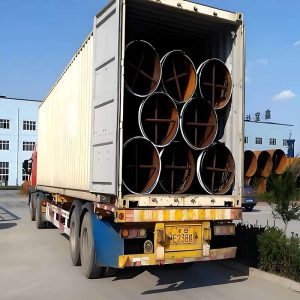
  • Determine the transportation method (full truckload, bulk, or pallet).
  • Confirm packaging methods to prevent transportation damage.
  1. Receiving and Acceptance
  • Upon arrival, conduct a visual inspection (welds, surface, straightness).
  • Perform random checks of dimensions, tolerances, and wall thickness.
  • Verify material certificates (MTC) and test reports.
  • Report any problems to the supplier promptly.
  1. Warehousing and Use
  • Store materials according to specifications and intended use, taking precautions against rust and damage.
  • Issue materials in batches during project construction to ensure proper construction sequence and safety.
Related Products

DIN 2448 Seamless Steel Pipe Specifications and Dimensions Table

Outside Diameter (mm) Wall Thickness (mm) Length (m) Theoretical Weight (kg/m) Applicable Steel Grades
10 1.0 – 2.5 6 / 12 0.10 – 0.18 ST37, ST44
20 2.0 – 3.5 6 / 12 0.32 – 0.52 ST37, ST44
25 2.0 – 4.0 6 / 12 0.50 – 0.78 ST37, ST44
32 2.0 – 5.0 6 / 12 0.78 – 1.21 ST37, ST44, ST52
40 2.5 – 5.0 6 / 12 1.21 – 1.78 ST37, ST44, ST52
50 2.5 – 6.0 6 / 12 1.78 – 2.63 ST37, ST44, ST52
65 3.0 – 6.5 6 / 12 2.91 – 4.42 ST37, ST44, ST52
80 3.0 – 8.0 6 / 12 4.42 – 6.94 ST44, ST52
100 4.0 – 10 6 / 12 7.85 – 13.0 ST44, ST52
125 4.0 – 12 6 / 12 12.3 – 20.0 ST44, ST52
150 5.0 – 14 6 / 12 18.6 – 30.0 ST44, ST52
200 6.0 – 16 6 / 12 29.5 – 48.0 ST52
250 7.0 – 20 6 / 12 49.5 – 87.0 ST52
300 8.0 – 22 6 / 12 70.0 – 115.0 ST52
350 9.0 – 25 6 / 12 97.0 – 160.0 ST52
400 10 – 28 6 / 12 130 – 210 ST52
500 12 – 32 6 / 12 200 – 330 ST52
610 14 – 40 6 / 12 310 – 540 ST52


DIN 2448 Seamless Steel Pipe Standard

I. Standard Introduction

DIN 2448 is a German standard for seamless steel pipes, applicable to seamless pipes made of carbon steel and low-alloy steel. This standard guarantees high strength, high dimensional accuracy, and good weldability of the pipes, and is widely used in industrial pipelines, mechanical equipment, and building structures.

II. Materials / Steel Grades

Material Category Common Steel Grades Characteristics
Carbon Steel ST37, ST44, ST52 Good weldability, high ductility, cost-effective
Low Alloy Steel 16Mo3, 13CrMo44 Excellent performance under high temperature and pressure; suitable for boiler and steam pipelines

III. Dimensions and Tolerances

Parameter Range Tolerance Description
Outside Diameter 10 – 610 mm ±0.8%
Wall Thickness 1 – 50 mm (commonly 2 – 25 mm) ±12.5%
Length 6 m / 12 m or cut-to-length ±10 mm

IV. Mechanical Properties

Parameter Value Range Description
Yield Strength 235 – 355 MPa (carbon steel) Ensures load-bearing capacity
Tensile Strength 360 – 630 MPa Guarantees structural safety
Elongation 22 – 26% Ensures pipe ductility
Impact Toughness Optional J0 / J2 Prevents brittle fracture in low-temperature environments

V. Surface and Quality Requirements

Smooth surface, free from cracks or pits
Optional rust-preventive oil, black finish, hot-dip galvanizing, or coating
Material test certificate (MTC) provided
Ultrasonic or radiographic non-destructive testing (NDT) available

VI. Compatible Standards

DIN 2448 is compatible with modern European standards such as EN 10220 / EN 10216-1
Guaranteed compliance of material, dimensions, and mechanical properties with international engineering requirements


DIN 2448 Seamless Steel Pipe Production Process Flow

Raw Material Preparation → Steel Billet Heating → Piercing and Rolling → Straightening and Sizing → Cutting to Length → Surface Treatment → Quality Inspection → Packaging and Shipping

Detailed Steps:

1. Raw Material Preparation
Select carbon steel or low-alloy steel billets conforming to DIN 2448 standards.
Check the chemical composition and mechanical properties of the steel billets.

2. Steel Billet Heating
Heat the steel billets to a temperature suitable for rolling (approximately 1100℃).
Ensure uniform heating of the steel material.

3. Piercing and Rolling / Cold Drawing (Optional)
Hot-rolled seamless pipe: Steel billet is pierced into a tube blank → rolled into a pipe.
Cold-drawn seamless pipe (optional): Hot-rolled tube blank is cold-drawn for high-precision dimensions.

4. Straightening and Sizing
The pipe is straightened using a straightening machine.
Sizing ensures that the outer diameter, wall thickness, roundness, and straightness meet the standards.

5. Cutting to Length
Cut according to project requirements or standard lengths (6 m / 12 m).
Custom length cutting is available for convenient construction and installation.

6. Surface Treatment
Surface treatment options include: black pipe, anti-rust oil, hot-dip galvanizing, or coating, depending on customer requirements.
Ensures corrosion resistance during transportation and use.

7. Quality Inspection
Chemical composition, mechanical properties, dimensional tolerances, weld quality.
Optional non-destructive testing (ultrasonic/radiographic).

8. Packaging and Shipping
Standardized packaging to ensure safe transportation.
Shipments can be made in batches according to project needs.


DIN 2448 Seamless Steel Pipe Testing Standards

1. Chemical Composition Testing
Test items: Carbon (C), Silicon (Si), Manganese (Mn), Phosphorus (P), Sulfur (S), Chromium (Cr), Molybdenum (Mo), etc.
Purpose: To ensure that the mechanical properties, weldability, and corrosion resistance of the steel meet the DIN 2448 standard.
Output: Material Test Certificate (MTC)

2. Mechanical Properties Testing
Test items:
Yield strength (Rp0.2): 235 – 355 MPa (carbon steel)
Tensile strength (Rm): 360 – 630 MPa
Elongation (A%): 22 – 26%
Purpose: To verify the load-bearing capacity and plasticity of the pipe, ensuring structural safety.

3. Low-Temperature Impact Test
Test item: Charpy V-Notch impact value
Grade: J0 / J2 grade
Purpose: To ensure that the pipe does not become brittle at low temperatures.

4. Dimensions and Tolerances Testing
Test items: Outer diameter, wall thickness, length, straightness
Standard: Outer diameter ±0.8%, wall thickness ±12.5%, length ±10 mm
Purpose: To ensure proper installation and engineering accuracy.

5. Surface Quality Inspection
Inspection content: Surface finish, weld quality, no cracks, pits, or mechanical damage
Purpose: To ensure the appearance and safe use of the pipe.

6. Non-Destructive Testing
Testing methods: Ultrasonic testing (UT), Radiographic testing (RT)
Purpose: To detect internal defects such as pores and slag inclusions.
Application: Applicable to high-pressure pipelines or critical structural pipes.

7. Pressure Testing
Testing method: Hydrostatic or pneumatic testing
Purpose: To confirm the pressure resistance of the pipe.
Application: Pressure pipelines, high-temperature steam pipelines


ASTM A252 Steel Pipe Pile

DIN 2448 Seamless Steel Pipe FAQ

Q1. What applications are DIN 2448 seamless steel pipes suitable for?

A:
They are widely used in industrial pipelines, building structures, mechanical equipment, boilers, and steam pipelines. Carbon steel is suitable for general load-bearing and structural pipelines, while low-alloy steel is suitable for high-temperature, high-pressure, and critical load-bearing pipelines.

Q2. What are the common steel grades, and what are their differences?

A:
ST37: General structural use, economical and practical.
ST44 / ST52: Medium to high strength, better load-bearing capacity.
16Mo3 / 13CrMo44: High temperature and high pressure resistance, suitable for boilers and steam pipelines.
Different steel grades differ in yield strength, tensile strength, and low-temperature impact performance. The selection should be determined according to the engineering load.

Q3. How to select the pipe diameter and wall thickness?

Answer:
Select the outer diameter based on the project’s load-bearing and flow requirements.
Select the wall thickness according to the safety factor and load requirements.
It is not recommended to blindly increase the wall thickness; reasonable selection ensures both safety and cost reduction.

Q4. What surface treatment methods are available for DIN 2448 seamless steel pipes?

Answer:
Black pipe/rust-preventive oil: For indoor or short-term storage.
Hot-dip galvanizing: For outdoor or humid environments.
Sandblasting/painting: For corrosion protection and decorative purposes, suitable for special pipelines and decorative structures.

Q5. What quality standards should be considered during procurement?

A:
Confirm that the supplier provides a Material Test Certificate (MTC).
Check the chemical composition, mechanical properties, dimensional tolerances, and surface quality.
For critical pressure-bearing pipelines, non-destructive testing (UT/RT) can be required to ensure internal quality.

Q6. What standards can be referenced for DIN 2448 seamless steel pipes?

A:
DIN 2448: The original German standard, covering seamless pipes of carbon steel and low-alloy steel.
EN 10220 / EN 10216-1: Modern European standards, compatible with DIN 2448 in terms of dimensions, wall thickness, and mechanical properties.
It is recommended to verify the standards during procurement to ensure that the pipes meet project requirements.