V. Common Selection FAQs for ASTM A53 Seamless Carbon Steel Pipes
(1) What are the differences between ASTM A53, ASTM A106, and API 5L? Which should I choose?
Answer:
ASTM A53 is mainly used for general transportation, water supply and drainage, gas, and structural applications, suitable for medium and low pressure environments.
ASTM A106 is suitable for high-temperature, high-pressure steam or fluid systems (such as boiler pipelines).
API 5L is used for oil and gas pipelines, requiring higher strength and toughness.
If your system temperature is below 400℃ and the pressure is moderate, A53 is a cost-effective choice; if high-temperature steam or pressure pipelines are involved, A106 or API 5L should be considered first.
(2) What is the difference between ASTM A53 seamless pipe and welded pipe?
Answer:
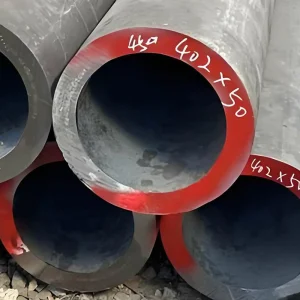
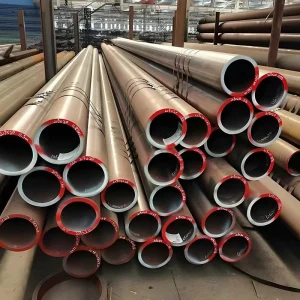
Seamless pipe: Produced by hot rolling or cold drawing, without weld seams, with better compressive strength and fatigue resistance. Suitable for pressure systems or critical piping.
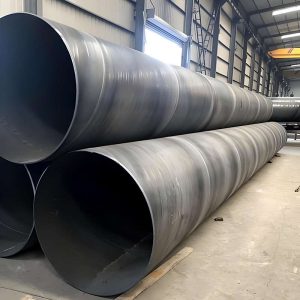
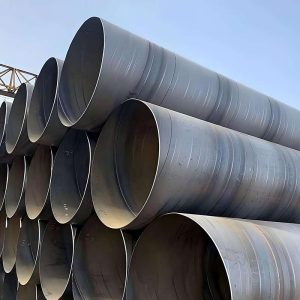
Welded pipe: Produced by resistance welding or furnace welding, with lower cost, suitable for non-pressure or low-pressure systems.
For industrial fluid, compressed air, or water supply systems, seamless pipe is recommended to reduce the risk of weld seam leakage.
(3) What is the difference between ASTM A53 Grade A and Grade B?
Answer:
| Item |
Grade A |
Grade B |
| Yield Strength (MPa) |
≥205 |
≥240 |
| Tensile Strength (MPa) |
≥330 |
≥415 |
| Suitable Environment |
Low-pressure fluid transport, structural pipes |
Medium-pressure or light high-pressure fluid systems |
| Cost |
Lower |
Slightly higher, but better pressure and temperature resistance |
For general industrial and water supply systems, Grade B is recommended due to its more reliable pressure resistance.
(4) Is ASTM A53 seamless pipe suitable for hot and cold water systems?
Answer:
Yes, but attention must be paid to corrosion protection and temperature:
Suitable for hot water systems ≤120℃;
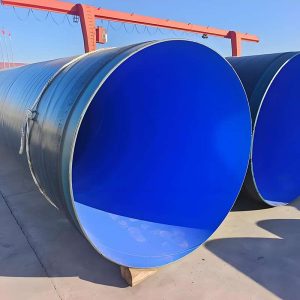
Cold water pipes should have internal and external corrosion protection (such as epoxy, galvanized, or FBE coating);
For long-term high-temperature hot water (>150℃), ASTM A106 is recommended due to its better high-temperature performance.
(5) How to select the appropriate wall thickness based on pressure and temperature?
Answer:
Selection Logic:
Determine the system operating pressure (P) and temperature (T);
Refer to the wall thickness tables in ASME B31.3 or B36.10;
Select the corresponding Schedule (SCH) based on the safety factor.
For example:
SCH 40: Commonly used in ordinary water and gas systems;
SCH 80: Used in medium and high pressure systems;
SCH 160: Suitable for high pressure or high temperature fluid transportation.
In industrial condensate or compressed air systems, if the pressure > 1.6 MPa, it is recommended to select SCH 80 or higher.
(6) What corrosion protection measures are required for ASTM A53 seamless pipes in water supply systems?
Answer:
Carbon steel pipes are prone to oxidation and corrosion. It is recommended to select the following protection methods based on water quality and operating environment:
Zinc plating: Suitable for ordinary tap water pipes;
Epoxy coating (EP): Suitable for industrial circulating water systems;
Inner plastic lining (PE/PP): Suitable for drinking water or chemical media transportation, offering stronger corrosion resistance;
Cathode protection or anti-corrosion tape wrapping: Used in buried or marine environments.