Products

Related News

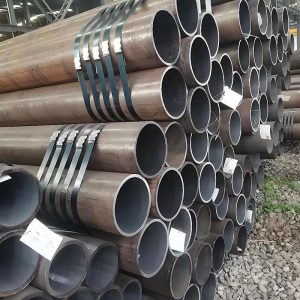
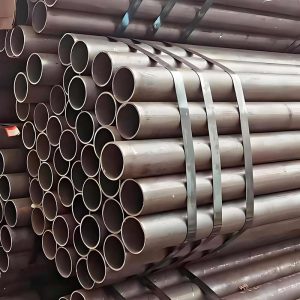
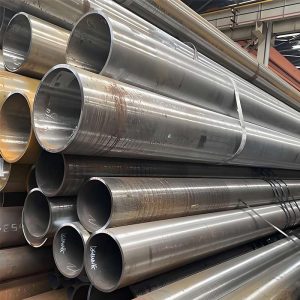
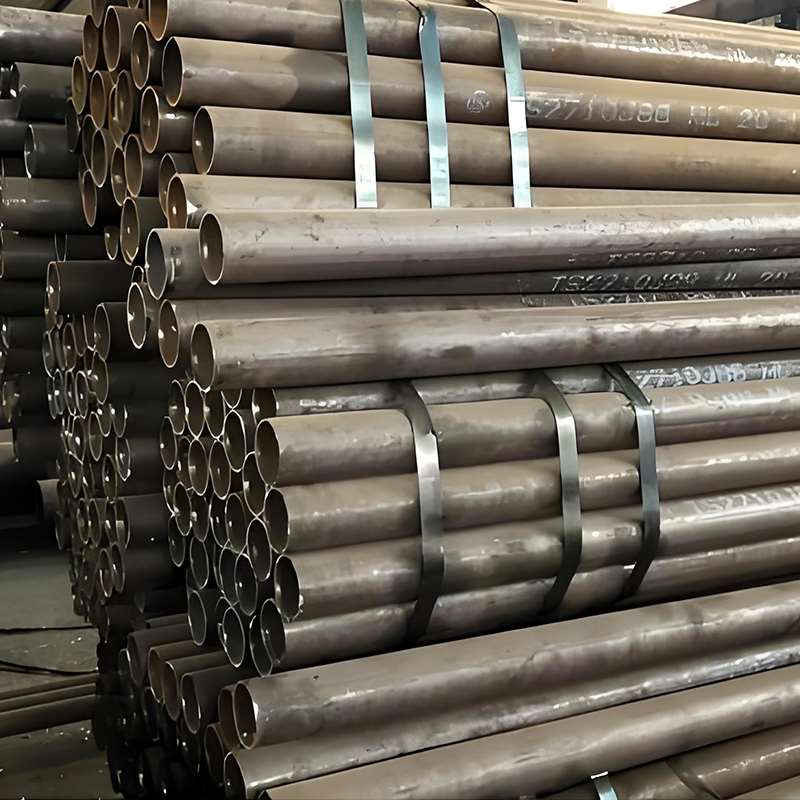
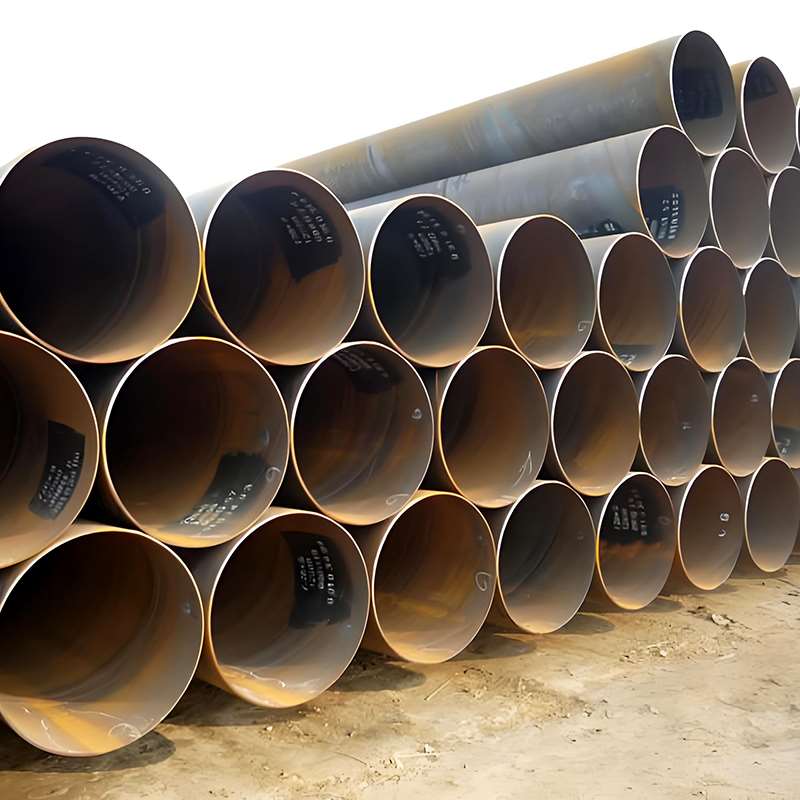
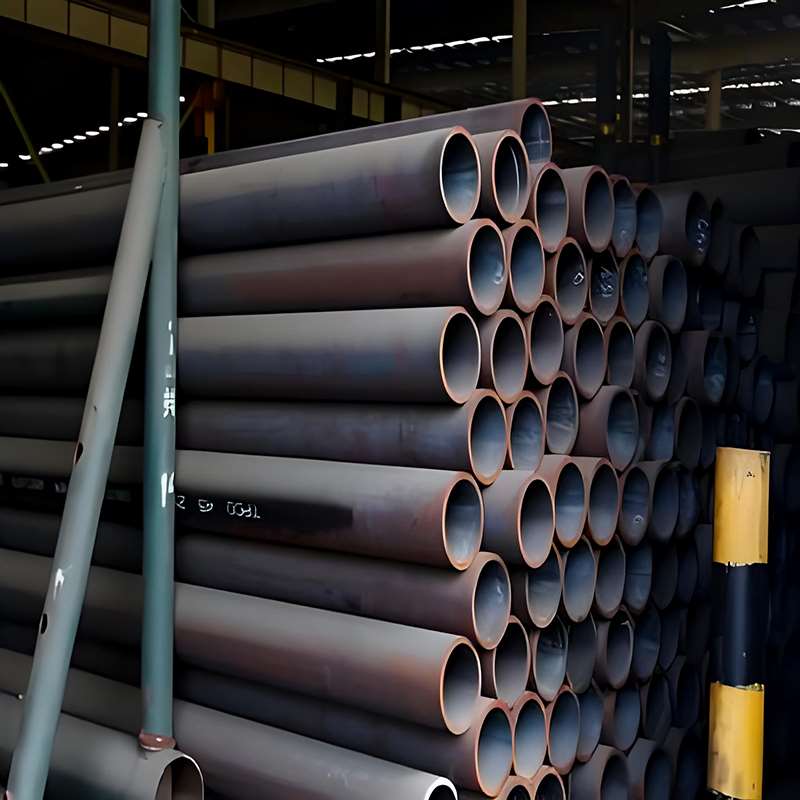
GB/T 9711 Line Pipe

OD Range :

Φ21.3 mm – Φ3620 mm

WT Range :

2.0 mm – 40.0 mm

Length :

6 m / 9 m / 12 m

Tolerance :

Outer Diameter Tolerance: ±0.75% OD (Min. ±0.5 mm); Wall Thickness Tolerance: ±10% WT; Length Tolerance: +50 mm / -0 mm

Material :

L175 / L210 / L245 / L290 / L320 / L360 / L390 / L415 / L450 / L485

Standard :

GB/T 9711

Surface :

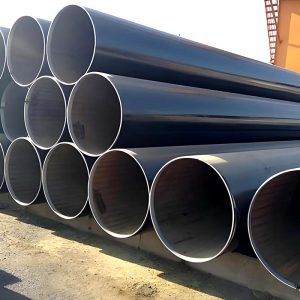
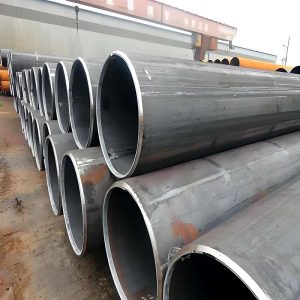
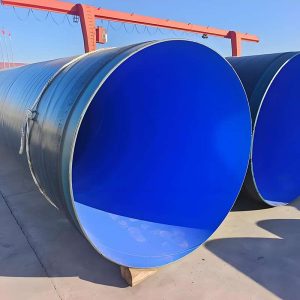
Black Painting, Anti-corrosion Coating (3PE / FBE), Varnish, Paint, End Rust-preventive Oil, Sandblasting

Application :

Petroleum Transport, Natural Gas Pipelines, Urban Gas Projects, Long-Distance Transmission Lines, Water Conservancy Projects, Structural Applications

I. Overview of GB/T 9711 Line Pipe

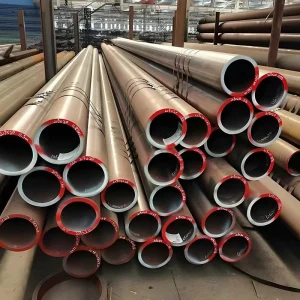
GB/T 9711 steel pipe for transmission purposes is a high-performance line pipe manufactured in accordance with the Chinese National Standard GB/T 9711. It is widely utilized in long-distance transmission systems for petroleum, natural gas, and various other fluids.

In terms of technical requirements and performance specifications, this product is benchmarked against API 5L. It exhibits excellent strength, toughness, and weldability, thereby meeting operational demands under high-pressure and complex working conditions.

Depending on specific project requirements, these steel pipes are available in various Product Specification Levels (PSL), such as PSL1 and PSL2. Furthermore, they support a range of manufacturing processes—including ERW, LSAW, and SSAW—making them suitable for onshore pipelines, offshore subsea lines, and urban energy transmission projects. Consequently, they constitute one of the key materials frequently employed in international pipeline engineering.

II. Classification of GB/T 9711 Line Pipe

i. Classified by Product Grade

CategoryDescription
PSL1Base grade, suitable for general service conditions
PSL2High grade, suitable for high-pressure, long-distance oil and gas pipelines

ii. Classified by Production Process

CategoryFull NameFeatures
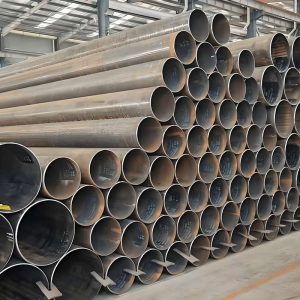
ERWHigh-Frequency Resistance Welded PipePrimarily small diameter, low cost, high efficiency
LSAWLongitudinal Submerged Arc Welded PipeLarge diameter, high strength, suitable for critical projects
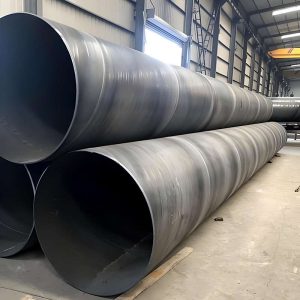
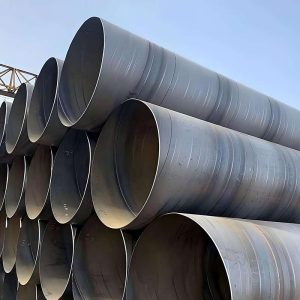
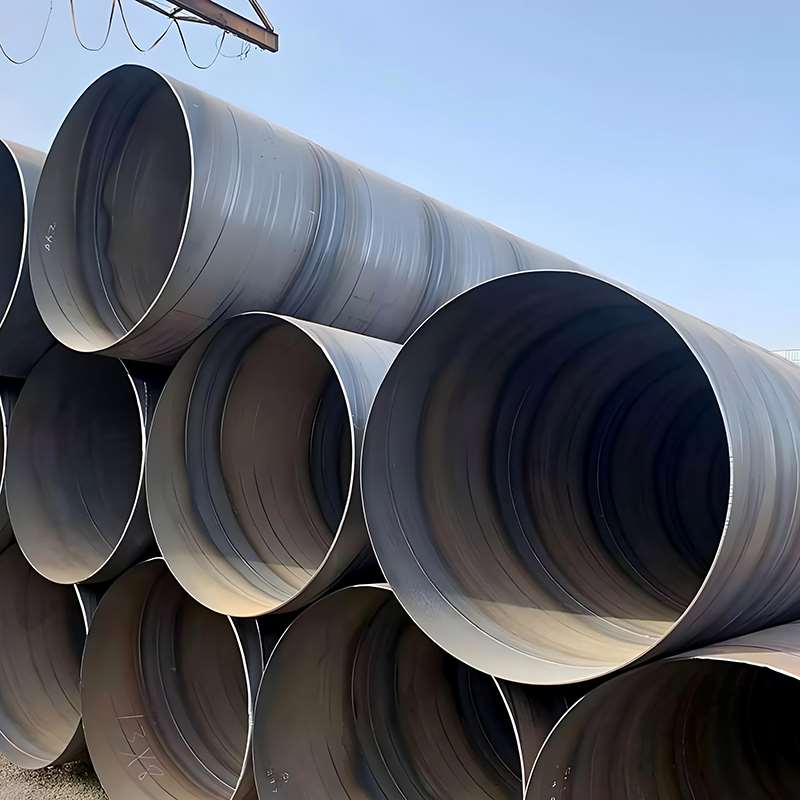
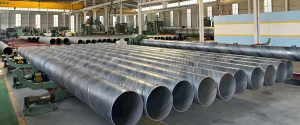
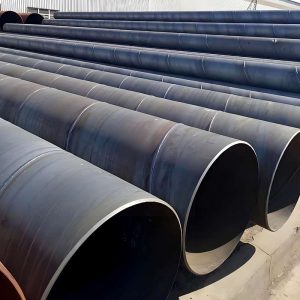
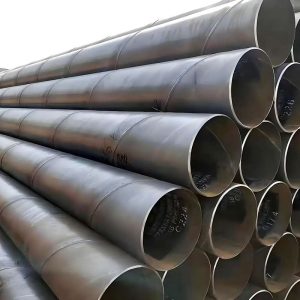
SSAWSpiral Submerged Arc Welded PipeCan produce extra-large diameter, cost-effective

iii. Classified by Steel Grade (Material Strength)

Steel Grade (GB)Corresponding API GradeFeatures
L245BCommon basic grade
L290X42Medium strength
L320X46Standard pipeline
L360X52Common engineering grade
L390X56Medium-high strength
L415X60High strength
L450X65High-end projects
L485X70Long-distance pipeline

iv. Classified by Use

CategoryApplication
Oil Pipeline PipeCrude oil transportation
Natural Gas PipeNatural gas transportation
Water PipelineUrban water supply and drainage
Structural PipeBridges, piling, etc.

v. Classified by surface treatment

CategoryDescription
Black PipeOriginal state, no coating
Anti-corrosion Pipe3PE / FBE coating
Painted PipeRust-proof oil or paint
Galvanized PipeGalvanized treatment (less commonly used for pipeline pipes)

III. GB/T 9711 PSL1 vs. PSL2 Chemical Composition Comparison Table (%)

Steel GradeGradeC (Carbon)Mn (Manganese)Si (Silicon)P (Phosphorus)S (Sulfur)
L245PSL1≤0.28≤1.20≤0.45≤0.035≤0.035
L245PSL2≤0.28≤1.20≤0.45≤0.030≤0.030
L290PSL1≤0.28≤1.30≤0.45≤0.035≤0.035
L290PSL2≤0.28≤1.30≤0.45≤0.030≤0.030
L320PSL1≤0.28≤1.40≤0.45≤0.035≤0.035
L320PSL2≤0.28≤1.40≤0.45≤0.030≤0.030
L360PSL1≤0.28≤1.40≤0.45≤0.035≤0.035
L360PSL2≤0.28≤1.40≤0.45≤0.030≤0.030
L390PSL1≤0.26≤1.50≤0.45≤0.030≤0.030
L390PSL2≤0.26≤1.50≤0.45≤0.025≤0.025
L415PSL1≤0.24≤1.60≤0.45≤0.030≤0.030
L415PSL2≤0.24≤1.60≤0.45≤0.025≤0.025
L450PSL1≤0.22≤1.60≤0.45≤0.030≤0.030
L450PSL2≤0.22≤1.60≤0.45≤0.025≤0.025
L485PSL1≤0.22≤1.70≤0.45≤0.030≤0.030
L485PSL2≤0.22≤1.70≤0.45≤0.025≤0.025

IV. GB/T 9711 Mechanical Properties Table (PSL2)

Steel GradeYield Strength (MPa) ≥Tensile Strength (MPa) ≥Elongation (%) ≥
L24524541521
L29029041521
L32032043521
L36036046021
L39039049020
L41541552020
L45045053518
L48548557018

V. GB/T 9711 Line Pipe: Application Fields

GB/T 9711 steel pipes for transmission are widely utilized in a diverse range of transport and engineering projects. Their primary applications encompass the following areas:

  1. Petroleum Pipeline Transport
    Used for crude oil transmission pipelines and oilfield gathering lines.
    Suitable for high-pressure, long-distance oil transport projects.
  2. Natural Gas Pipelines
    Urban gas distribution networks and long-distance natural gas trunk lines.
    Capable of stable operation in low-temperature and high-pressure environments.
  3. Water Conservancy and Urban Water Supply
    Urban water supply, drainage, and water transmission projects.
    Includes pipelines for potable water, industrial water, and irrigation systems.
  4. Offshore and Coastal Engineering
    Subsea oil and gas transmission pipelines.
    Pipelines for offshore platforms and near-shore engineering structures.
  5. Industrial Pipelines
    Transmission pipelines for industries such as chemicals, metallurgy, and electric power.
    Used for conveying liquids, gases, and other industrial media.
  6. Structural Applications
    Bridges, building pile foundations, and support structures.
    Serve a dual function, combining load-bearing capacity with fluid transmission capabilities.
Related Products

Outer Diameter (OD) (mm) Wall Thickness (WT) (mm) Length (m) Description
21.3 2.0 – 5.0 6 / 9 / 12 Small diameter ERW pipe, suitable for low-pressure pipelines
26.9 2.5 – 6.0 6 / 9 / 12 ERW / LSAW general specifications
33.7 2.5 – 7.0 6 / 9 / 12 Industrial and medium-pressure pipelines
42.4 2.5 – 8.0 6 / 12 ERW / SSAW pipes
48.3 3.0 – 8.0 6 / 12 Medium-pressure oil and gas pipelines
60.3 3.0 – 9.0 6 / 12 Common specifications for LSAW / SSAW pipes
76.1 3.5 – 11.0 6 / 12 Medium to large diameter pipeline pipes
89.0 3.5 – 12.0 6 / 12 High-pressure pipelines
114.3 4.0 – 14.0 6 / 12 Long-distance oil and gas pipelines
168.3 5.0 – 18.0 12 / Fixed LSAW / SSAW pipes
219.1 6.0 – 22.0 12 / Fixed High-pressure transportation
273.0 6.0 – 25.0 12 / Fixed Large diameter pipelines
323.9 7.0 – 32.0 12 / Fixed Extra-large diameter
355.6 8.0 – 35.0 12 / Fixed Subsea and long-distance pipelines
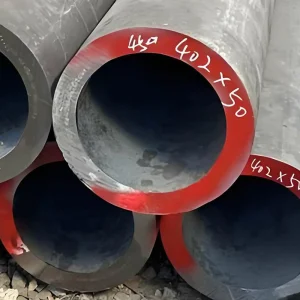
406.4 10.0 – 40.0 12 / Fixed Extra-large diameter pipes
457.0 – 1420 10.0 – 40.0 12 / 18 SSAW / LSAW extra-large diameter pipeline
1421 – 3620 12.0 – 40.0 Fixed / Custom Ultra-large diameter transportation pipelines, customized per project


Introduction to the GB/T 9711 Standard

GB/T 9711, titled *Steel pipes for use as pipelines for the petroleum and natural gas industries*, is a Chinese national standard that primarily specifies the technical requirements, manufacturing processes, inspection methods, and dimensional tolerances for steel pipes used in transmission pipelines.

Key Content:

1. Scope of Application

  • Pipelines for the transportation of petroleum, natural gas, liquids, and gases.
  • Applicable to onshore, offshore, and urban gas distribution networks.

2. Classification

  • PSL1: Basic level, suitable for general operating conditions.
  • PSL2: Advanced level, suitable for high-pressure, long-distance, and critical engineering projects.

3. Chemical Composition and Mechanical Properties

  • Specifies the content of carbon, manganese, silicon, phosphorus, sulfur, and other elements based on the steel grade (L245–L485).
  • Yield strength, tensile strength, elongation, and impact toughness meet the requirements of pipeline engineering projects.

4. Manufacturing Processes

  • ERW (High-Frequency Straight Seam Welded Pipe)
  • LSAW (Straight Seam Submerged Arc Welded Pipe)
  • SSAW (Spiral Submerged Arc Welded Pipe)

5. Dimensions and Tolerances

  • Outer diameter, wall thickness, length, and end configurations are clearly specified.
  • Ensures interchangeability and weldability for pipeline projects.

6. Inspection and Quality Control

  • Non-Destructive Testing (UT / RT)
  • Coating, corrosion protection, and end finishing
  • PSL2 grade features stricter standards, with more rigorous requirements for low-temperature impact resistance and weldability.

GB/T 9711 Line Pipe Production Process

Raw Materials → Uncoiling & Leveling → Forming → Welding → Heat Treatment → Non-destructive Testing → Dimensional Processing → Surface Treatment → Inspection & Packaging → Shipment

1. Raw Material Preparation

  • Procurement and Acceptance of Steel Coils / Steel Plates
  • Inspection of Chemical Composition, Mechanical Properties, and Surface Quality

2. Uncoiling and Leveling

  • Uncoiling of Steel Coils
  • Straightening using a leveling machine to ensure plate flatness

3. Forming

  • ERW (Electric Resistance Welded Pipe): Coiled into a round pipe using a high-frequency welding machine
  • LSAW (Longitudinal Submerged Arc Welded Pipe): Steel plates longitudinally welded into a pipe
  • SSAW (Spiral Submerged Arc Welded Pipe): Steel strips spirally coiled and welded into a pipe

4. Welding

  • Automated welding of joints
  • Heating and pressing of weld seams to ensure a secure bond

5. Heat Treatment (If Required)

  • Relief of internal stresses
  • Adjustment of mechanical properties (yield strength, toughness)

6. Non-Destructive Testing (NDT)

  • Ultrasonic Testing (UT) or Radiographic Testing (RT) of weld seams and pipe bodies
  • Inspection for defects to ensure quality

7. Dimensional Processing

  • Cut to specified length
  • End finishing (Plain ends / Beveled ends / Capped ends)

8. Surface Treatment

  • Black paint, standard painting, anti-corrosion coating (3PE / FBE), sandblasting, etc.
  • Anti-rust treatment for protection during transport and storage

9. Inspection and Packaging

  • Inspection of chemical composition, mechanical properties, dimensions, and appearance
  • Bundling, stacking, or packaging according to customer requirements

10. Shipment

  • Loading and transport arranged according to project requirements
  • Custom lengths, grades, and surface treatments available upon request
Test Item Test Content Standard Technical Requirement / Acceptance Criteria
Chemical Composition Analysis Content of C, Mn, Si, P, S, etc. GB/T 9711 / GB/T 223 Controlled according to steel grade; PSL2 is stricter than PSL1
Visual Inspection Surface defects (cracks, porosity, pits, welding defects, etc.) GB/T 9711 Surface should be smooth, without defects affecting use
Dimensional Check Outer diameter, wall thickness, length, tolerances GB/T 9711 OD ±0.75% (minimum ±0.5 mm); WT ±10%; Length +50/-0 mm
Mechanical Properties Yield strength, tensile strength, elongation GB/T 9711 / GB/T 228 According to steel grade; PSL2 is stricter
Bending Test Cold or hot bending of pipe ends and welds GB/T 9711 / GB/T 232 No cracks or fractures
Impact Test Charpy impact value (low-temperature toughness) GB/T 232-2010 PSL2 must pass to ensure low-temperature toughness
Nondestructive Testing Ultrasonic (UT), Radiographic (RT) GB/T 9711 / GB/T 11345 Welds and pipe body must be free of defects affecting use
Pressure Test (if required) Hydraulic or pneumatic testing GB/T 9711 / GB/T 13927 No leaks or rupture in pipe body and welds
Surface Treatment Check Coating thickness, anti-corrosion adhesion GB/T 9711 / HG/T 3700 3PE, FBE coatings must meet thickness and adhesion requirements
Packaging Check Pipe end protection, bundling and securing GB/T 9711 / Company Standard Pipe ends have protective caps; packaging is neat, secure, and suitable for transport


Q1: What is the difference between GB/T 9711 Line Pipe and API 5L?

Answer:
GB/T 9711 is a Chinese national standard covering PSL1 and PSL2 grades, in which chemical composition, mechanical properties, dimensions, and testing methods are strictly controlled.
It is technically equivalent to the API 5L standard and can be directly utilized in pipeline engineering projects for oil, gas, and natural gas applications.

Q2: What are the main differences between PSL1 and PSL2?

Answer:
The PSL2 grade is more rigorous than PSL1, imposing stricter requirements—particularly regarding chemical composition (specifically P and S content), low-temperature impact properties, and welding performance control.
PSL1 is suitable for pipelines in general service conditions, whereas PSL2 is intended for high-pressure applications, long-distance transmission lines, or critical engineering projects.

Q3: What manufacturing processes are available for GB/T 9711 Line Pipe?

Answer:
We can produce ERW (High-Frequency Electric Resistance Welded), LSAW (Longitudinal Submerged Arc Welded), and SSAW (Spiral Submerged Arc Welded) pipes to meet various diameters, pressure ratings, and project requirements.

Q4: What are the standard lengths, outer diameters, and wall thicknesses for steel pipes?

Answer:
Standard lengths are 6, 9, or 12 meters, with a maximum customizable length of up to 18 meters; the outer diameter ranges from Φ21.3 to Φ3620 mm; and the wall thickness ranges from 2 to 40 mm. Dimensional tolerances strictly adhere to the GB/T 9711 standard.

Q5: What are the primary application fields for GB/T 9711 Line Pipe?

Answer:
It is widely used in oil pipelines, natural gas pipelines, water conservancy projects, urban gas distribution, industrial piping, and structural applications, and is suitable for onshore, offshore, and long-distance transmission projects.

Q6: Do you provide test reports and quality assurance?

A:
Yes, a Mill Test Certificate (MTC) can be provided for every pipe. This certificate covers chemical composition, mechanical properties, dimensional tolerances, and weld testing, ensuring that the product complies with the GB/T 9711 standard as well as specific customer requirements.