I. Overview of LSAW Welded Line Pipes
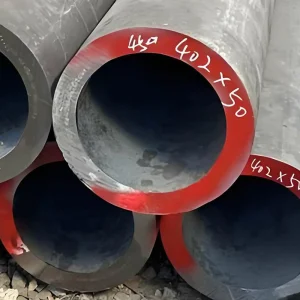
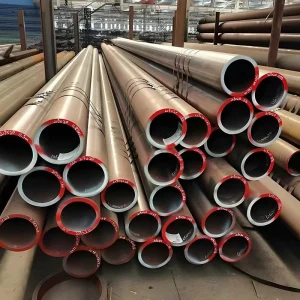
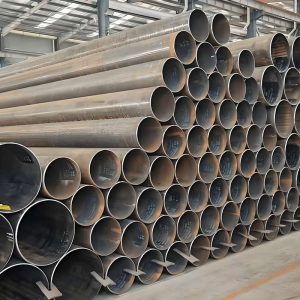
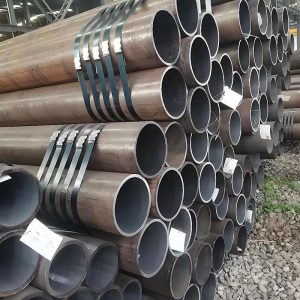
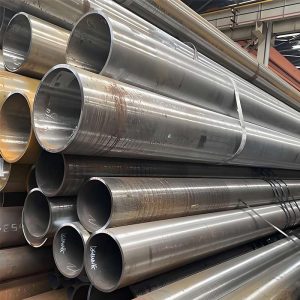
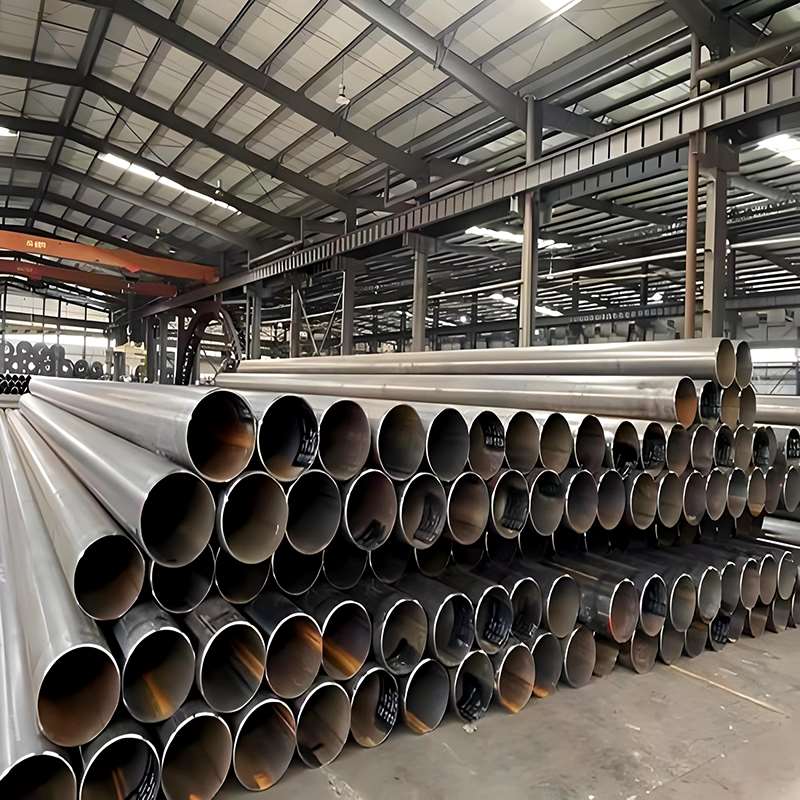
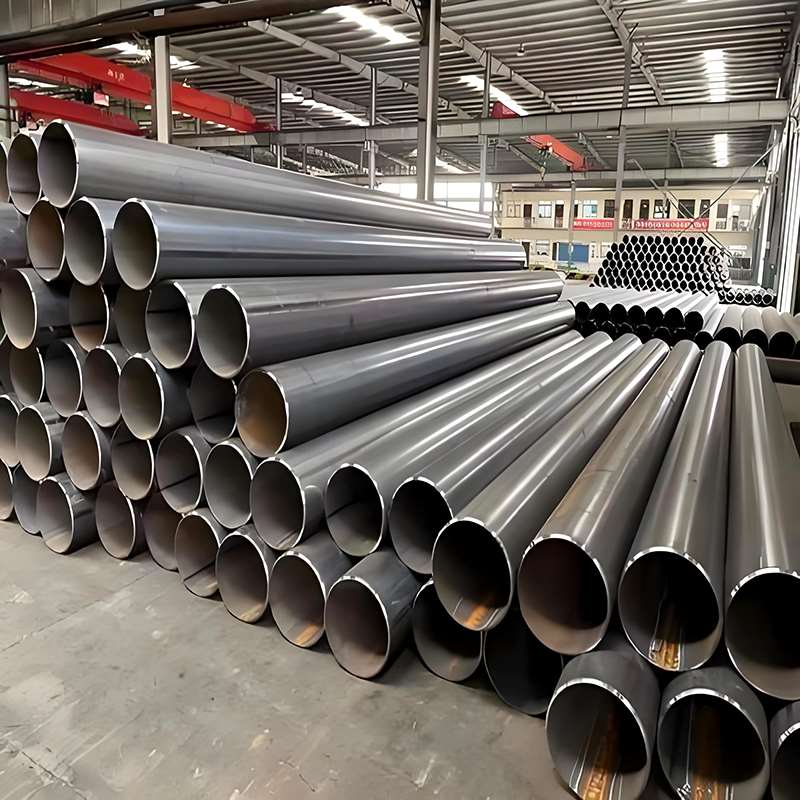
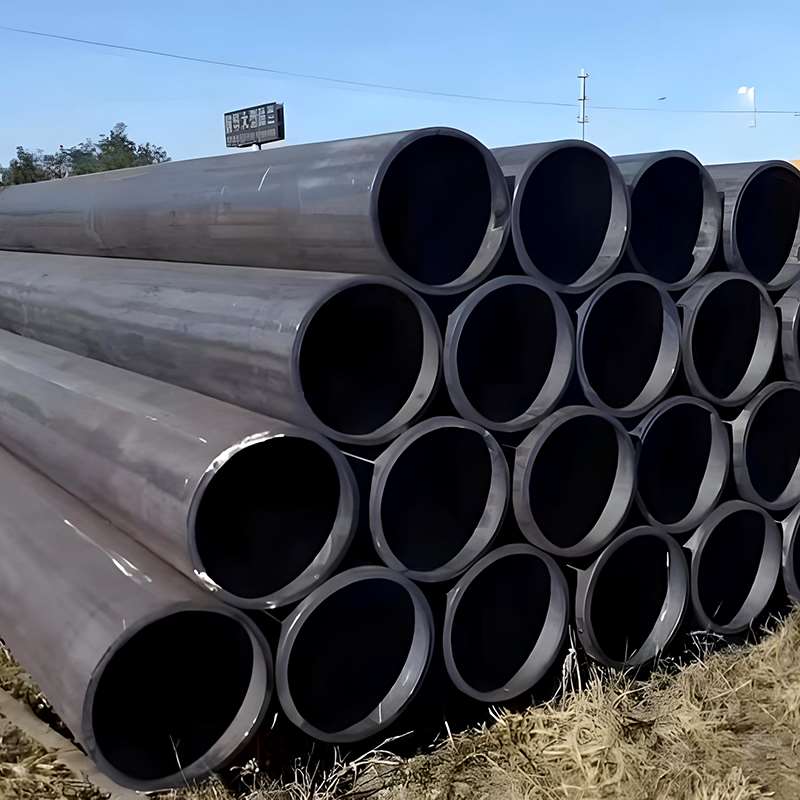
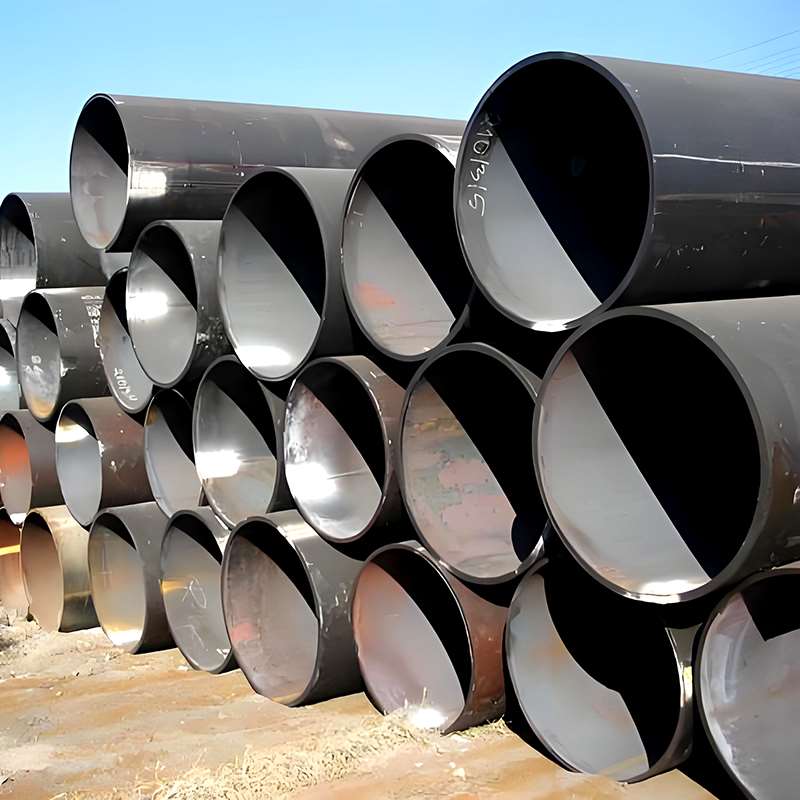
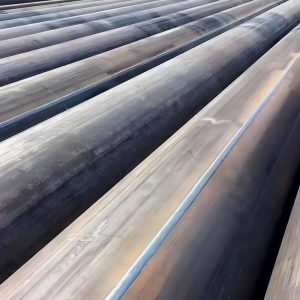
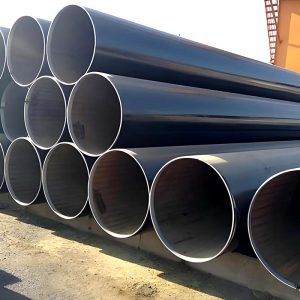
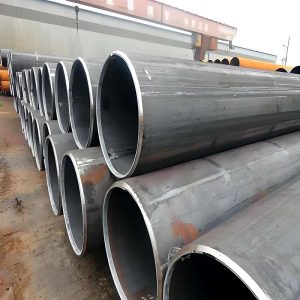
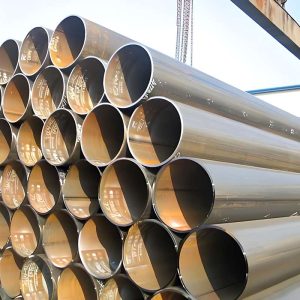
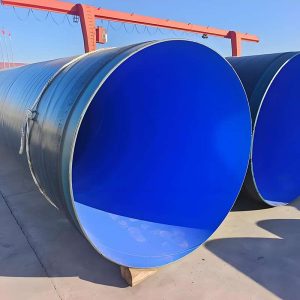
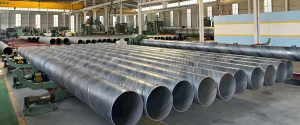
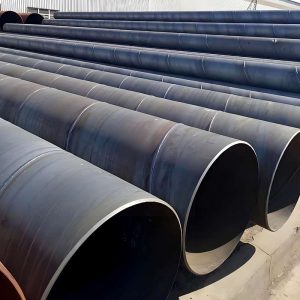
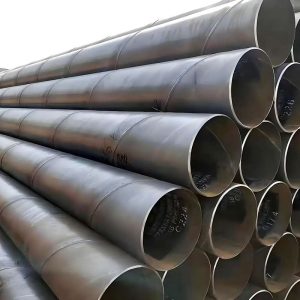
LSAW welded line pipes refer to line pipes manufactured using the longitudinal submerged arc welding process. These pipes are made from medium-thick steel plates and undergo processes including pre-bending, forming, longitudinal submerged arc welding, expanding, and multiple inspection procedures. The weld seam runs along the axis of the steel pipe, resulting in stable welding quality and strong pressure resistance.
LSAW line pipes are primarily used in medium-to-high pressure, long-distance transportation projects for media such as oil, natural gas, and water. They are particularly suitable for large-diameter, high-grade steel, and high-safety pipeline projects.
These steel pipes can be manufactured according to international standards such as API 5L PSL1/PSL2, with steel grades ranging from Gr.B to X70, meeting the requirements for onshore, offshore, and complex working condition pipeline projects.
II. LSAW Welded Pipeline Production Process
i. Process Types
- Longitudinal Submerged Arc Welding (LSAW)
- Steel plates are rolled longitudinally into pipe blanks before welding.
- The welding method is submerged arc welding (SAW), where the welding wire and flux cover the weld seam.
- The weld seam runs along the pipe axis, resulting in high welding quality and strong pressure resistance.
- Process Classification
- Single-sided submerged arc welding + reverse side fill welding
- Single-sided welding of the inner weld seam, with external repair welding.
- Commonly used for medium-thick walled pipes.
- Double-sided multi-pass submerged arc welding
- Simultaneous multi-pass welding of both inner and outer weld seams.
- Commonly used for thick-walled, high-grade steel pipes.
ii. Process Characteristics
- Weld location: Along the pipe axis (longitudinal), weld length is shorter than spiral welded pipes, but with higher pressure bearing capacity.
- Raw materials: Medium-thick steel plates (usually 8–40 mm)
- Welding heat input: Concentrated and controllable, resulting in stable weld metallurgical properties.
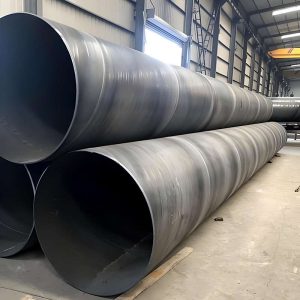
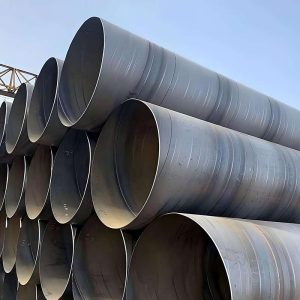
- Pipe diameter range: Large-diameter pipes (406 mm – 1626 mm common), thick-walled pipes
- Steel grade: Gr.B – X70, suitable for high-strength long-distance pipelines
Advantages:
- High weld strength and good toughness
- High dimensional accuracy of pipes
- Suitable for high-pressure, long-distance pipelines
- Weld can be fully inspected, ensuring safety and reliability
Disadvantages:
- High requirements for raw materials
- Large-scale production equipment and high investment
iii. Comparison with other welded pipe manufacturing processes
| Process Type | Weld Seam Direction | Applicable Pipe Size | Advantages | Disadvantages |
|---|---|---|---|---|
| LSAW | Longitudinal | Large diameter, thick-wall | High pressure-bearing capacity; excellent weld metallurgical properties | High equipment investment; longer production cycle |
| HFW / ERW | Longitudinal | Small to medium diameter | High production efficiency; lower manufacturing cost | Limited pressure capacity for high-grade steel or thick-wall pipes |
| SSAW / HSAW | Spiral | Medium to large diameter | High material utilization; capable of producing long pipe lengths | Inclined weld seam causes higher local stress; slightly lower pressure-bearing performance |
III. Common Steel Grade Comparison Table for LSAW Welded Pipeline Pipes
| Steel Grade (API 5L) | Minimum Yield Strength (MPa) | Tensile Strength (MPa) | Typical Applications | Notes |
|---|---|---|---|---|
| Gr. B | ≥245 | 415 – 565 | Low-pressure oil, gas, and water transmission pipelines | Cost-effective; suitable for standard service conditions |
| X42 | ≥290 | 415 – 565 | General oil and gas pipelines | Higher strength than Gr. B |
| X46 | ≥320 | 435 – 570 | City gas distribution and industrial pipelines | Balanced strength and toughness |
| X52 | ≥360 | 460 – 760 | Onshore long-distance oil and gas transmission pipelines | Common entry-grade for LSAW pipes |
| X56 | ≥390 | 490 – 760 | Medium- to high-pressure transmission pipelines | Strong pressure-bearing capacity |
| X60 | ≥415 | 520 – 760 | Long-distance oil and gas transmission | Suitable for large-diameter pipelines |
| X65 | ≥450 | 535 – 760 | High-pressure and critical pipeline projects | Higher requirements for welding and inspection |
| X70 | ≥485 | 570 – 760 | High-pressure, large-scale energy projects | Widely used in major oil and gas projects |
IV. Chemical Composition (%) of LSAW Welded Pipeline Pipes
| Steel grade | C | Mn | P | S | Si | Nb | V | Ti | Carbon equivalent CE※ |
| Gr.B | ≤0.28 | 0.60–1.40 | ≤0.030 | ≤0.030 | ≤0.40 | — | — | — | ≤0.40 |
| X42 | ≤0.26 | ≤1.40 | ≤0.030 | ≤0.030 | ≤0.45 | ≤0.05 | ≤0.06 | ≤0.04 | ≤0.40 |
| X46 | ≤0.26 | ≤1.45 | ≤0.030 | ≤0.030 | ≤0.45 | ≤0.05 | ≤0.06 | ≤0.04 | ≤0.41 |
| X52 | ≤0.24 | ≤1.60 | ≤0.025 | ≤0.025 | ≤0.45 | ≤0.05 | ≤0.07 | ≤0.04 | ≤0.42 |
| X56 | ≤0.24 | ≤1.65 | ≤0.025 | ≤0.025 | ≤0.45 | ≤0.06 | ≤0.08 | ≤0.04 | ≤0.43 |
| X60 | ≤0.22 | ≤1.70 | ≤0.025 | ≤0.025 | ≤0.45 | ≤0.06 | ≤0.10 | ≤0.04 | ≤0.43 |
| X65 | ≤0.22 | ≤1.80 | ≤0.020 | ≤0.015 | ≤0.45 | ≤0.06 | ≤0.10 | ≤0.04 | ≤0.45 |
| X70 | ≤0.20 | ≤1.85 | ≤0.020 | ≤0.015 | ≤0.45 | ≤0.07 | ≤0.12 | ≤0.04 | ≤0.47 |
V. LSAW Welded Pipeline Pipe Selection Guide
1. Selecting Steel Grade Based on Industry and Transported Medium
Different industries and transported media have varying requirements for the steel grade and standards of pipeline pipes.
- Oil and Gas Long-Distance Pipelines: For transporting crude oil, petroleum products, or natural gas, X52–X70 steel grades are recommended, conforming to API 5L PSL2 standards. Higher steel grades meet the requirements of long-distance, high-pressure pipelines.
- City Gas and Industrial Gas Pipelines: For transporting natural gas or coal gas, X42–X56 steel grades are recommended to meet medium and low-pressure conditions, and either API 5L PSL1 or PSL2 can be selected.
- Water Conservancy and Water Supply Pipelines: For transporting tap water or industrial cooling water, Gr.B or X52 steel grades can be selected, conforming to API 5L PSL1 or GB/T 9711 standards.
- Chemical or Industrial Pipelines: For transporting chemical liquids or liquefied gases, X52–X65 steel grades should be selected based on the corrosiveness of the medium, and appropriate anti-corrosion coatings should be used.
2. Matching Working Pressure and Wall Thickness
The working pressure of the pipeline determines the required wall thickness. High-pressure pipelines should use thicker walls to ensure safety; medium and low-pressure pipelines can use thinner walls to reduce costs.
In actual design, the wall thickness is usually selected based on the pipe diameter, working pressure, and steel grade yield strength, referring to standard wall thickness tables or design institute recommendations.
3. Considering Environmental and Operating Conditions
Different construction environments have a significant impact on pipeline selection:
- Buried or onshore long-distance pipelines: X52–X65 steel grades are recommended, with FBE, 2PE, or 3PE anti-corrosion coatings.
- Offshore pipelines or deepwater pipelines: X60–X70 steel grades + PSL2 standard steel are recommended to ensure low-temperature toughness, and 3PE/3PP coatings should be used.
- Cold regions or low-temperature conditions: Low-temperature impact toughness steel grades, X52–X70 + PSL2, should be selected.
- Corrosive media: Strengthen anti-corrosion measures or select corrosion-resistant steel grades to ensure the service life of the pipeline.
4. Matching Pipe Diameter to Flow Rate
Larger pipe diameters offer greater conveying capacity and are suitable for long-distance main pipelines; smaller diameters are suitable for medium and low-pressure branch lines.
Pipe diameter selection should be determined based on the design flow rate and the characteristics of the conveyed medium, through calculations or using recommended tables from the design institute.
5. Selection of Standards and Quality Grades
When selecting pipe standards, consider the pressure rating and project importance:
- High-pressure or critical pipelines: Use API 5L PSL2 to ensure strict control of chemical composition and mechanical properties.
- Conventional pressure pipelines: API 5L PSL1 or GB/T 9711 can be used.
- Export projects: Standards of the target country can be used, such as ISO 3183, EN 10208, etc.
6. Matching Pipe Ends to Construction Methods
The pipe end form should be determined based on the construction method:
- Beveled ends: Suitable for welding
- Plain ends / Flanged ends: Facilitate bolted connections or on-site welding
- Matching the pipe end, wall thickness, and construction method is a crucial factor in ensuring project safety and construction efficiency.