
If spiral steel pipes used in water transmission systems are considered the “arteries” of a city, then spiral welded steel pipe piles serve as the “structural backbone” of major infrastructure projects.
Under complex geological conditions such as offshore engineering, port and terminal construction, soft soil foundations, and super high-rise buildings, conventional concrete piles often face significant limitations, including excessive weight, susceptibility to cracking, and long construction cycles.
In comparison, spiral welded steel pipe piles offer higher structural strength, greater customization flexibility, and faster installation efficiency. These advantages make them a more reliable solution for deep foundation engineering, where they serve as the primary load-bearing support system for large-scale construction projects.
I. What Is a Spiral Steel Pipe Pile Foundation Project?
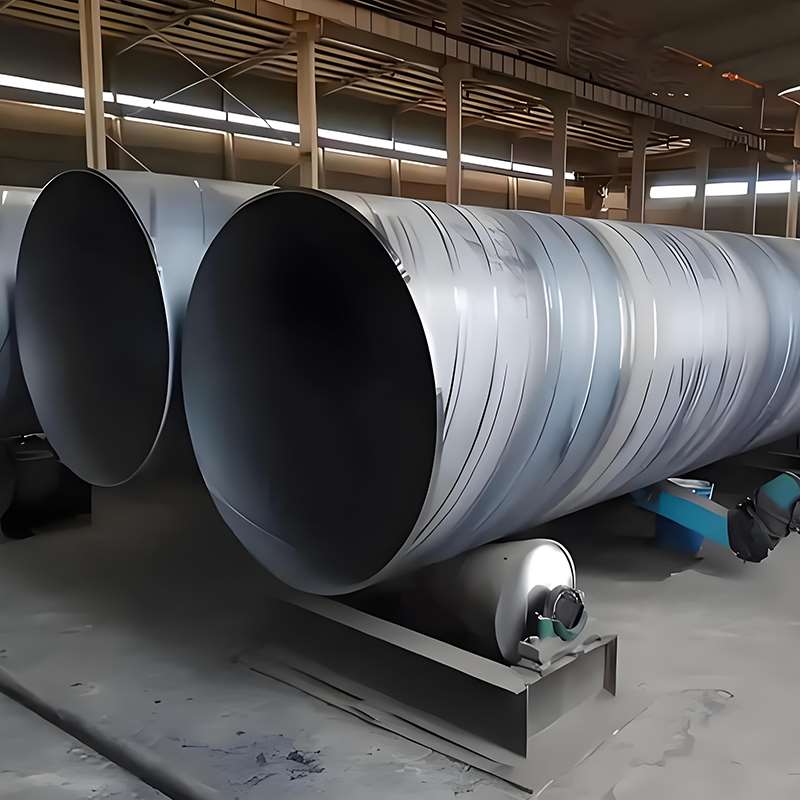
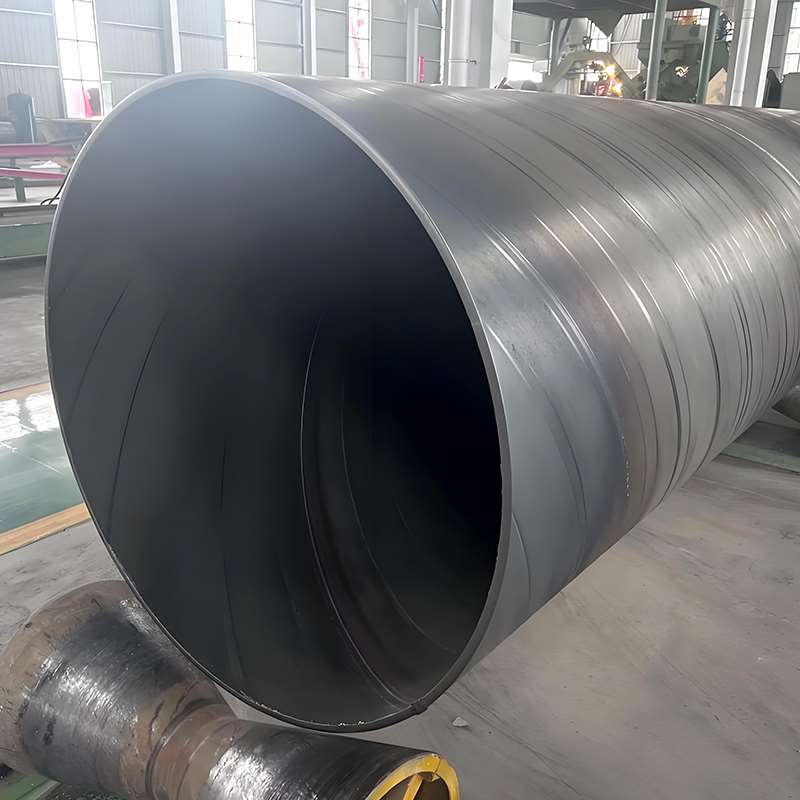
A spiral steel pipe pile foundation project refers to a deep foundation construction method that utilizes Spiral Submerged Arc Welded Steel Pipes (SSAW pipes) as the primary pile structure. These steel pipe piles are driven deep into stable rock or dense soil layers using piling equipment such as pile drivers, vibratory hammers, or rotary drilling rigs, enabling them to support massive structural loads from the upper superstructure.
Depending on the engineering design requirements, after the steel pipe piles are installed to the designated depth, the soil inside the pipe is typically excavated and filled with concrete to form Concrete-Filled Steel Tube (CFST/CFT) piles. This composite pile structure maximizes both structural rigidity and load-bearing capacity, making it highly suitable for heavy-duty foundation engineering applications.
II. Advantages of Spiral Steel Pipe Piles: Why Are They Preferred for Major Infrastructure Projects?
Compared with traditional prestressed high-strength concrete piles (PHC piles) or cast-in-place bored concrete piles, spiral welded steel pipe piles demonstrate significant advantages under complex and extreme working conditions. As a result, they are widely used in bridge construction, offshore engineering, and high-rise building foundation projects.
1. Higher Single-Pile Load-Bearing Capacity
Spiral steel pipe piles are manufactured from high-strength steel materials, providing superior tensile strength, compressive strength, and shear resistance compared with conventional concrete piles.
Under massive vertical loads from high-rise buildings, as well as horizontal forces generated by wind, waves, and seismic activity in bridges and offshore platforms, steel pipe piles maintain excellent structural stability, high load-bearing performance, and superior overall rigidity.
2. Better Seismic Performance and Structural Toughness
Steel naturally offers excellent ductility and deformation capacity. During earthquakes or uneven foundation settlement, spiral steel pipe piles can absorb and dissipate stress through controlled elastic deformation.
In contrast, concrete piles are more susceptible to brittle cracking or structural failure under extreme stress conditions. Spiral welded steel pipe piles therefore provide a safer and more reliable foundation solution in seismic or unstable ground environments.
3. Strong Customization Capability and Flexible Installation
Spiral welded steel pipe piles can be custom-manufactured according to specific project requirements, including diameter, wall thickness, and pile length. Common size ranges typically extend from DN600 to above DN2000.
During installation, if deeper soil penetration is required, pile sections can be extended through on-site welding, allowing for high construction efficiency and strong adaptability to varying geological conditions.
4. Faster Construction and Lower Environmental Impact
Spiral steel pipe piles are typically installed using vibratory hammers or pile driving equipment, enabling direct pile penetration without the extensive slurry wall protection and curing processes required for cast-in-place concrete piles.
The construction process is cleaner, faster, and more efficient, making spiral steel pipe piles a low-pollution and low-disturbance foundation solution. This makes them particularly suitable for marine construction projects and urban-area infrastructure development where environmental impact control is critical.
III. Application Scenarios and Selection Recommendations for Spiral Welded Steel Pipe Piles
1. Bridge Foundation Projects (River-Crossing and Sea-Crossing Bridges)
Application Characteristics
Bridge pile foundations are typically subjected to massive vertical loads combined with strong horizontal forces, including wind loads, traffic-induced vibration, and water current impact. These conditions represent a typical high-stress structural environment with extremely demanding foundation performance requirements.
Selection Recommendations
- Recommended Pile Diameter: DN800 – DN2000 (adjusted according to bridge span and load requirements)
- Recommended Wall Thickness: ≥12 mm (heavier bridge structures may require thicker walls)
- Recommended Steel Grade: Q355B or higher
- Structural Requirements:
Priority should be given to high-rigidity structural designs. Additional stiffening reinforcement may be required for large-span or heavy-load bridge projects. - Corrosion Protection Recommendations:
For underwater or high-humidity environments, 3PE coating systems or FBE coating combined with cathodic protection are recommended to ensure long-term corrosion resistance.
Core Design Principle
The foundation system must simultaneously achieve:
- High compressive strength
- Strong bending resistance
- Long-term service life durability
2. Offshore Platforms and Marine Engineering
Application Characteristics
Offshore platforms and marine engineering structures operate in one of the most aggressive service environments, continuously exposed to seawater corrosion, wave impact, and potential vessel collision. These combined conditions make it one of the most demanding engineering applications for foundation systems.
Selection Recommendations
- Recommended Pile Diameter: DN1000 – DN3000 (larger diameters may be required for heavy-duty offshore platforms)
- Recommended Wall Thickness: ≥14–25 mm (for high-specification offshore engineering applications)
- Corrosion Protection System (Mandatory):
- External coating: 3PE (Three-Layer Polyethylene) or reinforced FBE (Fusion Bonded Epoxy)
- Combined protection system: cathodic protection (CP) for both internal and external surfaces
- Structural Requirements:
Priority should be given to fatigue-resistant structural design and the use of high-toughness steel grades suitable for cyclic loading conditions in marine environments.
Core Design Principle
In offshore engineering applications, the priority order must be:
Corrosion protection first, followed by load-bearing capacity.
3. Foundation Engineering for High-Rise Buildings
Application Characteristics
High-rise building foundations are subjected to long-term vertical loads as well as risks of differential settlement, requiring a high level of structural stability and overall rigidity.
Selection Recommendations
- Recommended Pile Diameter: DN600 – DN1200
- Recommended Wall Thickness: 10–16 mm
- Steel Grade: Q355B / Q420B (depending on load requirements)
- Structural Requirements: Focus on settlement control and overall structural stiffness
- Corrosion Protection: FBE or epoxy coating is generally sufficient for buried conditions
Core Design Principle
Stability takes priority over ultimate strength.
4. Port, Wharf, and Coastal Protection Engineering
Application Characteristics
These structures must withstand vessel impact, wave erosion, and long-term water level fluctuations, making them highly demanding in terms of durability and impact resistance.
Selection Recommendations
- Recommended Pile Diameter: DN800 – DN1800
- Recommended Wall Thickness: 12–20 mm
- Corrosion Protection:
In tidal fluctuation zones, enhanced corrosion protection is required, typically using FBE coating combined with external protective wrapping systems. - Structural Requirements: Emphasis on improved impact resistance and structural robustness
Core Design Principle
Impact resistance + corrosion protection + fatigue resistance.
5. Soft Soil Foundations and Backfilled Ground Conditions
Application Characteristics
These sites are characterized by low bearing capacity and significant settlement issues. Piles must penetrate weak soil layers and reach competent bearing strata.
Selection Recommendations
- Recommended Pile Diameter: DN600 – DN1000 (cost-efficiency prioritized)
- Recommended Wall Thickness: 10–14 mm
- Structural Requirements: Focus on penetration capability and construction efficiency
- Splicing Method: On-site welding for pile extension must be supported
- Corrosion Protection: Standard buried FBE coating is sufficient
Core Design Principle
Constructability takes priority over ultimate load-bearing capacity.
6. Industrial Buildings and General Foundation Engineering
Application Characteristics
These applications involve moderate structural loads, with higher sensitivity to cost control and economic efficiency.
Selection Recommendations
- Recommended Pile Diameter: DN400 – DN800
- Recommended Wall Thickness: 8–12 mm
- Steel Grade: Q235B / Q355B
- Corrosion Protection: Standard buried anti-corrosion treatment is sufficient
Core Design Principle
Balance between cost efficiency and basic structural safety.
IV. Technical Requirements for Spiral Welded Steel Pipe Piles
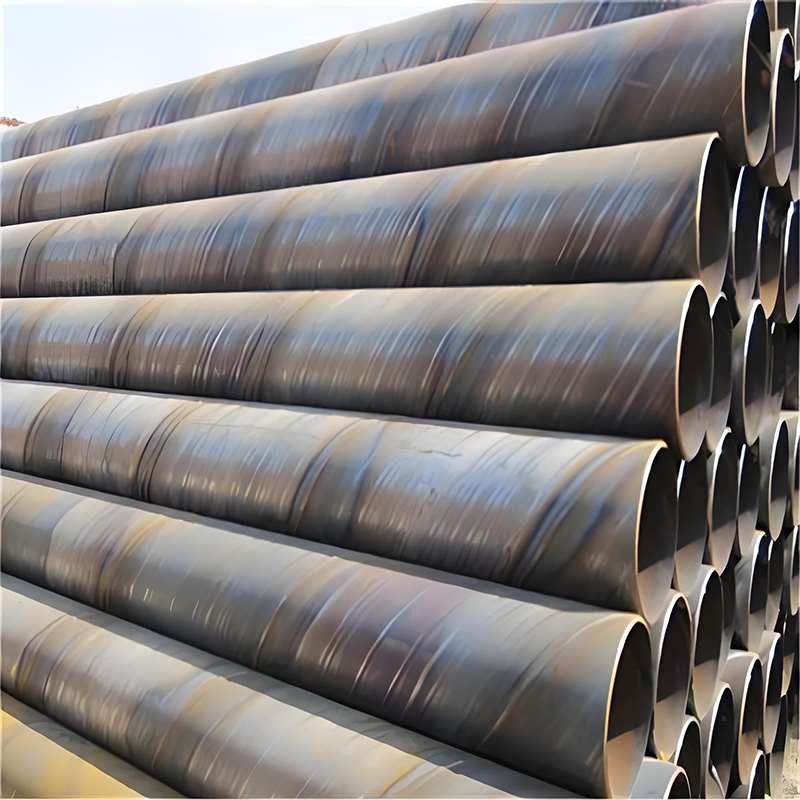
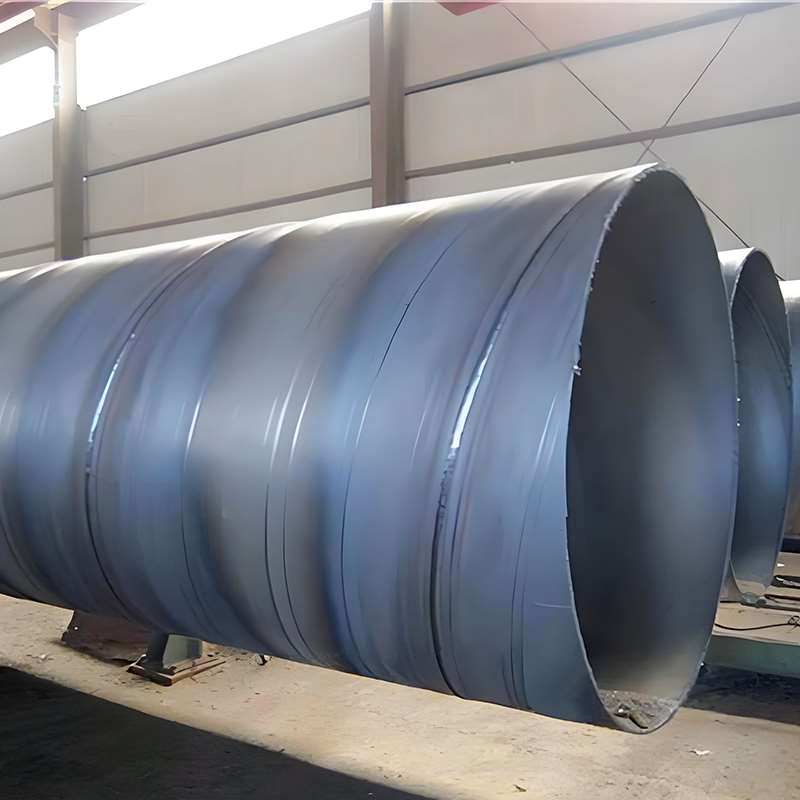
| Technical Item | Technical Requirement | Description |
|---|---|---|
| Steel Grade | Q235B / Q355B / Q420B or higher | Selected based on load conditions; Q355B or above is preferred for high-load engineering projects |
| Manufacturing Process | Spiral Submerged Arc Welding (SSAW) | Weld seams must be continuous, uniform, and free of defects |
| Pile Diameter Range | DN400 – DN3000+ | Customizable according to project requirements; larger diameters available for bridges and offshore structures |
| Wall Thickness Range | 8 mm – 25 mm | Higher loads and poorer soil conditions require greater wall thickness |
| Weld Quality | 100% Non-Destructive Testing (UT/RT) | No defects such as cracks, lack of fusion, or porosity are permitted |
| Straightness | ≤ L/1000 (standard requirement) | Ensures vertical accuracy during pile driving installation |
| Roundness Tolerance | ≤ ±1% – ±1.5% | Ensures uniform stress distribution |
| Pile Splicing Method | Flange connection / Butt welding | On-site welding must comply with construction standards |
| Corrosion Protection | FBE / 3PE / Coal Tar Epoxy | Selected according to service environment (marine or buried conditions) |
| Service Life | 30 – 100 years (depending on corrosion protection level) | High-performance anti-corrosion systems significantly extend service life |
| Load-Bearing Capacity | Determined by structural design calculations | Depends on pile diameter, wall thickness, and soil conditions |
| Installation Method | Vibratory driving / impact hammer driving | Different installation methods selected based on geological conditions |
V. FAQs on Spiral Welded Steel Pipe Pile Selection
Q1: How should the pile diameter be selected for spiral welded steel pipe piles?
Pile diameter is primarily determined by structural load requirements and geological conditions. In general:
- Light-duty buildings or standard industrial workshops: DN400–DN800
- Conventional high-rise buildings or municipal projects: DN600–DN1200
- Bridges or large-scale foundation engineering: DN800–DN2000+
Selection principle: the higher the load and the poorer the soil conditions, the larger the required pile diameter.
Q2: How is wall thickness determined for spiral steel pipe piles?
Wall thickness directly affects load-bearing capacity and bending resistance. It is typically selected based on structural stress conditions:
- General engineering: 8–12 mm
- Medium-load projects: 10–16 mm
- Heavy-load or offshore engineering: 14–25 mm
It is recommended that wall thickness be determined through structural design calculations rather than experience-based estimation alone.
Q3: Can spiral welded steel pipe piles be used as permanent structural elements?
Yes. With proper corrosion protection design—such as FBE, 3PE coating, or cathodic protection systems—spiral steel pipe piles can be used as permanent structural foundation elements.
They are widely applied in bridges, wharves, and offshore platform projects, with a service life that can extend to several decades.
Q4: How should piles be selected for coastal or offshore environments?
Marine environments are highly corrosive. Selection should focus on the following:
- Increased wall thickness for higher safety reserves
- 3PE or enhanced FBE corrosion protection systems
- Cathodic protection system integration
- Preference for high-strength steel grades (Q355B or above)
Core principle: corrosion protection first, structural redundancy second.
Q5: Are spiral steel pipe piles suitable for soft soil foundations?
Yes. Spiral steel pipe piles perform well in soft soil, silt, and backfilled ground conditions. They can efficiently penetrate weak soil layers and reach competent bearing strata.
Selection recommendations:
- Larger pile diameter for improved stability
- Design compatibility with on-site pile splicing
- Emphasis on penetration performance during installation
Q6: How do spiral steel pipe piles compare with concrete piles?
Spiral steel pipe piles:
- High strength
- Fast installation
- Excellent adaptability to complex geological conditions
Concrete piles:
- Lower cost
- Longer construction cycle
- Relatively weaker impact resistance
For bridges, offshore engineering, and complex ground conditions, steel pipe piles are generally the preferred solution.
Q7: What pile splicing methods are available? Do they affect quality?
Common splicing methods include:
- Butt welding (most widely used)
- Flange connection (for detachable structures)
As long as welding quality complies with standards and is verified through non-destructive testing (UT/RT), pile splicing does not negatively affect overall structural performance.
Q8: How can the quality of spiral steel pipe piles be evaluated?
Key inspection criteria include:
- Weld seams passing non-destructive testing
- Steel grade compliance (Q355B or above)
- Dimensional tolerances within standard limits
- Uniform and complete corrosion protection coating
Q9: What is the service life of spiral steel pipe piles?
Service life depends on corrosion protection system and environmental conditions:
- Standard buried environments: 30–50 years
- Enhanced protection (FBE/3PE): 50–80 years
- Offshore applications with cathodic protection: up to ~100 years
Q10: What are the most commonly overlooked factors in pile selection?
The most frequently neglected factors include:
- Horizontal loads (wind, wave, seismic forces)
- Long-term fatigue effects
- Soil variability and differential settlement
- Compatibility of corrosion protection systems
These factors are often more critical to long-term performance than static load-bearing capacity alone.