
I. Industry Background
i. Growing Demand for Long-Distance Oil & Gas Transportation
Cross-regional and even cross-border long-distance oil and gas transmission projects often traverse complex geological conditions, including deserts, mountainous terrain, river crossings, and seasonally frozen permafrost zones.
To ensure efficient and reliable energy supply across vast regions, pipeline diameters continue to increase (e.g., 1016 mm, 1219 mm, and even larger), while operating pressures are also being raised to meet growing transportation demands.
This type of high-volume, long-distance transmission places extremely stringent requirements on steel pipe supply capacity, manufacturing efficiency, and the diversity of available specifications.
ii. Extremely High Requirements for Pipeline Strength and Safety
Oil and high-pressure natural gas are hazardous, highly flammable, and potentially explosive media. Any pipeline failure or leakage can not only lead to enormous economic losses, but also trigger severe environmental contamination, fires, or even catastrophic explosions.
Therefore, pipeline steel must exhibit exceptionally high yield strength, excellent low-temperature impact toughness, and strong resistance to ductile fracture and crack arrest performance. These properties are essential to withstand circumferential stresses generated by high-pressure fluids, as well as external loads caused by ground settlement, geological movement, or seismic activity.
II. Why use spiral steel pipes?
1. Capability to Produce Large-Diameter Pipelines
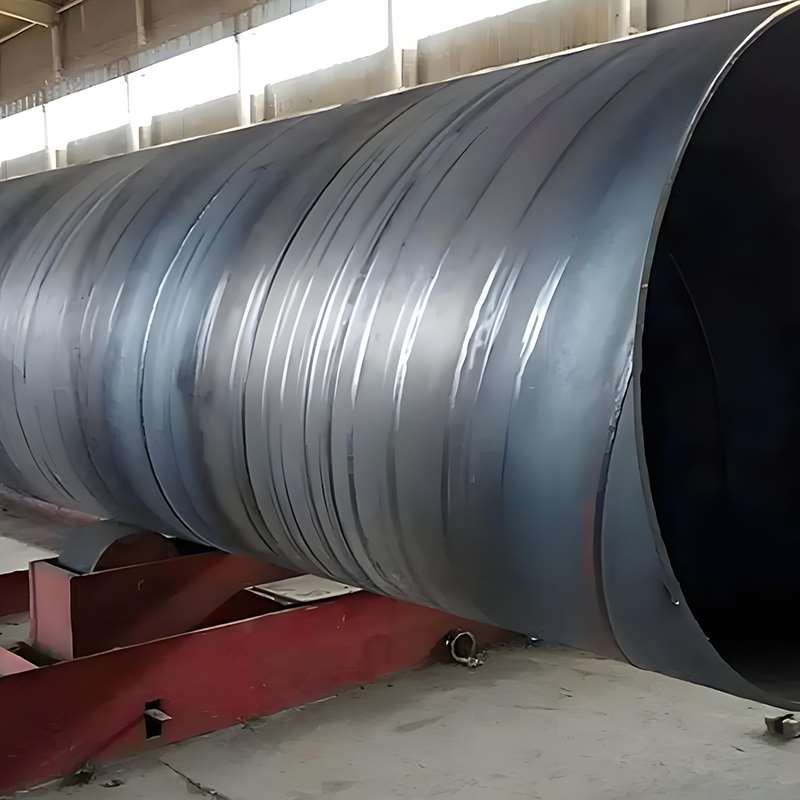
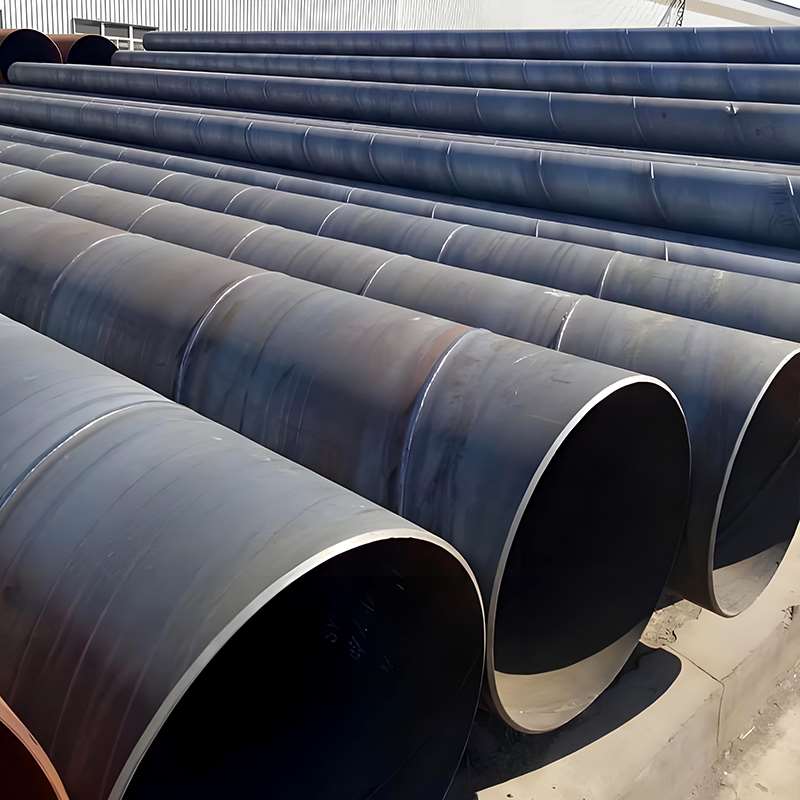
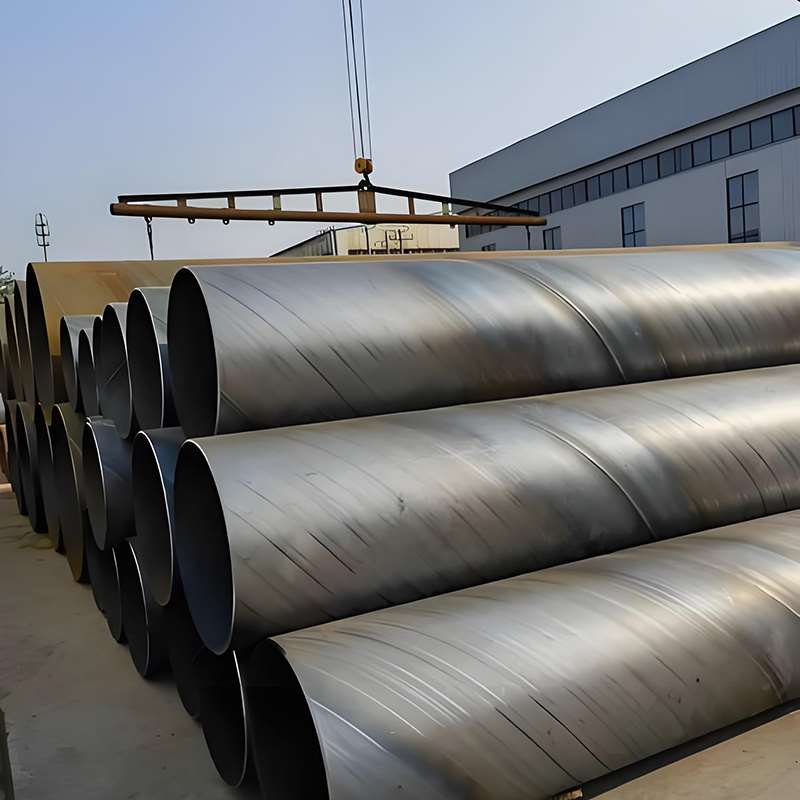
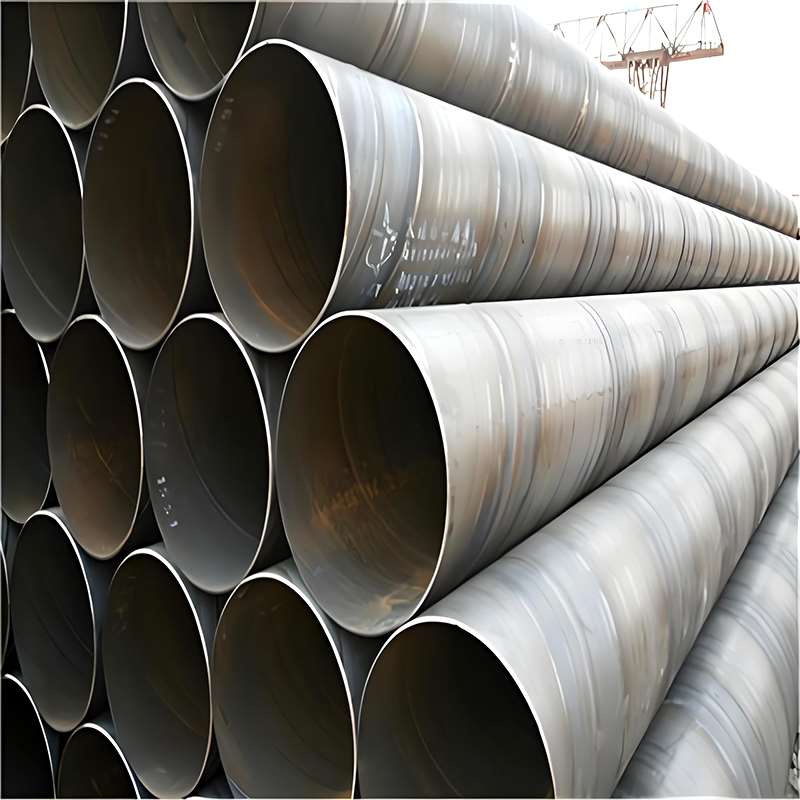
Spiral steel pipes are manufactured through a continuous spiral forming process using steel coils. By adjusting the forming angle, pipes of various diameters can be produced with ease, making it particularly suitable for large-diameter oil and gas transmission pipelines used in trunk line projects.
2. Lower Cost Compared to Seamless Steel Pipes
Compared with seamless steel pipes, spiral welded pipes offer higher production efficiency and better raw material utilization. Especially in large-diameter pipe manufacturing, overall production costs are significantly lower, making them more suitable for large-scale pipeline network projects.
3. High Strength Suitable for High-Pressure Transport
The spiral weld seam is evenly distributed along the pipe body, effectively dispersing internal pressure-induced stress. This provides strong pressure-bearing capacity, excellent bending resistance, and good impact toughness, enabling the pipe to meet the demanding requirements of high-pressure oil and natural gas transportation.
III. Application Scenarios in Oil and Gas Systems
| Application Condition | Specific Application | Pipeline Requirements |
|---|---|---|
| Long-Distance Crude Oil Transportation | Oil field to refinery transportation | High strength, stable operation |
| High-Pressure Natural Gas Transmission | Main natural gas transmission networks | High pressure resistance, excellent sealing performance |
| Large-Diameter Trunk Lines | National oil and gas pipeline projects | Large diameter, high transmission efficiency |
| Buried Pipeline Projects | Underground oil and gas pipeline systems | Corrosion resistance, long service life |
| Challenging Terrain Installation | Mountainous, river-crossing, and desert areas | High flexibility resistance, structural stability |
| Offshore Pipeline Systems | Subsea oil and gas pipelines | External pressure resistance, seawater corrosion resistance |
| Corrosive Media Transportation | Sour gas or humid, corrosive environments | Strong anti-corrosion performance |
IV. Technical Requirements
Spiral steel pipes used for oil and gas transmission must comply with stringent manufacturing and quality control standards to ensure safe operation and long-term stability of pipeline systems.
1. API 5L Steel Grade Standard (X42–X70)
Oil and gas pipelines are typically manufactured in accordance with the API 5L specification, meeting PSL2 requirements. Common steel grades include X42, X52, X60, X65, and up to X70. Higher-grade steel provides greater pressure-bearing capacity, allowing pipelines to operate at higher pressures with the same wall thickness, thereby improving both performance and overall cost efficiency.
2. Internal and External Anti-Corrosion Systems (3PE / FBE)
As pipelines are often installed underground or operated in harsh environments, corrosion protection is critical:
- External coating: 3LPE (Three-Layer Polyethylene) or FBE (Fusion Bonded Epoxy) coating, effectively isolating the pipe from soil and moisture-induced corrosion
- Internal coating: Epoxy flow-efficiency coating, reducing frictional resistance and improving transmission efficiency
3. Weld Quality and Non-Destructive Testing (NDT)
Weld integrity is a key factor in pipeline safety and must be strictly controlled through comprehensive inspection procedures:
- 100% automatic ultrasonic testing (UT) along the full pipe length
- Radiographic testing (RT) on critical weld sections
- Hydrostatic testing on every pipe to ensure zero leakage and structural integrity
V. Comparison with Seamless Steel Pipes
In pipeline network planning and engineering design, design institutes typically conduct a systematic comparison between seamless steel pipes and spiral steel pipes based on a dynamic balance between cost and strength considerations.
| Comparison Dimension | Spiral Welded Steel Pipe (SSAW) | Seamless Steel Pipe |
|---|---|---|
| Manufacturing Process | Steel strip spiral forming + double-sided submerged arc welding (DSAW) | Billet piercing + hot rolling / cold drawing integral forming |
| Diameter Range | Significant advantage, typically from 219 mm up to 2020 mm+ | Limited to medium and large diameters, usually below 508 mm |
| Wall Thickness Uniformity | High precision hot-rolled steel strip ensures excellent uniformity | Limited by piercing process, prone to eccentric wall thickness |
| Unit & Overall Cost | High production efficiency, lower processing cost, lower overall cost | Complex processes and expensive equipment; extremely high cost for large diameters |
| Pressure Resistance & Ultimate Stress | Weld seam is a relatively weaker area, but spiral angle helps distribute stress effectively | Seamless structure with no welds, isotropic properties, extremely high ultimate pressure resistance |
VI. Selection Guidelines for Spiral Steel Pipes in Oil and Gas Pipeline Applications
1. Pressure First: Determining the Appropriate Steel Grade
The most critical factor in pipe selection is the operating pressure.
- Low-pressure pipeline systems: X42 / X46 (suitable for general transmission branch lines)
- Medium-pressure systems: X52 / X60 (commonly used for trunk pipelines)
- High-pressure long-distance pipelines: X65 / X70 (high-safety-grade engineering projects)
Practical recommendation: It is safer and more stable to select a steel grade slightly higher than the minimum requirement rather than operating exactly at the threshold.
2. Medium Conditions: Determining the Anti-Corrosion System
Different oil and gas environments present varying corrosion risks:
- General buried pipelines: 3LPE (Three-Layer Polyethylene) coating — cost-effective and durable
- Highly corrosive soil or high-humidity environments: FBE (Fusion Bonded Epoxy) coating is preferred
- High-flow transmission systems: Internal epoxy flow-efficiency coating is recommended to improve transmission efficiency and reduce energy consumption
Key insight: Inadequate corrosion protection often results in maintenance costs far exceeding the initial material investment.
3. Pipe Diameter: Determining Transmission Efficiency
- Small-diameter pipes: Suitable for branch lines and in-plant pipeline networks
- Large-diameter pipes: Ideal for trunk lines and long-distance transmission systems
Engineering principle:
Larger diameter → higher throughput per unit time → lower energy consumption per volume transported
4. Installation Environment: Determining Structural Requirements
- Flat terrain: Standard specifications are generally sufficient
- Mountainous areas / river crossings: Higher bending resistance and impact strength are required
- Offshore or complex geological conditions: Enhanced corrosion protection combined with higher-grade steel materials is essential
- Key principle: The more complex the environment, the higher the requirement for structural redundancy and safety margin.
5. Quality Standards: Defining the Safety Baseline
Regardless of project type, the following standards must be strictly met:
- Compliance with API 5L / GB/T 9711 standards
- PSL2 grade (minimum requirement for oil and gas applications)
- 100% non-destructive testing (NDT), including ultrasonic testing (UT) on weld seams
- Hydrostatic testing must be passed for every pipe before delivery
VII. Spiral Steel Pipe for Oil and Gas Pipelines: Selection FAQ
1. How to Select the Right Steel Grade (X42–X70)?
Higher steel grades are not always better—the selection should be based on actual operating pressure and engineering design requirements.
- Low-pressure or branch pipelines: X42 / X46 are generally sufficient
- Standard trunk lines: X52 / X60 are the most commonly used and offer the best cost-performance balance
- High-pressure or long-distance critical pipelines: X65 / X70 provide higher safety margins
Practical recommendation: If future capacity expansion is expected, it is more economical to select a higher steel grade from the beginning rather than replacing the pipeline later.
2. When Is Large-Diameter Spiral Steel Pipe Required?
Large-diameter pipes are typically necessary under the following conditions:
- High transmission volume (e.g., natural gas trunk lines, crude oil transmission pipelines)
- Long-distance transportation (to reduce pressure loss)
- Projects aiming to minimize the number of pumping or compressor stations
Engineering logic:
Larger diameter → higher transmission capacity per unit time → lower overall operating cost
3. How to Choose Between 3LPE and FBE Coating Without Overspending?
A simple selection guideline:
- Normal buried environments (standard soil conditions): 3LPE is the most commonly used and cost-effective option
- Highly corrosive soil, humid, or high-temperature environments: FBE is preferred
- Uncertain operating conditions: 3LPE is generally the safer and more versatile choice
Common mistake: Selecting anti-corrosion systems based solely on initial cost often leads to significantly higher maintenance expenses later.
4. When Is Internal Coating Necessary?
Internal coating is strongly recommended if any of the following conditions apply:
- Long-distance transmission (to reduce pressure loss)
- High efficiency requirements (natural gas or crude oil trunk pipelines)
- Projects aiming to reduce energy consumption of pumping or compressor stations
Core function:
Reducing internal friction = lower energy consumption + higher transmission efficiency
5. How to Quickly Evaluate Steel Pipe Quality?
When purchasing, focus on the following four key criteria:
- Compliance with API 5L / GB/T 9711 standards
- PSL2 certification (minimum requirement for oil and gas applications)
- Availability of 100% ultrasonic testing (UT) reports
- Hydrostatic pressure testing certification
Important note: Pipes without proper inspection reports should not be used in oil and gas pipeline projects.
6. In What Applications Is Spiral Steel Pipe the Preferred Choice?
Spiral steel pipes are particularly well-suited for the following real-world engineering scenarios:
- Long-distance oil and gas trunk pipelines
- High-volume transmission systems
- Buried underground pipeline networks
- Mountainous, river-crossing, and complex terrain installations
- Large-scale projects with cost sensitivity