Products

Related News

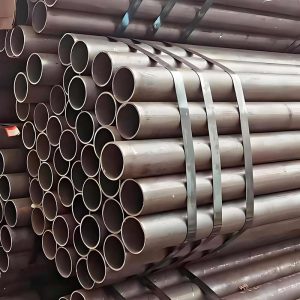
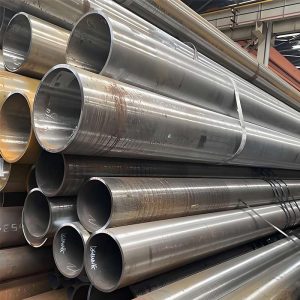
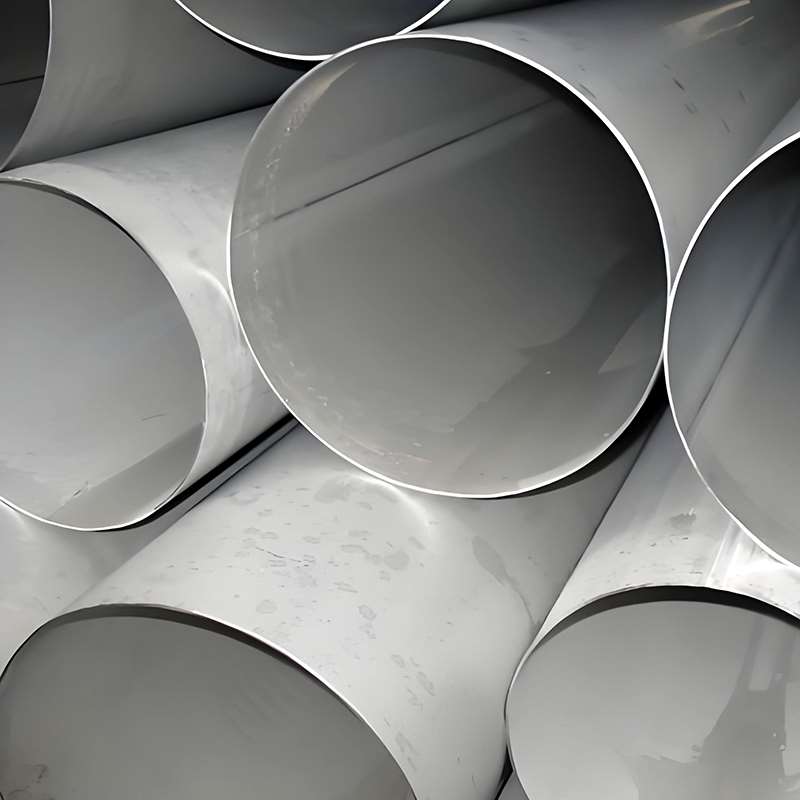
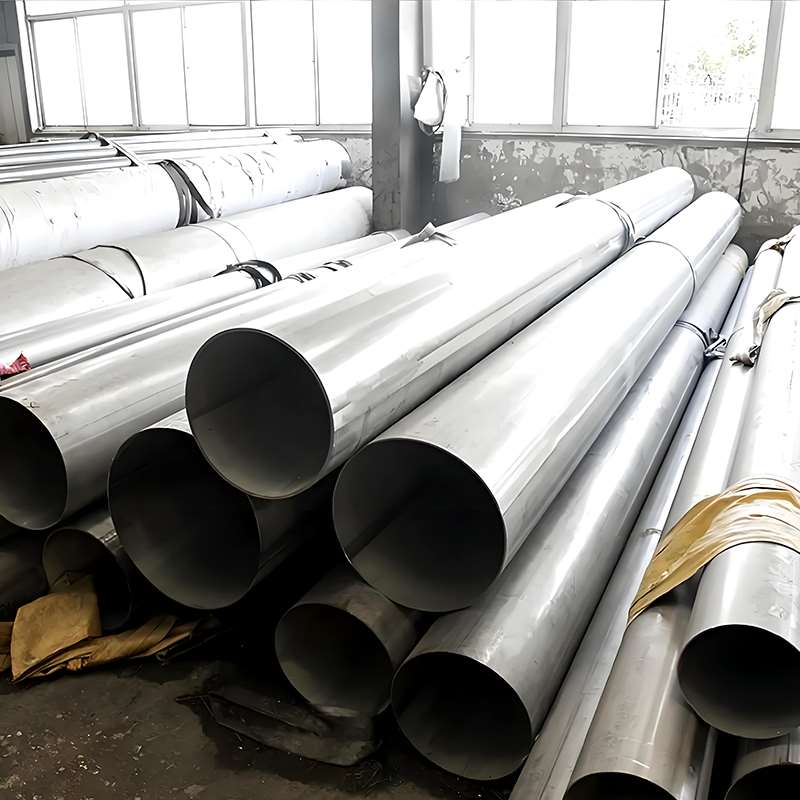
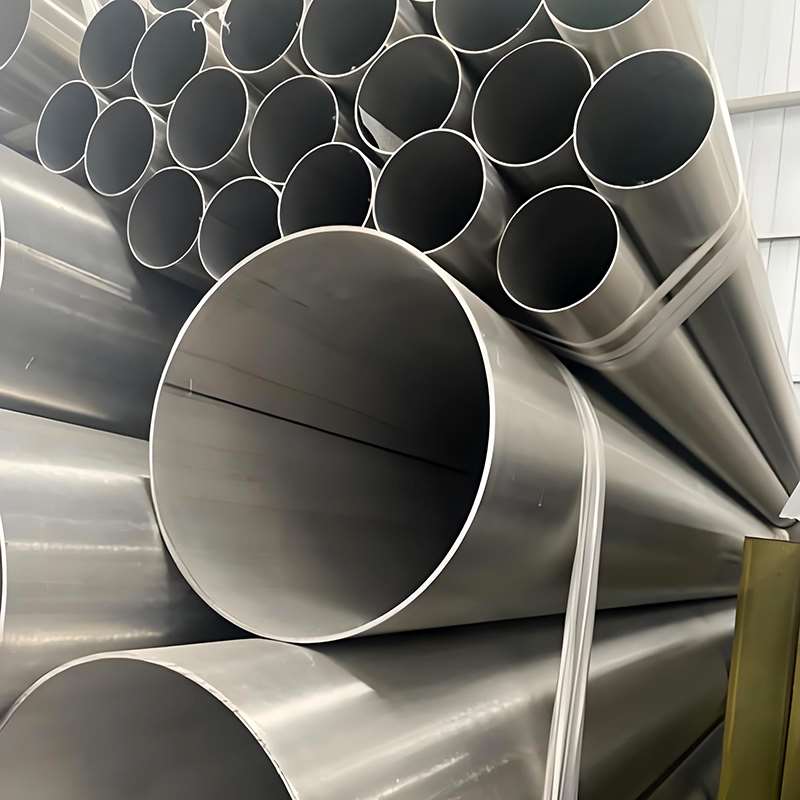
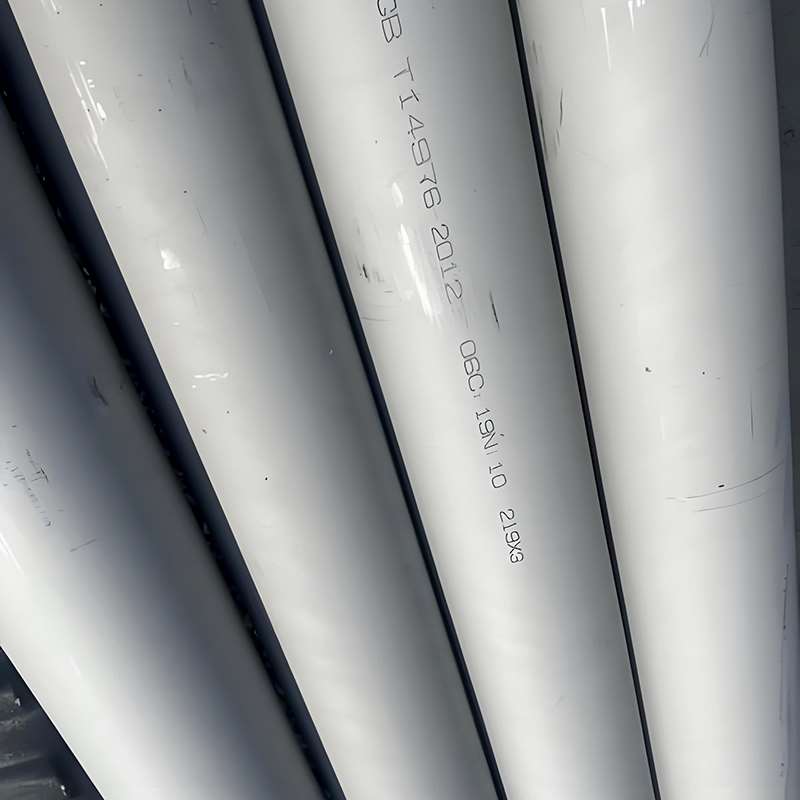
ERW Stainless Steel Pipe

OD Range :

1/2″ ~ 12″(21.3 mm ~ 323.9 mm)

WT Range :

SCH10 ~ SCH80 (approximately 2.77 mm ~ 12.7 mm, according to Schedule)

Length :

6m, 12m, customizable

Tolerance :

Outside diameter ±1%, wall thickness ±10% (according to ASTM/EN standards)

Material :

Stainless steel 304, 304L, 316, 316L, or other austenitic/duplex stainless steels

Standard :

ASTM A312 / ASTM A554 / EN 10296-2 / EN 10217-7

Surface :

Polishing (2B, BA), pickling and passivation, mirror polishing, bright finish, matte finish

Application :

Food processing, pharmaceuticals, chemicals, drinking water pipelines, heat exchanger tubes, decorative engineering, and mechanical structural tubing.

I. Overview of ERW Stainless Steel Pipes

ERW stainless steel pipes are manufactured by longitudinally welding stainless steel coils using high-frequency resistance welding, followed by straightening, polishing, or coating.
Common materials include 304 and 316, which possess characteristics such as strong corrosion resistance, high dimensional accuracy, and good processing performance.

Main Features:

  • Excellent corrosion resistance: 304 is suitable for general industrial environments, while 316 is suitable for chemical, marine, and highly corrosive environments.
  • High dimensional accuracy: The ERW welding process ensures uniform outer diameter and wall thickness, facilitating pipe connection and secondary processing.
  • Good processing performance: Can be cut, bent, welded, and threaded, adapting to various industrial applications.
  • Economical and efficient: Compared to seamless pipes, ERW pipes have lower costs and higher production efficiency.
  • Wide range of applications: Industrial pipelines, chemical liquid transportation, water supply systems, structural support, food and pharmaceutical equipment, etc.

II. Chemical Composition and Mechanical Properties of ERW Stainless Steel Pipes

i. Chemical Composition Table (%)

Steel gradeCCrNiMoTiMnSiPS
304≤0.0818–208–10.5≤2≤1≤0.045≤0.03
304L≤0.0318–208–12≤2≤1≤0.045≤0.03
316≤0.0816–1810–142–3≤2≤1≤0.045≤0.03
316L≤0.0316–1810–142–3≤2≤1≤0.045≤0.03
321≤0.0817–199–12≥5×C≤2≤1≤0.045≤0.03

ii. Mechanical Properties Table

GradeYield Strength Rp0.2 (MPa)Tensile Strength Rm (MPa)Elongation A (%)Impact Toughness (J)Remarks
304≥205515–735≥40≥70General industrial use, good resistance to moderate corrosion
304L≥170485–700≥45≥70Low-carbon grade, reduced risk of weld hot cracking
316≥205515–700≥40≥70Superior corrosion resistance, suitable for marine and chemical piping
316L≥170485–700≥45≥70Low-carbon 316, excellent weldability for highly corrosive environments
321≥205515–700≥40≥70Stabilized stainless steel for high-temperature steam and industrial piping

III. Practical Guide for Selecting ERW Stainless Steel Pipes

When selecting ERW stainless steel pipes, follow these six steps in order: Industry Application → Operating Conditions → Material Selection → Wall Thickness and Diameter → Processing and Installation → Standards and Certifications. This ensures the selected pipes are safe, durable, and cost-effective.

1. Clarify Industry Application

  • Chemical/Petrochemical Industry: For transporting corrosive liquids such as acids and alkalis, 316/316L ERW pipes are recommended. The low-carbon L grade steel has good welding performance and strong corrosion resistance.
  • Food/Pharmaceutical Industry: For transporting clean water, food raw materials, or liquid medicines, 304/304L ERW pipes are recommended. Their smooth surface is easy to clean and meets hygiene standards.
  • Municipal Water Supply or Drainage Pipelines: For ordinary water quality, 304 ERW pipes are sufficient and cost-effective.
  • Marine/Shipbuilding Environment: For saltwater or high-humidity environments, 316/316L ERW pipes are recommended. High corrosion resistance ensures long-term use.
  • Building Structures or Mechanical Supports: For indoor or outdoor structural piping, 304 or 321 ERW pipes can be selected, balancing strength and corrosion resistance.
  • High-Temperature Steam or Hot Water Pipelines: For high-temperature working environments, 321 ERW pipes are recommended. The addition of Ti element provides stabilization and prevents intergranular corrosion.

2. Determining Operating Conditions

Working Pressure:

  • Low pressure/gravity flow → SCH10~SCH40
  • Medium pressure → SCH40~SCH80
  • High pressure or critical pipelines → Select thick-walled or special steel grades based on design calculations

Temperature:

  • Ambient temperature → 304/316
  • High-temperature steam → 321

Medium Corrosiveness:

  • General water or non-corrosive liquids → 304 is sufficient
  • Saltwater or highly corrosive media → 316/316L

3. Material and Steel Grade Selection

  • 304: General industrial and building support, resistant to moderate corrosion
  • 304L: Low-carbon welding pipes, low risk of hot cracking during welding
  • 316: Chemical industry, marine, high-corrosion environments
  • 316L: Low-carbon version of 316, welding pipes for high-corrosion/high-temperature environments
  • 321: High-temperature steam or hot water pipelines, Ti stabilized to prevent intergranular corrosion
  • Selection principle: The stronger the environmental corrosiveness, the higher the corrosion-resistant steel grade should be prioritized; for pipes requiring welding, low-carbon L steel grades should be prioritized.

4. Determining Wall Thickness and Pipe Diameter

  • Determine based on pressure rating, flow requirements, and available space at the construction site.
  • Avoid excessively thin walls that could lead to bursting or excessively thick walls that would waste costs.
  • SCH series wall thickness is the most commonly used reference standard.

5. Considering Processing and Installation

  • Welding: Low-carbon L-grade steel (304L/316L) is safer.
  • Bending/Cutting/Threading: Ensure uniform pipe diameter and wall thickness, and good outer diameter roundness.
  • Outdoor or humid environments: Galvanized or polished surface treatment can extend service life.

6. Standard Certification Confirmation

  • Domestic: GB/T 12771-2008
  • International Export: ASTM A312, A269, A249 or EN 10216-5, 10217-7
  • Confirming the standard ensures dimensional accuracy, mechanical properties, weld quality, and corrosion resistance.
Related Products

ERW Stainless Steel Pipe Specifications and Dimensions Table (304/316 Common Grades)

Nominal Size (NPS / DN) Outside Diameter OD (mm) Wall Thickness WT (mm) Theoretical Weight (kg/m) Standard Length (m)
1/2″ / DN15 21.3 1.2, 1.5, 2.0, 2.5 1.2, 1.5, 2.0, 2.5 6 / 12
3/4″ / DN20 26.7 1.5, 2.0, 2.5, 3.0 1.6, 2.1, 2.6, 3.1 6 / 12
1″ / DN25 33.4 2.0, 2.5, 3.0, 3.5 2.2, 2.8, 3.4, 3.9 6 / 12
1 1/4″ / DN32 42.2 2.5, 3.0, 3.5, 4.0 3.3, 3.9, 4.5, 5.1 6 / 12
1 1/2″ / DN40 48.3 2.5, 3.0, 3.5, 4.0 3.8, 4.4, 5.0, 5.7 6 / 12
2″ / DN50 60.3 2.5, 3.0, 3.5, 4.0, 4.5 4.8, 5.5, 6.2, 6.9, 7.6 6 / 12
2 1/2″ / DN65 76.1 3.0, 3.5, 4.0, 4.5, 5.0 6.1, 7.1, 7.9, 8.8, 9.8 6 / 12
3″ / DN80 88.9 3.0, 3.5, 4.0, 4.5, 5.0, 5.5 7.1, 8.1, 9.2, 10.2, 11.3, 12.4 6 / 12
4″ / DN100 114.3 3.5, 4.0, 4.5, 5.0, 5.5, 6.0 10.1, 11.5, 12.9, 14.3, 15.7, 17.1 6 / 12
5″ / DN125 139.7 4.0, 4.5, 5.0, 5.5, 6.0, 6.5 13.2, 14.8, 16.5, 18.1, 19.8, 21.5 6 / 12
6″ / DN150 168.3 4.5, 5.0, 5.5, 6.0, 6.5, 7.0 17.1, 18.8, 20.5, 22.3, 24.0, 25.8 6 / 12
8″ / DN200 219.1 5.0, 5.5, 6.0, 6.5, 7.0, 7.5 25.1, 26.9, 28.7, 30.5, 32.3, 34.2 6 / 12
10″ / DN250 273.0 5.5, 6.0, 6.5, 7.0, 7.5, 8.0 34.0, 36.0, 38.0, 40.0, 42.0, 44.0 6 / 12
12″ / DN300 323.9 6.0, 6.5, 7.0, 7.5, 8.0, 8.5 42.5, 44.7, 46.9, 49.1, 51.3, 53.6 6 / 12


Common standards and steel grades for ERW stainless steel pipes

Common Standards

Standard System Standard No. Application Scope Remarks
GB / T GB/T 12771-2008 Stainless Steel Welded Pipes Domestic ERW stainless steel pipes for general industrial and building pipelines Specifies requirements for outside diameter, wall thickness, and weld seam strength
ASTM ASTM A269 / A249 Welded and seamless stainless steel pipes for chemical, food, pharmaceutical, and water treatment applications Emphasizes corrosion resistance and dimensional accuracy
ASTM ASTM A312 Seamless and ERW stainless steel pipes for high-temperature, chemical, and industrial fluid service Available in grades such as 304, 316, and 316L
EN EN 10216-5 / EN 10217-7 Stainless steel pipes for industrial applications Includes ERW welded pipes, focusing on corrosion resistance and mechanical properties
JIS JIS G3463 Japanese industrial stainless steel welded pipes Commonly used in food, chemical, and mechanical piping systems

Common steel grades

Material Grade Chemical Composition Characteristics Typical Applications
304 18% Cr + 8% Ni General industrial piping, structural support, and water supply systems with moderate corrosion resistance
304L Low-carbon version of 304 Applications with strict welding requirements; reduces the risk of weld hot cracking
316 16–18% Cr + 10–14% Ni + 2–3% Mo Marine environments, chemical piping, and highly corrosive applications
316L Low-carbon 316 High-corrosion and high-temperature welded piping; offers excellent corrosion resistance
321 Cr-Ni-Ti stabilized stainless steel High-temperature steam pipelines and heat-resistant industrial applications


ERW Stainless Steel Pipe Production Process Flow

Raw Material → Shearing → Rolling → Welding → Straightening → Heat Treatment (Optional) → Surface Treatment → Cutting → Inspection → Packaging

1. Raw Material Preparation
Select stainless steel cold-rolled coil or hot-rolled strip steel. Commonly used materials are 304, 304L, 316, 316L, and 321.
Check the chemical composition and thickness of the material to ensure it meets standard requirements.

2. Shearing and Uncoiling
Cut the coil into strips of appropriate width according to the required pipe diameter.
Width calculation formula: Strip width ≈ π × outer pipe diameter / 2.
Ensure the cut edges are neat to facilitate subsequent rolling and welding.

3. Forming
The steel strip is rolled into a cylindrical shape using a forming machine (plate rolling machine).
The pipe blank is initially shaped to ensure a uniform outer diameter and accurate weld seam position.

4. High-Frequency Resistance Welding (ERW Welding)
The edges of the formed pipe blank are welded together under high-frequency current and pressure.
The weld seam is treated by extrusion or rolling to ensure pipe body strength and a smooth weld seam.

5. Pressure Testing and Shaping
The welded pipe undergoes hydrostatic or pneumatic testing to check the weld seam’s sealing and pressure resistance.
The outer diameter and roundness are corrected by a sizing machine to ensure dimensional accuracy meets standards.

6. Heat Treatment (Optional)
Annealing is performed on some pipes with high corrosion resistance requirements or high welding stress.
This improves the crystal structure and enhances toughness and machinability.

7. Surface Treatment
Choose pickling, polishing, or plating to improve surface finish and corrosion resistance.
316/316L stainless steel can be passivated to enhance oxidation resistance.

8. Cutting and End Treatment
The pipes are cut to standard lengths (6m/12m or customized lengths).
Pipe ends can be plain, beveled, or threaded for easy on-site installation.

9. Inspection and Packaging
Inspection includes appearance, dimensions, welds, and mechanical properties.
After passing inspection, protective packaging is applied to prevent scratches or oxidation during transportation.


ERW Stainless Steel Pipe Inspection Standards Table

Inspection Item Inspection Content Inspection Method Standard Requirement / Reference
Visual Inspection Smooth pipe surface, free from scratches, dents, cracks, rust spots, and weld beads Visual inspection / magnifier-assisted inspection Compliant with GB/T 12771, ASTM A312, EN 10217-7
Dimensional Inspection Outside diameter, wall thickness, length, pipe end dimensions, and roundness Vernier caliper, thickness gauge, steel tape, laser diameter gauge OD tolerance ±1%, WT ±10% (or per SCH series), length ±0.5%
Weld Seam Inspection Weld quality, weld strength, free from porosity and slag inclusions Eddy Current Testing (ET), Ultrasonic Testing (UT), Radiographic Testing (RT), visual inspection Weld strength equal to or not less than the minimum required by the base material standard
Mechanical Properties Test Yield strength Rp0.2, tensile strength Rm, elongation A, impact toughness Tensile test, impact test 304/316: Rp0.2 ≥205 MPa, Rm 515–735 MPa, A ≥40%; low-carbon “L” grades: Rp0.2 ≥170 MPa, A ≥45%
Chemical Composition Test Content of C, Cr, Ni, Mo, Ti, Mn, Si, P, S, etc. Spectrometric analysis / chemical analysis Meets material grade requirements (304, 304L, 316, 316L, 321)
Pressure Test (Optional) Pressure-bearing capacity and tightness of the pipe Hydrostatic test / pneumatic test Pipe withstands the rated working pressure without leakage
Surface & Corrosion Resistance Inspection Pickling, polishing, passivation, zinc coating thickness Visual inspection / thickness gauge / chemical reagent testing In accordance with customer requirements or ASTM / EN standards


ERW Stainless Steel Pipe Frequently Asked Questions

Q1: What are the common grades of ERW stainless steel pipes?

A1:
Common grades include 304, 304L, 316, 316L, and 321.
304/304L: Resistant to moderate corrosion, suitable for food, pharmaceutical, and construction industries.
316/316L: Resistant to strong corrosive environments, such as chemical and marine pipelines.
321: Recommended for high-temperature steam pipelines, Ti stabilization prevents intergranular corrosion.
When selecting a steel grade, consider the type of medium, environmental corrosivity, and welding requirements.

Q2: Which industries are suitable for using ERW stainless steel pipes?

A2:
ERW stainless steel pipes are suitable for various industries, including chemical, food, pharmaceutical, construction, municipal water supply, and marine engineering.
Chemical/Marine environments → 316/316L
Food/Pharmaceutical → 304/304L
High-temperature steam → 321
By combining operating conditions (pressure, temperature, corrosivity), the appropriate steel grade and wall thickness can be selected to ensure safety and reliability.

Q3: How to choose the pipe diameter and wall thickness for ERW stainless steel pipes?

A3:
Pipe diameter and wall thickness are determined based on the flow rate of the conveyed medium, working pressure, and pipeline length.
Low-pressure pipelines can use SCH10~SCH40; medium-pressure SCH40~SCH80; high-pressure pipelines require design calculations.
A pipe wall that is too thin is prone to rupture, while one that is too thick increases costs. A balance should be struck based on actual working conditions.

Q4: Can ERW stainless steel pipes be welded and bent?

A4:
Yes.
For welding, low-carbon L-grade steel (304L/316L) is recommended to reduce the risk of hot cracking.
Bending and cutting can be done using ordinary cold bending or hot bending methods, but attention should be paid to the pipe diameter, wall thickness, and weld location.
It is recommended to perform small sample tests before processing to ensure that corrosion resistance and strength are not affected.

Q5: How to protect ERW stainless steel pipes in outdoor or corrosive environments?

A5:
Surface polishing, pickling, and passivation treatments can be used to improve corrosion resistance.
For seawater or chemical media environments, 316/316L is preferred.
For high-humidity or outdoor installations, protective coatings or coverings can be added to extend service life.

Q6: What are the factory inspection standards for ERW stainless steel pipes?

A6:
Before leaving the factory, the following tests are usually required:
Appearance: No scratches, dents, or weld beads
Dimensions: Outer diameter, wall thickness, length, and roundness
Weld quality: No pores, no slag inclusions, and strength meets standards
Mechanical properties: Yield strength, tensile strength, and elongation
Chemical composition: Ensure the material grade meets the standard
Pressure test (optional): To ensure pressure resistance and sealing。