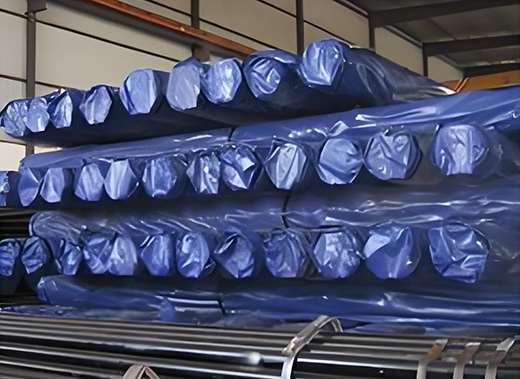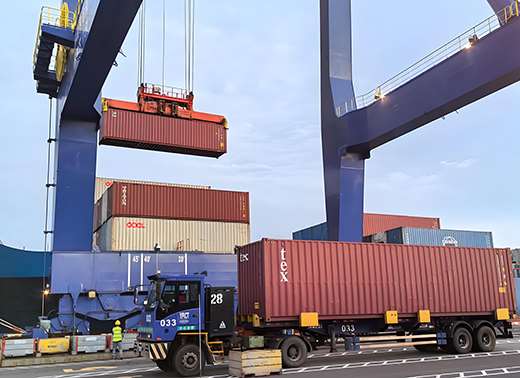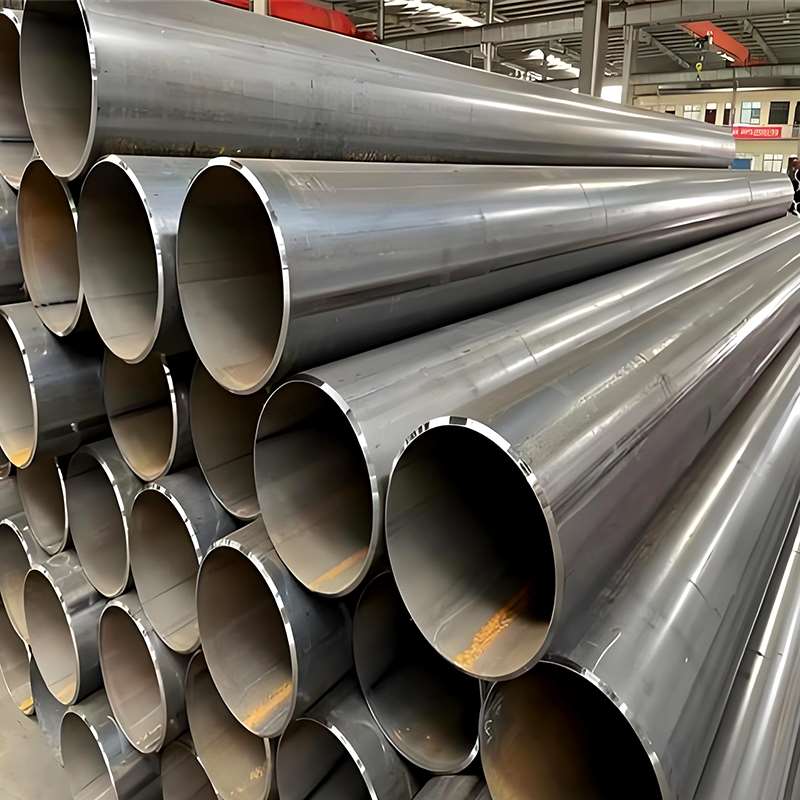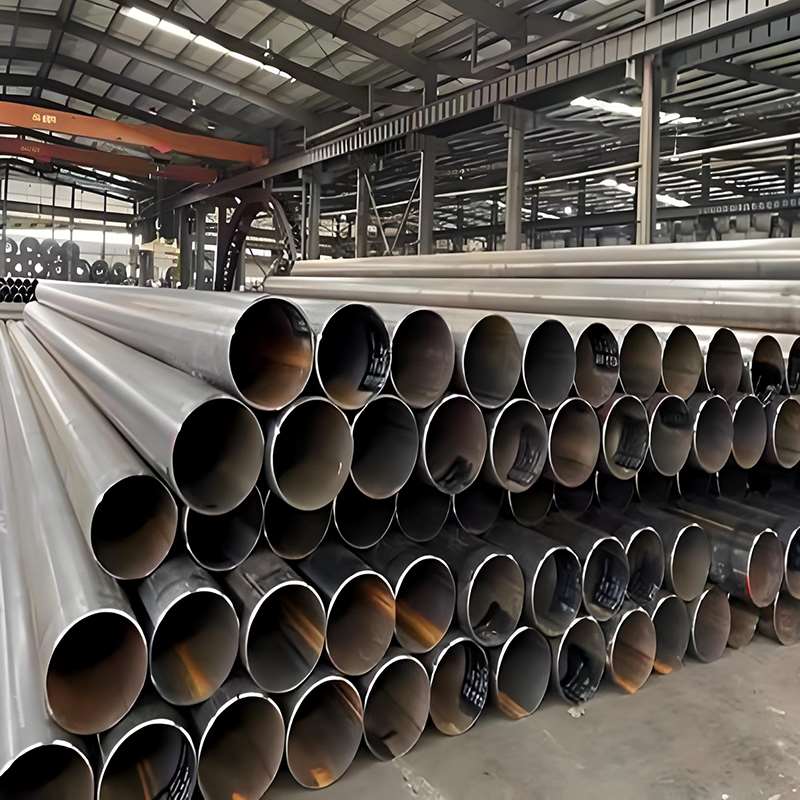
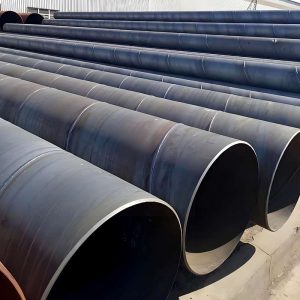
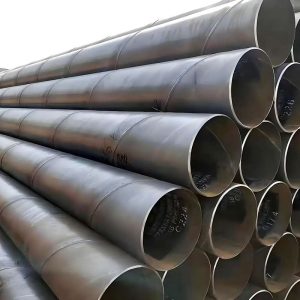
I. Overview of ERW Welded Steel Pipes
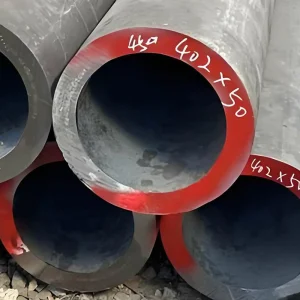
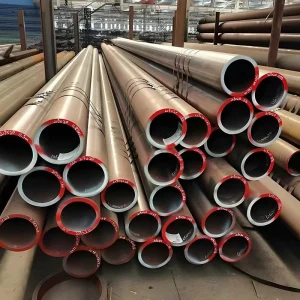
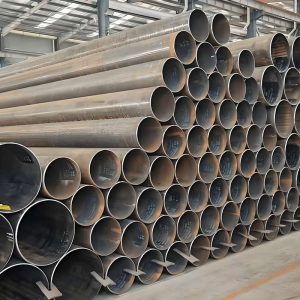
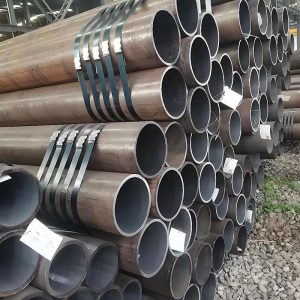
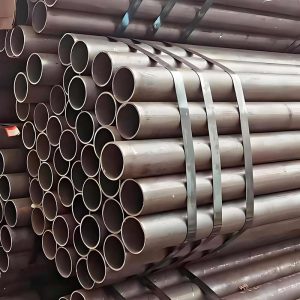
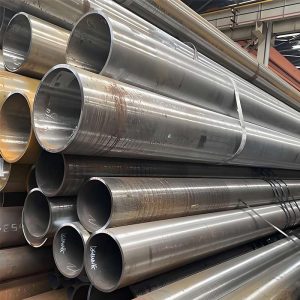
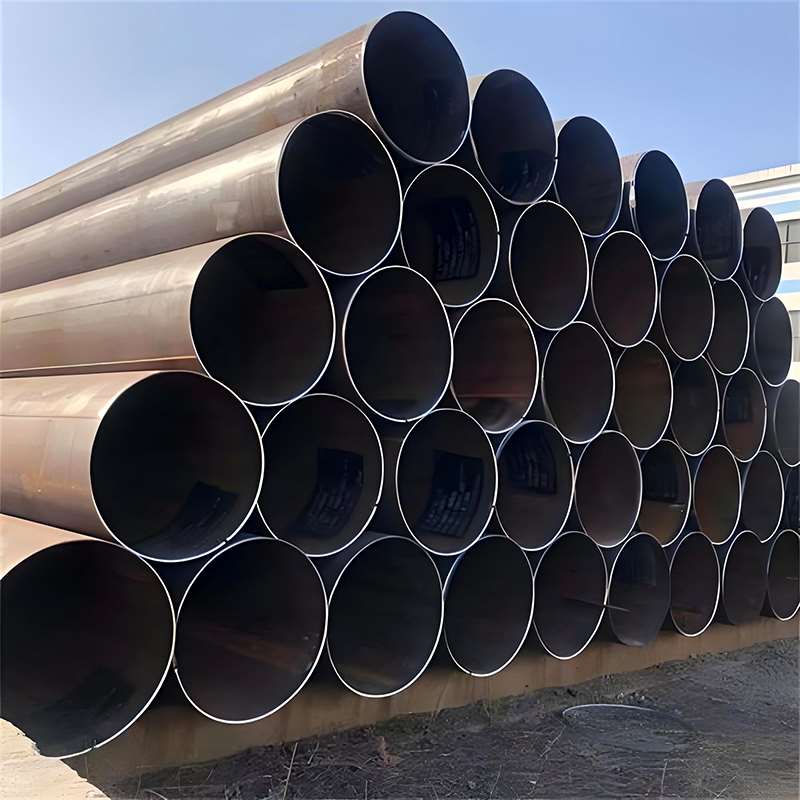
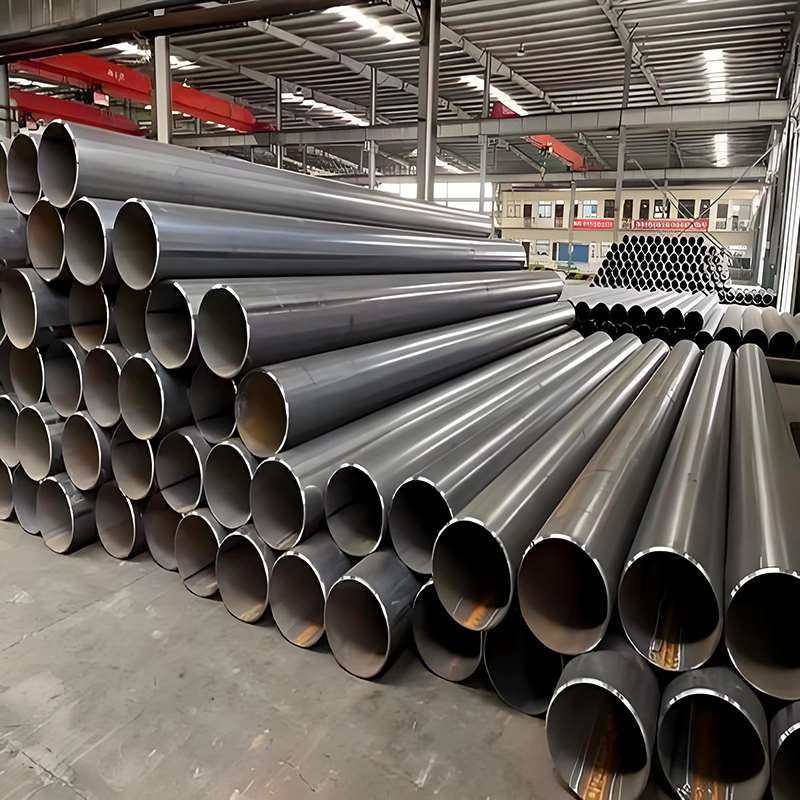
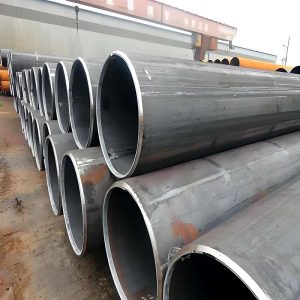
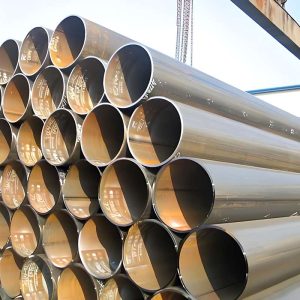
ERW welded steel pipes are straight seam steel pipes manufactured using resistance welding, where hot-rolled or cold-rolled steel strips are heated and welded together by high-frequency current after forming. This process does not use welding wire or flux, resulting in a dense weld structure and stable quality, suitable for mass production.
ERW welded steel pipes are characterized by high outer diameter accuracy, uniform wall thickness, and good weld consistency, and are widely used in industrial pipelines, building structures, machinery manufacturing, municipal engineering, and general fluid transportation.
Depending on the operating conditions, different steel grades, wall thicknesses, and surface treatments (such as black pipe, hot-dip galvanized, anti-corrosion coating, etc.) are available to meet pressure resistance, corrosion resistance, and structural strength requirements.
II. Types of ERW Welded Steel Pipes
i. Classification by Application
- Industrial ERW Welded Steel Pipes
- Mainly used for general fluid transportation, equipment connection, and industrial structural applications, requiring high dimensional accuracy and weld stability.
- Common Applications: Factory pipelines, machinery, low and medium pressure transmission systems
- Common Standards: ASTM A53, ASTM A500, EN 10255
- Structural ERW Welded Steel Pipes
- Primarily focused on load-bearing capacity and structural strength, emphasizing yield strength and dimensional stability.
- Common Applications: Steel structure buildings, factory frames, scaffolding, bridge structures
- Common Standards: ASTM A500, EN 10219, GB/T 6728
- Transportation ERW Welded Steel Pipes
- Used for transporting water, oil, gas, etc., requiring high weld quality and pipe body consistency.
- Common Applications: Water supply and drainage pipelines, oil and gas gathering and transportation pipelines, municipal engineering
- Common Standards: API 5L, GB/T 9711
ii. Classification by Manufacturing Standards and Steel Grades
- Ordinary Carbon Steel ERW Welded Steel Pipes
- Suitable for conventional working conditions, cost control is a priority.
- Common steel grades: Q195, Q235, ASTM A53 Grade A Applicable scenarios: Low-pressure fluids, general structures.
- Medium-High Strength ERW Welded Steel Pipes
- Suitable for engineering projects with higher requirements for pressure resistance and strength.
- Common steel grades: Q345, ASTM A500 Grade B/C, API 5L X42–X52 Applicable scenarios: Industrial pipelines, structural load-bearing systems.
iii. Classification by Surface Condition and Corrosion Protection Method
- Black-skinned ERW Welded Steel Pipe
- No surface anti-corrosion treatment; suitable for dry environments or subsequent processing.
- Features: Low cost, flexible processing.
- Galvanized ERW Welded Steel Pipe
- Corrosion resistance is improved through hot-dip galvanizing or pre-galvanizing.
- Features: Long service life, low maintenance cost.
- Applications: Water supply pipelines, building structures, outdoor projects.
- Anti-corrosion Coated ERW Welded Steel Pipe
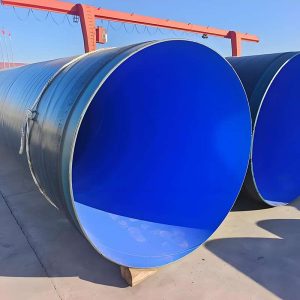
- Anti-corrosion coatings such as paint, epoxy, and 3PE can be added as needed.
- Applications: Underground pipelines, humid or corrosive environments.
III. Real-world Selection Recommendations for ERW Welded Steel Pipe Applications
i. Factory/Steel Structure/Workshop
Working Conditions:
- The pipeline primarily bears weight, does not transport media.
- Long-term static load + wind load. Priority is given to strength, straightness, and dimensional consistency.
Selection Recommendations:
- Type: Structural ERW welded steel pipe
- Standard: ASTM A500 / EN 10219 / GB/T 6728
- Steel Grade: Q345 or ASTM A500 Grade B
Surface Finish:
- Indoor → Black pipe is sufficient
- Outdoor → Hot-dip galvanized
ii. Internal Fluid Transportation within the Factory
Operating Conditions:
- Transporting water, compressed air, and low-corrosive liquids
- Ambient or slightly elevated temperature
- Low pressure, but requiring long-term stable operation
Selection Recommendations:
- Type: ERW welded steel pipe for low-pressure fluids
- Standard: ASTM A53 / GB/T 3091
- Steel Grade: ASTM A53 Grade B
- Wall Thickness: Select based on working pressure; avoid unnecessary thickening
- Surface Treatment: Internal and external anti-rust paint or light corrosion protection
iii. Municipal Water Supply and Drainage / Underground Pipeline Network
Operating Conditions:
- Pipes are buried underground for extended periods.
- Humid and corrosive environment.
- High maintenance costs; problems are difficult to resolve once they occur.
Selection Recommendations:
- Type: Corrosion-resistant ERW welded steel pipe
- Standard: GB/T 3091 / EN 10255
- Steel Grade: Q235 is sufficient
iv. Oil and Gas Gathering and Transportation / Energy Pipelines
Operating Conditions:
- Medium pressure
- Extremely high requirements for weld reliability
- Must pass inspection and comply with specifications
Selection Recommendations:
- Type: Pipeline-grade ERW welded steel pipe
- Standards: API 5L / GB/T 9711
- Steel Grade: X42 / X52
Requirements:
- Specify PSL1 or PSL2
- Non-destructive testing (UT / RT) is mandatory
v. Equipment Manufacturing / Frames / Mechanical Structures
Operating Conditions:
- High requirements for outer diameter and wall thickness consistency
- Subsequent cutting, welding, and machining required
- The pipe itself is not a pressure vessel
Selection Recommendations:
- Type: High-dimensional accuracy ERW welded steel pipe
- Standards: ASTM A500 / EN 10219
Key Considerations:
- Outer diameter tolerance
- Weld formation quality
- Surface flatness