Products

Related News

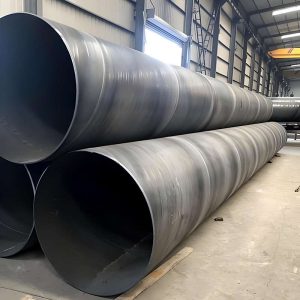
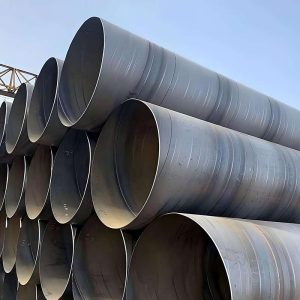
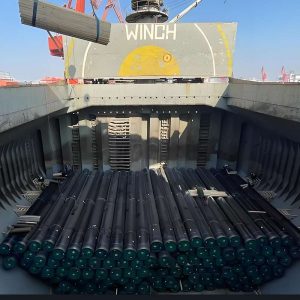
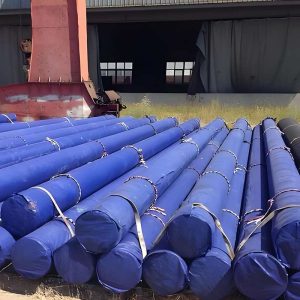
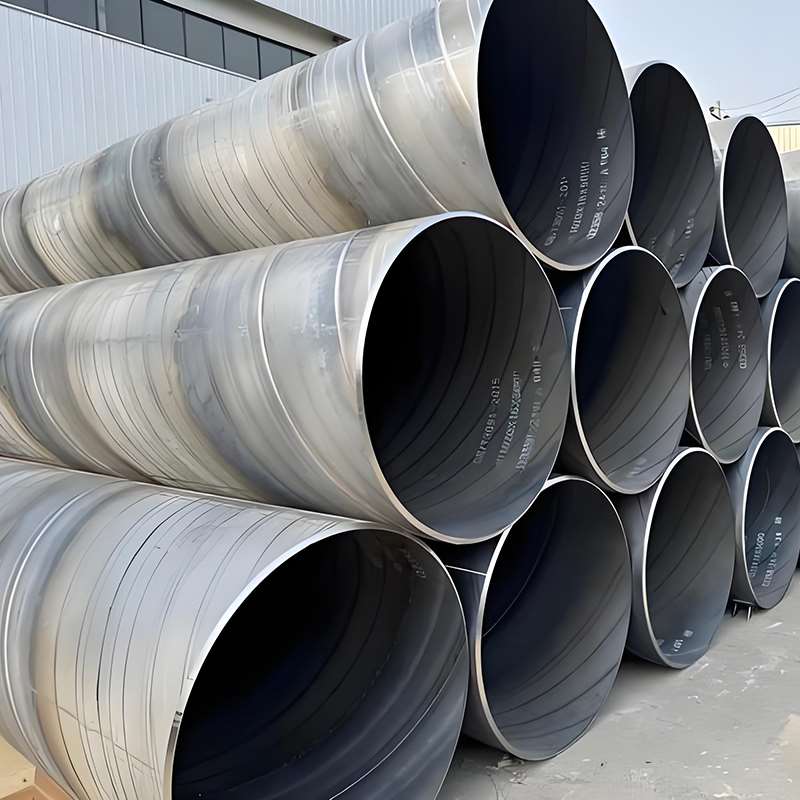
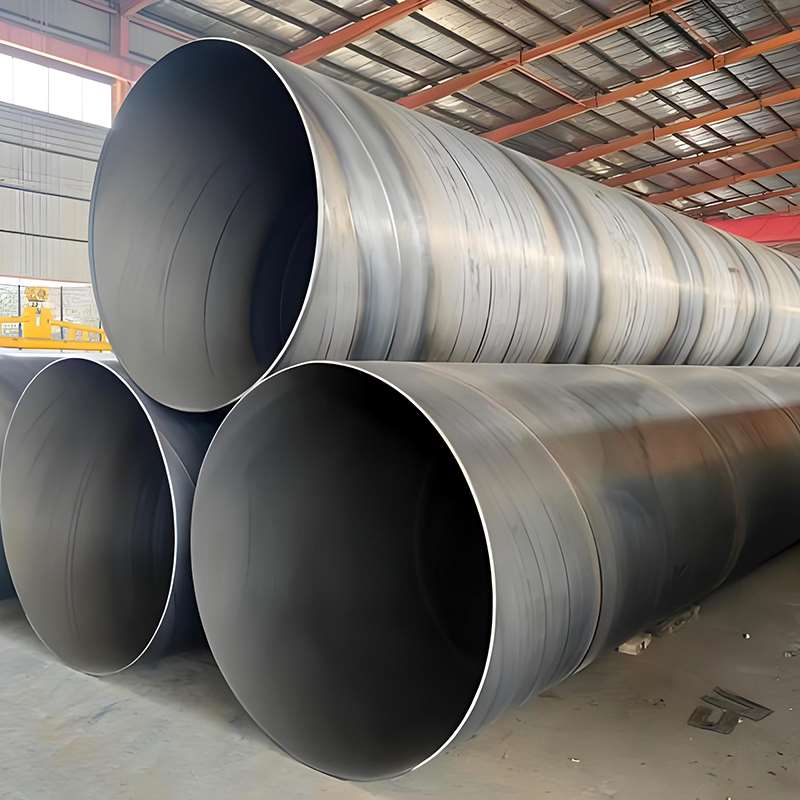
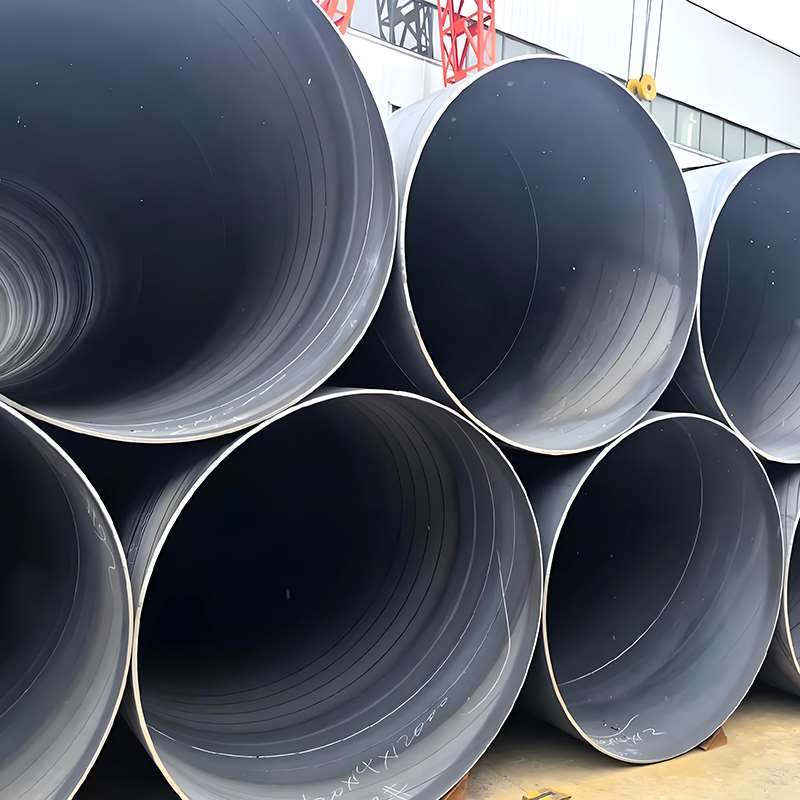
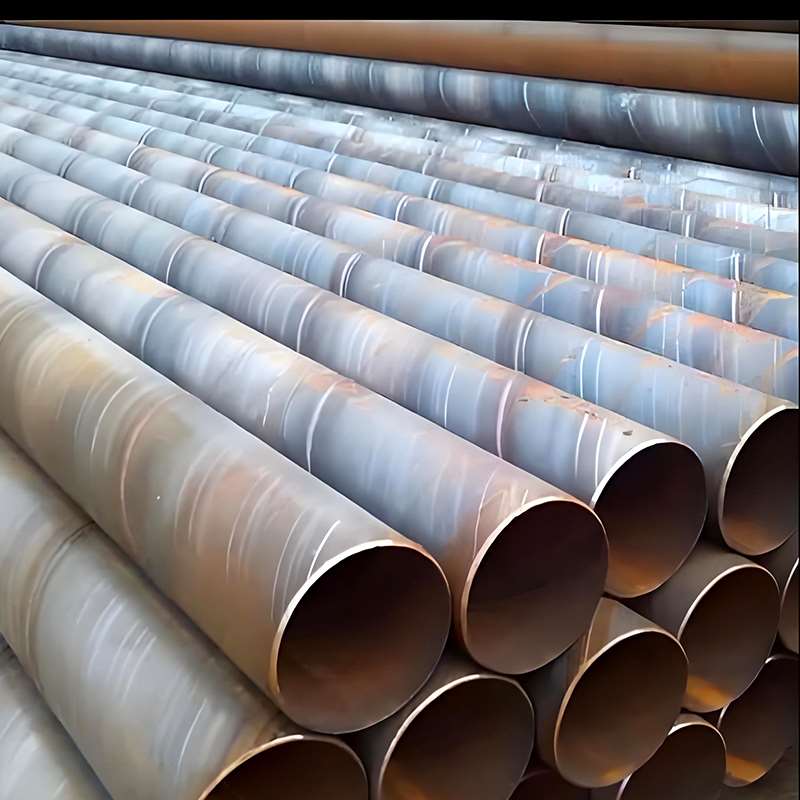
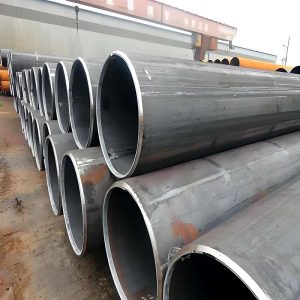
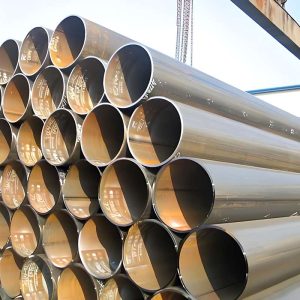
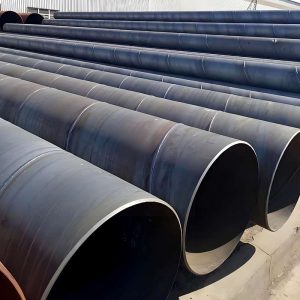
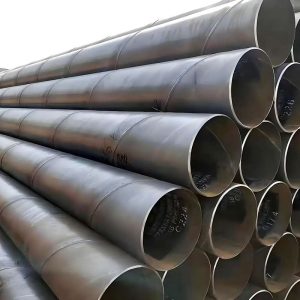
SSAW structural steel pipe

OD Range :

219 mm – 3200 mm (Common sizes: 219, 273, 325, 377, 426, 508, 610, 720, 820, 1020, 1220, 1420, 1524, 1620, 1820, 2030, 2440, 2730, 3200 mm)

WT Range :

6 mm – 40 mm

Length :

6 m – 12 m

Tolerance :

Outside diameter tolerance: ±2%, wall thickness tolerance: ±12.5%, length tolerance: ±5 mm

Material :

Q235, X42, X46, X52, X56, X60, X65, X70

Standard :

GB/T 9711.1-2017 / API 5L / ASTM A252

Surface :

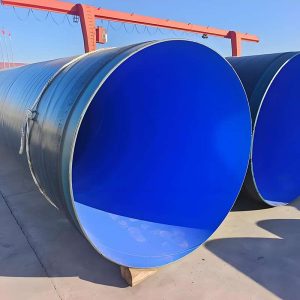
Rust-preventive oil, rust-preventive paint, hot-dip galvanizing, epoxy coating

Application :

Urban gas pipelines, water pipelines, oil pipelines, industrial structural supports, bridges, and large-scale steel structure projects.

I. Definition of SSAW Structural Steel Pipes

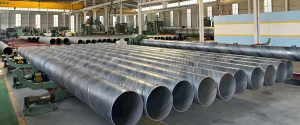
SSAW (Spiral Submerged Arc Welding) structural steel pipes refer to a type of carbon steel or low-alloy steel pipe manufactured using a spiral welding process. Hot-rolled steel strips or plates are uncoiled, roll-formed, and then welded along the spiral direction to form the pipe.

Its characteristics include a spiral weld seam along the pipe body, ensuring uniform pressure distribution, making it suitable for engineering applications such as transporting liquids and gases, and providing structural support in construction.

Key Features:

  • Spiral Welding: The weld seam is spiral-shaped, extending along the pipe body, resulting in high and evenly distributed welding strength.
  • Large Diameter Production: Can meet large diameter requirements from 219 mm to 3200 mm.
  • Multi-purpose Applications: Can be used for transporting water, oil, and natural gas, as well as for steel structure support and bridge construction.
  • Standardized Production: Common standards include GB/T 9711, API 5L, and ASTM, with materials covering Q235 and X42–X70.

II. Common Steel Grades and Differences of SSAW Structural Steel Pipes

Steel Grade / MaterialChemical Composition FeaturesMechanical PropertiesMain Applications & Differences
Q235Low carbon steel, low carbon content, easy to processYield strength 235 MPa, tensile strength 370–500 MPa, elongation ≥26%Suitable for general structural supports and low-pressure pipelines; low cost and easy to weld
X42Moderate carbon content, Mn 0.9–1.2%Yield strength ~290 MPa, tensile strength 420–550 MPaCommonly used for medium-low pressure water and gas pipelines
X46Slightly higher carbon than X42, Mn 1.0–1.3%Yield strength ~315 MPa, tensile strength 450–580 MPaOil and gas pipelines, slightly higher pressure resistance than X42
X52Low alloy steel, strength enhancedYield strength ~355 MPa, tensile strength 455–610 MPaMedium-pressure oil and gas pipelines, stronger than X46
X56Low alloy steel, pressure-strengthenedYield strength ~385 MPa, tensile strength 485–630 MPaMedium-high pressure pipelines and industrial structural pressure pipes
X60Contains manganese and minor microalloying elementsYield strength ~415 MPa, tensile strength 510–650 MPaHigh-pressure oil and gas transport, good pressure and impact resistance
X65Contains small amount of microalloying elements, high strengthYield strength ~455 MPa, tensile strength 550–690 MPaHigh-pressure oil and gas pipelines, strong load-bearing capacity, suitable for long-distance transport
X70Low alloy high-strength steelYield strength ~485 MPa, tensile strength 580–710 MPaHigh-pressure oil and gas pipelines and critical structural pipes; high welding requirements, suitable for large-scale projects

III. Chemical Composition and Mechanical Properties of SSAW Structural Steel Pipes

i. Chemical Composition of SSAW Structural Steel Pipes

Steel gradeC (%)Mn (%)P (%)S (%)Si (%)
Q2350.12–0.200.30–0.70≤0.035≤0.0350.10–0.30
X420.18–0.221.20–1.60≤0.030≤0.0300.15–0.35
X460.20–0.241.20–1.60≤0.030≤0.0300.15–0.35
X520.20–0.261.20–1.60≤0.030≤0.0300.15–0.35
X600.22–0.281.20–1.60≤0.030≤0.0300.15–0.35
X700.24–0.301.20–1.80≤0.030≤0.0300.15–0.35

ii. Mechanical properties of SSAW structural steel pipes

Steel GradeYield Strength ReH (MPa)Tensile Strength Rm (MPa)Elongation A (%)
Q235235375–500≥26
X42290420–550≥23
X46315450–580≥22
X52355455–610≥21
X56385485–630≥20
X60415510–650≥20
X65455550–690≥18
X70485580–710≥18

IV. Recommendations for Selecting SSAW Structural Steel Pipes

1. Selecting Steel Grade and Material Based on Pipe Application

  • Low-pressure water supply or gas pipelines: Q235 or X42 are suitable, offering moderate strength, low cost, and ease of processing and welding.
  • Medium-pressure oil, gas, or industrial pipelines: X46–X56 is recommended, possessing high yield strength and tensile strength, suitable for medium pressure applications.
  • High-pressure oil and gas pipelines or critical structural pipes: X60–X70 should be selected, offering high strength and pressure resistance to ensure safety and reliability.

2. Matching Diameter and Wall Thickness to Usage Requirements

  • Large-diameter pipes (>800 mm): SSAW pipes are suitable, offering lower cost and higher production efficiency;
  • Wall thickness selection: The higher the pipe pressure, the thicker the wall needs to be; it is recommended to calculate the wall thickness based on the design pressure and temperature, in accordance with GB/T 9711 or API 5L.

3. Considering the Transported Medium and Environment

  • Water or general liquids: Ordinary anti-rust oil is sufficient;
  • Corrosive media or outdoor environments: Epoxy coating or hot-dip galvanizing is recommended to improve corrosion resistance;
  • Low-temperature environments: Check the impact toughness of the steel to ensure that the welds do not become brittle and crack.

4. Weld Quality and Tolerance Requirements

  • Require ultrasonic weld testing reports (UT) or magnetic particle testing (MT) during procurement;
  • Outer diameter deviation: ±2%, wall thickness deviation: ±12.5%, length deviation: ±5 mm;
  • For high-requirement pipelines, suppliers should be required to provide third-party inspection certification.

5. Construction and Installation Considerations

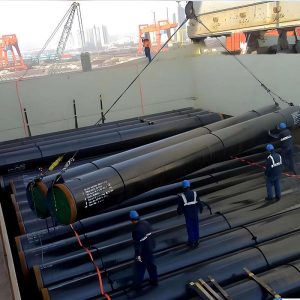
  • SSAW pipes are heavy due to their large diameter; use slings and brackets during handling to avoid stress concentration on the welds;
  • When bending during installation, follow the minimum bending radius to avoid stress concentration leading to cracking.

6. Standards and Certifications

  • Common standards: GB/T 9711.1-2017, API 5L, ASTM A252;
  • The material grade must be consistent with the design documents, confirming the steel grade, chemical composition, and mechanical properties;
  • For critical projects, it is recommended to choose suppliers with factory certification and a quality traceability system.
Related Products

SSAW Structural Steel Pipe Specifications and Dimensions Table

Outer Diameter (inch) Outer Diameter (mm) Wall Thickness (mm, all values) Theoretical Weight (kg/m) Length Tolerance Standard Tolerance
8″ 219 6, 8, 10, 12, 14, 16 25.3 – 62.0 ±5 mm ±2% OD / ±12.5% WT
10″ 273 6, 8, 10, 12, 14, 16, 18 31.2 – 82.1 ±5 mm ±2% OD / ±12.5% WT
12″ 325 6, 8, 10, 12, 14, 16, 18, 20 39.6 – 105.8 ±5 mm ±2% OD / ±12.5% WT
14″ 377 6, 8, 10, 12, 14, 16, 18, 20 45.5 – 129.5 ±5 mm ±2% OD / ±12.5% WT
16″ 426 6, 8, 10, 12, 14, 16, 18, 20, 22 51.4 – 153.0 ±5 mm ±2% OD / ±12.5% WT
18″ 457 6, 8, 10, 12, 14, 16, 18, 20, 22 56.6 – 174.0 ±5 mm ±2% OD / ±12.5% WT
20″ 508 6, 8, 10, 12, 14, 16, 18, 20, 22, 25 62.8 – 215.0 ±5 mm ±2% OD / ±12.5% WT
24″ 610 6, 8, 10, 12, 14, 16, 18, 20, 22, 25, 28 75.4 – 271.0 ±5 mm ±2% OD / ±12.5% WT
28″ 720 8, 10, 12, 14, 16, 18, 20, 22, 25, 28, 30 90.5 – 341.0 ±5 mm ±2% OD / ±12.5% WT
32″ 820 8, 10, 12, 14, 16, 18, 20, 22, 25, 28, 30, 32 105 – 410 ±5 mm ±2% OD / ±12.5% WT
36″ 914 10, 12, 14, 16, 18, 20, 22, 25, 28, 30, 32, 35 125 – 510 ±5 mm ±2% OD / ±12.5% WT
40″ 1020 10, 12, 14, 16, 18, 20, 22, 25, 28, 30, 32, 35, 40 140 – 615 ±5 mm ±2% OD / ±12.5% WT


SSAW structural steel pipe standards

Standard Type Standard Number Scope / Description
National Standard (China) GB/T 9711.1-2017 Spiral welded steel pipes for oil and gas transportation, specifying dimensions, appearance, weld requirements, mechanical properties, and chemical composition; suitable for large-diameter pipelines.
National Standard (China) GB/T 9711.2-2017 Requirements for heat treatment and mechanical properties of spiral welded pipes to ensure weld and base material strength and toughness.
International Standard API 5L (Latest Edition) Spiral welded steel pipes for oil and gas pipelines, specifying steel grades, dimensions, weld requirements, and tolerances; includes PSL1 (standard grade) and PSL2 (high-spec grade).
International Standard ASTM A252 / A589 Spiral welded pipes for piles or structural use, specifying welding method, wall thickness, mechanical properties, and inspection methods.
European Standard EN 10217-1 / EN 10217-2 Welded steel pipes (including spiral welded), specifying manufacturing, dimensions, weld quality, and inspection requirements; mainly for structural engineering.


SSAW Structural Steel Pipe Production Process Flow (Spiral Welded Steel Pipe)

Steel coil unwinding → Roll forming → Internal and external welding heating → High-frequency spiral welding → Straightening → Cutting to length → Weld non-destructive testing (UT/MT) → Surface treatment (rust-proof oil/coating/hot-dip galvanizing) → Finished product warehousing

Process Description:

1. Steel Strip Uncoiling:
The hot-rolled steel strip is uncoiled from the coil, ensuring that the width and thickness meet the design requirements.

2. Roll Forming:
The steel strip is rolled into a spiral pipe blank through multi-stage roll forming.

3. Internal and External Welding Preheating:
The weld area of ​​the pipe blank is preheated before welding to improve welding quality.

4. High-Frequency Spiral Welding:
High-frequency induction welding is used to weld along the spiral direction, resulting in a uniform and high-strength weld.

5. Straightening:
A straightening machine is used to eliminate bending stress generated during forming and welding, ensuring the straightness of the pipe body.

6. Cutting to Length:
The steel pipe is cut to the length required by the customer, usually 6–12 meters.

7. Non-Destructive Weld Testing:
Ultrasonic testing (UT) or magnetic particle testing (MT) is used to inspect the weld quality and ensure there are no defects.

8. Surface Treatment:
Anti-rust oil, epoxy coating, or hot-dip galvanizing can be applied to improve corrosion resistance.

9. Finished Product Warehousing:
After inspection and acceptance, the finished products are packaged and stored in the warehouse, awaiting transportation or use in construction.


SSAW structural steel pipe testing standards

Test Item Purpose / Requirement Test Method
Chemical Composition Ensure steel meets design requirements (content of C, Mn, P, S, Si, etc.) Spectral analysis or chemical analysis
Yield Strength ReH Ensure the pipe does not undergo permanent deformation under working pressure Tensile test
Tensile Strength Rm Verify material’s resistance to fracture and ensure pressure safety Tensile test
Elongation A (%) Test material plasticity and toughness to prevent cracking during welding or bending Tensile test
Weld Ultrasonic Testing (UT) Detect internal weld defects such as lack of fusion, porosity, slag inclusions Ultrasonic testing
Magnetic Particle Testing (MT) Detect surface and near-surface weld defects, cracks, porosity Magnetic particle inspection
Pipe Straightness Ensure smooth installation and avoid stress concentration Geometric dimension measurement
Visual Defects Check welds and pipe surface for cracks, scratches, dents, etc. Visual inspection or manual measurement
Wall Thickness Measurement Ensure pressure-bearing capacity meets design requirements Ultrasonic thickness measurement or mechanical measurement
Hardness Test (optional) Check hardness of weld and base metal to prevent brittleness or softness Brinell / Rockwell / Vickers hardness test
Pressure Test (optional) Verify pressure resistance for high-pressure pipes Hydrostatic or pneumatic test


SSAW Structural Steel Pipe Selection – Frequently Asked Questions

Q1: What engineering scenarios are suitable for SSAW pipes?

A1:
SSAW pipes are mainly suitable for large-diameter, medium-to-low pressure pipelines, such as urban gas, water pipelines, oil pipelines, and industrial pipe networks. They can also be used in steel structures, bridges, port engineering, and other building structures.
For high-pressure or critical pressure-bearing pipelines, LSAW pipes are generally recommended. The suitability should be determined based on the pipe diameter, pressure rating, and project type.

Q2: What factors should be considered when selecting steel grade and wall thickness?

A2: Steel grade selection should be based on design pressure, temperature, and media corrosiveness:
Low-pressure water or gas pipelines: Q235, X42 are sufficient;
Medium-pressure oil, gas, or industrial pipelines: X46–X56;
High-pressure oil, gas, or critical structural pipelines: X60–X70.
Wall thickness should be calculated based on the pipeline’s pressure bearing capacity, and in accordance with GB/T 9711 or API 5L standards to ensure the pipeline’s pressure bearing capacity and safety margin.

Q3: How is weld quality guaranteed, and what precautions should be taken during construction?

A3: SSAW pipe welds are spiral high-frequency welds. Common risks include insufficient penetration or porosity. Recommendations for procurement and construction:
Obtain ultrasonic or magnetic particle testing reports for the welds;
Avoid bending or impacting the welds during handling and installation;
For high-risk pipelines, third-party inspection or repair records may be required.

Q4: How are pipe corrosion protection and environmental adaptability considered?

A4: SSAW carbon steel pipes are prone to rusting, and protective measures should be selected based on the environment:
Indoor or short-term use: Rust-proof oil is sufficient;
Outdoor or corrosive environments: Epoxy coating or hot-dip galvanizing;
Humid, hot, or low-temperature environments: Check coating thickness and steel impact toughness to ensure service life.

Q5: What are the precautions for transporting and installing large-diameter pipes?

A5: Large-diameter pipes are heavy and prone to bending or damage:
Use slings, supports, or special transport racks to avoid stress concentration;
When bending during installation, follow the minimum bending radius to prevent weld cracking;
Damaged pipe ends or welds should be repaired promptly and the thickness re-tested.

Q6: How to confirm that the pipes supplied by the supplier meet standards and design requirements?

A6: When purchasing, request a complete Mill Test Certificate (MTC):
Chemical composition and mechanical properties;
Weld ultrasonic/magnetic particle testing report;
Outer diameter, wall thickness, length, and straightness tolerances.
For critical projects, it is recommended to choose suppliers with factory certification and traceable quality to ensure reliable material performance and construction safety.