Products

Related News

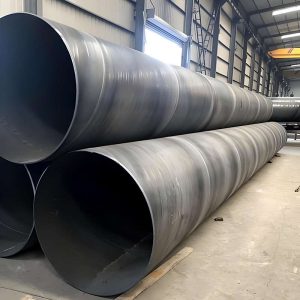
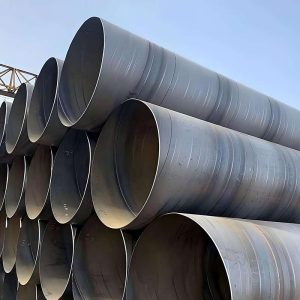
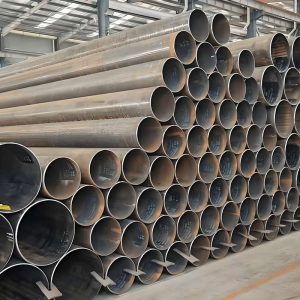
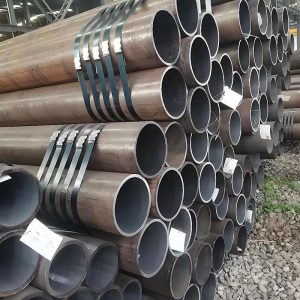
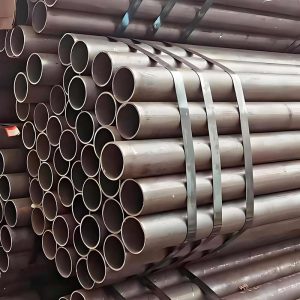
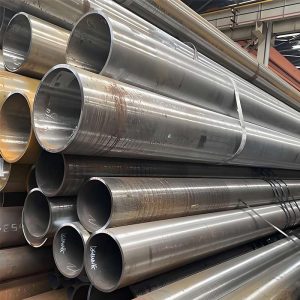
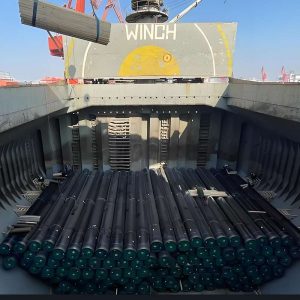
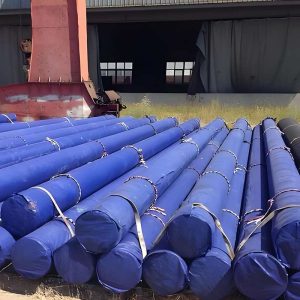
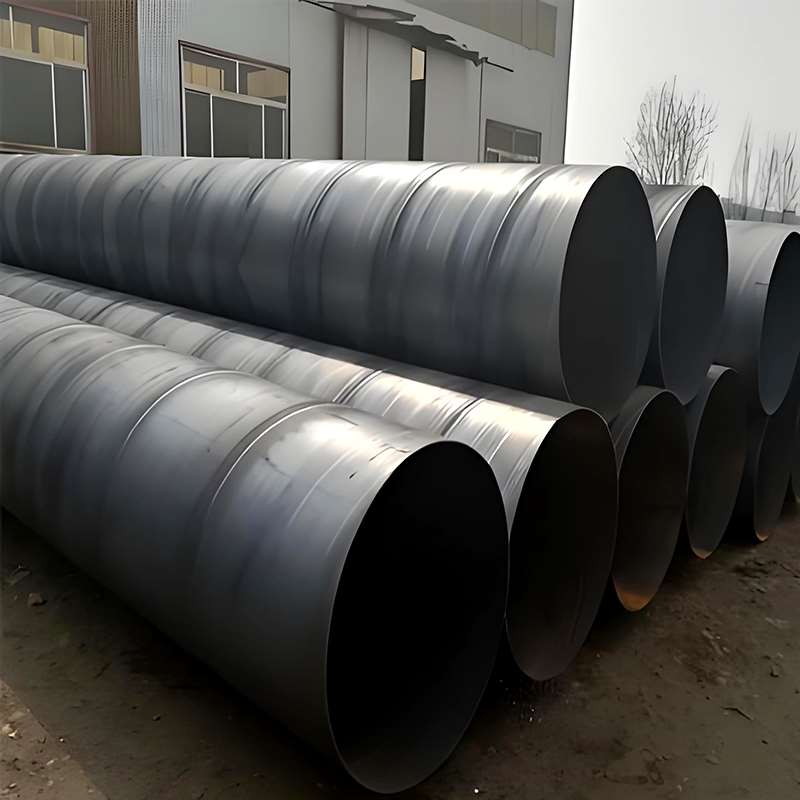
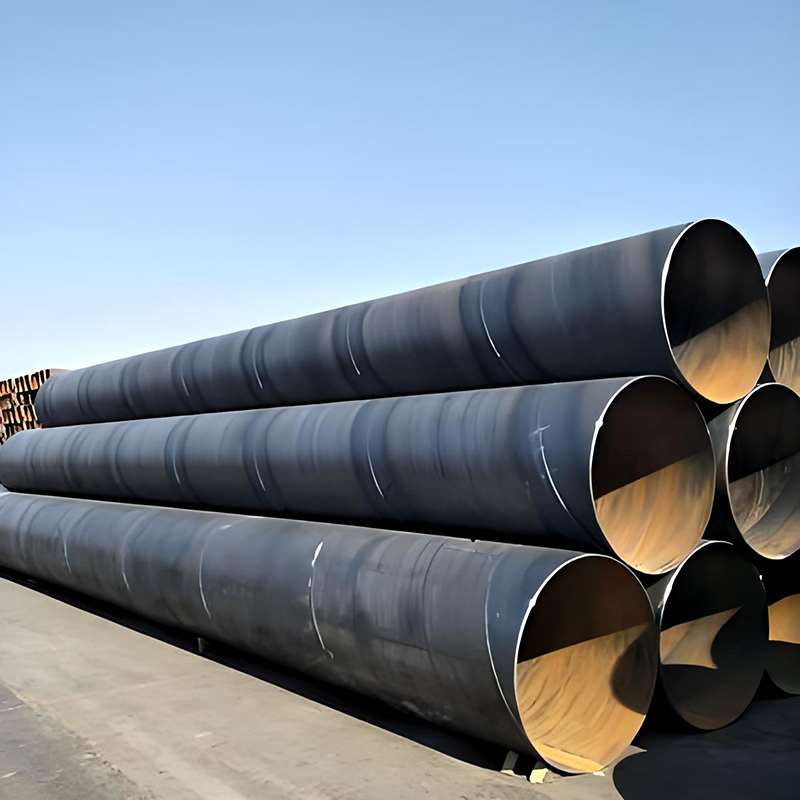
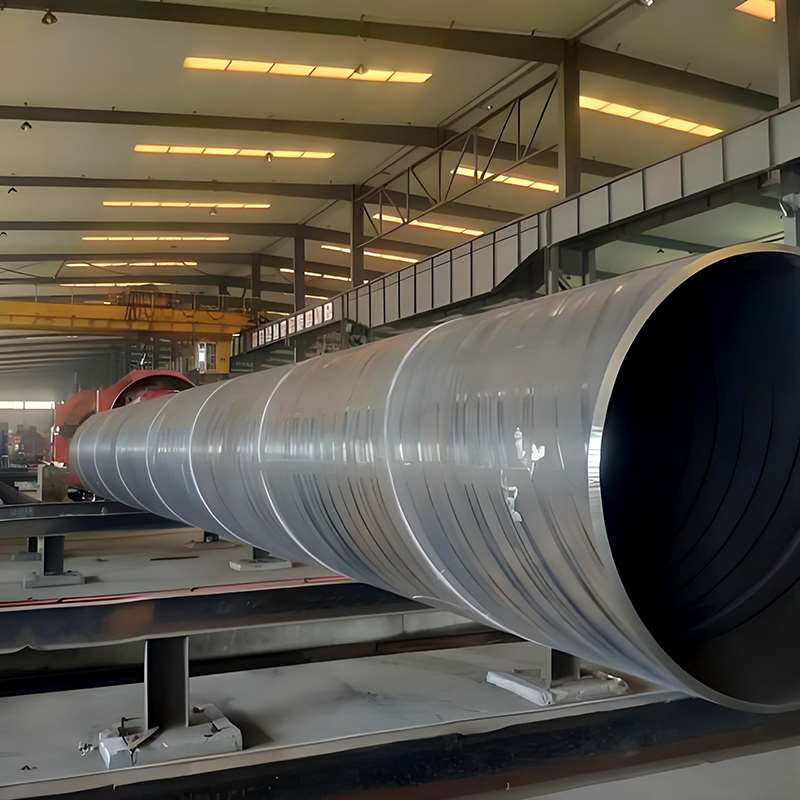
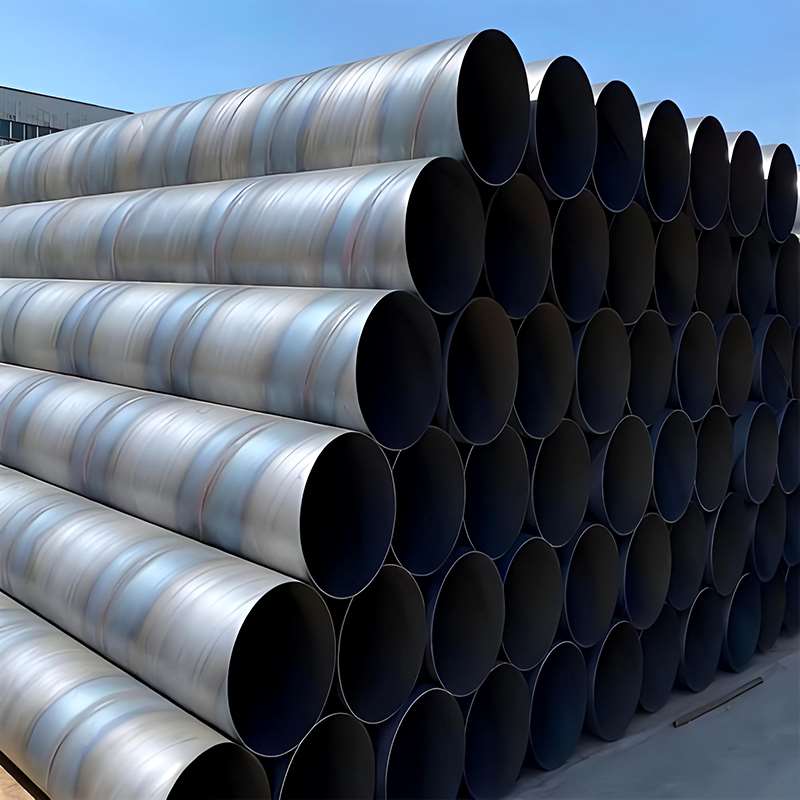
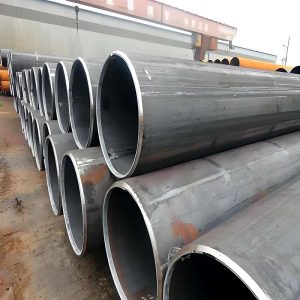
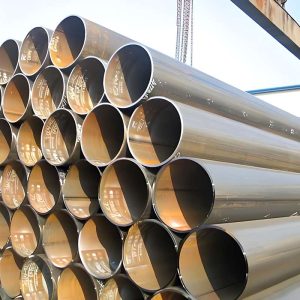
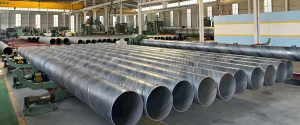
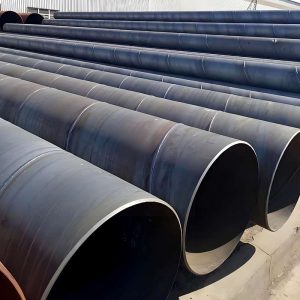
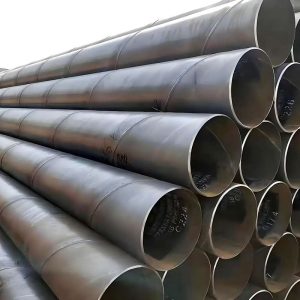
SSAW Carbon Steel Structural Pipe

OD Range :

219mm – 1420mm

WT Range :

6mm – 40mm

Length :

6m – 12m

Tolerance :

Outer diameter ±2%, wall thickness ±10%

Material :

Q235B, Q345B, X42, X52

Standard :

GB/T 9711.1-2017, API 5L, EN 10219

Surface :

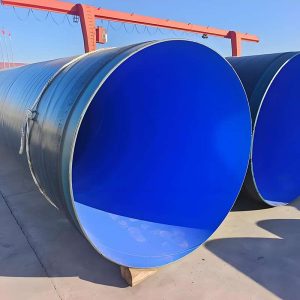
Rust-inhibiting oil coating / Hot-dip galvanizing / Painting

Application :

Building structural supports, bridge piles, industrial pipelines, transmission lines

Introduction :

SSAW carbon steel structural pipes are manufactured using the spiral submerged arc welding process, offering high strength and corrosion resistance.

I. Overview of SSAW Carbon Steel Structural Pipes

SSAW carbon steel structural pipes are high-strength carbon steel pipes manufactured using spiral submerged arc welding technology. These pipes feature precise dimensions, high pressure resistance, and good corrosion resistance, and are widely used in building structural support, bridge piling, industrial pipelines, and transportation systems.

SSAW pipes can be customized with different outer diameters, wall thicknesses, and lengths according to project requirements, and can be treated with anti-rust oil coating, hot-dip galvanizing, or painting to meet different environmental and usage conditions.

II. Summary Table of Common Steel Grades for SSAW Carbon Steel Structural Pipes

Steel Grade / MaterialCharacteristicsTypical Applications
Q195Ultra-low carbon steel, good weldability and machinabilityGeneral light building structures, non-pressure pipelines
Q215Low carbon steel, good weldability, low costLight industrial supports, structural pipes for buildings
Q235 / Q235BLow carbon steel, easy to process, good toughness, excellent weldabilityBuilding structures, pipeline supports, light industrial pipelines
Q345 / Q345BMedium carbon low-alloy steel, high strength, good toughnessBridge pile pipes, heavy building structures, pressure pipelines
X42API grade steel, moderate yield strength, good pressure resistanceOil and gas pipelines, general industrial pipelines
X46API steel, moderate strength, good compressive performanceIndustrial frameworks, general pressure pipelines
X52High-strength API steel, strong compressive and corrosion resistanceLong-distance pipelines, industrial framework structures, pressure pipelines
X56High-strength steel, good corrosion resistance, strong compressive strengthHigh-pressure transmission pipelines, critical pressure-bearing structures
X60High-strength, high-toughness steel, excellent corrosion resistanceHigh-pressure oil and gas pipelines, critical pressure-bearing pipelines
X65High-strength steel, strong compressive performance, suitable for long-distance pipelinesHigh-pressure long-distance pipelines, industrial structural supports
X70High-strength steel, excellent crack resistance and toughnessHigh-pressure oil and gas transmission, critical industrial pipelines

III. SSAW Carbon Steel Structural Pipe Application Scenarios

  1. Building Structure Support
    Used for steel structure frames and support columns in various industrial plants, warehouses, gymnasiums, and high-rise buildings.
    Advantages: High strength, precise dimensions, and easy welding and installation.
  2. Bridge and Foundation Piles
    Suitable for bridge foundation piles, dock foundations, tunnel supports, and other load-bearing structures.
    Advantages: Strong pressure resistance, stable load-bearing capacity, and long service life.
  3. Industrial Pipelines and Conveying Systems
    Used for pipelines transporting water, gas, oil, and other industrial media.
    Advantages: Uniform wall thickness, reliable welding, and excellent corrosion resistance.
  4. Energy and Petrochemical Industry
    Applied in pipeline systems and high-pressure industrial pipelines for oil, natural gas, and chemical industries.
    Advantages: Can withstand high pressure and high temperature environments, and has excellent corrosion resistance.
  5. Municipal Infrastructure
    Used for water supply and drainage pipes, rainwater pipes, gas pipelines, and other municipal engineering projects.
    Advantages: Convenient construction, strong durability, and low maintenance costs.
  6. Machinery and Equipment Structures
    Used for frames, brackets, and pipe fittings of large machinery and equipment.
    Advantages: High strength, customizable processing, and meets special industrial requirements.

IV. How to Mitigate Procurement Risks for SSAW Carbon Steel Structural Pipes

1. Clearly define project requirements to avoid specification selection errors.

Before procurement, confirm design standards, operating conditions, pressure requirements, and operating environment (whether buried underground, whether corrosive).
Clearly define key parameters: outer diameter, wall thickness, length, steel grade, and applicable standards.
Avoid selecting based solely on the “lowest price” to prevent insufficient wall thickness or substandard steel grade.
Risk point: Specifications do not match the design, leading to installation difficulties or failure to pass acceptance testing.

2. Strictly Confirm and Adhere to Execution Standards

Common standards:
GB/T 9711 (Domestic engineering projects)
API 5L (Oil and gas and export projects)
EN 10219 (European standard for structural applications)
The contract should clearly specify the standard version number to avoid ambiguity.
Risk point: Using lower standards while claiming to meet higher standards, affecting project safety.

3. Verify the authenticity of the steel grade to prevent the substitution of inferior materials.

Suppliers are required to provide:
Material Test Certificate (MTC / Mill Test Certificate)
Chemical composition + mechanical properties report
Third-party re-inspection (SGS, BV, TUV, etc.) can be conducted for critical items.
Risk points: Q235 being passed off as Q345, X42 as X52, resulting in insufficient load-bearing capacity.

4. Focus on Weld Quality

The core risk in SSAW pipes lies in the spiral weld.
During procurement, the following should be clearly specified:
Ultrasonic testing (UT)
Radiographic testing (RT) (for critical projects)
Understand the welding process: single-sided welding/double-sided welding, welding material grade.
Risk points: Weld defects leading to leakage, cracking, or rework.

5. Clearly Define Dimensions and Tolerances

Specify the following in the contract:
Outer diameter tolerance
Wall thickness tolerance
Ovality requirements
Especially for structural and piling projects, dimensional deviations can affect on-site construction.
Risk points: Non-conforming dimensions upon delivery, leading to work stoppage or cutting and rework.

6. Emphasize Surface Treatment and Corrosion Protection Solutions

Select based on the operating environment:
Rust-preventive oil (short-term storage)
Painting (general environment)
Hot-dip galvanizing / anti-corrosion coating (buried or humid environment)
Clearly specify coating thickness, color, and standards.
Risk point: Inadequate corrosion protection shortens service life and increases maintenance costs.

7. Review Supplier Qualifications and Production Capabilities

Key considerations:
Whether they are the actual manufacturer
Whether they have a dedicated SSAW production line
Whether they possess stable large-diameter, thick-walled pipe production capabilities
Avoid “trading company low-price subcontracting,” which leads to uncontrollable quality.
Risk point: Uncontrolled delivery time, unstable quality, and lack of after-sales service.

8. Clearly Define Acceptance and Liability Clauses in the Contract

Clearly specify:
Acceptance standards
Handling of non-conforming products
Compensation and return/exchange clauses
For key projects, phased acceptance or on-site inspection can be agreed upon.
Risk point: No basis for claiming compensation in case of quality problems.
Related Products

SSAW Carbon Steel Structural Pipe Specifications and Dimensions Table

Inch / OD (mm) Wall Thickness (mm) Theoretical Weight (kg/m) Tolerance
8″ / 219.1 6, 7, 8, 9, 10, 11, 12 21.8 – 42.0 OD ±2%, Wall ±10%
10″ / 273.0 6, 7, 8, 9, 10, 12, 14 27.2 – 61.8 OD ±2%, Wall ±10%
12″ / 323.9 6, 8, 10, 12, 14, 16 33.0 – 84.5 OD ±2%, Wall ±10%
14″ / 355.6 8, 10, 12, 14, 16, 18 47.5 – 101.0 OD ±2%, Wall ±10%
16″ / 406.4 10, 12, 14, 16, 18, 20 63.0 – 134.0 OD ±2%, Wall ±10%
18″ / 457.0 12, 14, 16, 18, 20, 22 85.0 – 169.0 OD ±2%, Wall ±10%
20″ / 508.0 12, 14, 16, 18, 20, 22, 25 94.0 – 205.0 OD ±2%, Wall ±10%
24″ / 610.0 14, 16, 18, 20, 22, 25, 28 136.0 – 284.0 OD ±2%, Wall ±10%
28″ / 711.0 16, 18, 20, 22, 25, 28, 32 180.0 – 390.0 OD ±2%, Wall ±10%
30″ / 762.0 16, 18, 20, 22, 25, 28, 32, 35 200.0 – 460.0 OD ±2%, Wall ±10%
32″ / 813.0 18, 20, 22, 25, 28, 32, 35, 40 220.0 – 520.0 OD ±2%, Wall ±10%
36″ / 914.0 20, 22, 25, 28, 32, 35, 40 280.0 – 660.0 OD ±2%, Wall ±10%
40″ / 1016.0 20, 22, 25, 28, 32, 35, 40 320.0 – 740.0 OD ±2%, Wall ±10%
48″ / 1219.0 22, 25, 28, 32, 35, 40 420.0 – 960.0 OD ±2%, Wall ±10%
56″ / 1420.0 25, 28, 32, 35, 40 560.0 – 1300.0 OD ±2%, Wall ±10%


Summary of Standards for SSAW Carbon Steel Structural Pipes

Standard No. Pipe Type / Scope Applicable Steel Grades Main Applications
GB/T 9711.1-2017 Spiral Submerged Arc Welded (SSAW) Steel Pipe for Petroleum, Natural Gas, and Industrial Fluids Q195, Q215, Q235B, Q345B Transmission pipelines, industrial piping
GB/T 3087-2021 Seamless Steel Pipe Dimensions, Tolerances, and Weight Reference Q195, Q215, Q235B, Q345B Engineering structures, pipelines
GB/T 6728-2002 Steel Pipes for Building Structures Q235, Q345 Building steel structures, support columns
GB/T 3091-2015 Low-Pressure Welded Steel Pipes for Fluid Transport Q195–Q345 Low-pressure industrial pipelines
API 5L Steel Pipes for Transporting Petroleum, Natural Gas, and Industrial Fluids X42, X46, X52, X56, X60, X65, X70 Long-distance oil & gas pipelines, industrial pipelines
EN 10219 Cold-Formed Welded Structural Steel Pipes (Round, Square & Rectangular) S235, S275, S355 Building structures, bridges, industrial frameworks
EN 10210 Hot-Formed Structural Steel Pipes S235, S275, S355 Bridges, heavy steel structures
ASTM A53 / A252 Steel Pipes for Building Structures and Pipe Piles Grade A / B Building supports, pile pipes
JIS G3444 / G3466 Steel Pipes for Building and Industrial Pipelines SS330, SS400 Japanese building and industrial pipelines


SSAW Carbon Steel Structural Pipe Production Process:

Steel coil uncoiling → Roll forming → Internal and external welding and heating → High-frequency welding → Straightening → Cutting to length → Non-destructive testing (e.g., ultrasonic/magnetic particle testing) → Surface treatment (rust-proof oil/coating) → Finished product warehousing

SSAW Carbon Steel Structural Pipe Testing Standards

Inspection Category Inspection Item Common Standards (API / ASTM / GB) Purpose / Description
Chemical Analysis Smelting & Finished Product Analysis API 5L, ASTM A252, GB/T 700 / 1591 Verify content of C, Mn, Si, S, P, etc., ensuring material meets the steel grade requirements.
Mechanical Properties Testing Tensile Test ASTM A370, GB/T 228.1 Test yield strength, tensile strength, and elongation to ensure the pipe has sufficient load-bearing capacity.
Impact Test (Charpy) ASTM E23, GB/T 229 For grades like S355J2 or Q355D, test low-temperature resistance to brittle fracture.
Flattening / Bending Test API 5L, GB/T 244 / 246 Evaluate weld and base metal quality under plastic deformation, checking for cracks.
Non-Destructive Testing (NDT) Ultrasonic Testing (UT) ASTM E213, GB/T 11345 Most commonly used; detects internal weld defects such as porosity, slag inclusions, or incomplete fusion.
X-Ray Testing (RT) ASTM E94, GB/T 3323 Spot check pipe ends or repaired areas; provides radiographic evidence.
Magnetic Particle Testing (MT) ASTM E709, GB/T 15822 Mainly for detecting surface and near-surface cracks, especially at weld edges.
Dimensions & Appearance Geometrical Dimension Inspection API 5L, EN 10219 Check outer diameter (OD), wall thickness (WT), roundness, straightness, and pipe end bevels.
Hydrostatic Test API 5L, GB/T 9711 Even for structural pipes, critical projects may require pressure testing to verify overall pipe integrity.
Visual Inspection Appearance Check Manufacturer Standard / Customer Requirement Inspect weld reinforcement, misalignment, arc burn, and surface rust.


SSAW Carbon Steel Structural Pipe FAQ

Q1: What engineering applications are suitable for SSAW carbon steel structural pipes?

A1:
SSAW pipes are suitable for medium- and low-pressure pipeline projects such as water, oil, natural gas transportation and structural support, especially for large-diameter (>300mm) pipelines. If the project requires high pressure or critical pressure-bearing pipelines, LSAW pipes should be prioritized.

Q2: How are the outer diameter and wall thickness tolerances of the pipes controlled, and how are they accepted?

A2:
SSAW pipes achieve precise dimensions through roll forming, automatic weld control, and straightening machines during production. During acceptance, the outer diameter deviation should be within ±2% and the wall thickness deviation within ±12.5% ​​(according to GB/T 9711 or API 5L standards), and a dimensional inspection report and weld non-destructive testing report should be requested.

Q3: What are the common problems with weld quality, and how can they be avoided?

A3:
SSAW pipe welds are spiral high-frequency welds. Common problems include incomplete penetration, cracks, or pores in the weld. Avoidance measures:
Require a qualified ultrasonic testing (UT) or magnetic particle testing (MT) report during procurement;
Inspect the flatness and integrity of the pipe end welds before installation;
Avoid local stress concentration on the weld caused by handling or bending.

Q4: How to choose corrosion protection for pipelines, and what are the precautions during construction?

A4:
SSAW carbon steel pipes are prone to corrosion. Common protection methods include:
Hot-dip galvanizing (suitable for long-term outdoor use)
Epoxy coating (suitable for water, sewage, and corrosive environments)
Rust-preventive oil (for short-term storage or transportation)
During construction, avoid scratching the coating and damaging the coating during welding. On-site touch-up painting should be performed if necessary.

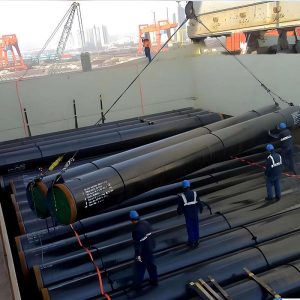
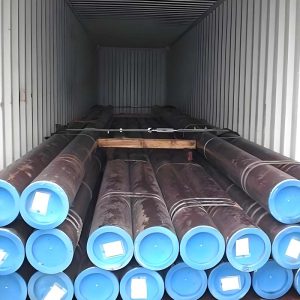
Q5: What are the risks and control measures during transportation and installation?

A5:
Large-diameter pipes are prone to bending, damage, or stress concentration at welds. Control measures:
Use special brackets and slings to prevent uneven stress on the pipe body;
Avoid exceeding the bending radius limit during installation;
Repair or perform ultrasonic testing on damaged areas of pipe ends or welds.

Q6: How to select materials and standards, and how to ensure the reliability of pipe materials?

A6:
Common standards: GB/T 9711, API 5L, material range: X42–X70. Selection considerations:
Select the steel grade based on design pressure, temperature, and medium;
Require suppliers to provide chemical composition, mechanical properties (tensile strength, yield strength, elongation), and heat treatment certificates;
For high-risk projects, third-party testing or factory certification can be required to ensure material reliability.