
Let’s start by clearing up a common misconception:
“Standard sizes” are not a fixed table of dimensions that you can simply look up and use to place an order.
In reality, three factors need to be considered together:
- Applicable standards: GB/T 9711 / API 5L / SY/T 5037 / SY/T 5040
- Project application: Oil and gas transmission / Municipal water supply and heating / Piling and structural applications
- Manufacturer’s production capabilities: Maximum diameter, wall thickness, and pipe length that the manufacturer can reliably produce.
So, the right question is not:
“What are the standard pipe sizes?”
It is:
“Under my specified standards and project requirements, which dimensions can be consistently manufactured, and what are the allowable dimensional tolerances?”
I. First, identify the standard: different standards cover different scopes.
| Standard | Main Application | Dimensional and Technical Characteristics |
|---|---|---|
| GB/T 9711 | Mainline oil and gas transmission (PSL1 / PSL2) | Strict tolerances, comprehensive inspection requirements, and pressure-service oriented |
| API 5L | Internationally recognized standard for oil and gas transmission (PSL1 / PSL2) | Similar approach to GB/T 9711; widely used in international trade projects |
| SY/T 5037 | Municipal water supply, drainage, and low-pressure fluid transportation | Relatively less stringent requirements and lower production costs |
| SY/T 5040 | Piling and structural applications | Focuses on load-bearing capacity rather than fluid-tightness requirements |
I. Pipe Diameter: What Is Considered Large Diameter, and What Sizes Are Commonly Available?
1. Diameter Range
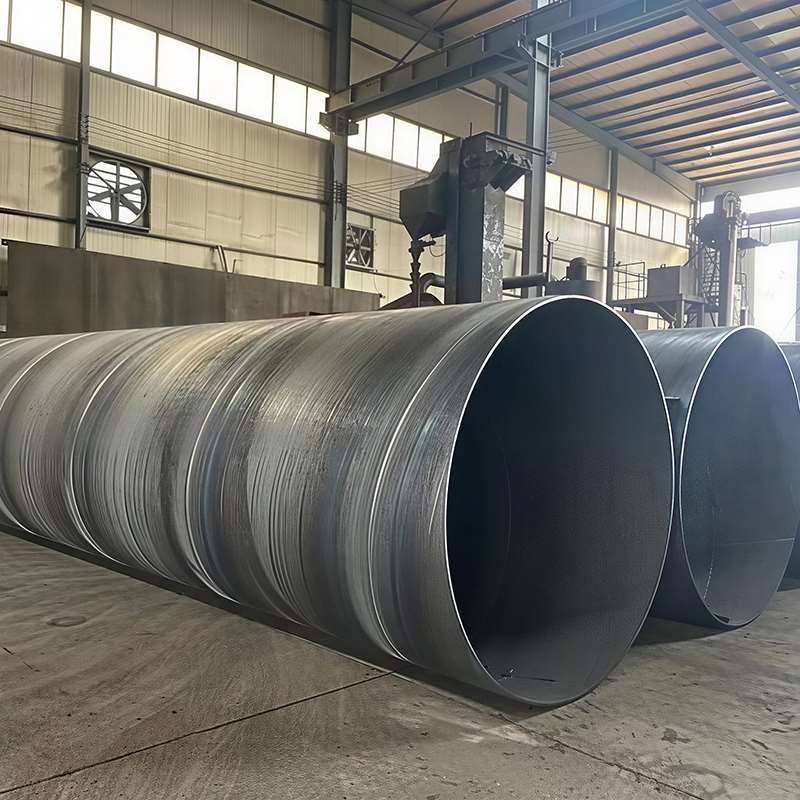
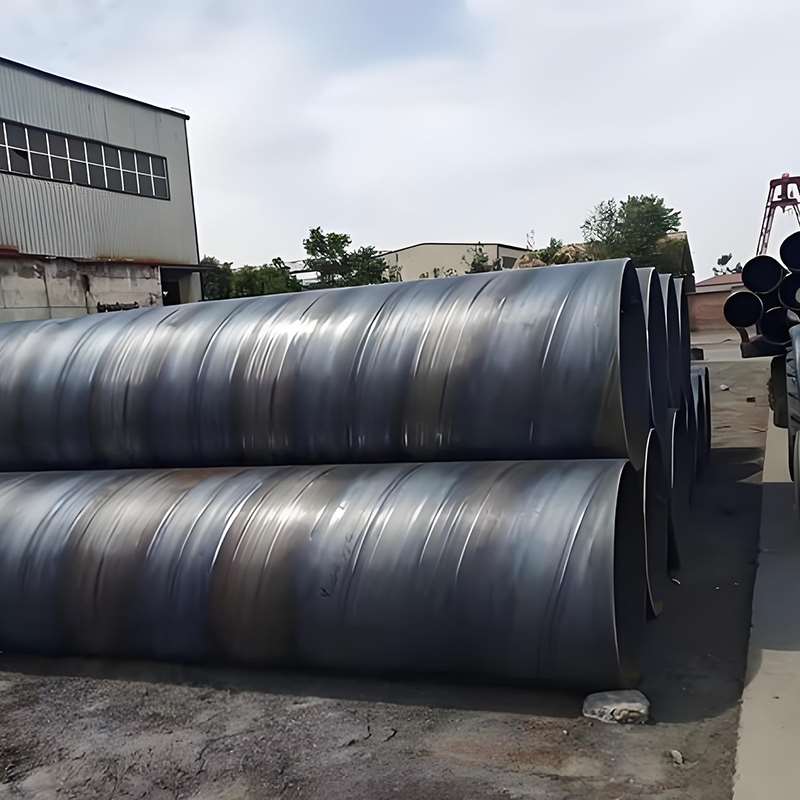
Common spiral welded steel pipe outside diameters range from Φ219 mm to Φ3620 mm.
For custom engineering projects, diameters of Φ3880 mm or even larger may be achievable. However, these are considered non-standard sizes and require separate discussions regarding manufacturing processes and tooling.
What is generally considered large diameter?
- In the industry, pipes with an outside diameter of Φ1000 mm and above are commonly referred to as large-diameter pipes.
- Some also use DN850 and above as the threshold. However, this is a matter of industry convention rather than a strict technical requirement.
2. DN ≠ Actual Outside Diameter
DN stands for Nominal Diameter. It is neither the actual outside diameter nor the inside diameter.
The same DN designation may correspond to two different outside diameter series: Series A (imperial-based) and Series B (metric-based).
| DN | Series A Outside Diameter (mm) | Series B Outside Diameter (mm) (Commonly Used in China) |
|---|---|---|
| DN500 | 508 | 530 |
| DN600 | 610 | 630 |
| DN1000 | 1016 | 1020 |
| DN1200 | 1219 | 1220 |
| DN2000 | 2032 | 2020 |
When placing an order, don’t specify only “DN1000.” Clearly state whether you require Φ1020 (Series B) or Φ1016 (Series A).
3. Common Outside Diameter Range (Primarily Metric)
- Φ219, 273, 325, 426, 508, 630, 720, 820,
- Φ1020, 1220, 1420, 1620, 1820, 2020, 2420, 2820, 3220, 3620
Moving up to a larger diameter range (for example, from Φ1220 to Φ2020) affects more than just the price. It also involves changes in transportation vehicles, lifting equipment, beveling machines, anti-corrosion coating lines, and automatic welding equipment.
III. Wall Thickness: A Greater Impact on Safety and Cost Than Pipe Diameter
1. Common Wall Thickness Options
- General-purpose transmission pipes: Common wall thicknesses include 5, 6, 7, 8, 10, 12, 14, 16, 18, 20, 22, and 25.4 mm.
- Large-diameter water transmission and heating pipelines: Typically 6–25.4 mm.
- Piling and structural pipes: Typically 8–60 mm, depending on the required structural stiffness and the need to prevent deformation during pile driving.
2. Wall Thickness Tolerances
- SY/T 5037: ±10% of the specified wall thickness when t ≤ 15 mm; ±1.5 mm when t > 15 mm.
- GB/T 9711 / API 5L: Tolerances depend on the applicable grade and specification level, with PSL2 generally having tighter requirements than PSL1. A commonly used reference for API 5L wall thickness tolerance is approximately +15%t / −12.5%t, depending on the applicable edition of the standard.
Simply stating “in accordance with national standards” in the contract is not sufficient. The following requirements must be clearly specified:
- The minimum acceptable measured wall thickness.
- Whether a minimum wall thickness at any individual measurement point is acceptable.
- How wall thickness reduction in the weld area is calculated and evaluated.
Each increase in wall thickness by one standard size affects:
- Weight per meter.
- Total steel consumption.
- Welding heat input, which becomes more difficult to control.
- Production costs, which increase nonlinearly.
3. Pipe Diameter and Wall Thickness Cannot Be Combined Arbitrarily
The available combinations of pipe diameter and wall thickness are subject to the diameter-to-wall-thickness ratio (D/t) and the manufacturer’s production line capabilities.
- Φ1020 × 6 mm: Generally not a problem.
- Φ3000 × 25 mm: The manufacturer should be consulted first to confirm whether this is a standard production size and whether the forming and welding processes can be carried out consistently and reliably.
IV. Pipe Length: You Cannot Simply Specify Any Length You Want
1. Standard Lengths
- Typical delivery lengths: 6–12 m.
- Some production lines can manufacture pipes 12–18 m long. Longer lengths require special confirmation.
2. Length Tolerances (Vary by Standard)
- GB/T 9711: For fixed-length pipes, the typical tolerance is ±50 mm. Stricter requirements can be agreed upon separately for demanding projects.
- API 5L: Common fixed-length tolerances are in the range of ±500 mm. Stricter requirements must be specified in a separate agreement.
- Water infrastructure and automatic welding projects: Some projects require a length tolerance of ±5 mm per pipe section.
3. Practical Site Constraints
- 12 m pipes: Can generally be transported using standard heavy-duty trucks.
- 18 m pipes: Transport becomes more challenging due to turning radius requirements, factory access roads, and unloading and lifting-point arrangements.
Longer pipes mean fewer field welds during installation, but transportation and lifting costs can increase significantly.
V. Different Projects Have Different Dimensional Priorities
1. Long-Distance Oil and Gas Transmission
- Applicable standards: GB/T 9711 / API 5L PSL2.
- Wall thickness is determined by pressure design calculations, with the diameter-to-wall-thickness ratio (D/t) being a key constraint.
- Strict requirements apply to outside diameter ovality and pipe-end straightness. Automatic welding processes are particularly sensitive to pipe-end dimensional consistency.
2. Municipal Water Supply and Heating
- Applicable standards: SY/T 5037 or GB/T 9711.
- Pipe diameter is determined by flow requirements, while wall thickness includes an allowance for corrosion.
- Key considerations: Do not mix Series A and Series B DN dimensions, and ensure the anti-corrosion coating is protected from damage.
3. Piling and Structural Applications
- Applicable standard: SY/T 5040.
- Wall thickness is generally greater. Outside diameter accuracy and straightness are more critical than negative wall thickness tolerances for pressure-bearing applications.
- Difficulties during pile driving are often caused by insufficient control of pipe roundness or straightness.
VI. How to Use a Pipe Dimension Chart: Follow These 5 Steps
1. Identify the Applicable Standard First
Is the project for gas transmission, water supply, or piling? Different standards allow different dimensional tolerances, even for pipes of the same size.
2. Specify Dimensions as “Outside Diameter × Wall Thickness × Length” Rather Than DN Alone
Example: Φ1220 × 14 × 12000 mm (Series B)
3. Distinguish Between “Listed in the Dimension Chart” and “Can Be Reliably Manufactured on the Production Line”
The fact that Φ3620 × 25 mm appears in a dimension chart does not mean every manufacturer can produce and supply it consistently. Ask for recent production records or project references for the same specifications.
4. Clearly Specify These Four Items in the Contract’s Technical Appendix
- Outside diameter series (Series A or B).
- Minimum acceptable wall thickness and negative tolerance.
- Fixed pipe length and length tolerance.
- Requirements for roundness, straightness, and pipe-end beveling.
5. Do Not Use “Compliance with National Standards” as the Sole Acceptance Criterion
National standards allow certain tolerance ranges, but meeting those tolerances does not necessarily mean the pipes will satisfy your project’s actual requirements.