Products

Related News

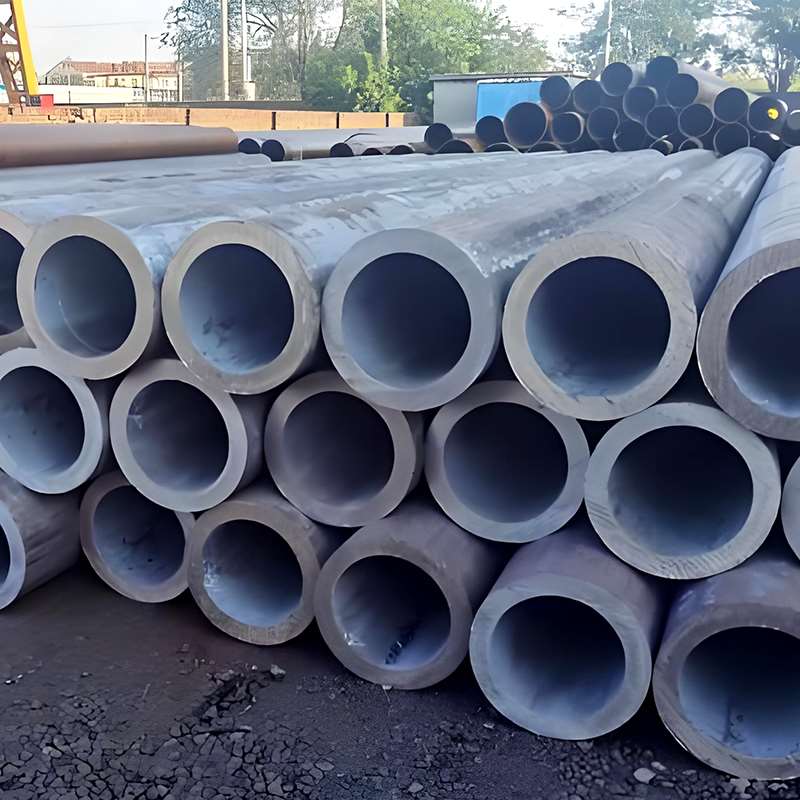
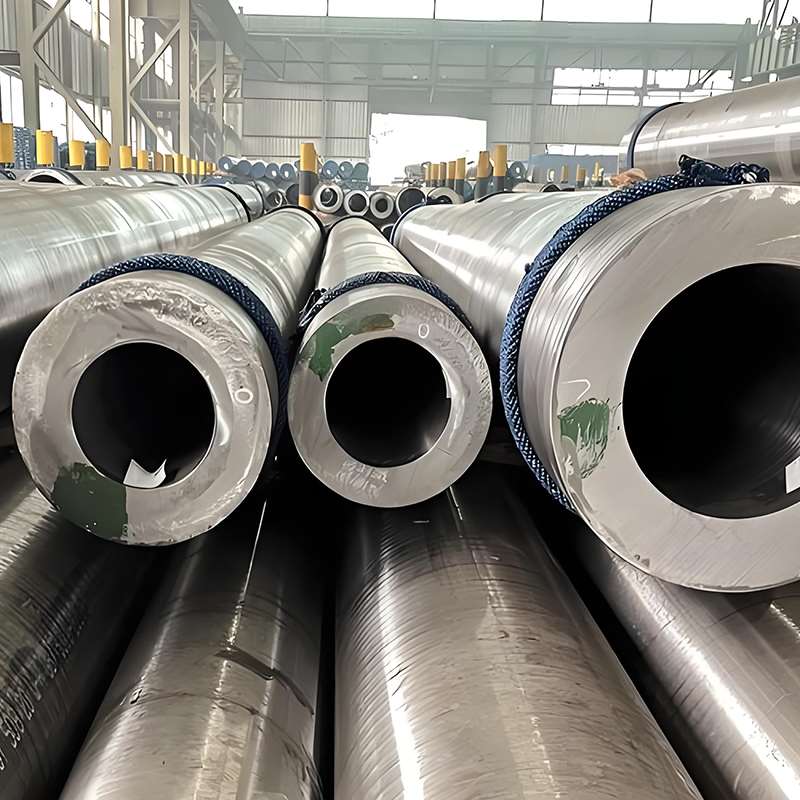
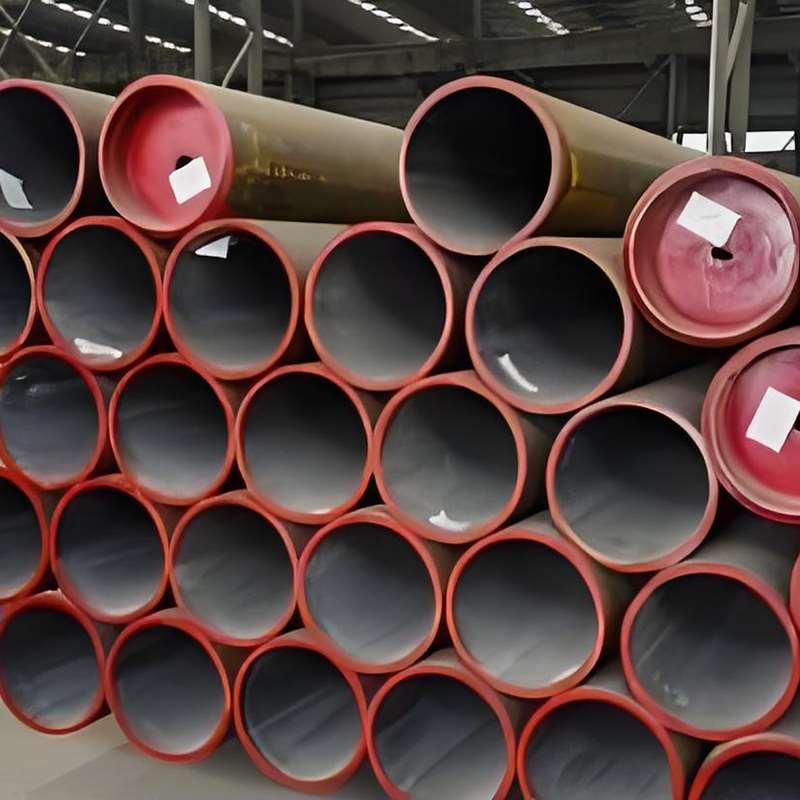
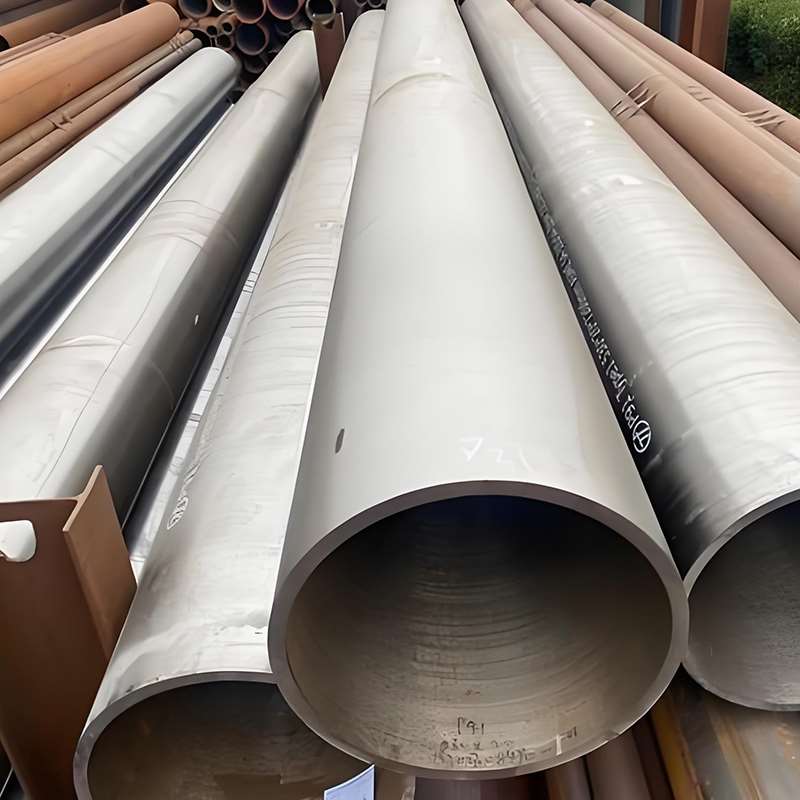
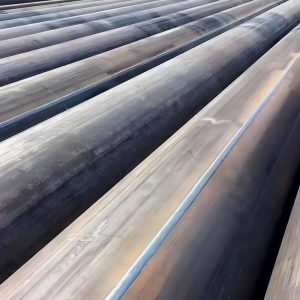
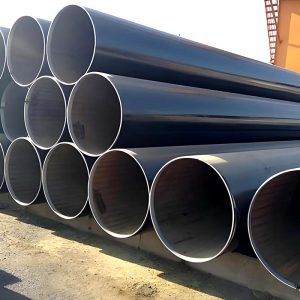
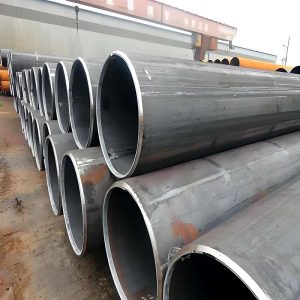
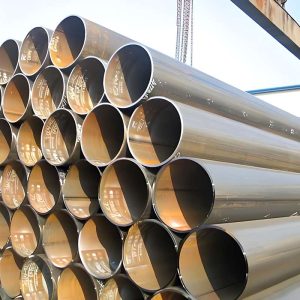
ASTM A335 Alloy Steel Pipe

OD Range :

21.3 mm – 610 mm

WT Range :

3 mm – 50 mm

Length :

5.8 m / 6 m / 11.8 m / 12 m

Tolerance :

Outer diameter: ±1~2%, wall thickness: ±1~2%, length: ±50 mm

Material :

P1、P5、P9、P11、P22、P91

Standard :

ASTM A335 / ASME SA335

Surface :

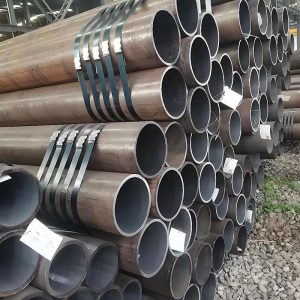
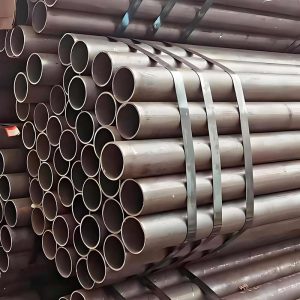
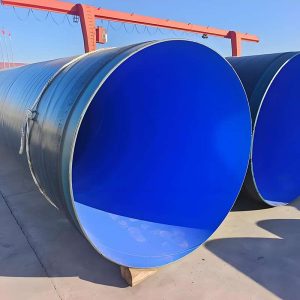
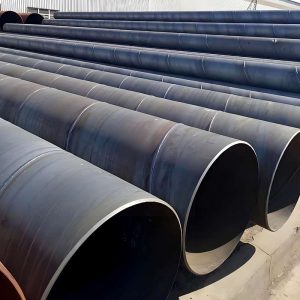
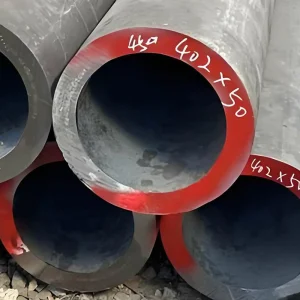
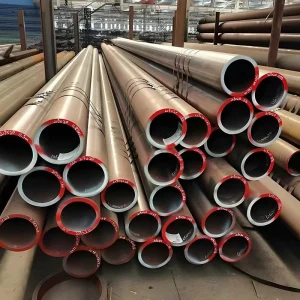
Black paint, clear varnish, and rust-preventive oil can be customized according to customer requirements.

Application :

Electric boiler pipelines, high-temperature and high-pressure pipelines, petrochemical pipelines, natural gas pipelines, and industrial equipment.

Introduction :

ASTM A335 Alloy Steel Pipe is a high-temperature, high-pressure seamless alloy steel pipe with excellent high-temperature resistance, pressure resistance, and corrosion resistance.

I. Overview of ASTM A335 Alloy Steel Pipe

ASTM A335 Alloy Steel Pipe is a seamless alloy steel pipe designed for high-temperature, high-pressure applications, specifically for power generation, petrochemical, oil and gas, and industrial high-temperature pipelines.

This pipe conforms to ASTM A335 / ASME SA335 standards and undergoes rigorous chemical composition, mechanical property, and non-destructive testing to ensure safe and reliable use under long-term high-temperature and high-pressure conditions.

Key Features:
High Temperature and High Pressure Resistance: Suitable for long-term stable operation in boilers, steam pipelines, and industrial equipment.
Excellent Mechanical Properties: High yield strength and tensile strength, meeting the pressure requirements of various engineering projects.
Excellent Corrosion Resistance: Suitable for corrosive environments such as petrochemical and natural gas pipelines.
Multiple Steel Grades Available: P1, P5, P9, P11, P22, P91, selectable based on temperature and pressure.
Rigorous Testing: Chemical composition analysis, low-temperature impact testing (for some steel grades), ultrasonic or radiographic testing, pressure testing, etc.

Typical applications:
Boiler piping in thermal power plants.
High-temperature pipelines in petrochemical and chemical industries.
Oil and gas transmission pipelines.
High-temperature circulation pipelines in industrial equipment.

II. Table of Common Steel Grades, Chemical Compositions, and Mechanical Properties of ASTM A335 Alloy Steel Pipes

The commonly used steel grades for ASTM A335 alloy steel pipes in industry include: P1, P5, P9, P11, P22, and P91.

i. Chemical composition table

Steel GradeC (%)Mn (%)P (%)S (%)Si (%)Cr (%)Mo (%)Ni (%)
P10.05–0.150.30–0.60≤0.025≤0.0250.10–0.35
P50.05–0.150.30–0.60≤0.025≤0.0250.10–0.350.45–0.650.45–0.60
P90.05–0.150.30–0.60≤0.025≤0.0250.10–0.351.90–2.400.85–1.05
P110.05–0.150.30–0.60≤0.025≤0.0250.10–0.350.90–1.200.45–0.65
P220.05–0.150.30–0.60≤0.025≤0.0250.10–0.351.90–2.400.85–1.05
P910.08–0.120.30–0.60≤0.020≤0.0100.20–0.508.00–9.500.85–1.050.20–0.50

ii. Mechanical properties

Steel GradeYield Strength σy (MPa)Tensile Strength σb (MPa)Elongation (%)Typical Service Temperature Range
P1≥205330–480≥20≤ 400°C
P5≥205330–480≥20≤ 450°C
P9≥205415–550≥20≤ 540°C
P11≥205415–550≥20≤ 550°C
P22≥205415–550≥20≤ 580°C
P91≥585690–850≥20≤ 600°C

III. ASTM A335 Alloy Steel Pipe Grade Selection Comparison Table

Operating Temperature Range (°C)Design Pressure Range (MPa)Recommended Steel GradeChemical Composition CharacteristicsTypical Application Scenarios
≤400≤20P1Low carbon, low alloy, medium-low pressure resistanceLow-temperature steam pipelines, general industrial pipelines
350–45010–25P5Medium-low alloy steel, medium temperature pressure resistanceMedium-temperature steam pipelines, boiler feedwater pipes
400–54015–30P9Medium alloy steel, Cr 1.9–2.4%, Mo 0.85–1.05%Medium-temperature, high-pressure boiler pipes, chemical steam pipes
450–55015–35P11Cr 0.9–1.2%, Mo 0.45–0.65%, high temperature and high pressure resistanceHigh-temperature, high-pressure boilers, steam pipes
480–58020–40P22Cr 1.9–2.4%, Mo 0.85–1.05%, used for high-temperature industrial pipelinesHigh-temperature industrial boilers, petrochemical pipelines
500–60030–60P91Cr 8–9.5%, Mo 0.85–1.05%, Ni, V alloy steel, high strengthThermal power plant boiler pipes, ultra-high-temperature and high-pressure pipelines, petrochemical heavy industry

Instructions and Usage Recommendations

Steel Grade Selection Principle: Select the appropriate steel grade based on the highest temperature and working pressure of the project.

P1/P5 → Medium and low temperature, medium and low pressure projects; low cost, large supply.

P9/P11/P22 → Medium and high temperature, high pressure industrial pipelines; balances toughness and pressure resistance.

P91 → High temperature, high pressure, ultra-long service life pipelines; suitable for boilers in thermal power plants and heavy chemical industries.

Specific pipe models can be further confirmed by considering pipe diameter, wall thickness, and welding method.
Related Products

ASTM A335 Alloy Steel Pipe Specifications and Dimensions

Nominal Size (NPS) Outer Diameter OD (mm) Common Wall Thickness WT (mm) Applicable Steel Grade
1/2″ 21.3 2.77 / 3.73 P1–P91
3/4″ 26.7 2.87 / 3.91 P1–P91
1″ 33.4 3.38 / 4.55 P1–P91
1 1/4″ 42.2 3.56 / 4.85 P1–P91
1 1/2″ 48.3 3.68 / 5.08 P1–P91
2″ 60.3 3.91 / 5.54 P1–P91
2 1/2″ 73.0 5.16 / 7.01 P1–P91
3″ 88.9 5.49 / 7.62 P1–P91
4″ 114.3 6.02 / 8.56 P1–P91
5″ 141.3 6.55 / 9.53 P1–P91
6″ 168.3 7.11 / 10.97 P1–P91
8″ 219.1 8.18 / 12.70 P1–P91
10″ 273.0 9.27 / 12.70 / 15.09 P1–P91
12″ 323.9 9.53 / 12.70 / 17.48 P1–P91
14″ 355.6 9.53 / 12.70 / 19.05 P1–P91
16″ 406.4 9.53 / 12.70 / 21.44 P1–P91
18″ 457.0 9.53 / 14.27 / 23.83 P1–P91
20″ 508.0 9.53 / 15.09 / 26.19 P1–P91
24″ 609.6 9.53 / 17.48 / 30.96 P1–P91

Additional Information:
Outer Diameter Range: 21.3 mm – 610 mm
Wall Thickness Range: 3 mm – 50 mm (different steel grades and pressure ratings available)
Length: Standard 6 m / 12 m, custom lengths also available upon request
Dimensional Tolerances: Outer Diameter ±1~2%, Wall Thickness ±1~2%, Length ±50 mm
Applicable Steel Grades: P1, P5, P9, P11, P22, P91
Standards: ASTM A335 / ASME SA335


ASTM A335 / ASME SA335 are internationally recognized standards for seamless alloy steel pipes, primarily used for high-temperature, high-pressure, and industrial piping.

Standards Coverage

Item Description
Standard Name ASTM A335 / ASME SA335
Product Type Seamless alloy steel pipes for high temperature and high pressure
Steel Grade Range P1, P5, P9, P11, P22, P91 (Typical industrial grades)
Chemical Composition Control of carbon, manganese, silicon, phosphorus, sulfur, chromium, molybdenum, nickel, and other elements to ensure high-temperature performance
Mechanical Properties Yield strength, tensile strength, elongation, etc., to ensure long-term safety under high temperature and pressure
Heat Treatment Normalizing or normalizing + tempering (for some grades), improves high-temperature toughness and strength
Dimensional Tolerances Allowable deviations for outer diameter, wall thickness, and length to ensure proper fit for installation
Inspection Requirements Chemical analysis, mechanical testing, non-destructive testing (UT/RT), pressure testing
Application Environment High-temperature boiler pipelines, steam pipelines, petrochemical pipelines, oil and gas pipelines, industrial equipment pipelines


ASTM A335 Alloy Steel Pipe Manufacturing Process

Bill Preparation → Billet Forming (Seamless/Welded) → Heat Treatment → Dimensioning → Inspection and Testing → Surface Treatment → Packaging and Shipping

1. Billet Preparation
Select alloy steel billets that meet the required steel grade (e.g., P1, P5, P9, P11, P22, P91).
Check the chemical composition (C, Mn, Cr, Mo, Ni, V, etc.).
Heat the billet to the hot rolling temperature (1100–1250°C).

2. Billet Forming
Seamless Steel Pipe:
Hot Rolling/Hot Extrusion: The billet is heated, pierced, and rolled into a round tube.
Expansion and Straightening: The billet is rolled through multiple passes to achieve the standard outer diameter and wall thickness.

Welded Steel Pipe (ERW/SAW):
The steel plate is rolled into a cylinder, and the edges are leveled.
Pipes are welded using high-frequency resistance welding (ERW) or submerged arc welding (SAW).
Weld shaping and stress relief are then performed.

3. Heat Treatment
Normalizing or normalizing + tempering: Improves high-temperature strength and toughness.
Strict temperature control ensures the mechanical properties and high-temperature resistance of the steel pipe meet ASTM A335 requirements.

4. Dimensioning
Cutting to length: Standard 6m/12m, custom lengths available for special projects.
Outer diameter and wall thickness correction: Tolerances guaranteed ±1~2%.
End machining: Flat or chamfered ends for easy welding and installation.

5. Inspection and Testing
Chemical Composition Testing: Spectroscopic analysis or chemical analysis methods.
Mechanical Property Testing: Yield strength, tensile strength, elongation.
Non-destructive Testing: Ultrasonic testing (UT) or radiographic testing (RT) to ensure no internal defects.
Pressure Testing: Hydrostatic pressure testing to ensure reliable pressure resistance of the pipeline.
Low Temperature Impact Testing (for some steel grades, such as P1/P5): To ensure toughness meets standards.

6. Surface Treatment
Rust Prevention Treatment: Applying rust-preventive oil, black paint, or varnish.
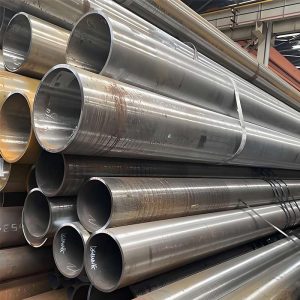
Marking: Steel grade, dimensions, and standard number are printed on the pipe body.

7. Packaging and Shipping
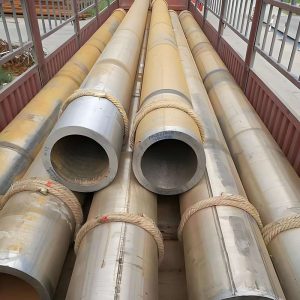
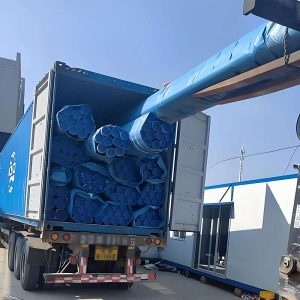
Strapping or wooden crate packaging: For easy transportation and installation.
For export items, pallets or steel straps can be used for securing to prevent damage during transportation.

ASTM A335 Alloy Steel Pipe Testing Standard Table

Inspection Item Inspection Content Standard / Method Technical Requirements / Purpose
Chemical Composition Analysis Check the content of elements such as C, Mn, Cr, Mo, Ni, V ASTM A335 / ASTM E415 / Spectral Analysis Ensure the chemical composition meets grade requirements to guarantee high-temperature and high-pressure performance
Visual Inspection Surface smoothness, no cracks, scratches, zinc spatter Visual Inspection Ensure surface quality and corrosion resistance
Dimensional Inspection Outer diameter, wall thickness, length, ovality, straightness ASTM A335 / ASME SA335 Outer diameter ±1~2%, wall thickness ±1~2%, length ±50 mm, ovality ≤1%, straightness ≤0.5%
Mechanical Property Test Yield strength, tensile strength, elongation ASTM A335 / ASTM A370 Meet the mechanical property requirements for each steel grade
Low-Temperature Impact Test Charpy V-notch impact test (for some grades) ASTM A335 / ASTM E23 Ensure low-temperature toughness (e.g., P1, P5 grades)
Non-Destructive Testing Ultrasonic Testing (UT) or Radiographic Testing (RT) ASTM A335 / ASTM E213 / ASTM E94 Ensure no internal defects, ensuring safety and reliability
Hydrostatic Test Hydrostatic pressure test ASTM A335 / ASME B31.3 Verify the pipeline’s pressure resistance and prevent leakage
Surface Protection Inspection Rust-proof oil, black paint, or varnish coating Company Standard / Customer Requirements Ensure no rust during transportation and storage, and facilitate on-site construction

ASTM A335 Alloy Steel Pipe FAQ

Q1: What are the commonly used steel grades for ASTM A335 alloy steel pipe? How to choose?

A1:
Commonly used steel grades include P1, P5, P9, P11, P22, and P91.
The selection of steel grade mainly depends on the operating temperature and pressure:
≤450°C → P1, P5
450–580°C → P9, P11, P22
High temperature and high pressure or thermal power boilers → P91
When selecting a steel grade, the corrosive environment, pipe diameter, and service life should also be considered.

Q2: What is the difference between ASTM A335 and ordinary carbon steel pipe?

A2:
ASTM A335 is an alloy steel pipe for high temperature and high pressure applications. It undergoes strict control over chemical composition, mechanical properties, and heat treatment, and can be used for extended periods in high-temperature environments of 400–600°C. Ordinary carbon steel pipe is not suitable for high-temperature and high-pressure conditions and is prone to creep and brittle fracture.

Q3: What pressure can ASTM A335 pipe withstand?

A3:
The pressure resistance of a pipe depends on the steel grade, wall thickness, and outer diameter. Specific pressure requirements must be calculated according to ASME B31.3 or the project design specifications.
Table of Steel Grade Strength Reference:
P1–P5: Medium to low pressure ≤25 MPa
P9–P22: Medium to high pressure ≤40 MPa
P91: High pressure ≤60 MPa

Q4: Can pipelines be used in low-temperature environments?

A4:
Generally, ASTM A335 steel grades are primarily designed for high temperature and high pressure, but some low-carbon steel grades (P1, P5) can also be used in low-temperature conditions.
If the project requires extremely low temperatures, the toughness data of the steel grade should be considered, or a special low-temperature steel pipe should be selected.

Q5: What are the requirements for pipeline welding and heat treatment?

A5:
Both seamless and welded pipes can be welded, but the weld material must match the steel grade.
High-temperature steel grades (P11, P22, P91) usually require tempering or stress relief after welding to ensure the high-temperature toughness of the weld and base material.
Welding procedure specifications (WPS/PQR) must be followed during construction.

Q6: How to ensure reliable pipe quality? What are the testing items?

A6:
ASTM A335 pipe quality assurance primarily relies on:
Chemical composition analysis, mechanical property testing
Dimensional inspection (outer diameter, wall thickness, length)
Non-destructive testing (UT/RT), pressure testing
Low-temperature impact testing (for some steel grades)
Surface protection inspection (rust-preventive oil, black paint, varnish)
These tests ensure that the pipes meet standard requirements and are safe and reliable for long-term use.