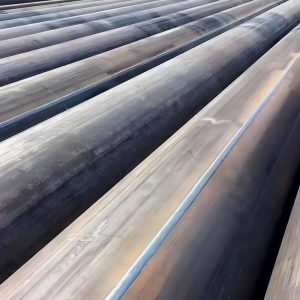
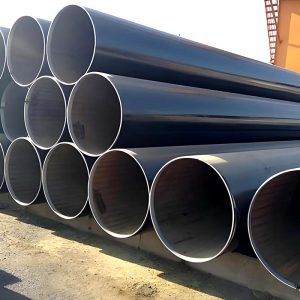
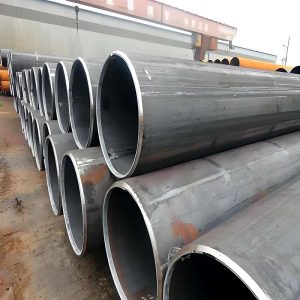
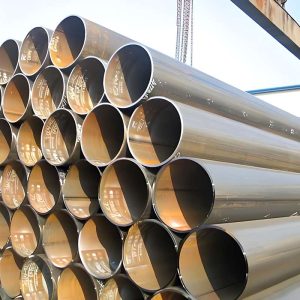
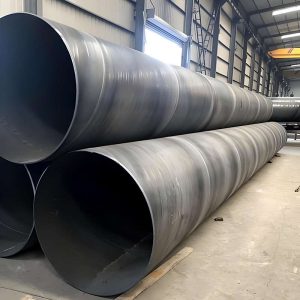
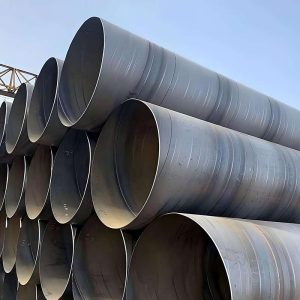
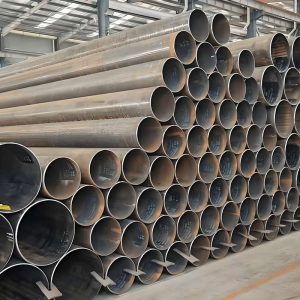
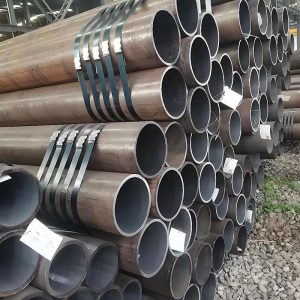
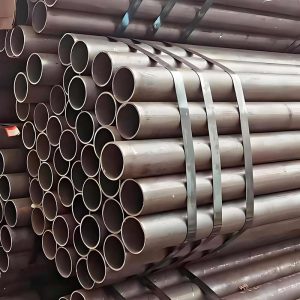
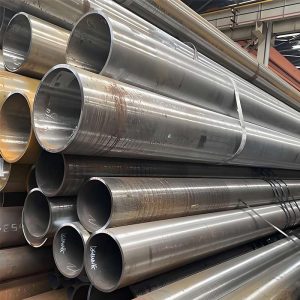
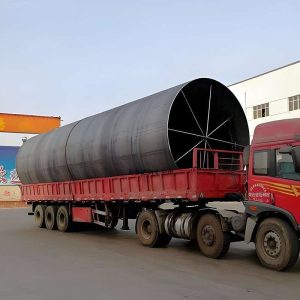
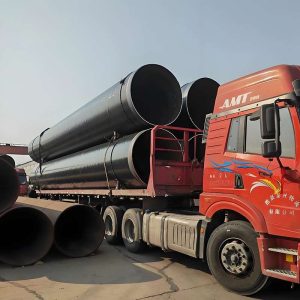
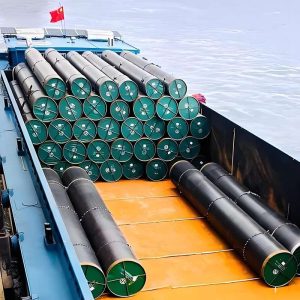
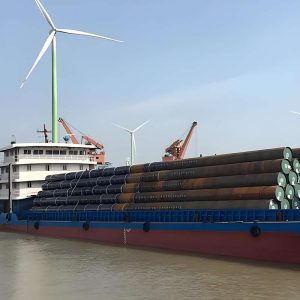
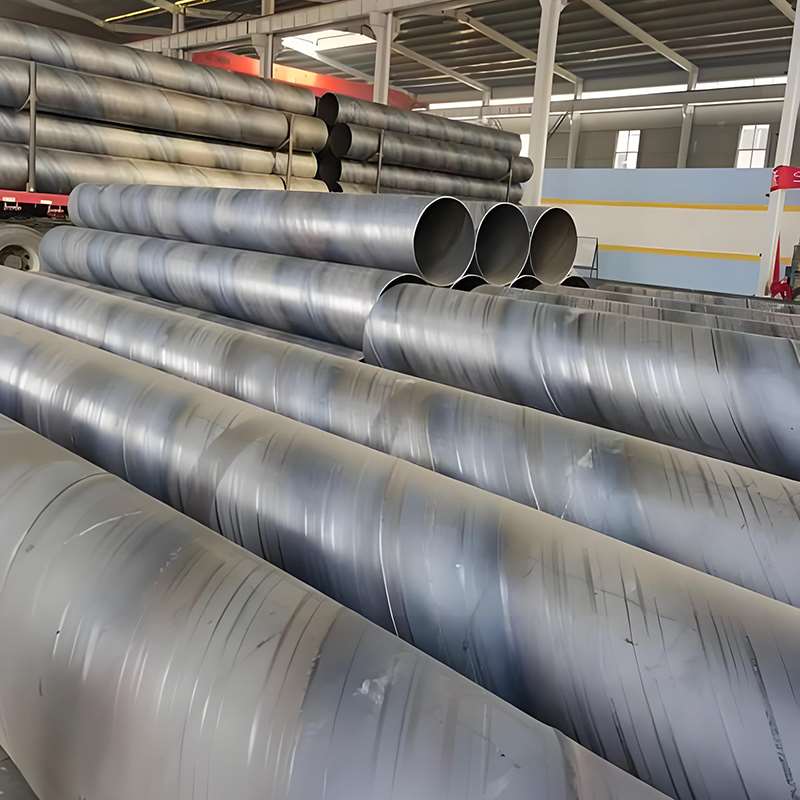
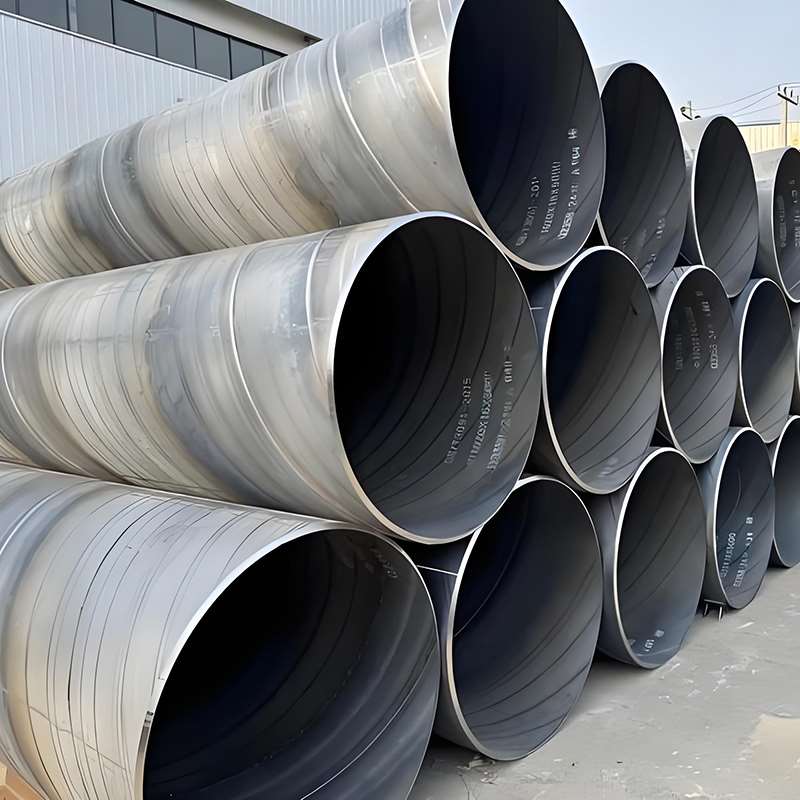
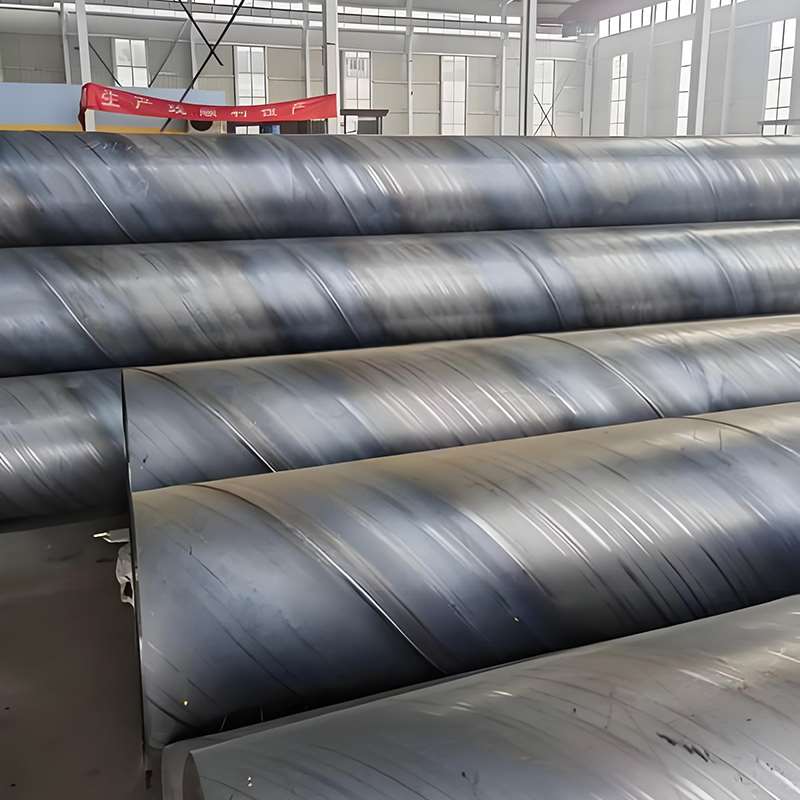
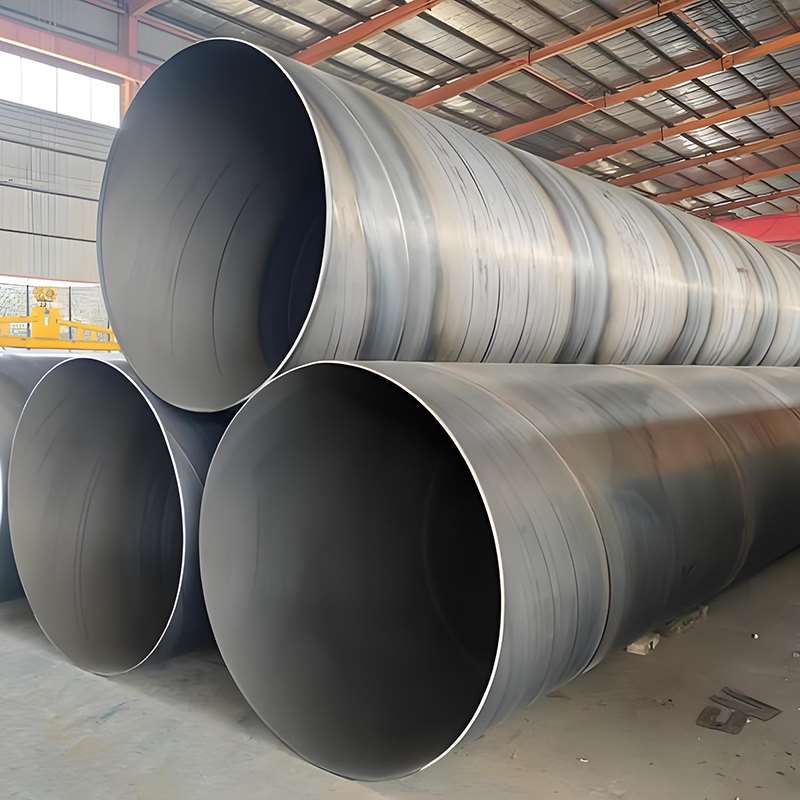
Steel strip preparation → Forming → Spiral welding → Dimensional correction → Heat treatment (optional) → Inspection → Corrosion protection treatment → End processing → Shipment
1. Steel Strip Preparation
Select high-strength low-alloy steel strip or plate (X60/X65/X70).
Check that the material, chemical composition, and mechanical properties meet the standards (API 5L / GB/T 9711.1).
Remove rust and clean the steel strip surface to ensure welding quality.
2. Forming
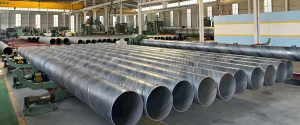
Bend the steel strip into a spiral tube using a forming machine.
Precisely control the outer diameter, wall thickness, and roundness.
Form a continuous spiral angle to ensure uniform weld length.
3. Welding
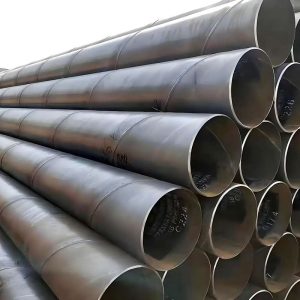
Submerged arc welding (SAW) is used for both internal and external welds.
Strictly control the welding current, wire type, and weld thickness. High-strength steel grade ensures the weld’s mechanical properties match the base material. Double-sided welding can be used for high-pressure pipelines.
4. Dimensional Correction
The pipeline’s outer diameter and ovality are corrected using a sizing machine/press.
Ensure compliance with tolerance requirements through inner diameter, outer diameter, and ovality checks.
5. Heat Treatment
Heat treatment is performed according to steel grade and project requirements. Normalizing or heat treatment
Improves pipeline toughness and reduces residual stress. High-grade X65/X70 steel often uses heat treatment processes.
6. Inspection
Non-destructive testing (NDT): X-ray and ultrasonic testing of weld quality.
Dimensional inspection: Outer diameter, wall thickness, length, ovality, straightness.
Mechanical property testing: Tensile, impact, and bending tests.
Complies with API 5L / GB/T 9711.1 / EN 10217 standards.
7. Corrosion protection
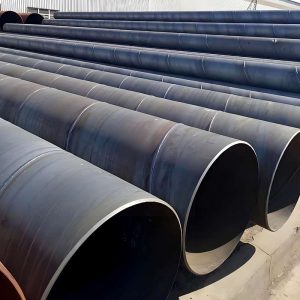
External corrosion protection: 3PE (three-layer polyethylene), FBE (epoxy powder coating), black paint.
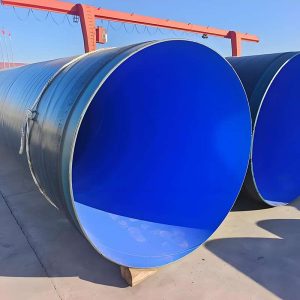
Internal corrosion protection (optional): Epoxy lining, polyurethane lining. Ensures long-term corrosion resistance of pipelines in buried, offshore, or humid environments.
8. End processing and packaging
Pipe ends are cut smoothly, chamfered, or protected.
Packaging is done according to project requirements to prevent damage to the anti-corrosion layer during transportation. Bundling, labeling, and complete factory inspection reports are provided.