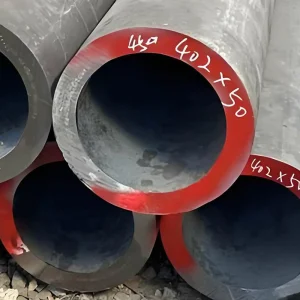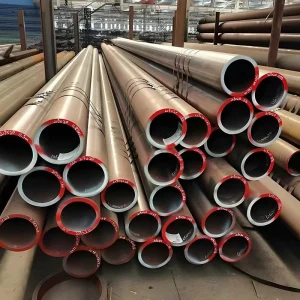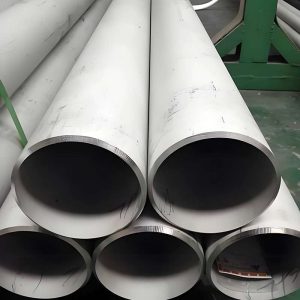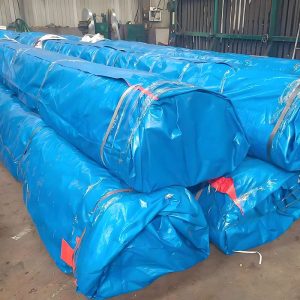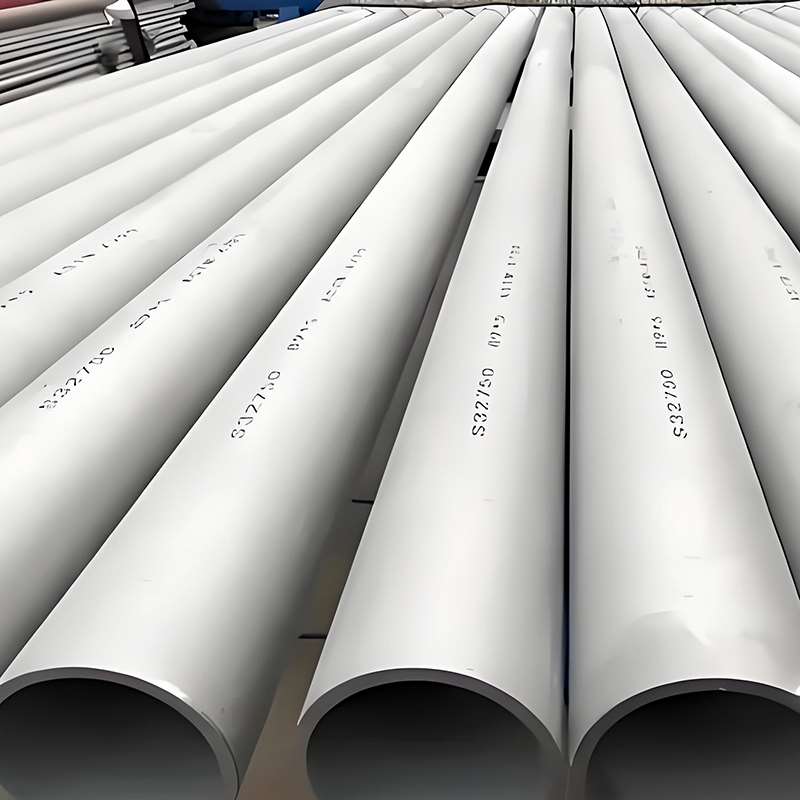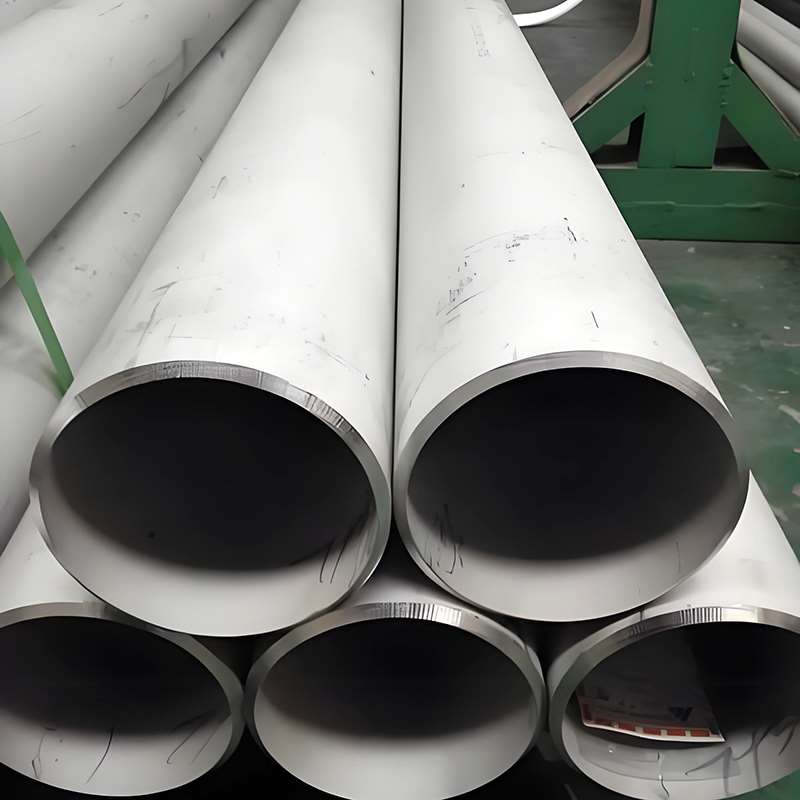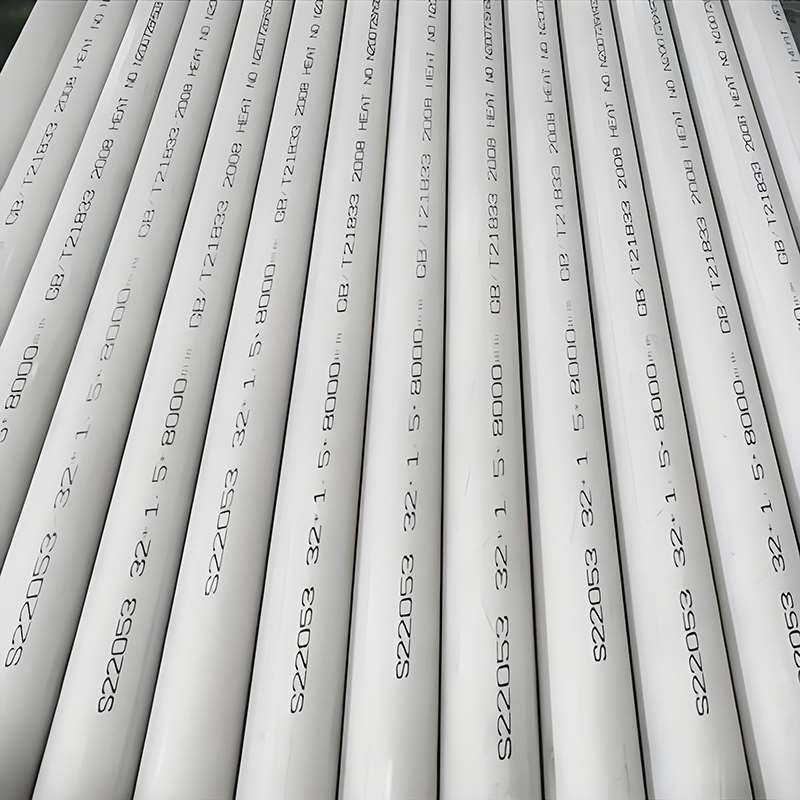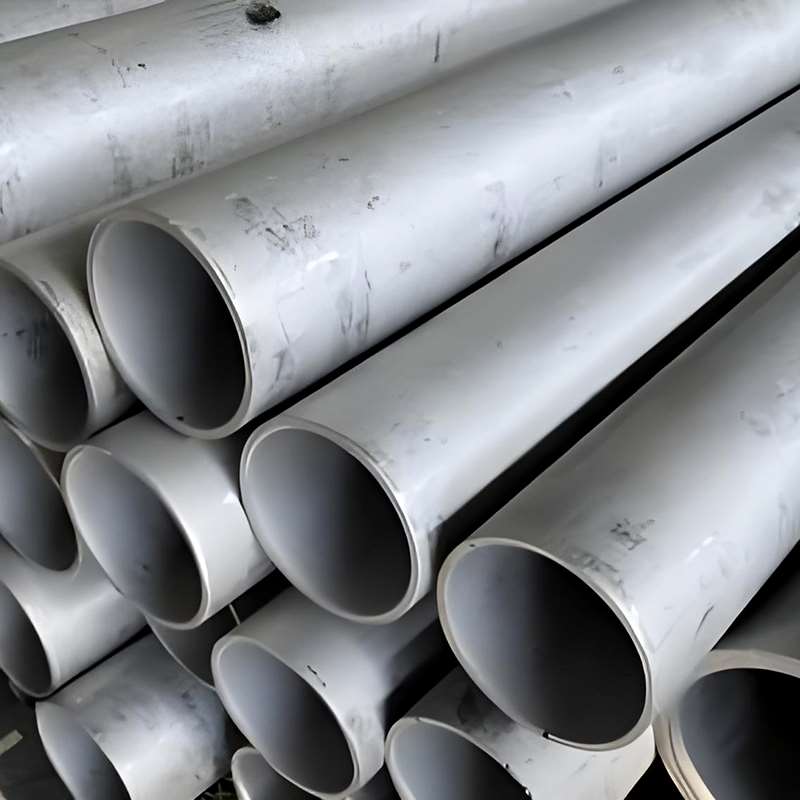
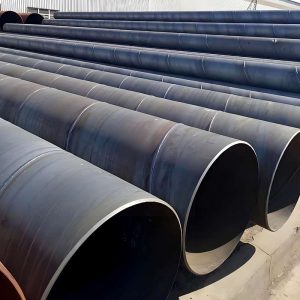
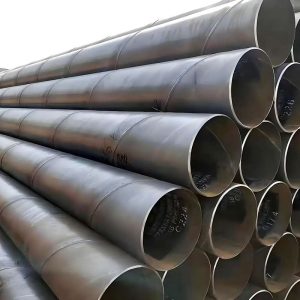
I. Overview of Super Duplex Stainless Steel Pipes
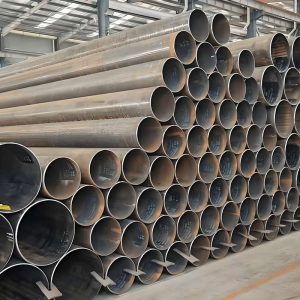
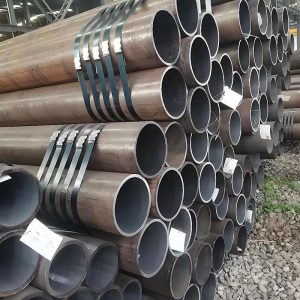
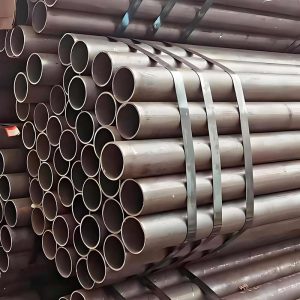
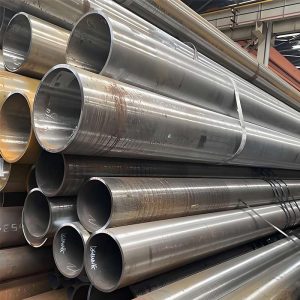
Super Duplex stainless steel pipes are high-performance duplex stainless steel pipes that combine the advantages of both austenitic and ferritic stainless steels, possessing both extremely high strength and excellent corrosion resistance.
This pipe material is particularly suitable for the transportation of seawater, acid and alkaline solutions, and chemical media, and is resistant to pitting corrosion, crevice corrosion, and stress corrosion cracking.
Super Duplex stainless steel pipes are widely used in petrochemicals, seawater desalination, shipbuilding, the chemical industry, and pipelines in highly corrosive environments, making them an ideal choice for high-end industrial pipelines and special application pipelines.
II. Chemical Composition and Mechanical Properties of Super Duplex Stainless Steel Tubes
i. Chemical Composition Table (%)
| Steel grade | C | Cr | Ni | Mo | N | Mn |
| S32750 | ≤0.03 | 24–26 | 6–8 | 3–5 | 0.24–0.32 | ≤1.2 |
| S32760 | ≤0.03 | 25–26 | 7–9 | 3–5 | 0.24–0.32 | ≤1.2 |
ii. Mechanical Properties Table
| Steel Grade | Yield Strength ReH (MPa) | Tensile Strength Rm (MPa) | Elongation A (%) | Hardness HB |
|---|---|---|---|---|
| S32750 | ≥ 550 | 800–900 | ≥ 25 | 250–280 |
| S32760 | ≥ 600 | 850–1000 | ≥ 25 | 280–310 |
III. Common Steel Grades and Differences of Super Duplex Stainless Steel Pipes
i. Common Steel Grades
| Steel Grade | UNS Number | Abbreviation | Features |
|---|---|---|---|
| S32750 | UNS S32750 | 25Cr-7Ni-3Mo | Standard Super Duplex steel, good corrosion resistance, high strength, suitable for seawater and chemical pipelines |
| S32760 | UNS S32760 | 25Cr-7Ni-4Mo | High nickel, high chromium, high molybdenum duplex steel, superior resistance to chloride stress corrosion, suitable for harsh environments |
| S32906 | UNS S32906 | Lean Duplex | Low nickel, low molybdenum super duplex steel, lower cost, suitable for general chemical and seawater applications |
| S32520 | UNS S32520 | Lean Duplex | Lower alloy content, slightly lower corrosion resistance, suitable for moderate corrosion environments, more economical |
ii. Main Differences Between Steel Grades
- Corrosion Resistance
S32760 > S32750 > S32906/S32520
S32760 has a higher molybdenum content and is most resistant to chloride corrosion and stress corrosion cracking. - Mechanical Strength
S32760 has slightly higher strength, followed by S32750, while Lean Duplex steel has slightly lower strength.
High strength is suitable for high-pressure, high-temperature pipeline applications. - Alloy Cost
High-nickel, high-molybdenum steel (S32760) has the highest cost.
Lean Duplex steel (S32906/S32520) has a lower cost and is more economical. - Application Environment
S32760: High-chloride, highly corrosive environments, such as offshore oil and gas platforms and seawater desalination.
S32750: General seawater and chemical pipelines.
Lean Duplex: Medium to low corrosive environments, chemical plants, freshwater transportation. - Applicable Standards
ASTM A789 / A790, ASME SA789 / SA790, EN 10216-5, GB/T 2513
Different steel grades have corresponding chemical composition and mechanical property requirements in the standards.
IV. Applications of Super Duplex Stainless Steel Pipes
- Oil and Gas Industry
Offshore oil and gas platforms, subsea pipelines
High-pressure oil and gas transmission pipelines
Resistant to chloride stress corrosion cracking and seawater corrosion - Chemical and Petrochemical Industry
Pipelines for conveying acidic, alkaline liquids, brine, and corrosive chemicals
Reactor and heat exchanger connecting pipes
Piping systems in high-temperature, highly corrosive environments - Seawater Desalination and Water Treatment
Seawater intake pipelines, desalination plant pipelines
Cooling water circulation pipelines
Resistant to seawater corrosion, extending service life - Shipbuilding and Marine Engineering
Ship deck pipelines, internal piping systems
Offshore platforms, floating device pipelines
High strength and excellent corrosion resistance - Energy and Power Generation Industry
Thermal power and nuclear power plant cooling water pipelines
High-temperature and high-pressure steam pipelines
Suitable for harsh operating conditions, improving safety - Other High-Corrosion Environments
Chemical plants, seaport facilities
Industrial wastewater transmission pipelines
Scenarios requiring both high strength and corrosion resistance
V. Super Duplex Stainless Steel Pipe Selection Guide
- Selecting the Steel Grade Based on the Working Medium
S32750: Suitable for seawater, desalinated water, and general chemical liquid transportation.
S32760: Suitable for more demanding chemical media and high-concentration chloride environments.
Note: For conditions with high chloride content or a risk of stress corrosion cracking, S32760 is the preferred choice. - Selecting Wall Thickness Based on Working Pressure and Temperature
High-pressure pipelines: Choose thicker-walled pipes to increase the safety factor.
High-temperature conditions: Pay attention to thermal expansion and strength changes, and select a steel grade and wall thickness that meet the temperature requirements.
It is recommended to refer to the ASTM A789 / ASME SA789 standard wall thickness table for selection. - Determining Flow Rate and Installation Method Based on Pipe Diameter
Larger outer diameter results in lower pressure loss per unit flow rate.
When selecting the appropriate pipe diameter, consider flow rate, pressure, installation space, and the number of elbows. - Surface Treatment and Corrosion Protection Requirements
Seawater and highly corrosive environments: Acid pickling and passivation or polished surface to improve corrosion resistance.
Chemical and high-temperature steam pipelines: Sandblasted or bright surface can be chosen for easier cleaning and maintenance. - Standards and Certification Requirements
Confirm that the pipe material complies with ASTM A789 / A790, ASME SA789 / SA790, EN 10216-5, GB/T 2513, etc.
For critical engineering pipelines, prioritize products with certifications and test reports. - Construction and Maintenance Considerations
Welding can be performed using TIG, MIG, butt welding, etc., and passivation treatment is required after welding.
When bending pipes, control the cold bending or hot bending radius to avoid local stress concentration leading to cracking.