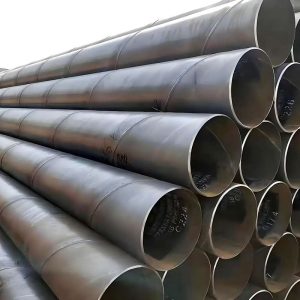
Products

Related News

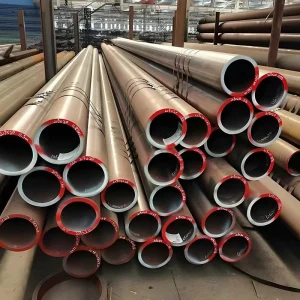
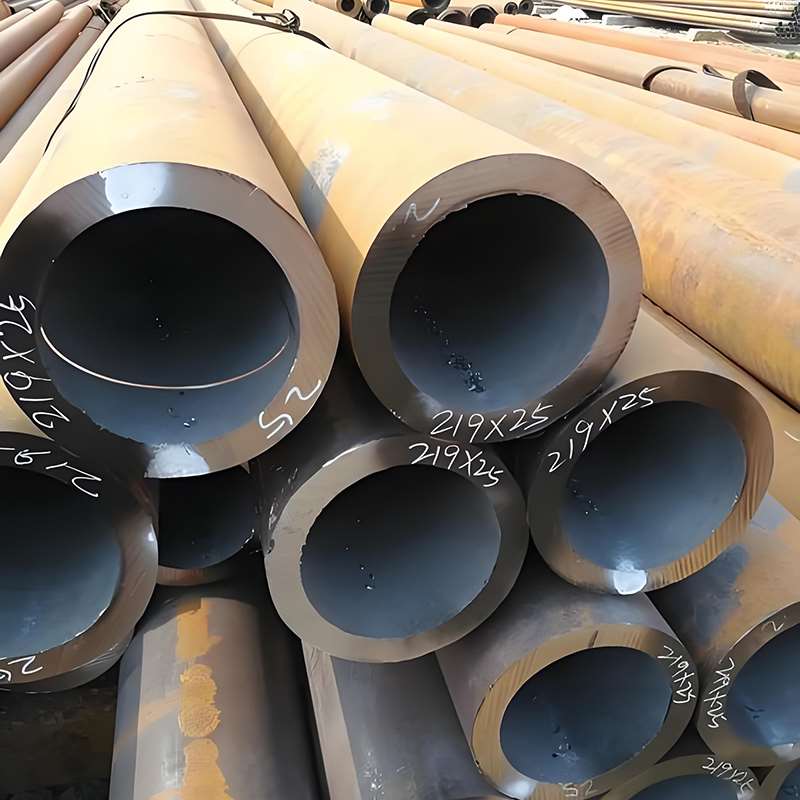
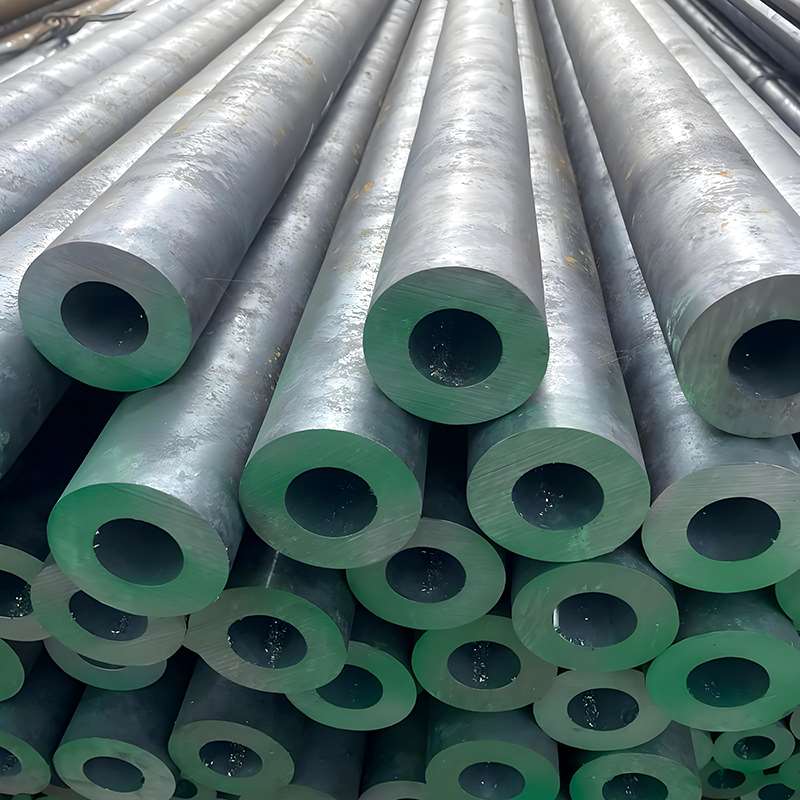
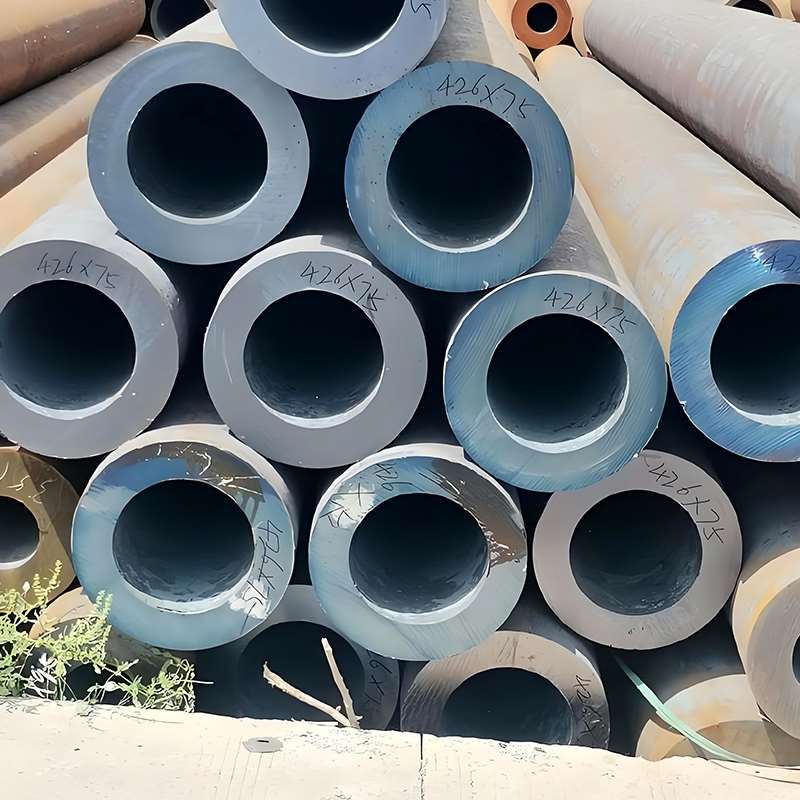
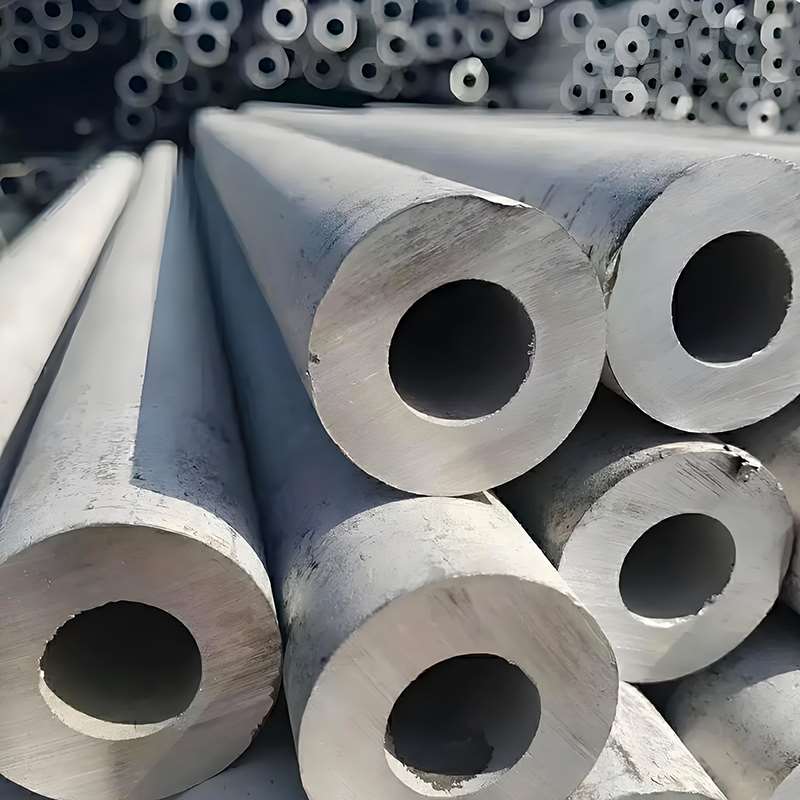
Seamless Alloy Steel Pipe

OD Range :

21.3 mm – 508 mm

WT Range :

2.0 mm – 40 mm

Length :

6 m / 12 m

Tolerance :

Outside diameter ±1%, wall thickness ±10%, length ±50 mm

Material :

P5, P9, P11, P12, P22, P91, P92

Standard :

GB/T 9948-2006、GB/T 3087-2021、ASTM A335 / A213 / A691、EN 10216-2

Surface :

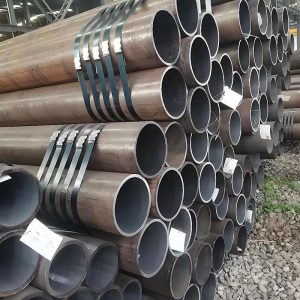
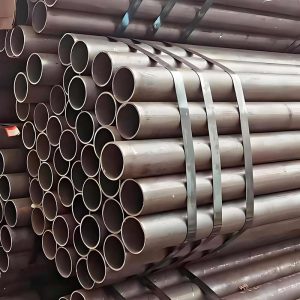
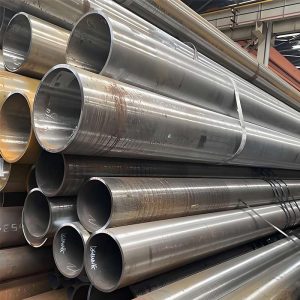
Acid pickling to remove scale, polishing, black pipe, and rust-preventive oil protection.

Application :

High-temperature and high-pressure boiler pipes, heat exchangers, petrochemical pipelines, power industry, chemical industry, steam transportation.

I. Overview of Seamless Alloy Steel Pipes

Seamless alloy steel pipes are a type of pipe formed directly through hot rolling or cold drawing processes, without welding. They are continuous metal tubes with high strength and excellent pressure resistance.
They are widely used in high-temperature and high-pressure boilers, heat exchangers, chemical pipelines, power pipelines, and petrochemical pipelines.

Main Features:

  • High strength, high temperature and high pressure resistance: The pipe material is uniform and dense, without weld weaknesses, suitable for critical operating conditions.
  • Strong creep resistance: Maintains pipe stability even under prolonged high temperature and pressure.
  • Good corrosion resistance: Different alloy compositions can be selected to meet the requirements of corrosive media.
  • Flexible processing: Available in various wall thicknesses, diameters, and lengths to meet different engineering needs.
  • Diverse surface treatments: Pickling, polishing, black pipe, or anti-rust oil treatment, suitable for different industry standards.

Typical Applications:

  • Boiler pipes: High-temperature steam pipes, reheater pipes, superheater pipes
  • Heat exchanger tubes: Heat exchange systems in power plants, chemical, and petrochemical industries
  • High-pressure pipeline systems: Oil, natural gas, and chemical transportation pipelines
  • Mechanical structures and pressure-bearing components: High-strength mechanical pipes and industrial supports

II. Commonly Used Steel Grades and Applicable Working Conditions for Seamless Alloy Steel Pipes

Steel GradeChemical Composition CharacteristicsTypical ApplicationsApplicable Temperature / Pressure Range
P5Low-alloy steel with small amounts of Cr and Mo, suitable for medium-low temperaturesMedium-temperature, medium-pressure boiler pipes, steam pipes≤ 450℃, medium-low pressure
P9Contains 0.5% Cr and 0.5% MoHot water pipes, medium-temperature steam pipes≤ 550℃, medium pressure
P11Contains 1% Cr and 0.5% MoPower plant boiler pipes, heat exchangers≤ 550–580℃, medium pressure
P12Contains 1% Cr and 0.6% MoMedium-to-high temperature steam pipes, heat exchangers≤ 580℃, medium-high pressure
P22Contains 2.25% Cr and 1% MoHigh-temperature, high-pressure boiler pipes, reheater pipes≤ 600℃, high pressure
P91Contains 9% Cr, 1% Mo, 0.2% V/NbUltra-high temperature, high-pressure boiler pipes, power plant reheater pipes≤ 650–700℃, high-pressure critical pipelines
P92Contains 9% Cr, 1% Mo, 0.25% V/NbHigh-temperature, high-pressure steam pipes, heat exchanger pipes≤ 650–700℃, high-pressure critical pipelines

Recommended Steel Grades:
Medium-low temperature, medium-pressure pipelines → P5, P9, P11
High-temperature, high-pressure boiler tubes → P12, P22
Ultra-high temperature, high-pressure critical pipelines → P91, P92

III. Chemical Composition and Mechanical Properties of Seamless Alloy Steel Pipes

i. Chemical Composition Table (%)

Steel GradeCSiMnPSCrMoVNb
P50.05–0.150.10–0.500.30–0.60≤0.025≤0.0250.50–1.000.50–0.60
P90.05–0.150.10–0.500.30–0.60≤0.025≤0.0250.90–1.100.50
P110.05–0.150.10–0.500.30–0.60≤0.025≤0.0250.90–1.100.45–0.55
P120.05–0.150.10–0.500.30–0.60≤0.025≤0.0251.00–1.250.55–0.65
P220.05–0.150.10–0.500.30–0.60≤0.025≤0.0252.00–2.500.85–1.05
P910.08–0.120.20–0.500.40–0.80≤0.020≤0.0208.50–9.500.85–1.050.18–0.250.06–0.12
P920.08–0.120.20–0.500.40–0.80≤0.020≤0.0208.50–9.500.85–1.100.20–0.300.05–0.12

ii. Mechanical Properties Table

Steel GradeTensile Strength Rm (MPa)Yield Strength ReH (MPa)Elongation A (%)Impact Toughness KV (J)Hardness HB
P5410–550≥240≥20≥27120–150
P9410–550≥240≥20≥27120–150
P11410–540≥240≥20≥27140–170
P12410–540≥240≥20≥27140–170
P22490–630≥310≥20≥34160–190
P91620–780≥510≥20≥47200–240
P92620–780≥520≥20≥47200–240

IV. Applications of Seamless Alloy Steel Pipes

  1. High-Temperature and High-Pressure Boiler Piping
    Reheater tubes, superheater tubes, main steam pipes
    Used in power plants, thermal power plants, and high-temperature steam systems
  2. Heat Exchanger Piping
    Heat exchangers, condensers, and heaters in the petrochemical, chemical, and power industries
    Heat exchange tubes under high temperature, high pressure, and corrosive media
  3. Oil and Gas Pipelines
    High-temperature and high-pressure transmission pipelines
    Pipelines in oil fields, natural gas facilities, and refineries
  4. Chemical Industry Piping
    Pipes for conveying corrosive media (acids, alkalis, salts, etc.)
    High-temperature and high-pressure process pipelines
  5. Boiler and Steam Transmission Systems
    Industrial steam pipelines, high-temperature water pipelines
    High-temperature hot water/steam pipes in food processing, pharmaceutical, and paper industries
  6. Mechanical Structures and Pressure-Bearing Components
    High-strength mechanical tubes, pressure-bearing components
    Industrial equipment supports and high-pressure pipeline supports
  7. Critical Pipelines in the Power Industry
    High-temperature and high-pressure critical pipelines in thermal and nuclear power plants
    Main steam pipes and reheater tubes that withstand steam pressure and temperature for extended periods

V. How long can seamless alloy steel pipes be used under high temperature, high pressure, or corrosive conditions?

  1. Material Selection Determines Durability
    Different steel grades (such as P22, P91, P92) have different creep resistance capabilities under high temperature and high pressure environments.
    The higher the content of alloying elements (Cr, Mo, V, Nb), the stronger the high-temperature resistance and the longer the service life.
  2. Wall Thickness Design Affects Service Life
    The thicker the pipe wall, the higher the pressure bearing capacity, the greater the corrosion allowance, and the longer the service life.
    During engineering selection, the optimal wall thickness needs to be calculated based on working pressure, temperature, and the corrosiveness of the medium.
  3. Surface Treatment and Corrosion Protection
    Pickling, polishing, or passivation treatment can remove scale and improve corrosion resistance.
    Surface treatment is especially important for steel pipes in chemical, seawater, or high-humidity environments, and can significantly extend their service life.
  4. Long-Term Cost of Ownership
    High steel grade + appropriate wall thickness + excellent surface treatment = longer service life, reducing maintenance and replacement frequency.
    Although the initial cost is slightly higher, the long-term cost-effectiveness is better.
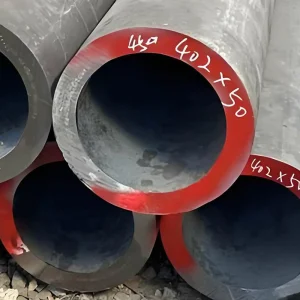
Related Products

Seamless Alloy Steel Pipe Specifications and Dimensions Table

Inch / OD (mm) Wall Thickness Range (mm) Theoretical Weight (kg/m) Tolerances
1/2″ / 21.3 2.0, 2.5, 3, 3.5, 4, 4.5, 5 1.68 – 4.01 OD ±1%, Wall ±10%, Length ±50 mm
3/4″ / 26.9 2.0, 2.5, 3, 3.5, 4, 4.5, 5, 5.5, 6 2.08 – 5.16 Same as above
1″ / 33.7 2.0, 2.5, 3, 3.5, 4, 4.5, 5, 6, 7 2.59 – 7.06 Same as above
1 1/4″ / 42.4 2.5, 3, 3.5, 4, 5, 6, 7, 8 3.36 – 9.85 Same as above
1 1/2″ / 48.3 2.5, 3, 3.5, 4, 5, 6, 7, 8, 9 3.84 – 12.6 Same as above
2″ / 60.3 2.5, 3, 3.5, 4, 5, 6, 7, 8, 9, 10 4.81 – 17.1 Same as above
2 1/2″ / 76.1 3, 4, 5, 6, 7, 8, 9, 10, 12 6.08 – 24.2 Same as above
3″ / 88.9 3, 4, 5, 6, 7, 8, 9, 10, 12, 14 7.08 – 32.1 Same as above
4″ / 114.3 4, 5, 6, 7, 8, 9, 10, 12, 14, 16 10.1 – 49.0 Same as above
6″ / 168.3 5, 6, 7, 8, 9, 10, 12, 14, 16, 18, 20 18.5 – 84.9 Same as above
8″ / 219.1 6, 7, 8, 9, 10, 12, 14, 16, 18, 20, 22, 25 28.1 – 127 Same as above
10″ / 273 6, 8, 10, 12, 14, 16, 18, 20, 22, 25, 28 35.0 – 185 Same as above
12″ / 323.9 8, 10, 12, 14, 16, 18, 20, 22, 25, 28, 30 45.0 – 245 Same as above
14″ / 355.6 8, 10, 12, 14, 16, 18, 20, 22, 25, 28, 30 50.1 – 280 Same as above
16″ / 406.4 10, 12, 14, 16, 18, 20, 22, 25, 28, 30, 35 64.0 – 355 Same as above
20″ / 508 12, 14, 16, 18, 20, 22, 25, 28, 30, 35, 40 95.0 – 550 Same as above


Seamless alloy steel pipe standards

Standard Type Standard No. Scope / Description
National Standard (GB) GB/T 9948-2006 Seamless alloy steel pipes for high-pressure boilers, suitable for high-temperature, high-pressure steam pipelines; specifies chemical composition, mechanical properties, dimensions, and tolerances
GB/T 5310-2017 Seamless steel pipes for high-pressure boilers, suitable for boilers, heat exchangers, and industrial piping
GB/T 3087-2021 Standard for dimensions, shape, and weight of seamless steel pipes, applicable to all types of seamless alloy steel pipes
International Standard (ASTM) ASTM A335 / A335M Seamless alloy steel pipes for high-temperature service, covering grades P5 / P9 / P11 / P22 / P91 / P92
ASTM A213 / A213M Seamless stainless or alloy steel pipes for boilers and heat exchangers
ASTM A691 High-temperature, high-pressure corrosion-resistant alloy steel pipes suitable for severe service conditions
European Standard (EN) EN 10216-2 Seamless steel pipes for high-temperature service, covering alloy steel; specifies chemical composition, mechanical properties, dimensions, and tolerances
EN 10204 Material test certificate standard to ensure traceability and quality of pipes

Execution Standard Description:
GB/T 9948 / GB/T 5310 → Primarily for domestic high-temperature and high-pressure boiler tubes
ASTM A335 / A213 / A691 → Widely recognized internationally, used for high-temperature and high-pressure steam pipes, boilers, and petrochemical pipelines
EN 10216-2 → European standard, covering steel grades from P5 to P92, with strict requirements, suitable for export and engineering projects
EN 10204 → Provides material certificates (MTC), including chemical composition, mechanical properties, and non-destructive testing results


Seamless Alloy Steel Pipe Production Process Flow

Raw Material Preparation → Melting and Ingot Casting → Forging → Heating → Piercing → Primary Rolling → Hot Rolling or Cold Drawing → Straightening → Cutting to Length → Inspection → Surface Treatment → Warehousing and Shipping

Detailed Description:

1. Raw Material Preparation
High-quality alloy steel ingots or billets are selected, with chemical composition meeting design requirements.
2. Melting and Ingot Casting
Melting is performed in an electric furnace or converter, adjusting alloy elements, and casting into steel ingots.
3. Forging
The steel ingots are heated to forging temperature and processed into round steel billets using a forging hammer or rolling mill to improve structural uniformity.
4. Heating
The steel billets are heated to hot working temperature in preparation for piercing.
5. Piercing
The steel billets are pierced using a Mannesmann or Selton piercing machine to form a hollow tube (preliminary hollow pipe).
6. Initial Rolling
The hollow tube is further expanded in diameter and its wall thickness is made uniform using an initial rolling mill.
7. Hot Rolling or Cold Drawing
Hot rolling: The pipe is rolled at high temperature to obtain the final outer diameter and wall thickness.
Cold drawing (optional): The pipe undergoes cold working to improve dimensional accuracy and surface finish.
8. Straightening
The pipe is straightened using a straightening machine to ensure straightness meets standard requirements.
9. Cutting to Length
The pipe is cut to length according to customer requirements or standard lengths (6m/12m).
10. Inspection
Chemical composition, dimensions, tolerances, mechanical properties, non-destructive testing (UT/RT), pressure testing, etc.
11. Surface Treatment
Pickling, polishing, wire drawing, black oxide coating, or anti-rust oil treatment to improve corrosion resistance and aesthetics.
12. Warehousing and Shipping
After passing inspection, the products are packaged and stored in the warehouse, then shipped to the customer.


Inspection and acceptance criteria for seamless alloy steel pipes

Inspection Item Inspection Method Purpose Standard / Notes
Chemical Composition Spectroscopy / Chemical Analysis Verify that alloy elements (C, Cr, Mo, V, Nb, etc.) meet the required steel grade and design specifications GB/T 9948, ASTM A335, EN 10216-2
Mechanical Properties Tensile Test, Impact Test, Hardness Test Ensure tensile strength, yield strength, elongation, impact toughness, and hardness meet the standard GB/T 9948, ASTM A335, EN 10216-2
Dimensions & Tolerances Caliper, Micrometer, Ruler, Automatic Inspection Equipment Check outer diameter, wall thickness, length, and straightness OD ±1%, WT ±10%, Length ±50 mm
Non-Destructive Testing (NDT) Radiographic Testing (RT), Ultrasonic Testing (UT), Eddy Current Testing (ET) Ensure the pipe is free of internal defects such as cracks, porosity, and inclusions GB/T 11345, ASTM A435, etc.
Pressure Testing Hydrostatic Test / Air Pressure Test Verify the pipe can withstand the rated working pressure and check for leaks GB/T 9948, ASTM A335
Surface Quality Inspection Visual Inspection, Surface Roughness Measurement Ensure the surface is free of scale, cracks, pits, and defects; verify surface treatment quality Pickling, Polishing, Passivation, Rust Preventive Oil
Acceptance / Material Certificate Material Test Certificate (MTC) Ensure material traceability; only release to inventory after all inspections pass GB/T 10204, ASTM A370


Seamless Alloy Steel Pipe Procurement – Frequently Asked Questions

Q1: How to choose the appropriate steel grade?

A:
The choice of steel grade should be determined based on the pipeline’s operating temperature, pressure, and medium:
Medium-low temperature and medium-pressure pipelines → P5, P9, P11
High-temperature and high-pressure boiler tubes → P12, P22
Ultra-high temperature and high-pressure critical pipelines → P91, P92
Corrosion resistance, service life, and welding performance should also be considered. It is recommended to confirm the operating conditions and applicable standards with the supplier before purchasing.

Q2: How to determine the specifications and wall thickness?

A:
The outer diameter and wall thickness directly affect the pressure bearing capacity and flow rate.
It is recommended to calculate the optimal wall thickness based on the design pressure, temperature, and corrosion allowance, and confirm the pipe material tolerances, length, and straightness.
Common tolerances: outer diameter ±1%, wall thickness ±10%, length ±50 mm.

Q3: Do the pipes have a quality guarantee? How is acceptance testing performed?

A:
Purchased pipes should be accompanied by a Material Test Certificate (MTC), including chemical composition, mechanical properties, dimensions, non-destructive testing, and pressure test results.
Acceptance testing includes checking: appearance, dimensions, mechanical properties, non-destructive testing reports, and surface treatment quality.
Ensure all data conforms to standards (e.g., GB/T 9948, ASTM A335, EN 10216-2).

Q4: How to ensure the long-term safety of the pipes?

A:
Service life depends on the steel grade, wall thickness, and surface treatment.
For high-temperature, high-pressure, or corrosive media applications, it is recommended to choose a high-grade steel (such as P22, P91, P92) and perform pickling, polishing, or passivation surface treatment.
Correct selection can significantly reduce maintenance and replacement frequency, improving cost-effectiveness.

Q5: How are lead times and inventory issues handled?

A:
Seamless alloy steel pipes have a long production cycle (usually 4–6 weeks), and large diameters and high steel grades may take even longer.
It is recommended to plan purchases in advance, confirm supplier inventory and production capacity to avoid project delays.
For urgent projects, you can confirm specifications and inventory with the supplier for faster delivery.

Q6: What precautions should be taken during transportation and storage?

A:
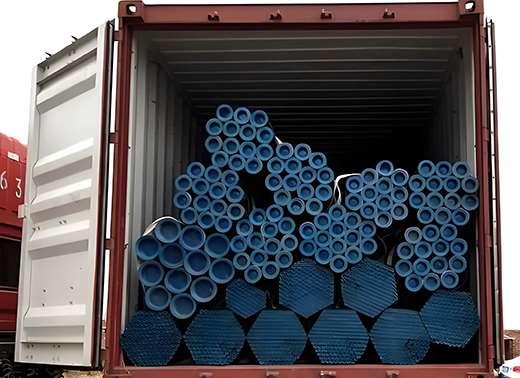
Pipes are susceptible to mechanical damage and corrosion. They should be supported on a flat surface, securely tied down, and covered to protect against rain.
Before warehousing, the appearance and surface treatment should be inspected. If scratches, mill scale, or rust spots are found, they should be dealt with promptly.
For long-term storage, it is recommended to regularly apply rust-preventive oil or cover with a protective film.