Products

Related News

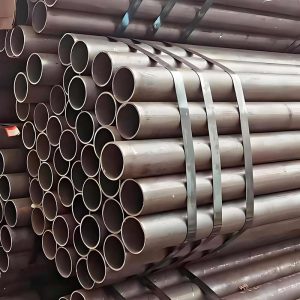
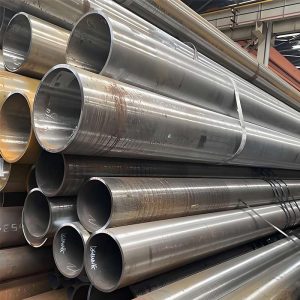
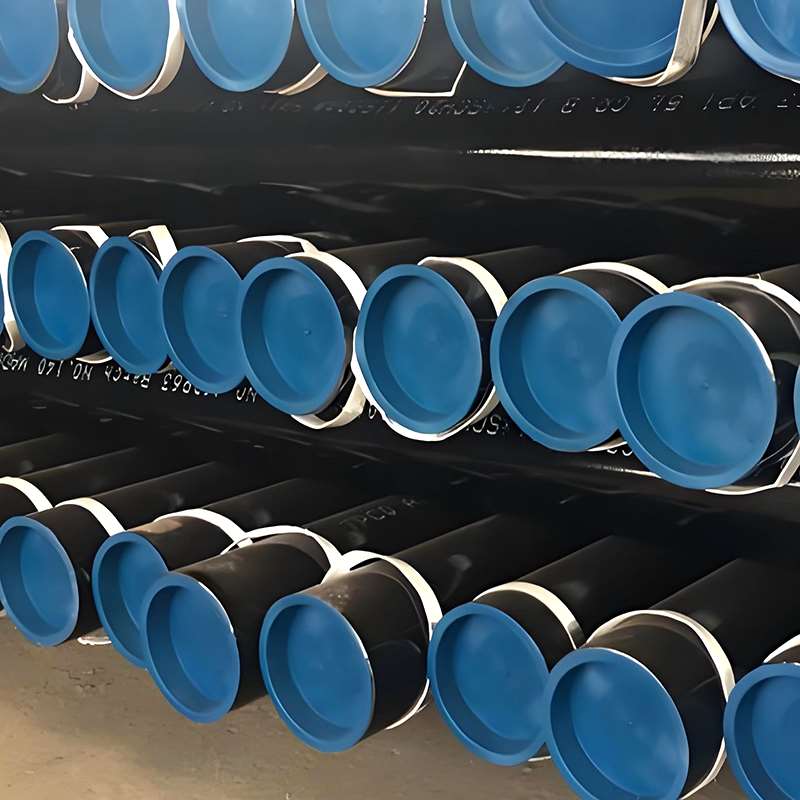
ASTM A53 Grade B Black Steel Pipe

OD Range :

21.3 mm – 610 mm (0.84″ – 24″)

WT Range :

2.0 mm – 25 mm (0.08″ – 0.98″)

Length :

6 m – 12 m (standard); customizable

Tolerance :

OD ±0.5–0.75%; WT +10% / -0%; Length +50 mm / -0 mm

Material :

Carbon Steel

Standard :

ASTM A53 Grade B

Surface :

Black (untreated), oiled, anti-rust coating, hot-dip galvanized (optional)

Application :

Oil, gas, and water pipelines; structural and mechanical purposes; general industrial use.

Introduction :

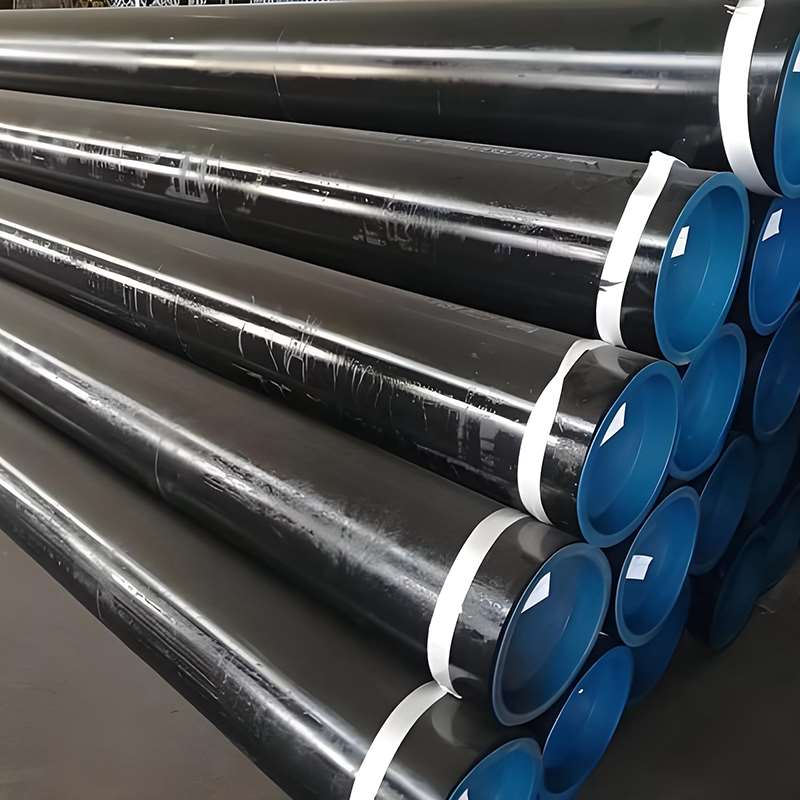
ASTM A53 Grade B Black Steel Pipe is a versatile carbon steel pipe widely used for water, gas, steam, and structural applications, offering reliable strength and medium- to low-pressure performance.

I. Introduction to ASTM A53 Grade B Black Steel Pipe

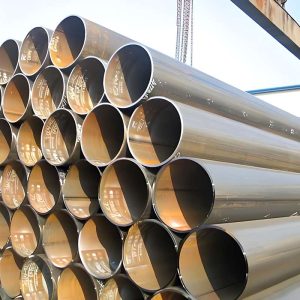
ASTM A53 Grade B black steel pipe is a commonly used seamless or welded carbon steel pipe primarily employed for conveying water, steam, air, and general mechanical structures. Compared to Grade A, Grade B pipe offers enhanced wall thickness and pressure-bearing capacity, making it more suitable for medium-to-high pressure pipelines and industrial tubing.

Features:
Material: Low-carbon steel
Process: Seamless or straight seam welded (ERW)
Surface treatment: Black oxide scale or galvanized
Applications: Building piping, water/gas transmission, boiler piping, mechanical structural piping
Standards: ASTM A53/A53M

II. ASTM A53 Grade B Black Steel Pipe Key Parameters Table

Parameter CategoryDescription
StandardASTM A53 / A53M
GradeGrade B
TypeSeamless Pipe, ERW (Electric Resistance Welded) Pipe
Outer Diameter (OD) Range1/2″ – 12″ (≈ 21.3 mm – 323.9 mm)
Wall Thickness (WT) Range0.109″ – 0.500″ (≈ 2.77 mm – 12.7 mm), selected according to Schedule (SCH) standards, e.g., SCH 40, SCH 80
LengthStandard 6 m or 12 m; custom lengths available upon request
Surface TreatmentBlack steel (mill scale), Galvanized
Typical ApplicationsWater, steam, air, and gas pipelines; medium- and low-pressure boiler pipes; construction and mechanical structural tubes; industrial and municipal piping networks

III. ASTM A53 Black Steel Pipe Grades

ASTM A53 carbon steel pipes are primarily divided into two grades:
Grade A
Grade B
Grade C is occasionally referenced in the standard, but Grade A and Grade B are predominantly used in most practical applications.

Comparison of Grade A and Grade B

ItemGrade AGrade BComparison / Notes
Applicable TypeSeamless or welded pipeSeamless or welded pipeBoth can be chosen as seamless or welded
Wall Thickness RangeGenerally thinnerCan be thickerGrade B allows thicker walls, higher pressure capacity
Pressure CapacityLow-pressure applicationsMedium- to low-pressure applicationsGrade B is suitable for higher working pressure
Yield StrengthLowerHigherGrade B has higher strength, better for industrial pipelines and high-pressure transport
Typical ApplicationsWater, steam, air pipelinesWater, steam, gas, boiler, and structural mechanical pipesGrade B has wider application, suitable for medium- and high-pressure situations
CostRelatively lowRelatively highGrade B is slightly more expensive due to thicker walls and higher pressure capacity

Summary:
Grade A: Suitable for low-pressure, light-load applications, primarily used in general water supply, steam, and air pipelines.
Grade B: Suitable for medium-low pressure or high-demand pipelines, featuring thicker walls and higher pressure ratings. Commonly used in gas, boiler, mechanical structural, and industrial pipelines.

IV. Manufacturing Processes and Types of ASTM A53 Grade B Black Steel Pipe

i. Manufacturing Process Types

ASTM A53 Grade B black steel pipe primarily employs two manufacturing processes:
Seamless Pipe
Process: Formed by extrusion or piercing heated steel billets, resulting in pipe without weld seams.
Characteristics:
Uniform wall thickness
High strength and excellent pressure-bearing capacity
Suitable for high-pressure and thick-walled pipelines
Applications: Boiler piping, high-pressure gas pipelines, industrial transport pipelines

Electric Resistance Welded (ERW) Pipe
Process: Steel strip coiled into a pipe blank, welded into a pipe body via high-frequency resistance welding.
Characteristics:
High production efficiency, relatively low cost
High dimensional accuracy
Suitable for medium- and low-pressure pipelines
Applications: Municipal water supply pipelines, gas pipelines, mechanical structural tubing

ii. Surface Treatment Types

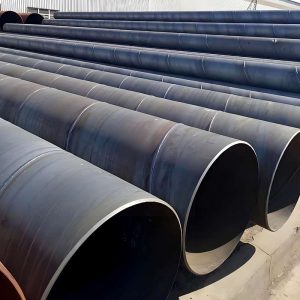
Black Steel: Standard surface finish, low cost, suitable for indoor or protected environments.
Galvanized: Enhanced corrosion resistance, suitable for outdoor or humid environments.
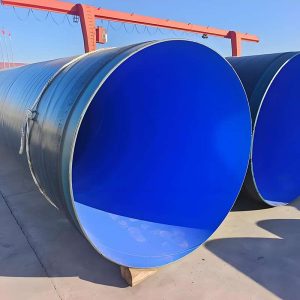
Epoxy coating or plastic lining (e.g., PE/PP lining) on both inner and outer surfaces: Used for potable water pipelines or gas pipelines with high corrosion resistance requirements.

iii. Seamless Pipe vs. Straight Seam Welded Pipe (ERW) Differences

ItemSeamless PipeERW (Electric Resistance Welded) PipeComparison / Notes
Manufacturing ProcessHeated steel billet pierced or extruded into pipe, no weld seamSteel strip rolled into pipe billet, welded by high-frequency resistance weldingSeamless pipe has no weld seam; ERW pipe has a welded seam
Pipe Wall StructureUniform wall thicknessSlight variation at the weld seam may existSeamless pipe has better wall uniformity; welds in ERW pipe require inspection
Dimensional AccuracyLower precisionHigh precision, OD and WT controllableERW pipe has more stable dimensions, suitable for mass installation
Pressure CapacityHighMedium to lowSeamless pipe is suitable for high-pressure applications
Production CostHighRelatively lowERW pipe has higher production efficiency and lower cost
ApplicationsHigh-pressure boiler pipes, industrial pipelines, thick-wall pipesMunicipal water, gas, mechanical structure, thin-wall pipesSelection depends on service environment and pressure requirements

V. ASTM A53 Grade B Black Steel Pipe Installation Guide

i: Pipe Inspection
Inspect pipe surfaces for dents, cracks, or scratches.
For welded pipes, focus on verifying weld integrity and absence of cracks.
Confirm pipe outer diameter, wall thickness, and length meet design specifications.

ii: Fitting and Dimension Verification
Verify that flanges, elbows, tees, and other fittings match the specified dimensions.
Confirm that the pipe’s Schedule (SCH) wall thickness meets the design pressure requirements.

iii: Cutting and Deburring
Use professional cutting tools to ensure clean, straight cuts.
Remove burrs from cut edges to prevent sealing or welding issues.
Clean slag from welded pipe ends.

iv: Pipe Support and Fixing
Install brackets, hangers, or clamps to secure pipes.
Maintain standard support spacing to prevent sagging or uneven stress.
Allow expansion space for thermal expansion and contraction.

v: Joint Connection and Sealing
Ensure welded pipe joints are uniform and reliably sealed.
Tighten flange connection bolts evenly to prevent leaks.
Position sealing gaskets correctly to guarantee effective sealing.

vi: Pipe Cleaning and Flushing
Before installation, remove iron filings, dust, and oil residues from the pipe interior.
After installation, flush or purge the pipes to ensure internal cleanliness.

vii: Corrosion Prevention and Surface Protection
Avoid scratching hot-dip galvanized or coated pipe surfaces.
If surface damage occurs on-site, promptly touch up paint or repair the anti-corrosion coating.
For outdoor installations, implement shielding or UV protection measures.

vii: Pressure Testing and Acceptance
After installation, conduct hydraulic or pneumatic pressure tests.
Inspect welds, joints, and seals section by section.
Confirm no leaks or deformation before putting into service.

Construction Notes
Replace any abnormal pipes discovered during construction immediately.
Regular pipeline inspections effectively prevent leaks or corrosion during long-term use.
Strictly adhere to design requirements and installation specifications at every step.
Related Products

ASTM A53 Grade B Black Steel Pipe Specifications

OD (inch/mm) SCH WT (inch/mm) Theoretical Weight (lb/ft / kg/m) Type Remarks
1/2″ (21.3) 40 0.109 / 2.77 1.68 / 2.50 Seamless / Welded Small diameter pipe
80 0.147 / 3.73 2.26 / 3.37 Seamless / Welded Medium to low-pressure pipe
160 0.312 / 7.92 4.79 / 7.16 Seamless / Welded High-pressure pipe
3/4″ (26.7) 40 0.113 / 2.87 2.27 / 3.38 Seamless / Welded Small diameter pipe
80 0.154 / 3.91 3.10 / 4.62 Seamless / Welded Medium to low-pressure pipe
160 0.307 / 7.80 6.17 / 9.20 Seamless / Welded High-pressure pipe
1″ (33.4) 40 0.133 / 3.38 3.10 / 4.62 Seamless / Welded Water, steam pipelines
80 0.179 / 4.55 4.18 / 6.23 Seamless / Welded Medium to low-pressure pipe
160 0.375 / 9.53 8.75 / 13.0 Seamless / Welded High-pressure pipe
1 1/4″ (42.2) 40 0.140 / 3.56 3.88 / 5.79 Seamless / Welded Medium to low-pressure pipe
80 0.188 / 4.78 5.16 / 7.70 Seamless / Welded Medium to high-pressure pipe
160 0.375 / 9.53 9.66 / 14.4 Seamless / Welded High-pressure pipe
1 1/2″ (48.3) 40 0.145 / 3.68 4.75 / 7.08 Seamless / Welded Medium to low-pressure pipe
80 0.200 / 5.08 6.28 / 9.36 Seamless / Welded Medium to high-pressure pipe
160 0.375 / 9.53 11.4 / 17.0 Seamless / Welded High-pressure pipe
2″ (60.3) 40 0.154 / 3.91 6.31 / 9.41 Seamless / Welded Medium diameter pipe
80 0.218 / 5.54 8.61 / 12.8 Seamless / Welded Medium to high-pressure pipe
160 0.375 / 9.53 14.6 / 21.7 Seamless / Welded High-pressure pipe
2 1/2″ (73.0) 40 0.203 / 5.16 9.05 / 13.5 Seamless / Welded Industrial pipe
80 0.276 / 7.01 12.4 / 18.5 Seamless / Welded Medium to high-pressure pipe
160 0.375 / 9.53 16.8 / 25.0 Seamless / Welded High-pressure pipe
3″ (88.9) 40 0.216 / 5.49 11.3 / 16.8 Seamless / Welded Medium to high-pressure pipe
80 0.300 / 7.62 15.3 / 22.7 Seamless / Welded Medium to high-pressure pipe
160 0.375 / 9.53 19.2 / 28.5 Seamless / Welded High-pressure pipe
4″ (114.3) 40 0.237 / 6.02 16.1 / 23.9 Seamless / Welded Main pipeline
80 0.337 / 8.56 23.1 / 34.4 Seamless / Welded Medium to high-pressure pipe
160 0.500 / 12.7 33.7 / 50.1 Seamless / Welded High-pressure pipe
6″ (168.3) 40 0.280 / 7.11 25.4 / 37.8 Seamless / Welded Large diameter pipe
80 0.432 / 10.97 39.5 / 58.7 Seamless / Welded High-pressure pipe
160 0.500 / 12.7 44.2 / 65.7 Seamless / Welded High-pressure pipe
8″ (219.1) 40 0.322 / 8.18 36.0 / 53.6 Seamless / Welded Industrial pipe
80 0.500 / 12.7 55.3 / 82.4 Seamless / Welded High-pressure pipe
160 0.625 / 15.9 67.8 / 101.1 Seamless / Welded High-pressure pipe
10″ (273.0) 40 0.365 / 9.27 49.1 / 73.0 Seamless / Welded Large-diameter transmission
80 0.500 / 12.7 66.6 / 98.9 Seamless / Welded High-pressure pipe
160 0.625 / 15.9 81.6 / 121.0 Seamless / Welded High-pressure pipe
12″ (323.9) 40 0.406 / 10.3 63.4 / 94.3 Seamless / Welded Extra-large pipe
80 0.500 / 12.7 78.8 / 117.1 Seamless / Welded High-pressure pipe
160 0.625 / 15.9 96.5 / 143.2 Seamless / Welded High-pressure pipe

I. Standard & Grade

Category Details
Standard Name ASTM A53 / A53M
Grade Grade B
Type Seamless (Seamless Pipe), ERW (Electric Resistance Welded Pipe)

II. Execution Requirements (Standard Compliance)

Requirement ASTM A53 Grade B Specification
Chemical Composition (wt%) Carbon (C) ≤ 0.30% Manganese (Mn) 0.27–0.93% Phosphorus (P) ≤ 0.035% Sulfur (S) ≤ 0.045% Silicon (Si) ≤ 0.10%
Yield Strength (MPa / ksi) Minimum 240 MPa (35 ksi) for sizes ≤ 2″ OD; Minimum 250 MPa (36 ksi) for sizes > 2″ OD
Tensile Strength (MPa / ksi) 415–540 MPa (60–78 ksi)
Elongation (%) ≥ 20% for sizes ≤ 2″ OD; ≥ 18% for sizes > 2″ OD
External Diameter (OD) Tolerance ±1.0% for OD ≤ 406.4 mm; ±0.75% for OD > 406.4 mm
Wall Thickness (WT) Tolerance +12.5% / -0% (Schedule 40, 80, 160)
Length Tolerance Fixed length: +50 mm / -0 mm Random length: 5–12 m
End Squareness ≤ 1.6 mm
Straightness ≤ 1.5 mm/m
Non-Destructive Testing (NDT) UT (Ultrasonic) or RT (X-ray) inspection for welds and base metal per ASTM A53 requirements
Surface Finish Black (mill scale), oiled, anti-rust, galvanized (optional)
Applications Water, steam, gas pipelines; industrial and structural use; medium- to low-pressure applications


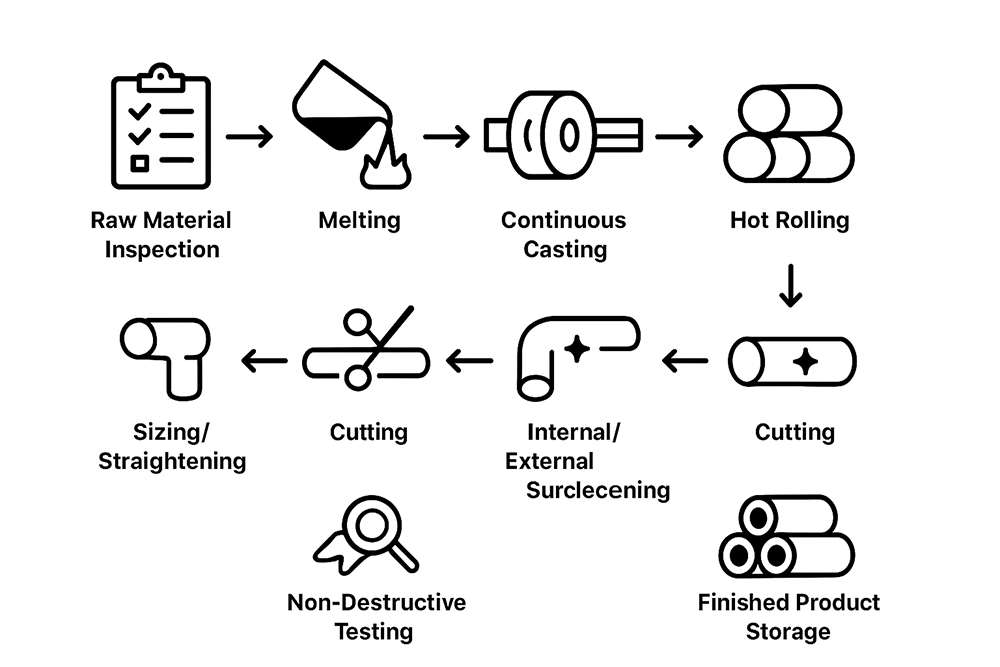
Raw Material Inspection → Melting → Continuous Casting → Hot Rolling → Sizing/Straightening → Cutting → Internal/External Surface Cleaning → Non-Destructive Testing → Rust Prevention Treatment → Finished Product Storage

ASTM A53 Grade B Black Steel Pipe Process Flow Chart

Brief Description:
(1) Raw Material Inspection: Check the chemical composition and quality of steel billets.
(2) Melting: Raw materials are melted in a furnace to produce molten steel.
(3) Continuous Casting: Molten steel is cast into billets.
(4) Hot Rolling: Billets are heated and processed through rolling mills to form pipe blanks.
(5) Sizing/Straightening: Pipe diameter is adjusted and the material is straightened.
(6) Cutting: Cut pipes to specified lengths.
(7) Surface Cleaning: Remove scale, oil, and contaminants from inner/outer surfaces.
(8) Non-Destructive Testing: Inspect pipe integrity via radiography/ultrasonic testing.
(9) Rust Prevention: Apply oil coating or hot-dip galvanizing for corrosion protection.
(10) Finished Product Storage: Package, label, and store products.


No. Inspection Item Test Method / Standard Specific Requirement / Parameter
1 Visual Inspection Visual / ASTM A53 Surface should be smooth, free of cracks, obvious dents, weld lumps, scaling, or severe rust.
2 Dimensions & Tolerances Dimensional Measurement / ASTM A53 Outer diameter, wall thickness, and tolerances as per ASTM A53; length deviation ±0.5%.
3 Chemical Composition Spectrometer Analysis / ASTM A53 C ≤ 0.25%, Mn ≤ 1.20%, P ≤ 0.05%, S ≤ 0.05%, Si ≤ 0.10%.
4 Tensile Properties Tensile Test / ASTM A370 Yield strength ≥ 35 ksi (≈240 MPa), tensile strength 60–95 ksi (≈415–655 MPa), elongation ≥ 20%.
5 Bend Test Bend Test / ASTM A370 Single or double bend 180°, no cracks allowed.
6 Hardness Test Rockwell / Brinell Hardness / ASTM E10 Hardness generally HRC 15–25, depending on pipe thickness.
7 Hydrostatic Test Hydrostatic Pressure Test / ASTM A53 Test pressure usually 1.5 × nominal working pressure, no leakage allowed.
8 Non-Destructive Testing (NDT) Magnetic Particle / Ultrasonic / ASTM E1444 / ASTM A578 Check for weld and base metal defects such as cracks, slag inclusion, and porosity.
9 Internal & External Rust Protection Visual + Chemical Treatment Pipe should be coated with anti-rust oil or protective layer inside and outside; surface should be uniform and free of flaking.
10 Marking Inspection Visual Pipes should be clearly marked with manufacturer, specification, standard, and batch number.


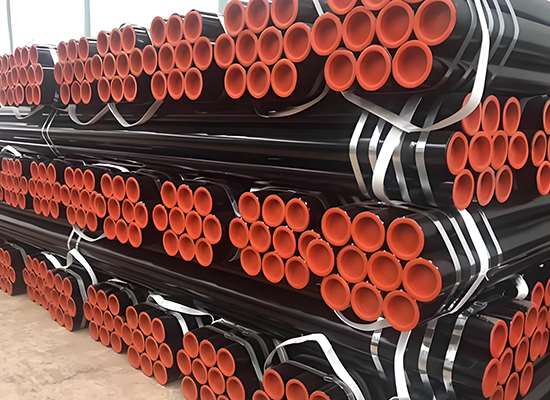
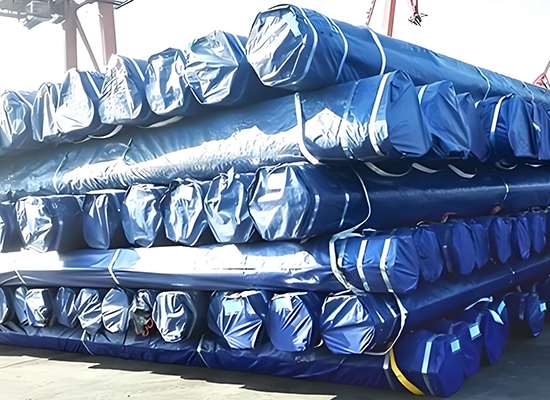
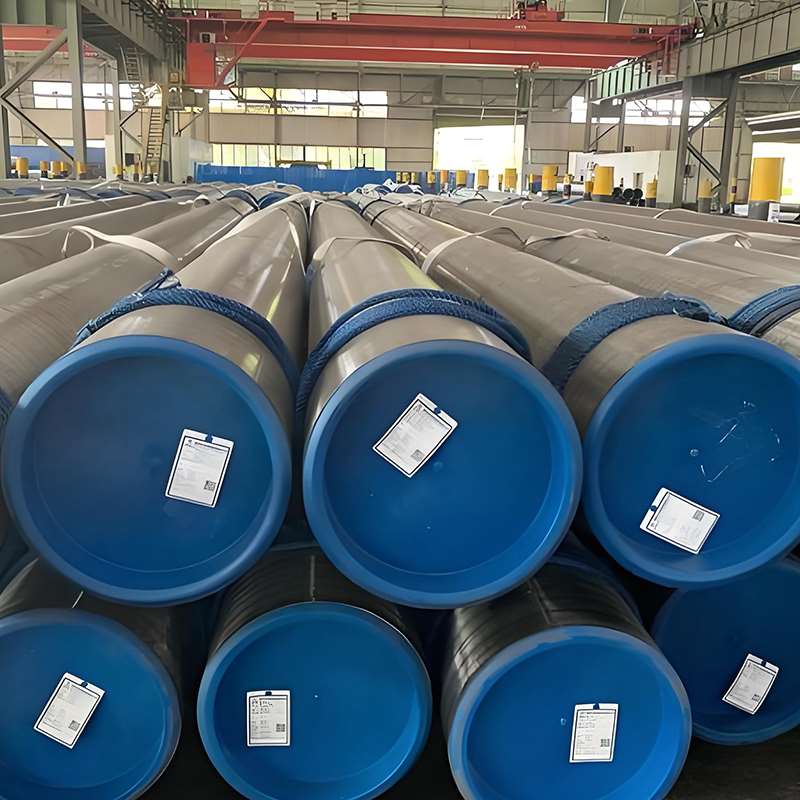
API 5L X52 Line Pipe Packaging

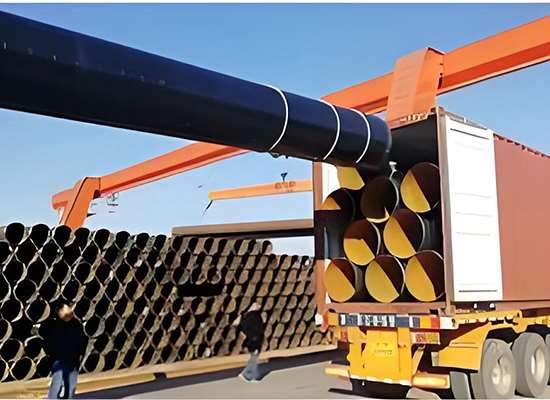
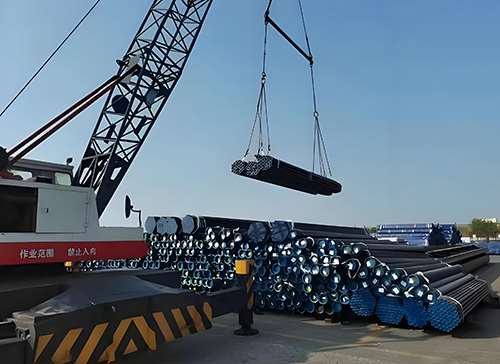
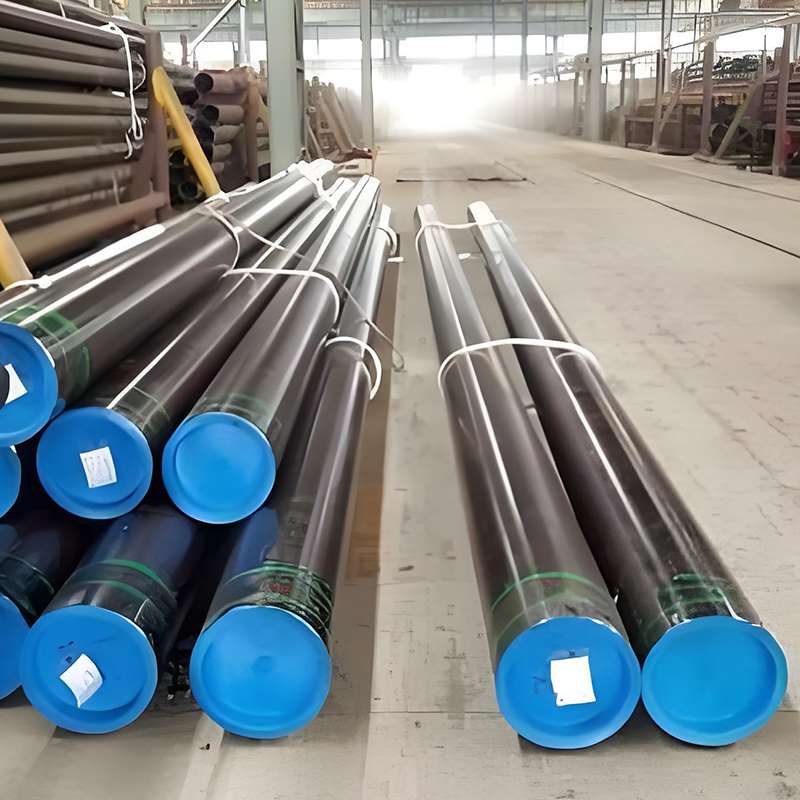
API 5L X52 Line Pipe Loading

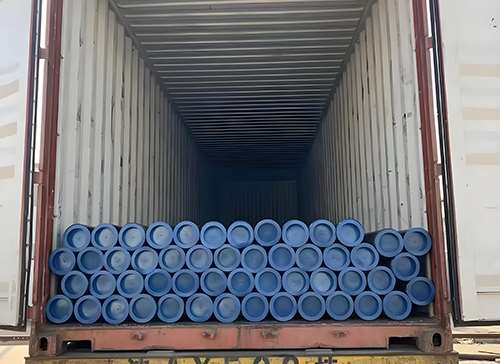
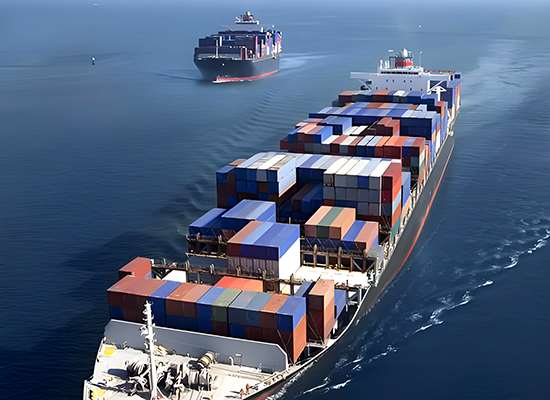
API 5L X52 Line Pipe Transportation

Common FAQs on Low-Pressure Conveyance Using ASTM A53 Grade B Black Steel Pipes

Q1. Are ASTM A53 Grade B pipes prone to leakage in low-pressure conveyance?

A:
Low-pressure pipelines typically operate at relatively low working pressures, but weld quality, flange connections, and gasket integrity must still be ensured.
Uneven welds, inconsistent bolt tightening, or improper gasket installation can lead to water or gas leaks.
When purchasing, select reputable manufacturers and verify weld quality along with pipe inspection reports.

Q2. Question: Are pipes prone to internal corrosion?

Answer:
Black steel pipes are susceptible to corrosion from moisture, acids, alkalis, and water quality.
Low-pressure water supply pipes exposed to corrosive water over extended periods may develop rust or perforations in the pipe walls.
When purchasing, consider hot-dip galvanized pipes or pipes lined with epoxy/plastic for corrosion protection.
After installation, ensure regular inspections and cleaning.

Q3. Question: What considerations should be made when selecting pipe wall thickness?

Answer:
ASTM A53 Grade B pipes come in various wall thicknesses (SCH 40, SCH 80, etc.). For low-pressure conveyance, SCH 40 or SCH 80 may be selected.
Excessively thin walls may compromise service life, while excessively thick walls increase costs and complicate installation.
When procuring, determine the appropriate wall thickness based on design pressure and the conveyed medium.

Q4. Q: What precautions should be taken during pipeline transportation and storage?

A:
The surface of black steel pipes is susceptible to scratches or impacts, which can compromise their anti-corrosion effectiveness.
During transportation, use wooden blocks to elevate the pipes, preventing direct contact with the ground or friction.
When stored on-site, avoid prolonged exposure to open air, standing water, or direct sunlight. Cover with protective tarps when necessary.

Q5. Question: What are common issues encountered during the installation of low-pressure pipelines?

Answer:
Uneven pipe joints, inconsistent welds, or uneven tightening of flange bolts may cause leaks.
Insufficient supports or non-compliant support spacing can lead to sagging or deformation of the pipeline.
Failure to clean internal debris from pipes prior to installation may compromise delivery quality.
When procuring materials, verify pipe dimensional accuracy, surface condition, and compatibility with fittings.

Q6. What documents and certifications should be verified when purchasing ASTM A53 Grade B pipe?

A:
Verify supplier qualifications and production licenses to ensure pipes comply with ASTM A53 standards.
Obtain factory quality certificates confirming pipe dimensions, wall thickness, type, and grade.
For welded pipes, request weld quality inspection reports or ultrasonic/radiographic testing records.
For potable water or gas pipelines, verify that anti-corrosion coatings or galvanization meet applicable specifications.