
I. What are the different grades of carbon steel pipes?
Carbon steel pipes come in various grades under different standards, primarily used for industrial pipelines, structural support, and transportation lines. Below are some common grades and their characteristics.
1. ASTM A53
ASTM A53 is a very commonly used carbon steel pipe specification in the American standard.
Uses: Low-pressure transportation of water, steam, air, oil, etc.; also suitable for structural applications.
Features: Includes both seamless and welded types, reliable strength, mature manufacturing process, and moderate price.
2. ASTM A106
ASTM A106 is specifically used for high-temperature, high-pressure fluid transport pipes.
Uses: High pressure boiler pipes, steam pipes, and high-temperature transportation of oil and natural gas.
Features: Good high-temperature resistance, strong resistance to stress corrosion, suitable for medium and high-pressure conditions.
3. API 5L
API 5L is a common standard for oil and gas pipelines.
Uses: Oil and gas transmission pipelines, including long-distance pipelines and offshore pipelines.
Features: Covers pipes from low pressure to high pressure, and from small to large diameters. Strength grades include X42, X52, X60, X70, etc., which can be selected according to pressure and environment.
4. Other Common Grades
GB/T 8162/8163 (Chinese National Standard): Widely used in fluid transportation and industrial pipelines.
EN 10219 / EN 10210 (European Standard): Primarily used for structural carbon steel pipes, with high strength and good dimensional accuracy.
II. Reference Table for Carbon Steel Pipe Selection
| Grade / Standard | Manufacturing Process | Common Pipe Diameter Range (OD) | Common Wall Thickness Range | Main Applications | Key Features |
|---|---|---|---|---|---|
| ASTM A53 | Seamless / ERW | 21.3mm – 610mm | 2.0mm – 20mm | Water, steam, air, oil transportation; structural uses | Reliable strength, mature manufacturing process, cost-effective, suitable for medium- and low-pressure applications |
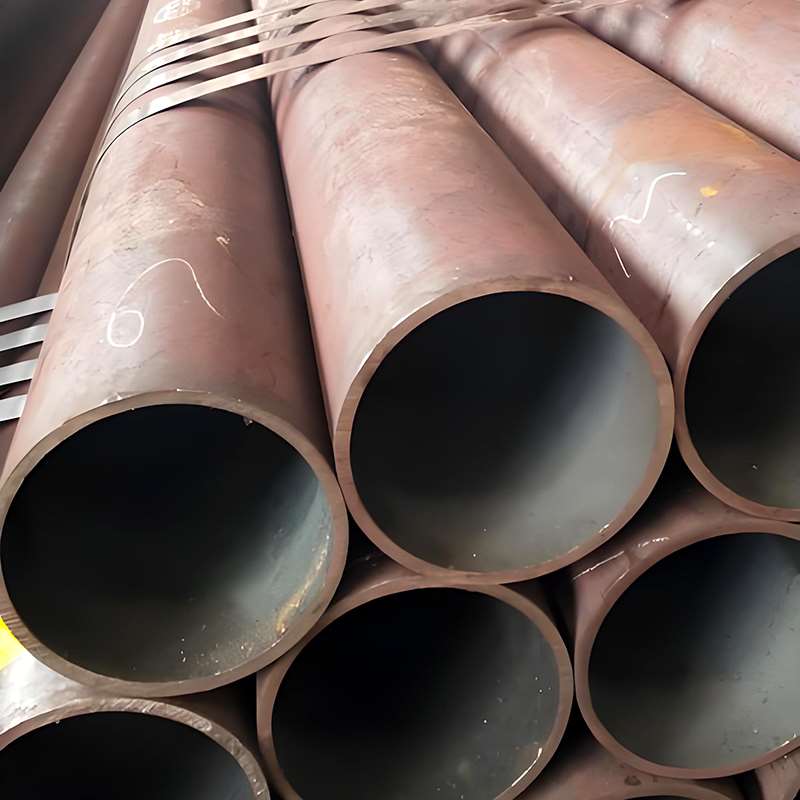
| ASTM A106 | Seamless | 21.3mm – 610mm | 3.0mm – 50mm | High-temperature and high-pressure fluid transportation; boiler tubes, steam pipes | High-temperature resistance, strong stress corrosion resistance, suitable for medium- and high-pressure, high-temperature applications |
| API 5L | Seamless / LSAW / SSAW | 114.3mm – 1422mm | 4.0mm – 50mm | Long-distance oil and gas pipelines | High strength, suitable for large-diameter, long-distance pipelines; grades X42–X70 |
| GB/T 8162 / 8163 | Seamless / Welded | 21.3mm – 610mm | 2.0mm – 25mm | Fluid transportation, industrial piping | Wide standard coverage, cost-effective, suitable for medium- and low-pressure applications |
| EN 10219 / EN 10210 | Seamless / Welded Structural Pipe | 21.3mm – 610mm | 2.0mm – 25mm | Construction, structural support, mechanical components | High dimensional accuracy, strong and durable, suitable for structural applications |
| ERW Carbon Steel Pipe | Electric Resistance Welding (ERW) | 21.3mm – 610mm | 2.0mm – 20mm | Medium- and low-pressure fluid transportation, structural uses | High dimensional accuracy, smooth appearance, suitable for bulk procurement |
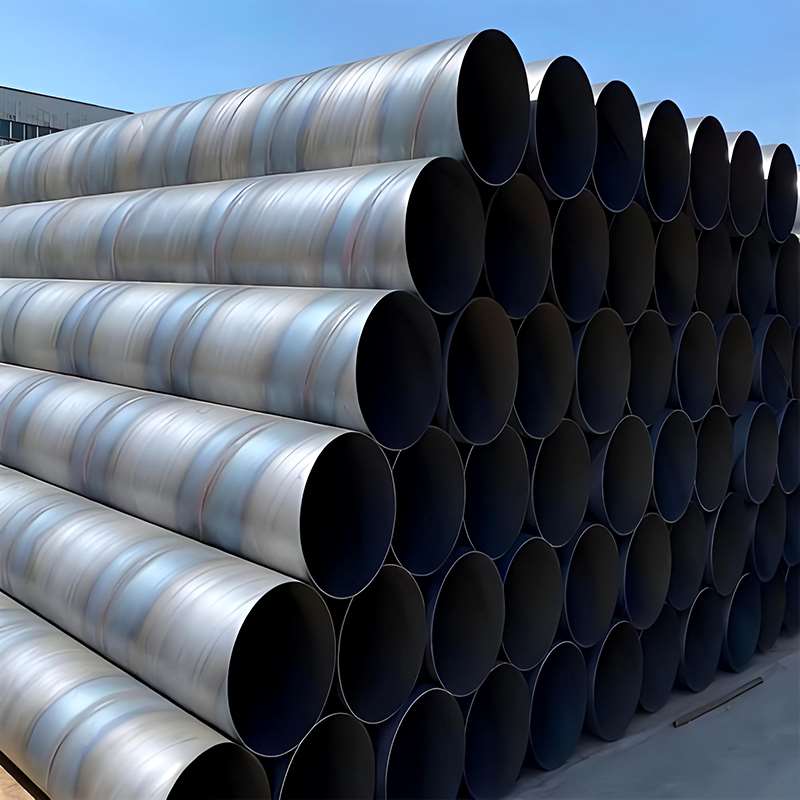
| SSAW Carbon Steel Pipe | Spiral Submerged Arc Welding (SSAW) | 273mm – 1422mm | 6.0mm – 50mm | Large-diameter transmission pipelines, water pipelines, drainage projects | Wide specification range, suitable for long-distance and large-diameter pipelines |
III. Carbon Steel Pipe Selection Guide
When selecting carbon steel pipes, it is necessary to match the appropriate type based on working conditions, pressure, temperature, diameter, and application. The following sections describe the different types.
- Manufacturing Process: High-frequency resistance welding
- Applicable Working Conditions: Medium and low-pressure fluid transportation, structural applications, general industrial piping
- Features: High dimensional accuracy, clean appearance, uniform wall thickness, suitable for bulk purchasing and standardized engineering
- Suitable Applications: Municipal pipelines, HVAC systems, light industrial pipelines
- Manufacturing Process: Spiral submerged arc welding
- Applicable Working Conditions: Large-diameter transmission pipelines, long-distance water supply and drainage projects
- Features: Wide range of specifications, suitable for large-diameter pipes, suitable for medium and low-pressure fluid transportation
- Suitable Applications: Water conservancy projects, urban water supply networks, large-scale drainage projects
- LSAW Carbon Steel Pipe
- Manufacturing Process: Straight seam submerged arc welding
- Applicable Conditions: High-pressure oil and gas pipelines
- Features: Strong pressure bearing capacity, suitable for long-distance, high-pressure pipelines
- Suitable Applications: Oil and natural gas transmission pipelines, urban gas long-distance transmission pipelines
- Manufacturing Process: Hot rolling or cold drawing seamless forming
- Applicable Conditions: High-temperature, high-pressure fluid transportation, mechanical structural components
- Features: No welds on the inner and outer walls, strong pressure bearing capacity, high temperature resistance, suitable for demanding conditions
- Suitable Applications: Boiler tubes, steam pipes, mechanical processing pipe fittings, oil and gas well pipelines
- Galvanized Carbon Steel Pipe
- Manufacturing Process: Electroplating or hot-dip galvanizing
- Applicable Conditions: Indoor water pipes, HVAC pipelines, mildly corrosive environments
- Features: Corrosion-resistant, rust-resistant, long service life
- Suitable Applications: Water supply pipes, HVAC systems, building pipelines
- Structural Carbon Steel Pipe (EN 10219 / EN 10210)
- Manufacturing Process: Welded or seamless structural pipe
- Applicable Conditions: Construction, mechanical structure support, load-bearing components
- Features: High dimensional accuracy, good strength, strong durability
- Suitable Applications: Factory structures, bridge supports, industrial machinery frames.