
I. Standard Overview
i. Standard Definition
EN 10219 is a European standard applicable to cold-formed welded hollow structural sections (HSS).
These pipes are primarily used in load-bearing and supporting structures, emphasizing dimensional accuracy, uniform mechanical properties, and weld quality.
ii. Scope of Application
Building Structures: Factory buildings, frame beams and columns, roof supports
Bridge Engineering: Truss members, supporting beams and columns
Industrial Supports: Machinery supports, pipe supports, towers
Machinery Frames: Equipment supports, conveyor supports, structural systems
iii. Differences between EN 10219 and EN 10210
| Item | EN10219 (Cold-Formed Welded Pipe) | EN10210 (Hot-Formed Pipe) |
|---|---|---|
| Manufacturing Method | Cold-formed + ERW welding | Hot-formed + welding |
| Section Type | Square, Rectangular, Round | Square, Rectangular, Round |
| Applicable Range | Light or medium load-bearing structures, mechanical supports | Heavy load-bearing structures, bridges, main beams of factories |
| Material | Non-alloy steel, fine-grain steel | Carbon steel, low-alloy steel |
| Advantages | Low cost, high dimensional accuracy, suitable for small to medium spans | High load-bearing capacity, smooth welds, suitable for long spans and high loads |
II. EN 10219 Pipe Types and Specifications
i. Cross-sectional Types
EN 10219 standard pipes mainly have three cross-sectional shapes:
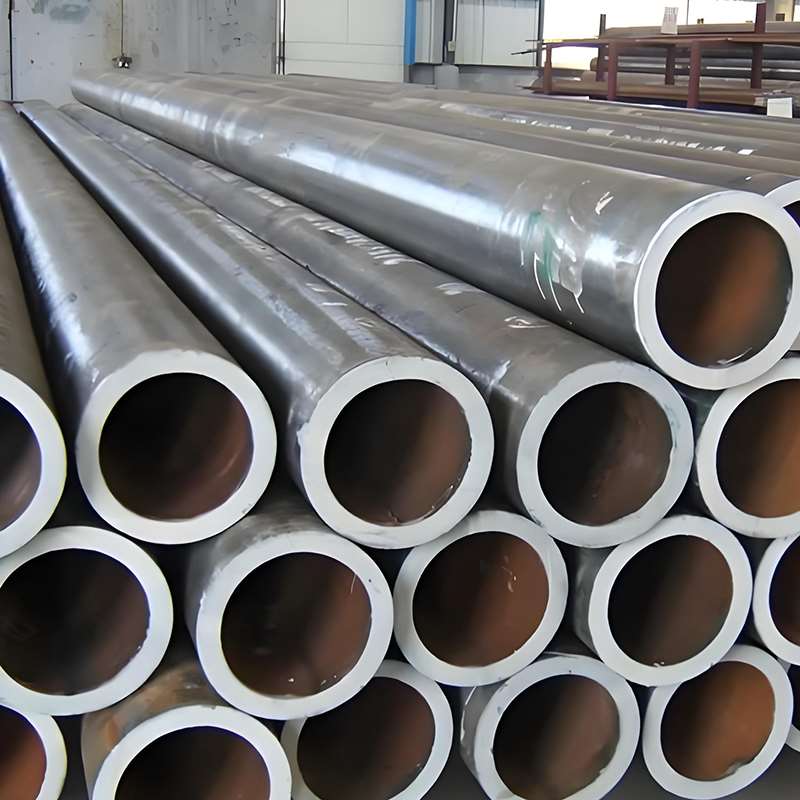
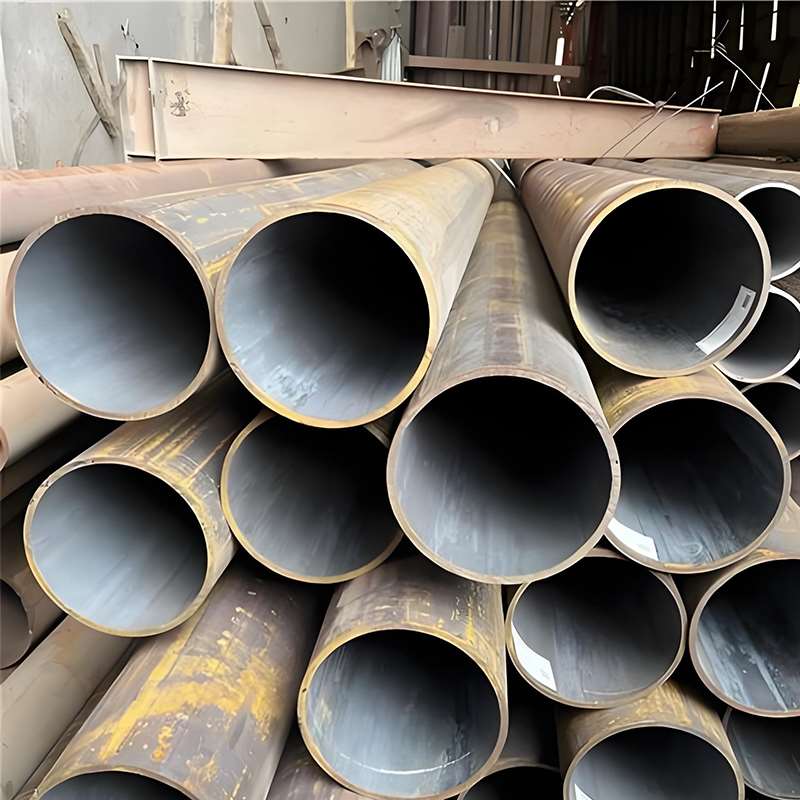
Circular Hollow Section (CHS)
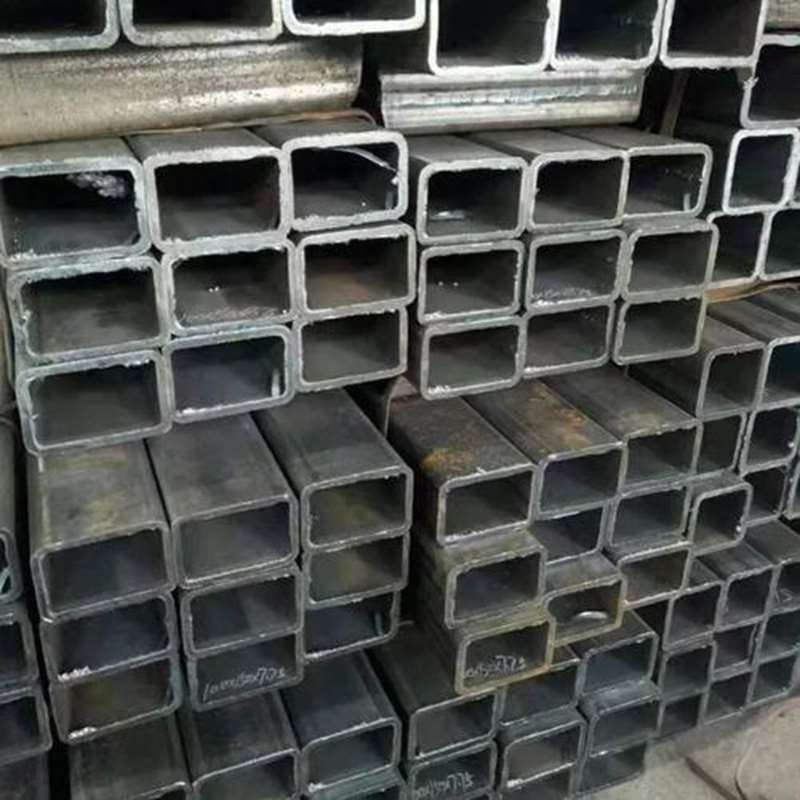
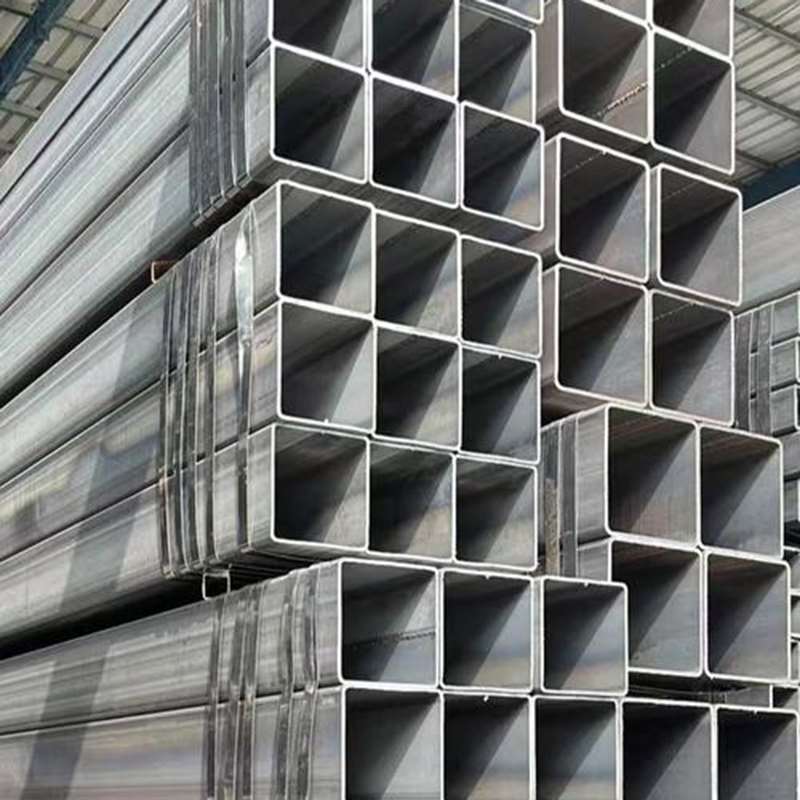
Square Hollow Section (SHS)
Rectangular Hollow Section (RHS)
ii. Dimensional Range and Tolerances
| Section Type | Outer Diameter / Side Length Range | Wall Thickness Range | Length Range | Dimensional Tolerance |
|---|---|---|---|---|
| Circular Pipe (CHS) | 21.3–813 mm | 2.6–25 mm | 6–12 m (customizable) | OD ±1%, WT ±10% (per standard) |
| Square Pipe (SHS) | 20×20–400×400 mm | 2.0–16 mm | 6–12 m (customizable) | Side ±1%, WT ±10% |
| Rectangular Pipe (RHS) | 30×20–400×300 mm | 2.0–16 mm | 6–12 m (customizable) | Side ±1%, WT ±10% |
III. EN 10219 Hollow Structural Steel Tubes — Production Process
Steel strip raw material → Cold bending → Edge shaping → Resistance welding (ERW) → Weld leveling → Straightening → Dimensional inspection → Surface treatment → Quality inspection and packaging → Shipment
IV. EN 10219 Mechanical Properties and Material Requirements for Hollow Structural Steel Tubes
i. Material Requirements
| Item | Carbon Steel | Low-Alloy Steel | Remarks |
|---|---|---|---|
| Steel Type | Non-alloy steel, fine-grain steel | Low-alloy steel containing Ni, Cr, Mo, etc. | Ensures weldability and load-bearing capacity |
| Chemical Composition (Typical) | C ≤0.22–0.30%, Mn 0.60–1.50%, P/S ≤0.035%, Si 0.10–0.55% | C ≤0.30%, Mn 0.60–1.50%, Ni 0.3–1.0%, Cr 0.3–1.0%, Mo 0.05–0.3% | Low-alloy steel enhances strength, corrosion resistance, and low-temperature toughness |
| Weldability | Good | Good, alloy content should be considered | Suitable for cold-formed + ERW manufacturing process |
ii. Mechanical properties
| Steel Type | Grade | Yield Strength σy (MPa) | Tensile Strength σu (MPa) | Elongation A (%) | Impact Toughness (J) | Remarks |
|---|---|---|---|---|---|---|
| Carbon Steel | S235 | 235 | 360–510 | ≥20 | ≥27 (20°C) | General building structures, light supports |
| Carbon Steel | S275 | 275 | 410–560 | ≥20 | ≥27 (20°C) | Medium-load buildings, secondary bridge beams |
| Carbon Steel | S355 | 355 | 470–630 | ≥20 | ≥27 (20°C) | High-strength building structures, main bridge beams |
| Low-Alloy Steel | S355NL | 355 | 470–630 | ≥20 | ≥27 (−20°C) | Large outdoor structures, low-temperature bridges, load-bearing columns and beams |
| Low-Alloy Steel | S420 | 420 | 520–680 | ≥20 | ≥27 (−20°C) | High-strength structures, bridge trusses, towers, special industrial supports |
V. EN 10219 Hollow structural steel pipes — Surface treatment and corrosion protection
| Treatment | Applicable Environment | Features & Remarks | Applicable Pipe Type |
|---|---|---|---|
| Black Steel (Untreated) | Indoor dry environment | Low cost, suitable for non-corrosive environments | Carbon steel, low-alloy steel |
| Hot-Dip Galvanizing | Outdoor, humid environment | Thick zinc coating, strong corrosion resistance, long service life | Carbon steel, low-alloy steel |
| Painted / Anti-Rust Coating | Industrial environment or extra protection required | Can be applied alone or over galvanized pipes to improve corrosion resistance | Carbon steel, low-alloy steel |
| Composite Anti-Corrosion (Galvanized + Painted) | Coastal, chemical plant, hot and humid environments | Double protection, higher durability | Carbon steel, low-alloy steel |
VI. EN 10219 Selection Guide for Hollow Structural Steel Tubes
i. Select steel grade according to load-bearing requirements
| Project Type | Recommended Steel Grade | Remarks |
|---|---|---|
| Light Building Structures (small span, low load) | S235 | Economical choice, meets general load-bearing requirements |
| Medium Buildings, Secondary Bridge Beams, Factory Frames | S275 | Moderate strength, balances cost and load-bearing capacity |
| Large-Span Buildings, Main Bridge Beams, Industrial Towers | S355 | High-strength steel, allows reduced section size and lower self-weight |
| Low-Temperature Environments or Outdoor High-Load Structures | Low-Alloy Steel S355NL / S420 | Provides low-temperature toughness and corrosion resistance, ensures safety |
ii. Select according to cross-sectional shape
| Load Direction / Scenario | Recommended Section Type | Remarks |
|---|---|---|
| Multi-directional loads (trusses, towers) | Circular Pipe (CHS) | Excellent resistance to bending and torsion in all directions |
| Unidirectional bending or compression (beams, columns, frame supports) | Square Pipe (SHS) / Rectangular Pipe (RHS) | Easy for welding or bolted connections, high bending strength |
| Aesthetic or industrial architecture | Square / Rectangular Pipe | Neat appearance, convenient for installation and pipe routing |
iii. Select according to environmental and corrosion prevention requirements
| Environment Type | Recommended Anti-Corrosion Method | Remarks |
|---|---|---|
| Indoor, dry | Black Steel | Low cost, no additional corrosion protection required |
| Outdoor, humid | Hot-Dip Galvanized | Long service life, reliable corrosion resistance |
| Coastal, chemical plants | Galvanized + Painted | Double protection, extends service life |
VII. EN 10219 Hollow Structural Steel Tubes — Application Selection Reference Table
| Application | Load Characteristics | Recommended Steel Grade | Section Type | Wall Thickness / Size Reference | Anti-Corrosion Method | End Type | Selection Notes |
|---|---|---|---|---|---|---|---|
| Factory beams and columns, light frame structures | Low to medium load | S235 | Square / Rectangular Pipe | WT 2–6 mm, side 50–150 mm | Black Steel / Galvanized (indoor/outdoor) | Plain or Socket End | Small span, low load, cost-priority |
| Medium industrial factories, secondary bridge beams | Medium load, medium span | S275 | Square / Rectangular Pipe | WT 4–8 mm, side 100–200 mm | Hot-Dip Galvanized | Plain End | Medium load, suitable for outdoor or mild corrosive environments |
| Large-span factories, main bridge beams | High load, long span | S355 | Circular / Rectangular Pipe | WT 6–12 mm, diameter/side 150–400 mm | Hot-Dip Galvanized or Composite Anti-Corrosion | Plain End | High-strength requirement, reduce section size while ensuring load capacity |
| Towers, trusses, communication poles | Multi-directional load | S355 / S420 Low-Alloy Steel | Circular Pipe (CHS) | WT 6–10 mm, diameter 100–300 mm | Hot-Dip Galvanized or Composite Anti-Corrosion | Plain End | Suitable for outdoor, low-temperature or corrosive environments |
| Machinery supports, equipment frameworks | Local load, small to medium span | S235 / S275 | Square / Rectangular Pipe | WT 3–6 mm, side 50–150 mm | Black Steel or Painted | Socket or Plain End | Frequently moved or removable supports, easy assembly and disassembly |
| Coastal facilities, chemical plant supports | High corrosion, high load | S355NL / S420 Low-Alloy Steel | Circular / Rectangular Pipe | WT 6–12 mm | Galvanized + Painted (Composite Anti-Corrosion) | Plain End | High-corrosion environment, ensures long-term use and safety |
VIII. EN 10219 Quality Inspection Standard for Hollow Structural Steel Pipes
| Test Item | Test Method / Standard | Acceptance Criteria / Parameters | Remarks |
|---|---|---|---|
| Chemical Composition | Optical Emission Spectroscopy (OES) or Chemical Analysis | C ≤0.22–0.30%, Mn 0.60–1.50%, S / P ≤0.035%; Low-Alloy Steel may contain Ni 0.3–1.0%, Cr 0.3–1.0%, Mo 0.05–0.3% | Ensures mechanical properties and weldability meet standards |
| Yield Strength σy | Tensile Test | Carbon Steel: S235 ≥235 MPa, S275 ≥275 MPa, S355 ≥355 MPa; Low-Alloy Steel: S355NL ≥355 MPa, S420 ≥420 MPa | Ensures structural load-bearing capacity |
| Tensile Strength σu | Tensile Test | Carbon Steel: 360–510 / 410–560 / 470–630 MPa; Low-Alloy Steel: 470–630 / 520–680 MPa | Meets steel grade design requirements |
| Elongation A | Tensile Test | ≥20% | Ensures plasticity, facilitates welding and installation |
| Impact Toughness (KV / J) | Impact Test | Carbon Steel ≥27 J (20°C); Low-Alloy Steel ≥27 J (−20°C) | Ensures toughness for low-temperature or outdoor applications |
| Wall Thickness & OD / Side Tolerance | Dimensional Measurement (Caliper, Ultrasonic Gauge) | WT ±10%, OD / side ±1% | Ensures accurate cross-section for installation and structural safety |
| Straightness | Spirit Level or Laser Measurement | Bending ≤0.5% × L (length) | Ensures straight pipes, convenient for installation |
| Weld Quality | Ultrasonic or X-Ray Testing | Continuous welds, free of cracks, no lack of penetration | Ensures load-bearing capacity and safety |
| Surface Quality | Visual Inspection or Magnetic Particle Testing | Smooth surface, no visible cracks, pits, shrinkage, or porosity | Improves appearance and coating adhesion |
| End Treatment | Visual / Dimensional Measurement | Threaded ends: threads complete; Socket ends: dimensions compliant; Plain ends: flat | Ensures reliable connection and easy installation |
| Marking & Batch Certification | Check factory markings and MTC | Complete markings with Material Test Certificate (MTC) | Facilitates acceptance and traceability |