Products

Related News

Epoxy Coated Steel Pipe

OD Range :

20 mm – 1420 mm (DN25 – DN1200)

WT Range :

2.5 mm – 50 mm (SCH10 – SCH160)

Length :

6 m / 12 m

Tolerance :

Outer diameter ±0.5%; wall thickness ±10%; length 0 – +50 mm

Material :

Q235、Q345、20#、L245-L555、ASTM A53/A106

Standard :

SY/T 0315、GB/T 23257、ISO 15741、API 5L、AWWA C210

Surface :

Epoxy powder

Application :

Epoxy-coated steel pipes are mainly used in water supply, gas supply, heating and chemical pipelines and other conveying systems that require corrosion and rust prevention.

I. Introduction to Epoxy-Coated Steel Pipes

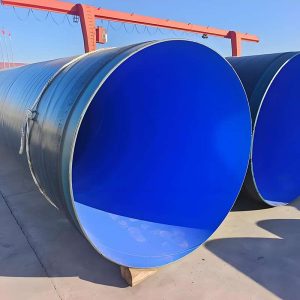
Epoxy-coated steel pipes are high-performance anti-corrosion pipes made by uniformly coating a layer of epoxy resin on the inner wall, outer wall, or both sides of high-quality carbon steel pipes.

The epoxy coating forms a strong bond with the steel pipe surface through processes such as electrostatic spraying, roller coating, or hot dipping, exhibiting excellent corrosion resistance, chemical resistance, and abrasion resistance.

This product effectively prevents steel pipes from being corroded, scaled, or contaminated during the transportation of media such as water, oil, and gas. It is widely used in municipal water supply, fire protection, seawater transportation, sewage treatment, and petrochemical pipeline networks.

II. Main Parameters of Epoxy-Coated Steel Pipes

ItemSpecification
Product NameEpoxy Coated Steel Pipe
MaterialQ195, Q235, Q345 or Carbon Steel according to ASTM A53 / A106
Pipe Diameter (OD)15 mm ~ 500 mm (common DN15 ~ DN500)
Wall Thickness (WT)2 mm ~ 20 mm (customizable according to client requirements)
Length (L)Standard 6 m, 9 m, 12 m, customizable
Coating TypeEpoxy powder coating (internal, external, or both)
Coating ThicknessInternal: 150~250 μm, External: 200~350 μm (customizable per project requirements)
Adhesion≥ Grade 1 (according to HG/T 20615, ISO 8179 standards)
Surface ConditionSmooth and even, free of bubbles, cracks, or peeling
End TypePlain End, Threaded End, Flanged End
StandardsHG/T 20615, SY/T 0414, ISO 8179, GB/T 19250
Main ApplicationsMunicipal water supply, fire-fighting pipelines, seawater transportation, petrochemical, wastewater treatment, etc.
Working Pressure≤ 2.5 MPa (depends on wall thickness and pipe diameter)

III. Introduction to the Anti-corrosion Structure and Process of Epoxy-Coated Steel Pipes

i. Anti-corrosion Structure

Epoxy-coated steel pipes typically employ internal coating, external coating, or both internal and external coating to form a multi-layered protective structure:

LayerMaterial & Function
Pipe SubstrateHigh-quality carbon steel or alloy steel, providing mechanical strength and pressure-bearing capacity
Primer LayerEpoxy primer, enhancing adhesion between the epoxy coating and the steel surface
Intermediate Layer (Optional)Epoxy filler layer, filling micro-pores and increasing corrosion protection thickness
Topcoat LayerHigh corrosion-resistant epoxy resin layer, directly resisting the medium and external corrosive environment
Protective Layer (Optional)Additional external PE or FBE layer, improving mechanical wear resistance and impact protection

ii. Anti-corrosion advantages:

Strong corrosion resistance: The epoxy layer effectively blocks water, oxygen, and chemical media.

Long service life: It can last for more than 30 years in normal water and sewage environments.

Hygienic and safe: The epoxy coating does not easily contaminate the media, making it suitable for municipal water supply pipelines.

Abrasion and impact resistance: The outer coating can resist mechanical damage from soil or during construction.

IV. Application Areas and Practical Engineering Examples of Epoxy-Coated Steel Pipes

i. Municipal Water Supply Pipelines

    Reasons for Application: The epoxy inner coating ensures water quality hygiene, prevents secondary pollution, and extends the service life of the pipeline.

    Practical Engineering Examples:
    Main urban water supply networks (e.g., DN150~DN500 pipe diameter)
    Internal water supply pipelines in residential communities (DN20~DN100)
    Fire hydrants and domestic water systems

    ii. Fire protection system piping

    Reasons for application: Corrosion resistant and high-pressure resistant, ensuring the long-term safety and reliability of the fire protection piping network.

    Actual project examples: Automatic sprinkler system piping in high-rise buildings
    Water supply pipes for fire pump rooms
    Fire hydrant systems in industrial plants

    iii. Sewage and Wastewater Treatment Pipelines

    Application Reasons: Epoxy coating prevents acid and alkali corrosion and erosion by chemicals in sewage, extending pipe life.

    Actual Project Examples: Main drainage pipes of urban sewage treatment plants
    Industrial wastewater transmission pipelines (chemical and pharmaceutical plants)
    Underground drainage networks

    iv. Seawater Transportation and Coastal Engineering

    Reason for Application: Epoxy coatings are resistant to saltwater corrosion and suitable for high-salt environments.

    Actual Engineering Examples:
    Seawater desalination plant water supply pipelines
    Port and wharf water supply and drainage networks
    Marine aquaculture and cooling water systems

    v. Petrochemical and Industrial Pipelines

    Application Reasons: Resistant to certain chemical corrosion, suitable for conveying liquids or gases that are not strong acids or alkalis.

    Practical Engineering Examples: Petrochemical plants conveying raw water and processing water; Industrial cooling water circulation networks; Corrosion-resistant water supply and drainage systems for industrial plants.

    vi. Underground Pipelines and Engineering in Complex Terrain

    Application Reasons: Corrosion resistant, wear-resistant, and pressure-resistant; suitable for buried installations and complex construction environments.

    Actual Project Examples:
    Underground municipal drainage networks
    Urban underground integrated pipe corridors
    Underground pumping stations and sewage lifting station pipelines

    Recommended Selection:

    Small Diameter (DN15~DN100) → Indoor water supply and fire protection branch pipes
    Medium Diameter (DN100~DN300) → Municipal water supply main pipes and fire protection main pipes
    Large Diameter (DN300~DN500) → Industrial water transmission, sewage treatment, and underground pipe networks
    Related Products

    Outer Diameter (OD) Wall Thickness (WT) Standard Length (L) Common Units
    15 mm 2.0 mm 6 m / 12 m DN15
    20 mm 2.5 mm 6 m / 12 m DN20
    25 mm 2.5 mm 6 m / 12 m DN25
    32 mm 2.5–3.0 mm 6 m / 12 m DN32
    40 mm 3.0 mm 6 m / 12 m DN40
    50 mm 3.0–4.0 mm 6 m / 12 m DN50
    65 mm 3.5–4.5 mm 6 m / 12 m DN65
    80 mm 4.0–5.0 mm 6 m / 12 m DN80
    100 mm 4.5–5.5 mm 6 m / 12 m DN100
    150 mm 5.0–7.0 mm 6 m / 12 m DN150
    200 mm 6.0–8.0 mm 6 m / 12 m DN200
    250 mm 7.0–9.0 mm 6 m / 12 m DN250
    300 mm 8.0–10.0 mm 6 m / 12 m DN300


    International Standards for Epoxy Coated Steel Pipes

    Standard No. Standard Name Scope of Application
    ISO 8179-1 / ISO 8179-2 Internal and/or external protective coatings for steel tubes International standard specifying coating thickness, adhesion, corrosion resistance, etc. for epoxy-coated steel pipes
    DIN 30670 German Industrial Standard for Epoxy Coated Steel Pipe Used in the European market for water, wastewater, and industrial pipeline corrosion protection
    EN 10240 Internal and/or external protective coatings for steel tubes EU standard defining coating types and corrosion-resistance performance for municipal and industrial pipelines
    AWWA C210 / C213 American Water Works Association Standard Requirements for epoxy coatings used in potable water pipelines, ensuring safety and hygiene
    BS 6920 British Standard for Potable Water Pipeline Hygiene Specifies coating safety requirements for water quality; applicable for the UK and Commonwealth export markets


    (1) Pipe Preparation

    High-quality carbon steel pipes are selected, and after cutting, straightening, and dimensional inspection, the pipes are ensured to be straight, without cracks or defects.

    (2) Surface Pretreatment

    Sandblasting or chemical pickling removes oxide scale, rust spots, and oil stains, improving epoxy adhesion.

    The cleaned pipe surface is clean and has moderate roughness, facilitating a strong coating bond.

    (3) Primer Coating Application

    Epoxy primer is evenly applied to the inner and outer surfaces of the pipe, using electrostatic spraying or flow coating processes to form a preliminary adhesion layer.

    (4) Intermediate and Topcoat Coating Application

    An epoxy filler layer and topcoat layer are added according to corrosion protection requirements, usually achieved through spraying or dip coating, with precise control over coating thickness.

    The topcoat enhances chemical resistance and abrasion resistance.

    (5) Curing Treatment

    After coating, the steel pipe is placed in an oven or heat treatment equipment for curing, allowing the epoxy resin to fully cross-link and form a robust protective film. (6) Cooling and Inspection

    After cooling to room temperature, perform thickness testing, adhesion testing, and surface appearance inspection to ensure that the anti-corrosion layer is free of bubbles, cracks, or peeling.

    After passing inspection, package and store the product.

    Inspection Item Acceptance Criteria Test Method Reference Standard
    Dry Film Thickness Normal grade ≥300 µm; Enhanced grade ≥400–600 µm Magnetic induction thickness gauge SY/T 0315-2013, ISO 21809-2
    Adhesion Strength ≥30 MPa (Pull-off test) Portable pull-off tester SY/T 0315-2013
    Holiday / Pinholes 0 defects (25 kV holiday test) High-voltage holiday detector ISO 21809-2
    Cathodic Disbondment ≤6 mm (28 days, -1.5 V, 23 °C) Constant-temperature immersion + voltage method CSA Z245.20
    Impact Resistance 1.5 J, no cracking Drop-weight impact tester AWWA C213
    Salt Spray Resistance 720 hours, no red rust Neutral salt spray chamber ASTM B117
    Bending Flexibility 2.5°, no cracking Cold bending test ISO 21809-2
    Appearance Continuous, smooth, free of bubbles or sagging Visual inspection + 3× magnifier GB/T 23257
    Dimensions OD ±0.5%; WT ±10%; Length 0–+50 mm Caliper, micrometer GB/T 9711 / API 5L
    Hygienic Performance Meets potable water requirements Immersion water test GB/T 17219


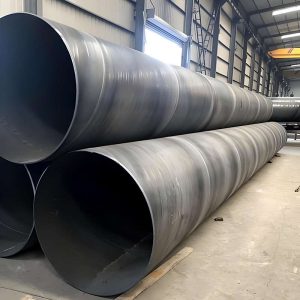
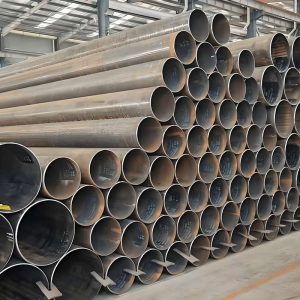
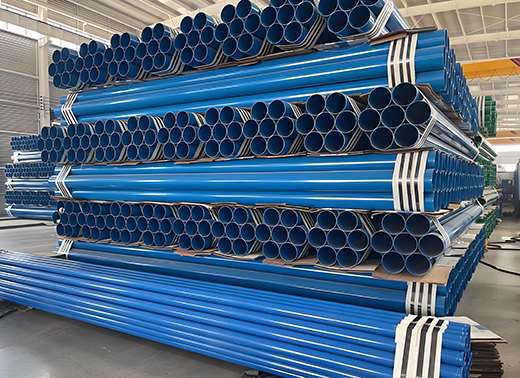
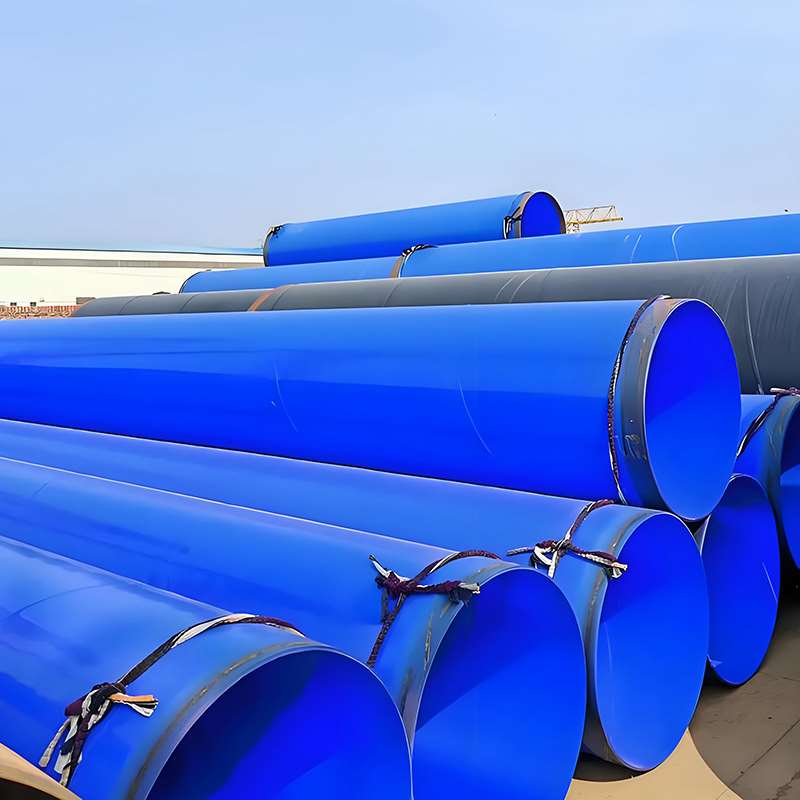
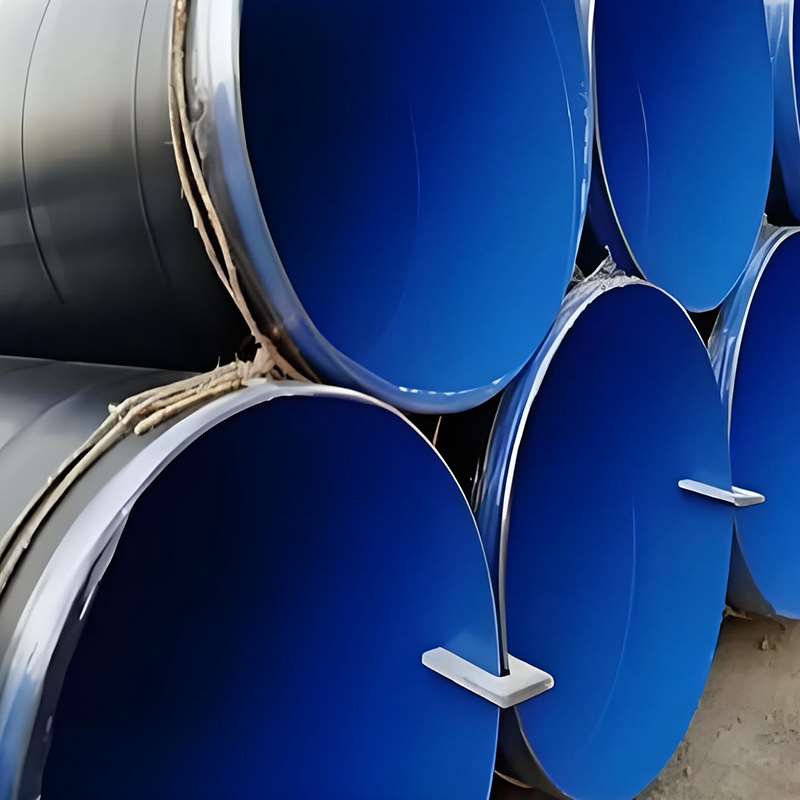
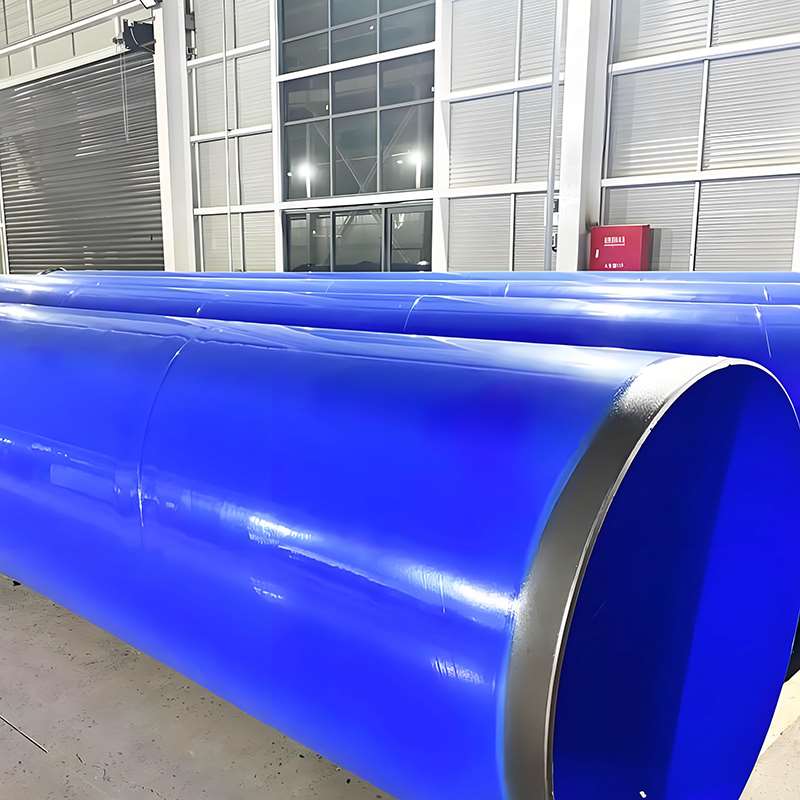
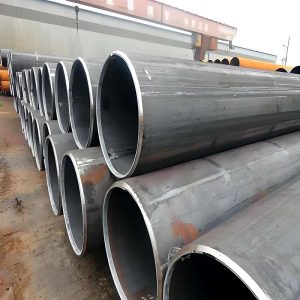
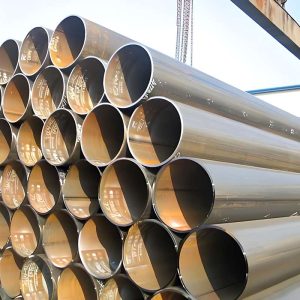
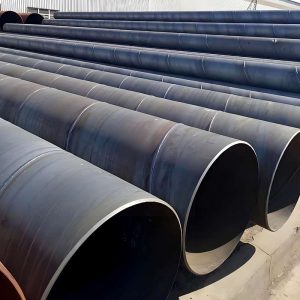
    Finished epoxy coated steel pipes   Finished epoxy coated steel pipes

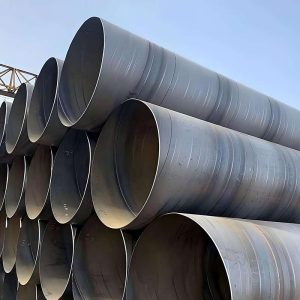
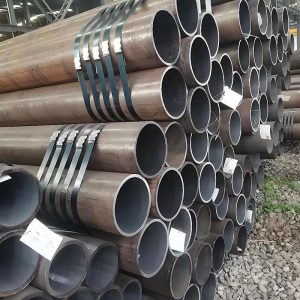
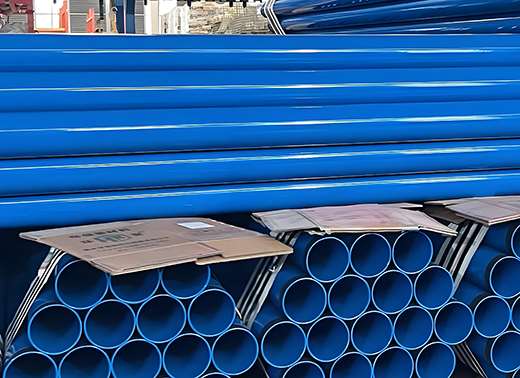
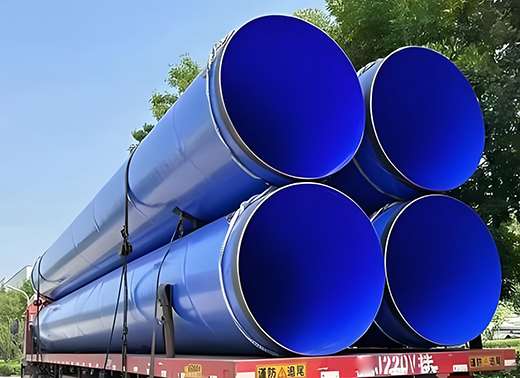
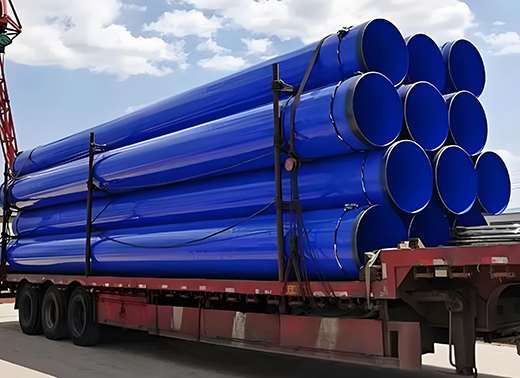
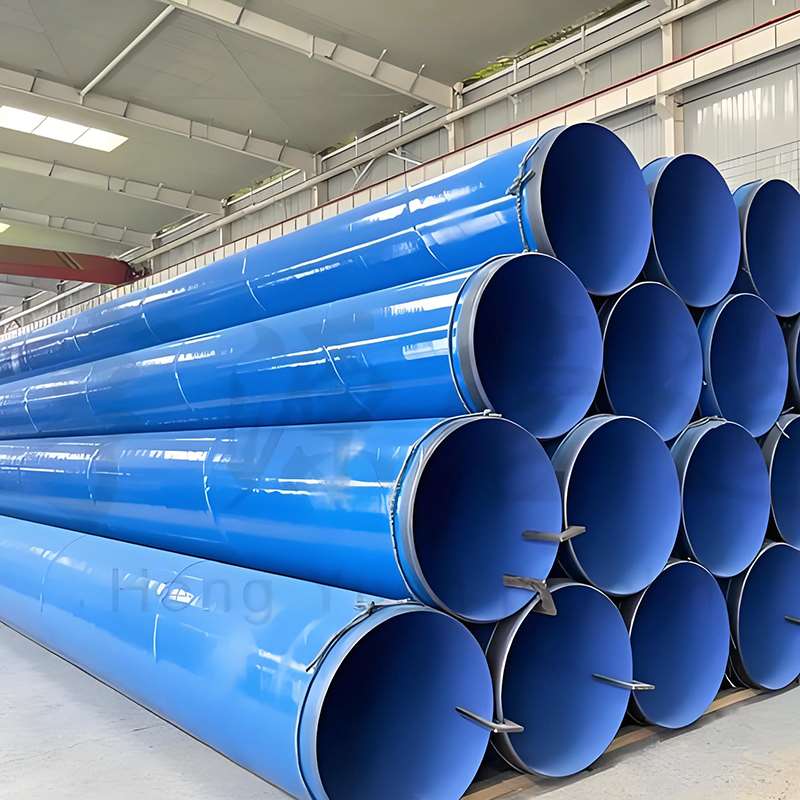
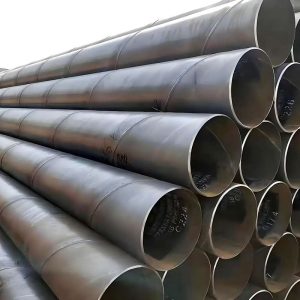
    Epoxy-coated steel pipe transportation   Epoxy-coated steel pipe transportation


    Common problems and solutions for epoxy-coated steel pipes in underground pipelines

    i. Coating Easily Damaged or Peeled

    Pain Point: During transportation, hoisting, or trench backfilling, the epoxy coating may be scratched, impacted, or abraded, leading to localized corrosion failure.
    Solution:
    Use soft pallets, pipe racks, or corner protectors during transportation and handling to avoid direct impact.
    Inspect the coating of each pipe for integrity before installation; minor scratches can be repaired with epoxy repair paint.
    Use a sand-lime mixture or plastic protective sleeves during backfilling to reduce friction and impact.

    ii. High Risk of Soil Corrosion

    Pain Point: Underground pipelines are buried in damp, acidic, alkaline, or saline-alkaline soils for extended periods, where a simple epoxy coating may be insufficient to resist complex chemical corrosion.
    Solution:
    Add a polyethylene (PE) protective layer or heat-shrinkable tape over the epoxy coating for double protection.
    For highly corrosive soil areas, a cathodic protection system can be used to extend service life through electrochemical means.
    Conduct soil chemical testing before construction to select appropriate coating thickness and type.

    iii. Weak Coating Protection at Joints

    Pain Point: Coating gaps easily appear at welded, threaded, or flanged connections, becoming the starting point for corrosion.
    Solutions:
    Apply an epoxy repair coating or use an anti-corrosion kit to the joint promptly after welding.
    For threaded joints, use an epoxy-coated thread protectant; for flanges, add anti-corrosion gaskets.
    Follow standard procedures during joint installation to ensure coating continuity.

    iv. White Rust Caused by Groundwater and Humidity

    Pain Point: Damp environments or immersion in groundwater can cause white powdery substances (zinc oxide rust or hydroxides) to appear on the epoxy coating surface, affecting aesthetics and corrosion resistance.
    Solution:
    Choose epoxy coating products with high curing strength and good moisture resistance.
    Backfill promptly after underground pipeline construction to reduce long-term exposure.
    White rust does not affect corrosion resistance and can be cleaned before acceptance.

    v. Inconvenient Pipeline Construction or Easy Damage to the Coating

    Pain Point: Epoxy coatings are prone to cracking or peeling when bending, welding, or traversing complex terrain.
    Solution:
    Use prefabricated epoxy-coated pipe fittings at bends or special joints to avoid on-site bending damage to the coating.
    Use professional pipeline handling and support equipment during construction to reduce human-caused damage.

    vi. Difficulty in Grasping Acceptance Standards

    Pain Point: Unclear requirements for epoxy coating thickness, adhesion, etc., between contractors and owners lead to acceptance disputes.
    Solution:
    Clearly define the applicable standards, such as HG/T 20615, ISO 8179, and AWWA C210, and specify the testing methods in the contract.
    Conduct on-site acceptance using professional thickness gauges or adhesion testing tools.
    Rework or touch up any substandard pipes promptly.