
In oil and gas transmission, municipal water supply, power plant construction, and large-scale piling engineering, large-diameter welded steel pipes serve as critical structural components that directly determine project safety and long-term operating costs.
For engineers involved in selection or procurement decisions, when searching for “differences between SSAW and LSAW steel pipes,” what they truly need is often not textbook definitions, but three practical answers:
- Which option is safer and more reliable in real engineering conditions?
- Which one better controls budget while maintaining required quality standards?
- Which is more suitable for the specific project conditions and specification requirements?
I. What Is the Fundamental Difference Between SSAW and LSAW?
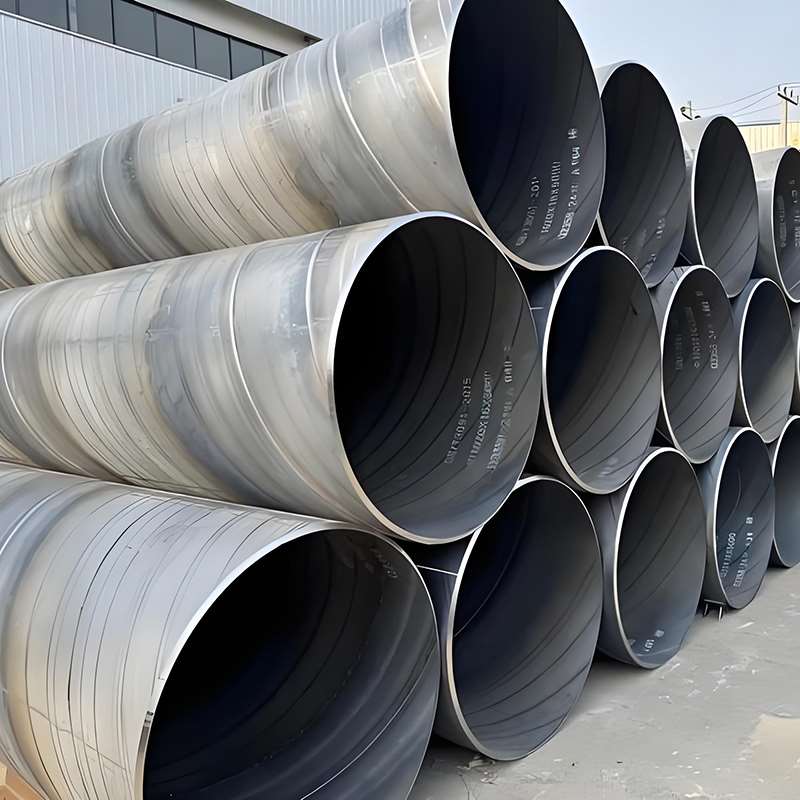
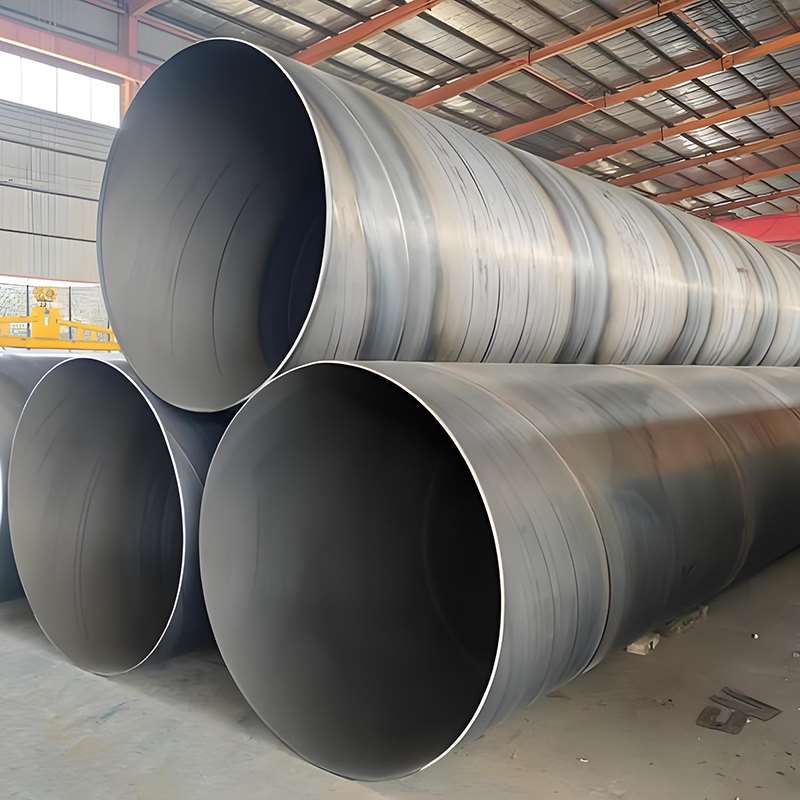
SSAW (Spiral Submerged Arc Welded pipe) is manufactured by spirally forming steel strip and welding it into a pipe.
LSAW (Longitudinal Submerged Arc Welded pipe) is produced by pressing steel plates into a cylindrical shape and welding along a straight longitudinal seam.
II. Manufacturing Process Comparison
1. SSAW (Spiral Submerged Arc Welded Pipe)
SSAW steel pipe is produced by continuously spirally forming hot-rolled steel coils (strip steel) at a certain angle, while applying submerged arc welding during forming to create the pipe.
Key characteristics:
- Large-diameter pipes can be produced using relatively narrow steel strips
- Continuous production process with high efficiency
- Suitable for large-volume, long-distance pipeline projects
- Lower manufacturing cost compared to LSAW
2. LSAW (Longitudinal Submerged Arc Welded Pipe)
LSAW steel pipe is manufactured using medium-to-thick steel plates, which are pressed multiple times into a cylindrical shape via JCOE or UOE processes, followed by longitudinal submerged arc welding.
Key characteristics:
- Uses high-grade medium and thick steel plates
- Typically features only one longitudinal weld seam
- Extremely high dimensional accuracy
- Capable of producing extra-thick-walled, high-strength pipes
- Higher manufacturing cost
III. Key Performance Comparison
| Comparison Item | SSAW Pipe (Spiral Welded Pipe) | LSAW Pipe (Longitudinal Welded Pipe) |
|---|---|---|
| Weld seam type | Spiral weld, longer seam length | Straight longitudinal weld, shorter seam |
| Raw material | Hot-rolled steel coil (strip steel) | Medium and thick steel plates |
| Forming method | Continuous spiral forming | JCOE / UOE multi-stage pressing |
| Dimensional accuracy | Moderate, possible ovality | Very high, often with expansion calibration |
| Wall thickness capability | Limited by strip steel | Can achieve much thicker walls |
| Stress distribution | More evenly distributed along weld | More concentrated stress at weld |
| Production cost | Lower | Higher |
| Delivery time | Faster | Relatively slower |
IV. Engineering Application Scenarios
1. When to Choose LSAW Steel Pipe
LSAW pipes are typically used in high-safety, high-pressure, or high-standard engineering projects:
- Long-distance oil and gas transmission pipelines (API 5L X60/X70 and above)
- Submarine pipeline projects
- High-pressure water transmission trunk lines
- Major urban infrastructure projects
- Ultra-thick-walled piling applications
- Projects in cold regions or complex geological conditions
2. When to Choose SSAW Steel Pipe
SSAW pipes are more suitable for cost-sensitive, large-diameter, and low-to-medium pressure applications:
- Urban water supply networks
- Drainage and sewage systems
- District heating pipelines
- Bridge piling foundations
- Port dredging and cofferdam projects
- General industrial fluid transport pipelines
V. Relationship Under International Standards
In global engineering procurement, both SSAW and LSAW pipes are commonly manufactured in compliance with:
- API 5L (core standard for oil and gas pipelines)
- ASTM A252 / A53 (structural and general engineering applications)
- EN 10219 / EN 10217 (European standards)
In simple terms:
- SSAW is commonly used for API 5L PSL1 / PSL2 low-to-medium pressure grades
- LSAW is more widely applied in PSL2 and high-grade steel applications (X60 / X70 / X80)
VI. Quality Control & NDT (Non-Destructive Testing) Differences
| Inspection Item | SSAW Pipe (Spiral Welded) | LSAW Pipe (Longitudinal Welded) |
|---|---|---|
| Weld inspection coverage | Full spiral weld inspection | 100% inspection of longitudinal seam |
| Main testing methods | Ultrasonic Testing (UT), Radiographic Testing (RT/X-ray) | UT + RT + re-inspection after expansion |
| Weld complexity impact | Longer weld, higher inspection workload | Shorter weld, easier control |
| Dimensional control | Focus on ovality and misalignment | High precision, often with mechanical expansion |
| Quality stability | Depends on process stability | Higher overall stability |
| Common defect risks | Weld misalignment, localized stress concentration | Weld defects, residual forming stress |
| Factory control focus | Welding continuity + online inspection | Forming accuracy + full-process quality control |
| Engineering grade usage | API 5L PSL1 / PSL2 | PSL2 and higher-grade projects |
VII. Common Misconceptions in Procurement
Misconception 1: SSAW is not suitable for high-pressure applications
In reality, SSAW pipes that comply with API 5L standards can be used in medium-to-high pressure projects.
Misconception 2: LSAW is always safer than SSAW
Safety depends on steel grade, standard compliance, and inspection level—not only pipe structure.
Misconception 3: Shorter weld seams are always better
In fact, spiral welds distribute stress more evenly along the pipe body.
VIII. Quick Engineering Selection Guide
| Project Type | Recommended Pipe Type |
|---|---|
| High-pressure oil & gas transmission pipeline | LSAW |
| Urban water supply / drainage systems | SSAW |
| Bridge piling | SSAW / LSAW (depends on design grade) |
| Submarine pipelines | LSAW |
| Low-to-medium pressure industrial pipelines | SSAW |