
In steel pipe procurement, overlooking even a minor detail—whether it is dimensional tolerance, material certification, or packaging—can result in failed inspections upon delivery or, in the worst case, compromise the safety and reliability of the entire project.
Before issuing a purchase order or signing a contract, make sure you carefully verify the following five critical areas.
I. Verify the Applicable Standard and Material Grade
Steel pipes may appear similar, but their mechanical properties and intended applications can vary significantly. Never place an order based solely on generic descriptions such as “carbon steel pipe” or “stainless steel pipe.” Instead, confirm the following technical requirements:
Applicable Standard
Verify that the steel pipe complies with the standard specified in the project drawings, such as:
- API 5L for oil and gas transmission pipelines
- ASTM A53 or GB/T 3091 for low-pressure fluid transportation
- ASTM A500 or GB/T 13793 for structural applications and piling
Steel Grade
Even within the same standard, different grades have substantially different mechanical properties. For example, under API 5L, Grade B, X52, and X60 offer significantly different yield strengths and pressure-bearing capacities.
Special Technical Requirements
Confirm whether the project requires additional testing or performance criteria, such as:
- Low-temperature impact testing
- Hardness testing
- HIC (Hydrogen-Induced Cracking) testing
- SSCC (Sulfide Stress Corrosion Cracking) testing for sour service environments
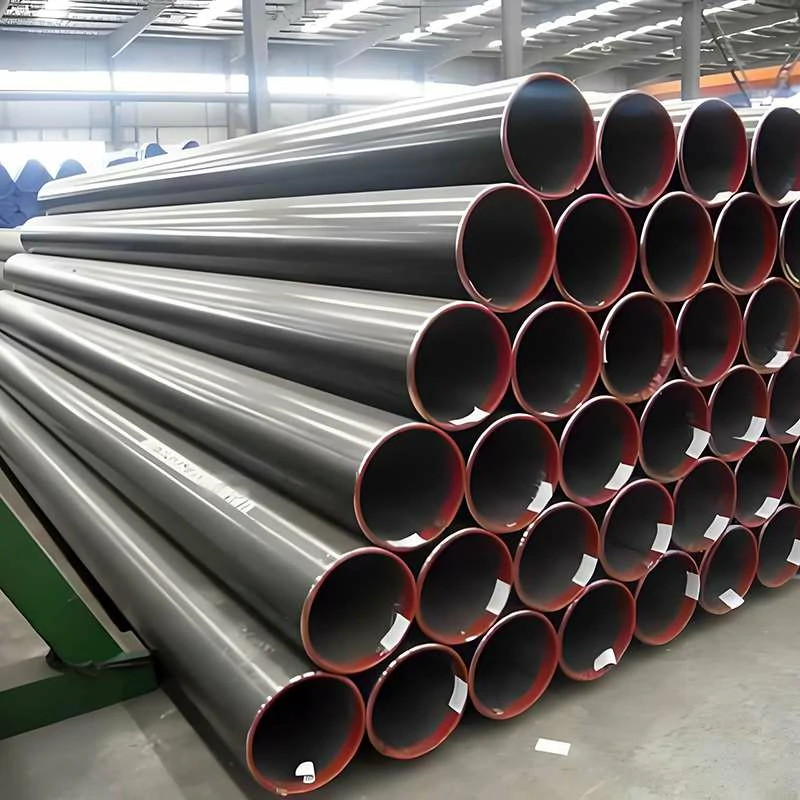
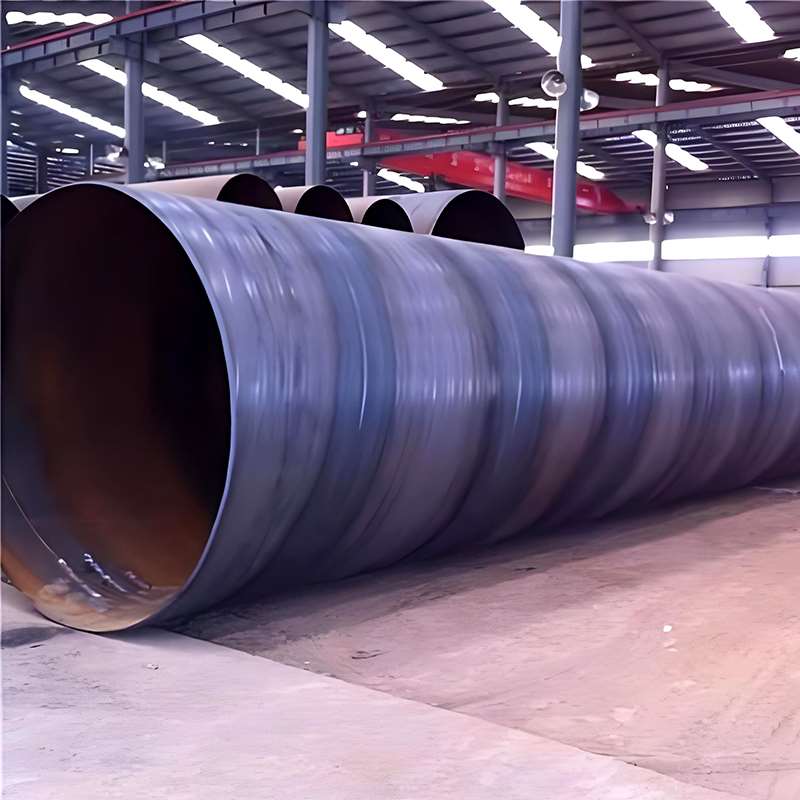
II. Verify Dimensions and Permissible Tolerances
Dimensional tolerances are an inherent part of steel pipe manufacturing. If acceptable tolerances are not clearly defined before production, pipes may fail site acceptance due to insufficient wall thickness or oversized outside diameters.
Outside Diameter (OD) and Wall Thickness (WT)
For imperial specifications, such as 8″ Schedule 40, always confirm the corresponding metric dimensions with the supplier using the applicable standard conversion table (for example, 219.1 mm OD × 8.18 mm WT).
Wall Thickness Tolerance
Negative wall thickness tolerance is common in steel pipe manufacturing.
Confirm the following with the supplier:
- What is the actual delivered wall thickness?
- Does it meet the project’s minimum wall thickness requirement?
- Does it comply with the specified tolerance (for example, within ±12.5%)?
Pipe Length
Confirm whether the order requires fixed lengths (such as exactly 6 m or 12 m) or random lengths.
For container shipments, note that pipes specified as 12 m are often required to have an actual maximum length of approximately 11.8 m to fit inside standard shipping containers.
III. Verify Non-Destructive Testing (NDT) and Material Certificates
Material Test Certificate (MTC)
Require the supplier to provide a Material Test Certificate (MTC) compliant with EN 10204 Type 3.1 (or 3.2, if specified).
Verify that the chemical composition and mechanical properties fully comply with the required material specification.
Hydrostatic Testing
Hydrostatic testing is a mandatory method for verifying pressure resistance and pipe integrity.
Confirm that every pipe will undergo an individual hydrostatic pressure test and that the supplier can provide records of the test pressure and holding time.
Weld Inspection
For welded pipes such as ERW, LSAW, and SSAW, confirm that the manufacturer performs automatic online Ultrasonic Testing (UT) or Radiographic Testing (RT) of the weld seam.
These inspections are essential for detecting weld defects such as slag inclusions, porosity, and cracking before shipment.
IV. Verify Coating Requirements and Pipe End Preparation
Coating Type and Thickness
Confirm whether the project requires only temporary protection (such as black paint or anti-rust oil) or a long-term anti-corrosion coating system such as 3PE or FBE.
For 3PE-coated steel pipes, verify the specified thickness of each coating layer, including:
- Fusion Bonded Epoxy (FBE)
- Adhesive layer
- Polyethylene outer layer
Pipe End Preparation
Confirm whether the pipe ends should be supplied as plain ends or beveled ends.
For beveled ends, verify the required bevel angle, typically 30° to 35°, to ensure proper field welding and root pass preparation.
V. Verify Packaging, Transportation, and Delivery Condition
Steel pipes are heavy products that can easily be damaged, deformed, or corroded during long-distance transportation, particularly in overseas shipments.
Packaging Method
Small-diameter pipes are typically bundled in hexagonal bundles, while large-diameter pipes are generally shipped individually.
Confirm whether plastic end caps will be installed to protect beveled ends from impact damage and prevent water or debris from entering the pipe.
Loading and Lifting
Verify that the manufacturer uses dedicated lifting slings rather than steel wire ropes during loading and unloading to prevent damage to the pipe surface or anti-corrosion coating.
Weight Basis for Commercial Settlement
Clearly specify whether payment will be based on theoretical weight or actual measured weight.
Because wall thickness tolerances affect the actual pipe weight, the pricing difference between these two settlement methods can be substantial.
Procurement Checklist Summary
Before signing the final purchase contract, it is strongly recommended to prepare a detailed inspection checklist covering all of the above technical requirements and have it reviewed, signed, and stamped by the supplier.
By thoroughly verifying these five key areas—standards, dimensional tolerances, material certificates, non-destructive testing, and packaging—you can eliminate more than 95% of the common risks associated with steel pipe procurement and significantly improve the likelihood of a successful project delivery.