
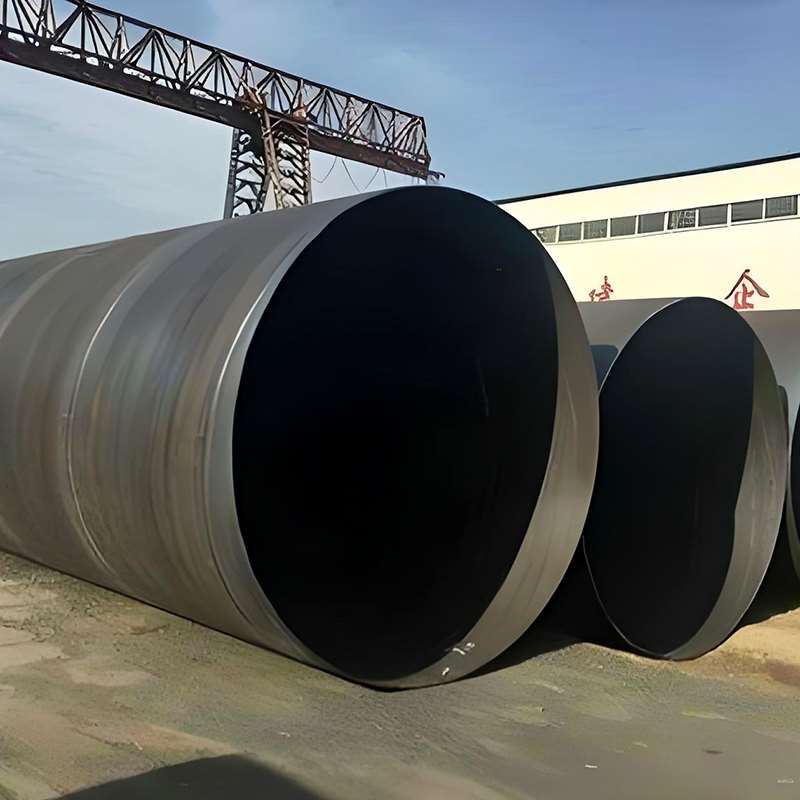
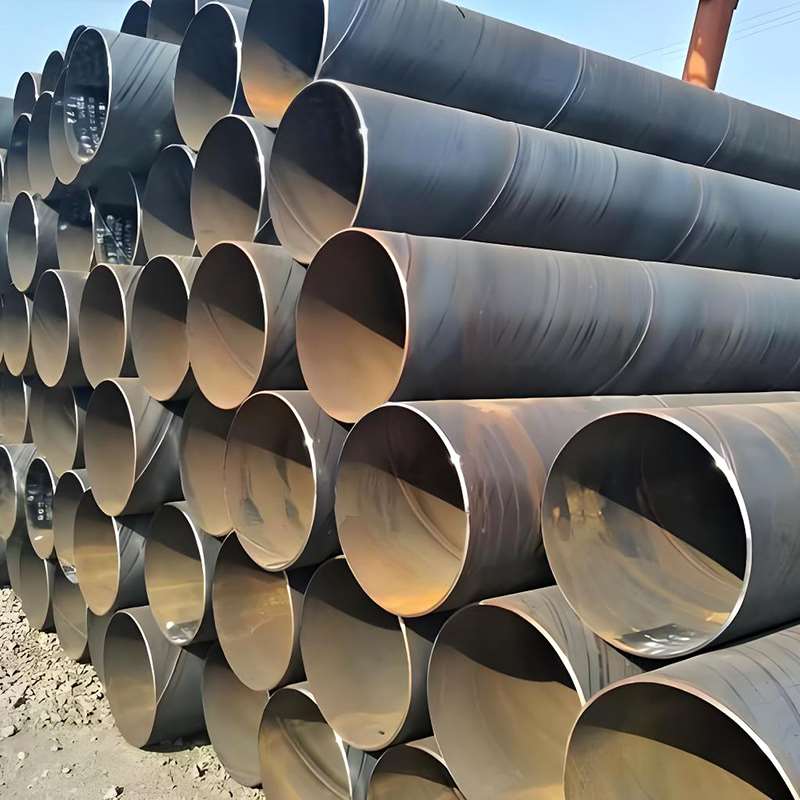
Power plants, as typical industrial energy systems, feature highly complex pipeline networks involving large-scale water circulation, cooling systems, and auxiliary transmission systems. These systems place extremely high demands on pipeline performance. Power Plant Spiral Steel Pipe is widely used due to its high structural strength, cost efficiency, and broad applicability. It performs particularly well in large-diameter water transmission and circulating water systems.
I. Characteristics of Power Plant Piping Systems
The operating environment of power plant piping systems is distinctly industrial in nature, characterized by the following conditions:
i. High Temperature and High Pressure Operating Conditions
Certain pipelines within power plants are required to withstand elevated pressure levels and temperature fluctuations, such as circulating water systems and auxiliary heat exchange systems. This places stringent requirements on the piping material in terms of structural stability and resistance to deformation.
In addition, during long-term operation, pipelines are also subjected to water flow impact, thermal cycling, and pressure fluctuations caused by equipment start-up and shutdown. As a result, high reliability of the piping system is essential.
ii. Advantages of Spiral Steel Pipes
1. High Pressure Resistance
Spiral welded steel pipes are manufactured through spiral forming and submerged arc welding processes. Due to their uniform stress distribution, they offer superior pressure-bearing performance compared with conventional straight seam welded pipes, especially in large-diameter applications, making them suitable for long-distance transmission systems.
2. Suitable for Circulating Water Systems
Circulating water systems in power plants typically feature large-diameter pipelines with stable flow rates. Spiral steel pipes are well-suited for high-volume water transmission and also provide significant cost-efficiency advantages.
II. Application Scenarios and Selection Recommendations for Spiral Steel Pipes in Power Plants
In power plant piping systems, requirements vary significantly depending on operating conditions. The correct application of spiral welded steel pipes is not simply about whether they can be used, but rather about where they are used, what specifications are selected, and which anti-corrosion system is applied.
The following sections map real power plant systems with corresponding selection recommendations.
1. Circulating Cooling Water System
Application Scenarios
- Condenser cooling water inlet pipelines
- Cooling tower circulating return water pipelines
- Main circulating water transmission pipelines
Key Characteristics
- Large diameter (DN800–DN3000)
- High flow rate, medium pressure
- Long-distance buried or above-ground installation
Selection Recommendations
- Pressure: ≤1.6 MPa → standard spiral welded steel pipes
- Wall thickness: designed based on operating pressure + corrosion allowance
- Anti-corrosion systems:
- Buried pipelines: 3PE or FBE coating
- Above-ground pipelines: epoxy zinc-rich primer + topcoat system
2. Cooling Tower Inlet and Outlet Water System
Application Scenarios
- Cooling tower inlet main pipelines
- Cooling tower return water main pipelines
Key Characteristics
- Long-distance transmission
- High humidity environment
- Partially buried pipelines
Selection Recommendations
- Diameter range: DN600–DN2400
- Critical anti-corrosion requirement:
- 3PE or FBE coating is mandatory
- Field joint coating (weld seam protection) is a key control point
- For coastal areas:
- Cathodic protection system should be added
3. Fire Protection Water System in Power Plants
Application Scenarios
- Fire water main pipelines
- Fire ring network systems
- Plant-wide fire water supply systems
Key Characteristics
- Medium pressure (1.0–2.0 MPa)
- High reliability requirement, but not extreme operating conditions
Selection Recommendations
- Pressure rating: PN10–PN16
- Diameter range: DN150–DN1200
- Anti-corrosion:
- Buried pipelines: standard 3PE coating is sufficient
- Above-ground pipelines: red epoxy topcoat system
4. Industrial Water / Flushing Water System
Application Scenarios
- Plant flushing water systems
- Equipment cooling make-up water systems
- Industrial circulating water systems
Key Characteristics
- Low pressure
- General water quality
- Long-term operation with moderate performance requirements
Selection Recommendations
- Pressure: ≤1.0 MPa
- Anti-corrosion:
- Standard epoxy coating is generally sufficient
- Buried pipelines are recommended to use 3PE coating for enhanced protection
5. Water Intake / Discharge Systems (River / Seawater Applications)
Application Scenarios
- River water intake pipelines
- Seawater intake pipelines
- Thermal discharge pipelines
Key Characteristics
- Long-distance buried or subsea installation
- Highly corrosive environment (especially seawater conditions)
- Long-term non-maintenance operation requirement
Selection Recommendations
- Anti-corrosion systems:
- FBE (Fusion Bonded Epoxy) is strongly preferred
- Or 3PE with reinforced coating layer
- Mandatory supporting system:
- Cathodic protection system (critical requirement)
- Wall thickness:
- Must include corrosion allowance and water impact pressure considerations
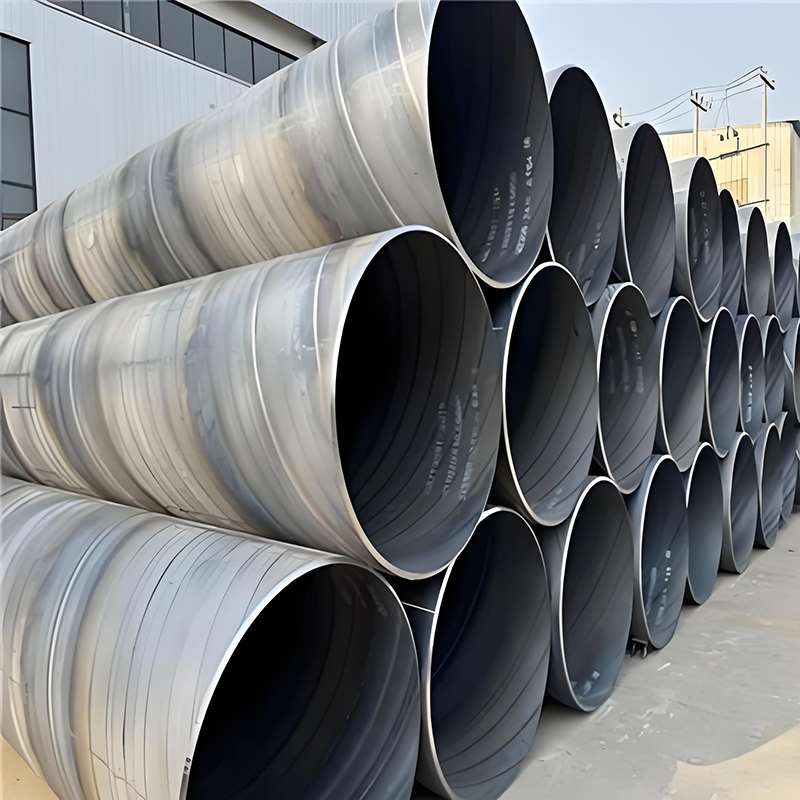
III. Comparison of Spiral Steel Pipes and Seamless Steel Pipes for Power Plants
| Comparison Item | Spiral Welded Steel Pipe | Seamless Steel Pipe |
|---|---|---|
| Manufacturing Process | Steel strip forming + spiral submerged arc welding (SSAW) | Hot-rolled piercing process, no weld seam |
| Applicable Pressure Rating | Mainly low to medium pressure (≤2.5 MPa) | Medium to high pressure applications (suitable for high-pressure systems) |
| Applicable Temperature | Medium to low temperature media (generally ≤120°C) | Suitable for high-temperature and high-pressure service conditions |
| Diameter Range | Excellent for large diameters (DN500–DN3000+) | More suitable for small to medium diameters (large diameters are cost-prohibitive) |
| Main Power Plant Applications | Circulating water systems, cooling water systems, fire protection water, intake & discharge pipelines | Steam systems, high-pressure boiler systems, critical pressure pipelines |
| Pressure Resistance | Structurally stable, suitable for uniform pressure systems | Higher pressure-bearing capacity, suitable for extreme operating conditions |
| Cost | Lower cost (significant advantage in large diameters) | Higher cost (cost increases significantly with larger diameters) |
| Weld Condition | Spiral weld seam present (requires inspection and control) | No longitudinal weld seam (integral seamless structure) |
| Quality Inspection Requirements | Weld UT/RT inspection + hydrostatic testing | Ultrasonic testing + hydrostatic testing |
| Anti-Corrosion Compatibility | Highly suitable for 3PE / FBE coating systems | Also applicable, but at higher overall cost |
| Installation & Construction | Easier installation and higher efficiency in large-diameter applications | Heavier weight; more commonly used in small-diameter applications |
| Service Life Performance | 20–30 years (depending on corrosion protection system) | 30+ years (more stable under high temperature and high pressure conditions) |
| Role in Power Plants | Primary material for large-diameter water transmission systems | Critical safety pipe for high-pressure and high-temperature systems |
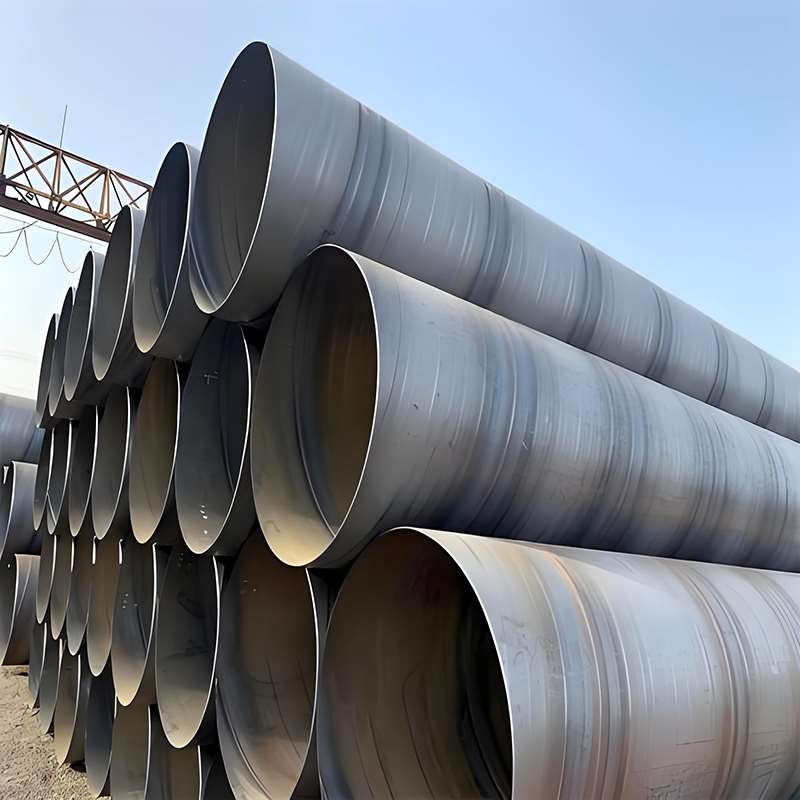
IV. Standards for Spiral Steel Pipes Used in Power Plants
| Category | Standard Name | Standard Number | Application Scope | Description |
|---|---|---|---|---|
| Line Pipe Standard | API 5L | API 5L | Circulating water, make-up water, industrial pipeline networks | The most commonly used standard in power plants, suitable for medium and low-pressure water transmission systems |
| Structural Steel Pipe | ASTM A252 | ASTM A252 | Pipe rack supports, structural piping | Mainly used for structural support in power plants or non-pressure applications |
| General Carbon Steel Pipe | ASTM A53 | ASTM A53 | General industrial piping systems | Suitable for low-pressure auxiliary systems |
| Water Transmission Pipe Standard | AWWA C200 | AWWA C200 | Circulating water / municipal water supply systems | Commonly used water supply standard in the United States, suitable for large-diameter water transmission |
| Chinese Line Pipe Standard | GB/T 9711 | GB/T 9711 | Oil & gas and industrial transmission pipelines | Widely used Chinese line pipe standard, also applicable to power plant projects |
| Welded Steel Pipe Standard | SY/T 5037 | SY/T 5037 | Low-pressure fluid transportation | Commonly used for general water transmission and auxiliary systems |
V. Common Corrosion Protection Types for Power Plant Steel Pipes
1. External Corrosion Protection
| Anti-Corrosion Type | Application Scenario | Characteristics |
|---|---|---|
| 3PE Coating | Buried circulating water pipelines | Excellent anti-corrosion performance, strong resistance to soil corrosion |
| FBE (Fusion Bonded Epoxy) | Medium to high requirement pipelines | Strong adhesion and excellent chemical corrosion resistance |
| Epoxy Coal Tar Coating | General buried pipelines | Low cost, suitable for conventional projects |
| Polyurea Coating | Special protection areas | Excellent impact resistance and wear resistance |
2. Internal corrosion protection
| Anti-Corrosion Type | Application Scenario | Characteristics |
|---|---|---|
| Cement Mortar Lining | Circulating cooling water pipelines | Anti-scaling performance and low cost |
| Epoxy Internal Coating | Industrial water / make-up water systems | Smooth surface, flow resistance reduction, and corrosion protection |
| Potable Water Grade Coating | Partial make-up water systems | Meets hygiene and drinking water safety standards |
VI. FAQs – Spiral Steel Pipes for Power Plant Applications
1. Why do power plants use spiral steel pipes instead of only seamless steel pipes?
In power plant piping systems, most circulating water and cooling water applications involve large-diameter, low to medium pressure transmission. Spiral steel pipes are more suitable for these operating conditions.
Key advantages include:
- Ability to manufacture extra-large diameters (ideal for high-flow systems)
- Lower cost compared to seamless steel pipes
- Suitable for long-distance pipeline networks
- Spiral weld structure provides high structural strength
2. What systems are spiral steel pipes used for in power plants?
They are mainly used in non-high-pressure industrial water systems, including:
- Cooling Water System
- Circulating Water Pipeline Network
- Make-up Water System
- Industrial Water Transmission Systems
- Drainage and Return Water Systems
3. What material grades are commonly used for spiral steel pipes in power plants?
Typical material selections include:
- API 5L Gr.B (most commonly used)
- API 5L X42 / X52 (medium strength applications)
- ASTM A53 (auxiliary systems)
- GB/T 9711 (commonly used in domestic power plant projects)
4. What anti-corrosion systems are required for spiral steel pipes in power plants?
Due to high humidity and long-term water transport conditions, anti-corrosion protection is essential:
External coating:
- 3PE coating (preferred for buried pipelines)
- FBE (Fusion Bonded Epoxy) coating
Internal coating:
- Cement mortar lining (commonly used in circulating water systems)
- Epoxy internal coating (for industrial water systems)
5. What is the typical service life of spiral steel pipes in power plants?
Under proper engineering design and a complete anti-corrosion system:
- Standard design life: 20–30 years
- High-quality coating systems: over 30 years
- Poor maintenance conditions: may be less than 15 years
6. What are the differences between spiral welded steel pipes and straight seam welded steel pipes for power plants?
| Item | Spiral Steel Pipe | Longitudinal Seam Welded Steel Pipe |
|---|---|---|
| Weld Seam Structure | Spiral weld seam | Straight (longitudinal) weld seam |
| Applicable Diameter | Strong advantage in large diameters | Mainly medium and small diameters |
| Cost | Lower | Slightly higher |
| Applications | Circulating water / water transmission systems | General industrial pipelines |
| Strength Distribution | Uniform stress distribution | Localized stress concentration |