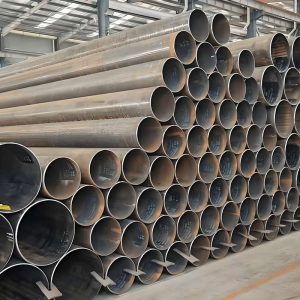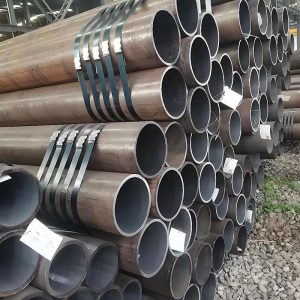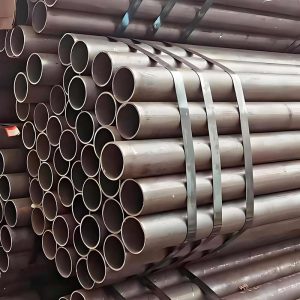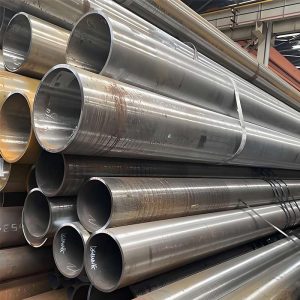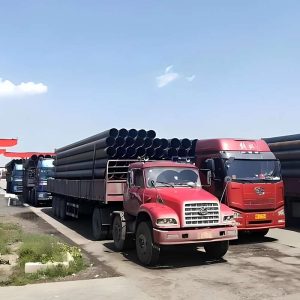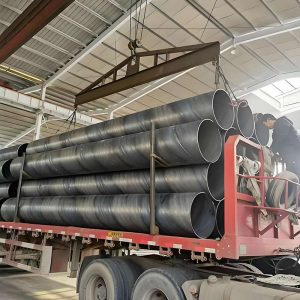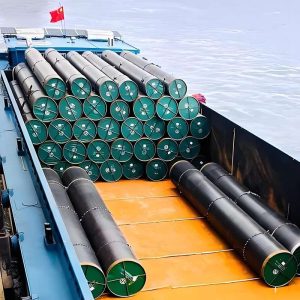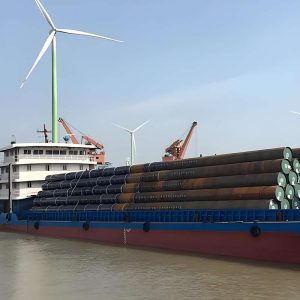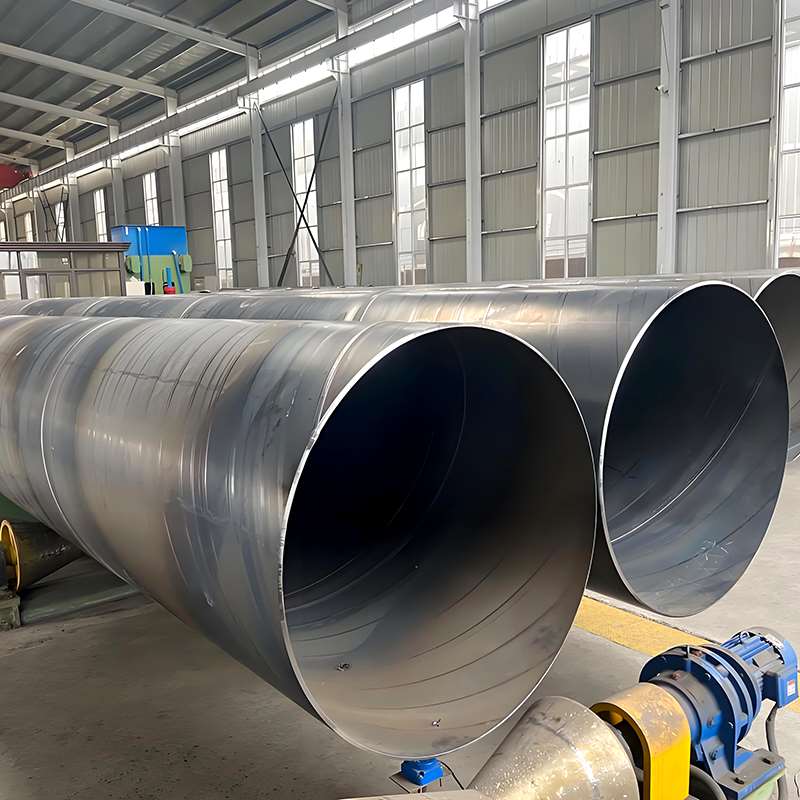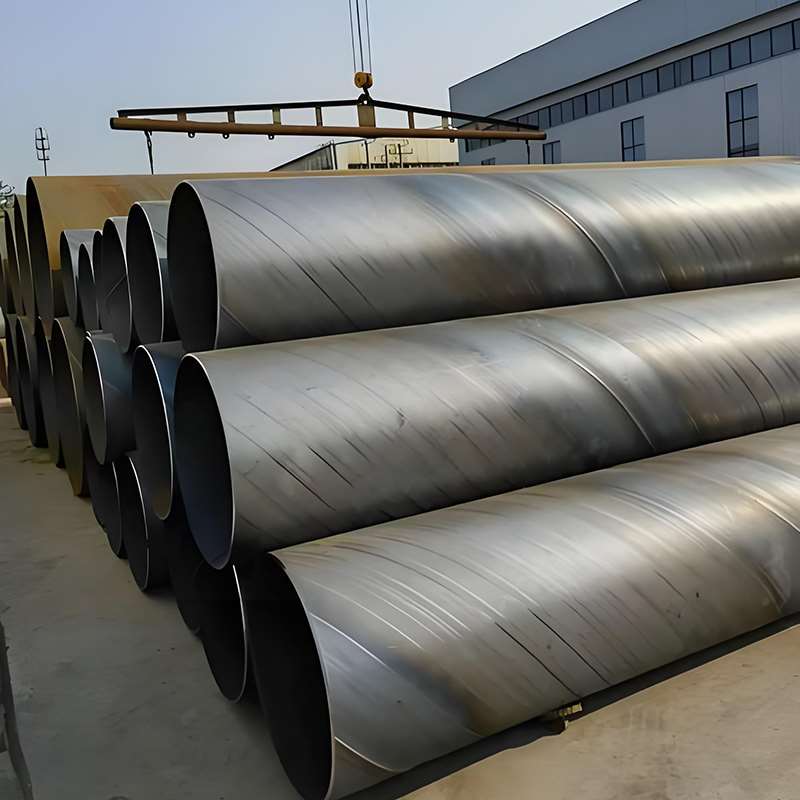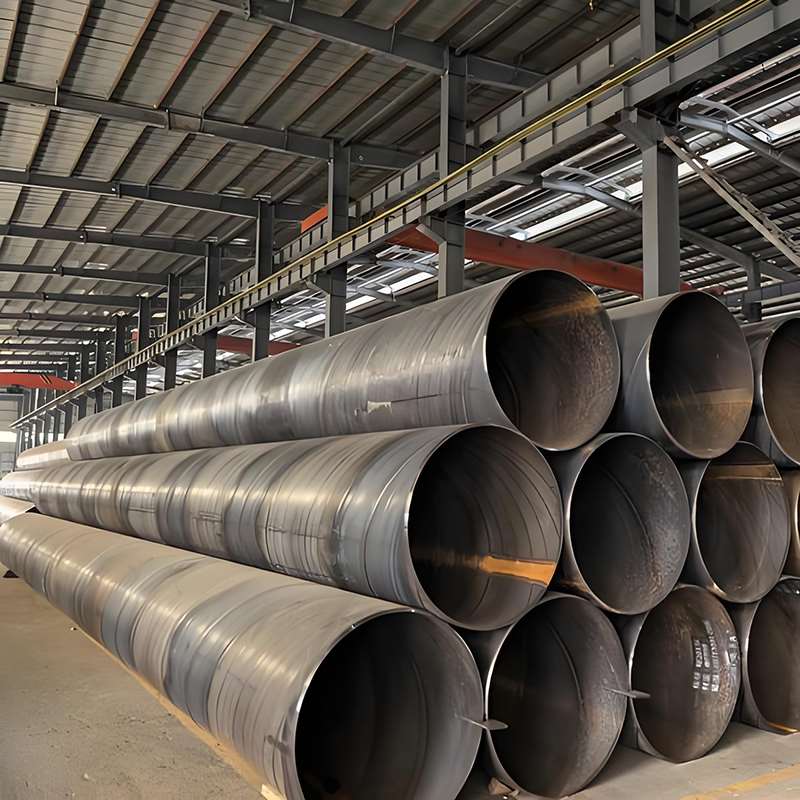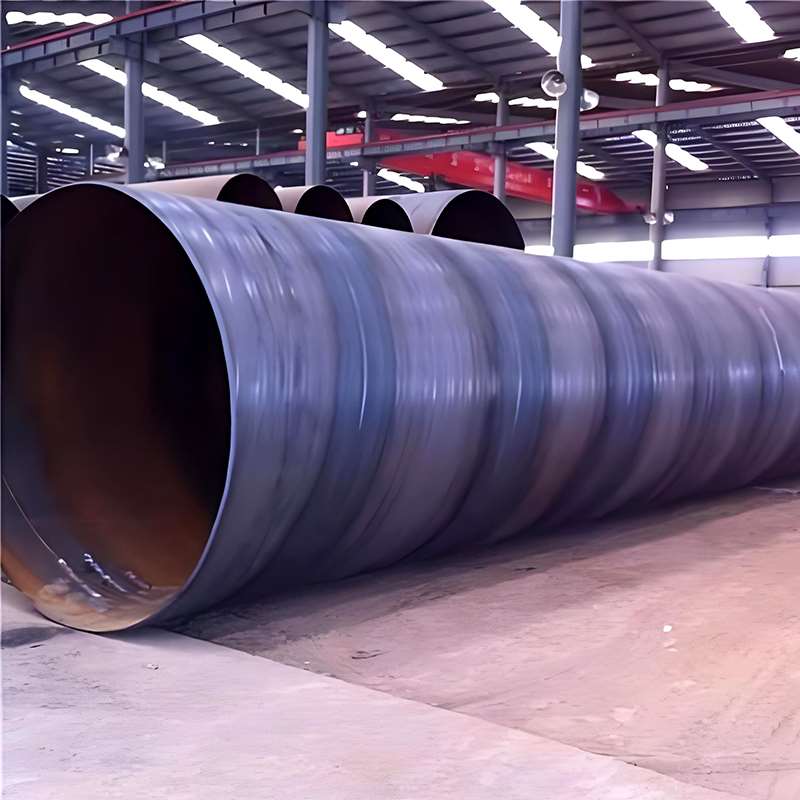
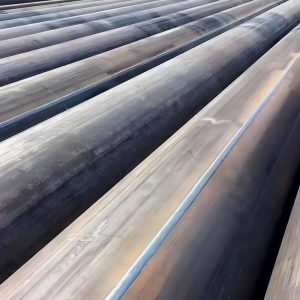
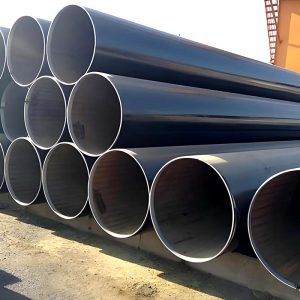
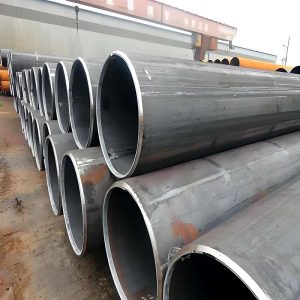
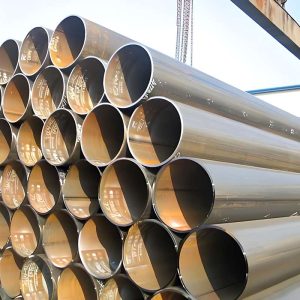
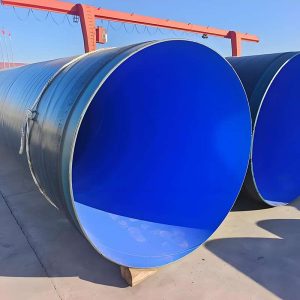
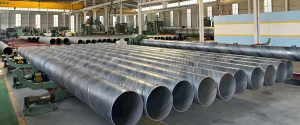
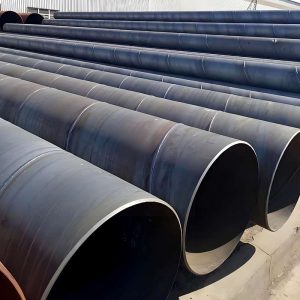
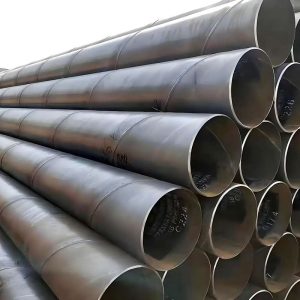
I. What is API 5L SSAW Line Pipe?
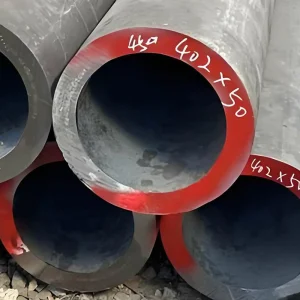
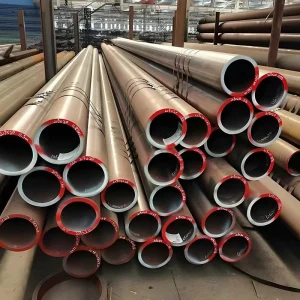
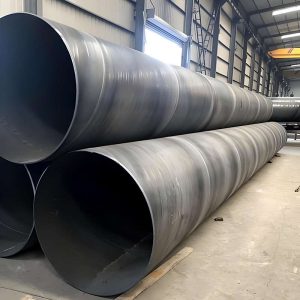
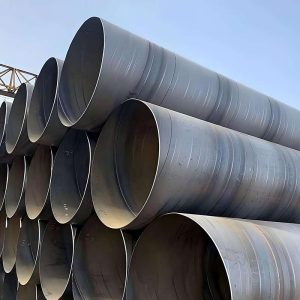
API 5L SSAW line pipe is a spiral welded steel pipe manufactured according to the API 5L steel pipe standard, primarily used for long-distance, large-diameter, continuous transportation projects.
Its core advantages are:
- Capable of producing large diameter pipes
- Relatively low cost
- Suitable for medium and high pressure transmission
- Suitable for large-scale infrastructure projects
i. Applicable Project Types
i. Applicable Project Types
1. Long-Distance Oil and Gas Pipelines
Suitable for long-distance onshore transmission of crude oil or natural gas.
Features:
Long transmission distance (tens to hundreds of kilometers)
High design pressure
Strict requirements for weld quality
Mostly buried
Recommended Steel Grades:
X52 / X60 / X65
Requirement: PSL2 grade
2. City Gas Main Pipeline
Suitable for city natural gas trunk pipeline systems.
Features:
Medium pressure
Large pipe diameter
Primarily underground installation
Recommended steel grades:
X42 / X52
Generally PSL1 or PSL2
3. Large-scale water transmission projects
Including:
Inter-regional water transfer projects
Industrial park water supply systems
Municipal water supply and drainage trunk lines
Characteristics:
Typically large pipe diameters
Predominantly medium to low pressure
Focus on corrosion resistance
Recommended steel grade:
Gr.B / X42
Can be fitted with 3PE or epoxy anti-corrosion coating
4. River/Sea Crossing Projects
Suitable for:
River crossings
Subsea laying
Characteristics:
Complex construction
High requirements for strength and corrosion resistance
Requires reinforced anti-corrosion coating
Recommended:
X60 and above steel grade
PSL2
Reinforced 3PE anti-corrosion coating
5. Piling and Structural Applications
Although primarily used for pipelines, it can also be used in some projects as:
Foundation piling
Bridge pile foundations
Temporary support structures
This application does not have high pressure resistance requirements, but does have requirements for wall thickness and diameter.
ii. Applicable conveying medium
Different media have a significant impact on material selection.
1. Crude Oil
Characteristics:
May contain corrosive substances
Large temperature variations during transport
Recommendation:
PSL2
Internal and external corrosion protection
Use X52 or higher steel grade
2. Natural Gas
Characteristics:
High transport pressure
High safety requirements
Recommendation:
PSL2 (mandatory)
Impact test
High steel grade (X60–X70)
3. Refined Oil
Characteristics:
Low corrosivity
Medium pressure
Recommendation:
X42–X52
Impact test optional depending on temperature
4. Industrial Water
Characteristics:
Low pressure
More emphasis on corrosion resistance
Recommendation:
Gr.B or X42
Corrosion protection treatment
5. Seawater
Characteristics:
Highly corrosive
Long service life requirements
Recommendation:
External reinforced 3PE corrosion protection
Internal corrosion protection coating if necessary
PSL2 recommended
II. Common Steel Grades and Classes for API 5L Spiral Pipes
i. Common Steel Grades and Application Instructions
| Steel Grade | Minimum Yield Strength (MPa) | Typical Applications | Suitable Project Types |
|---|---|---|---|
| Gr.B | 245 MPa | Medium and low pressure transportation | Water transmission projects, general oil & gas transportation |
| X42 | 290 MPa | Medium pressure pipelines | City gas main pipeline networks |
| X52 | 360 MPa | Medium-high pressure transportation | Long-distance oil and gas pipelines |
| X60 | 415 MPa | High-strength transportation | Long-distance crude oil / natural gas trunk pipelines |
| X65 | 450 MPa | High-pressure pipelines | Large energy infrastructure projects |
| X70 | 485 MPa | High-strength long-distance transportation | High-pressure oil and gas trunk pipelines |
Selection Guidelines:
A higher steel grade number indicates a higher yield strength.
Higher strength allows for greater allowable design pressure, but also increases cost.
Long-distance oil and gas projects typically use X60 and higher steel grades.
For water transport or medium-to-low pressure projects, Gr.B or X42 can be selected.
ii. Difference between PSL1 and PSL2
In the API 5L standard, line pipes are divided into two product specification levels: PSL1 and PSL2.
| Comparison Item | PSL1 | PSL2 |
|---|---|---|
| Quality Level | Basic requirements | Higher quality requirements |
| Chemical Composition Control | Standard control | More stringent control |
| Impact Test | Not mandatory | Mandatory |
| Non-Destructive Testing (NDT) | Standard inspection | More stringent ratio and methods |
| Hydrostatic Test | Required | Required |
| Applicable Projects | General transportation | High-pressure and critical oil & gas projects |
| Traceability Requirements | Basic | More stringent |
| Price | Lower | Slightly higher |
iii. How to Choose PSL1 or PSL2?
- Situations where PSL1 is chosen:
Water transmission projects
General industrial fluids
Low design pressure
Cost-sensitive projects - Situations where PSL2 is recommended:
Long-distance crude oil or natural gas pipelines
High-pressure transmission
Offshore or complex engineering projects
Mandatory requirements from the owner or project proponent
Note: In international oil and gas projects, PSL2 is usually the default requirement.
III. Comparison Table of SSAW and LSAW Procurement Selection
| Selection Dimension | SSAW Spiral Submerged Arc Welded Pipe | LSAW Longitudinal Submerged Arc Welded Pipe | Procurement Recommendation |
|---|---|---|---|
| Procurement Cost | Lower | Higher | Budget-sensitive projects should prioritize SSAW |
| Price per Ton | Usually 5%–15% lower | Higher | Cost difference becomes significant for bulk projects |
| Delivery Time | Faster | Relatively slower | Urgent projects should prioritize SSAW |
| Maximum Diameter Capacity | Can produce extra-large diameters | Limited by steel plate width | Choose SSAW for ultra-large diameters |
| Maximum Wall Thickness | Moderate | Thicker wall possible | Choose LSAW for thick-wall high-pressure pipelines |
| High-Pressure Suitability | Medium to high pressure | High / ultra-high pressure | LSAW preferred for high-pressure trunk pipelines |
| High Steel Grade Capability | Generally up to X70 | Up to X80 or higher | LSAW preferred for high-grade oil & gas pipelines |
| Weld Structure Risk | Longer spiral weld seam | Shorter weld seam | LSAW preferred for high-risk projects |
| Owner Acceptance | Widely accepted | Preferred for oil & gas trunk pipelines | Depends on project technical specifications |
| Inspection Requirement Compatibility | Can meet PSL2 | Mostly PSL2 | Both suitable for high-requirement projects |
| Typical Projects | Water transmission, city gas pipelines, medium-pressure oil & gas | Long-distance oil & gas trunk pipelines, core energy projects | Select according to project importance |
IV. API 5L Common Corrosion Protection Types for Spiral Submerged Arc Welded Pipelines
| Coating Type | Description | Applicable Environment |
|---|---|---|
| Black Paint | Surface coated with anti-rust paint to prevent rust during transportation and short-term storage | Indoor structures, temporary projects |
| FBE (Fusion Bonded Epoxy) | Single-layer epoxy powder coating with strong adhesion | Water transmission, general oil & gas pipelines |
| 3PE Coating | Three-layer anti-corrosion structure (epoxy + adhesive + polyethylene) | Buried oil & gas pipelines |
| Reinforced 3PE Coating | Thickened three-layer coating with stronger corrosion resistance | Subsea pipelines, highly corrosive environments |
| Internal Epoxy Coating | Internal pipe wall coating to reduce corrosion and flow resistance | Water transmission, seawater projects |
Selection Recommendations:
Ordinary Buried Engineering → 3PE Coated SSAW Steel Pipe
Long-Distance Oil and Gas Transportation → 3PE / PSL2
Seawater Environment → Reinforced 3PE
Water Transportation Projects → Can be supplemented with internal epoxy