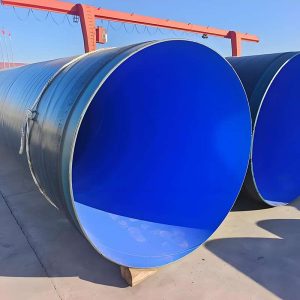
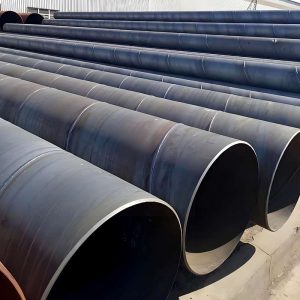
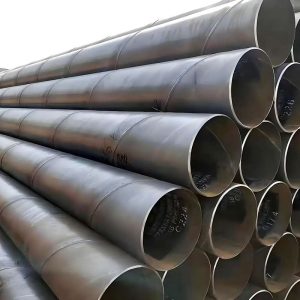
I. Overview of API 5L LSAW Welded Line Pipe
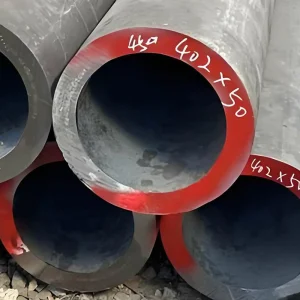
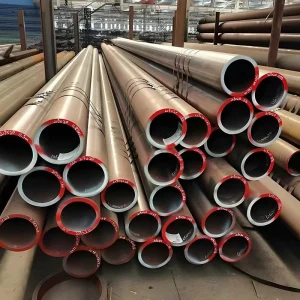
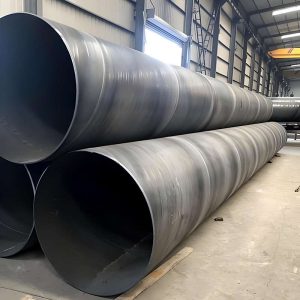
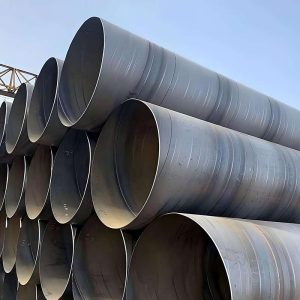
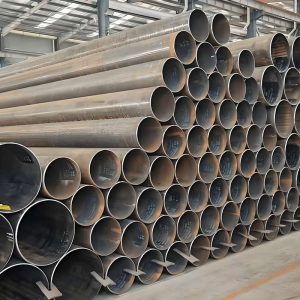
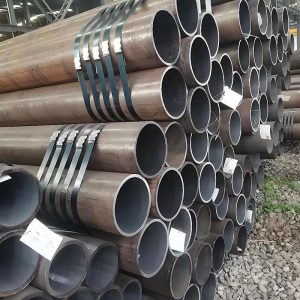
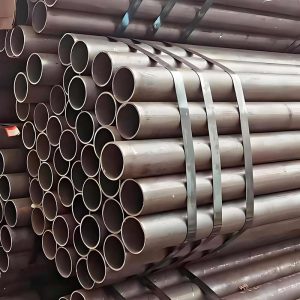
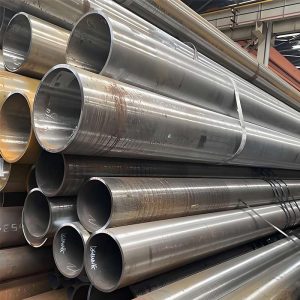
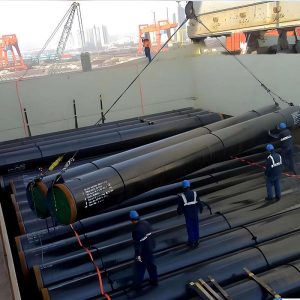
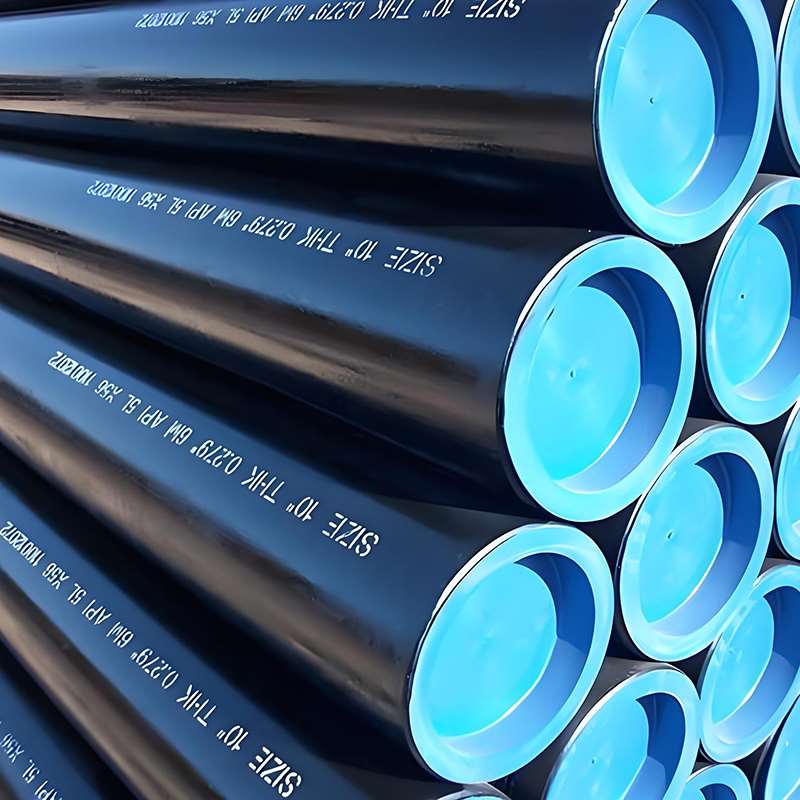
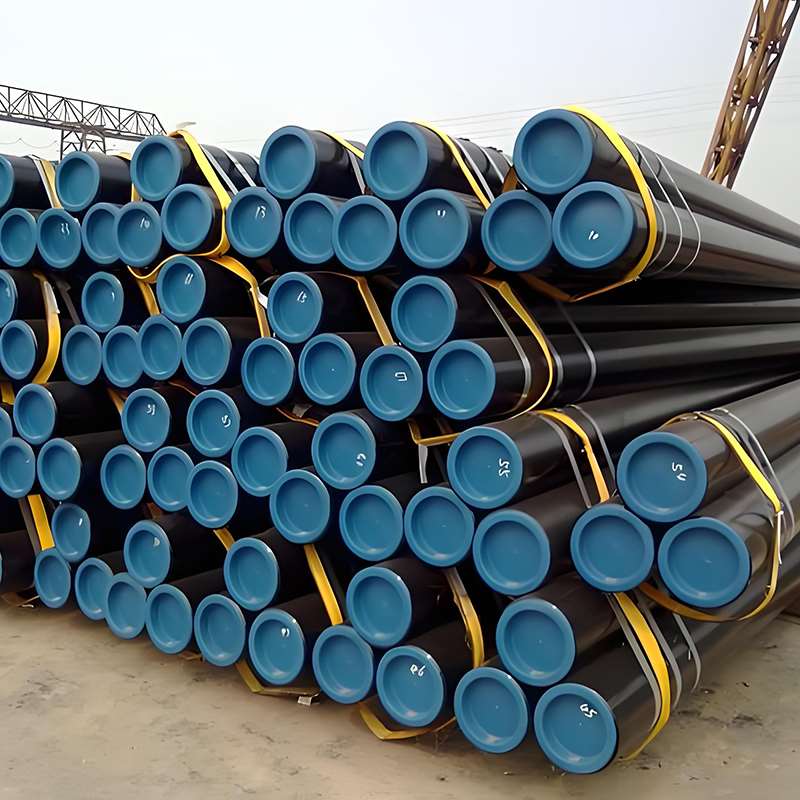
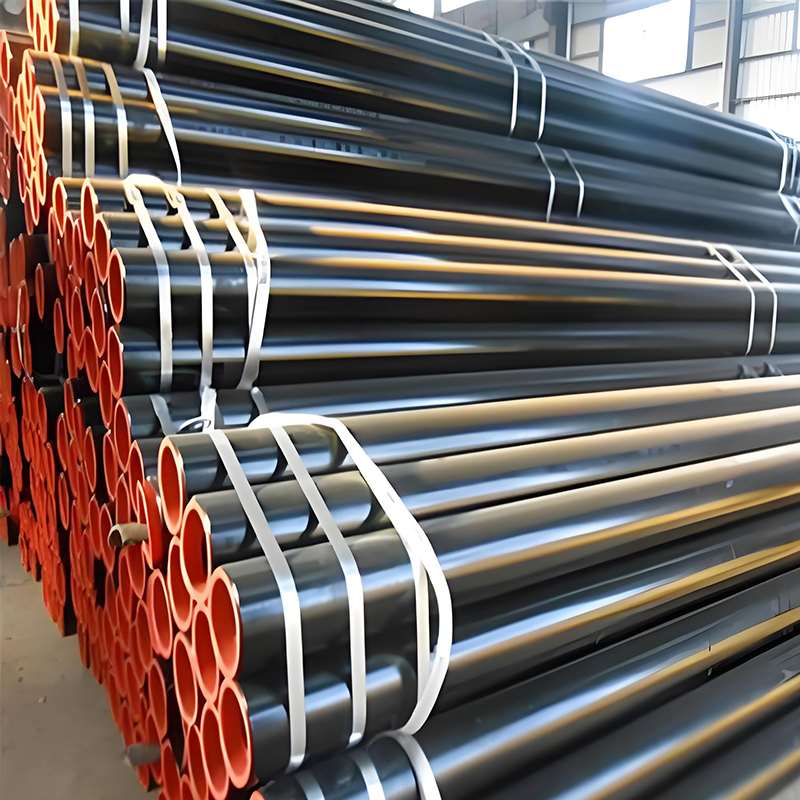
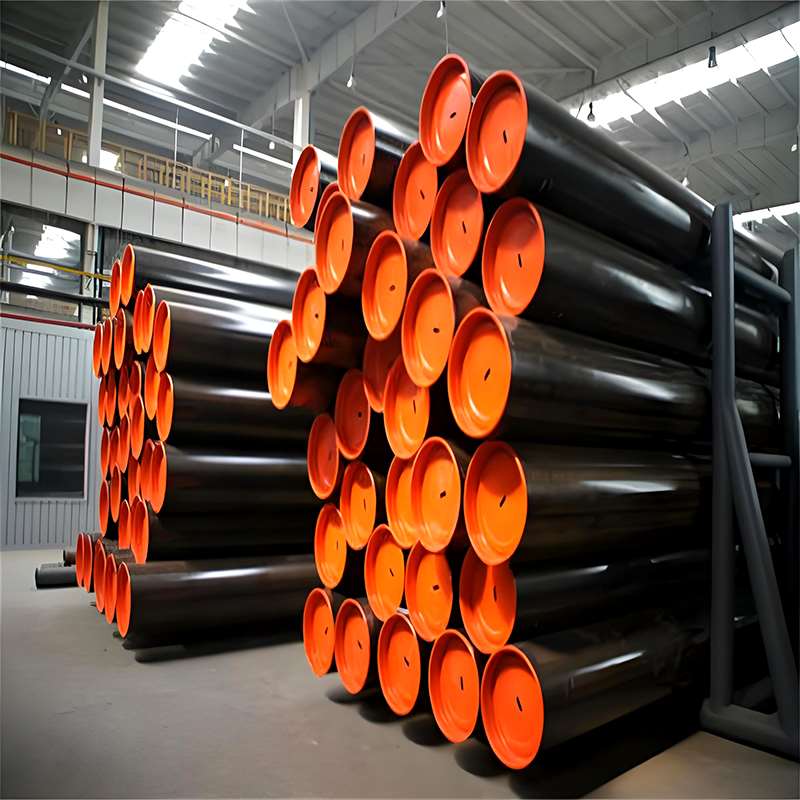
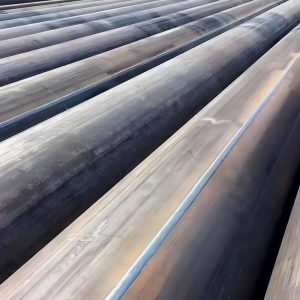
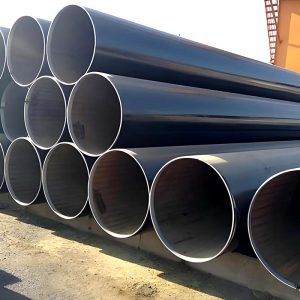
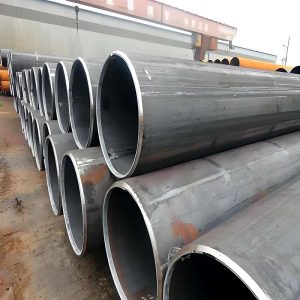
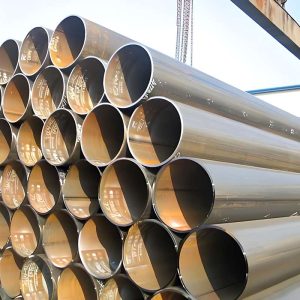
API 5L LSAW Line Pipe is a longitudinally submerged arc welded steel pipe conforming to API 5L standard (PSL1/PSL2), primarily used in oil, natural gas, and industrial pipeline projects.
Main Features
- Large Diameter, Thick-Walled Pipe
Outer diameter typically ranges from 406 mm to 1626 mm
Wall thickness from 6.4 mm to 40 mm, meeting high-pressure pipeline requirements - Longitudinal Submerged Arc Welding Process
Steel plates are rolled longitudinally into pipe blanks before welding
The weld seam runs along the pipe axis, resulting in high weld strength and toughness
Both internal and external welds can be fully inspected, ensuring safety and reliability - High Pressure Bearing Capacity
Suitable for medium and high-pressure and long-distance oil and gas transmission pipelines
Available steel grades X42 – X70 (PSL2), meeting the needs of high-grade engineering projects - Various Anti-corrosion and Surface Treatment Methods
Sandblasting, shot blasting, black paint, anti-rust oil
Optional coatings such as 3PE, FBE, 2PE, 3PP, suitable for buried or offshore pipelines - Flexible Pipe End Forms
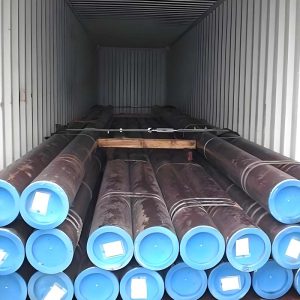
Beveled ends: for welding construction
Plain ends/flanged ends: suitable for bolted connections or matching pipe fittings
Main Applications
- Long-distance oil and gas pipelines
- Offshore oil and gas platform pipelines
- Urban gas and industrial water pipelines
- Chemical, metallurgical, and large-scale industrial pipelines
II. API 5L LSAW Pipeline Pipe Standard Grade Comparison Table
i. Product Specification Level (PSL)
| Item | PSL1 | PSL2 |
|---|---|---|
| Standard Level | Basic / General Use | High Grade / Engineering Use |
| Applicable Pipe Type | LSAW / ERW / SSAW | Mainly LSAW |
| Chemical Composition Control | Relatively relaxed | Stricter (lower limits for C, P, S) |
| Mechanical Property Requirements | Basic requirements | Higher and more stable |
| Impact Test (Charpy) | Not mandatory | Mandatory |
| Non-Destructive Testing (UT / RT) | Optional or partial | Full inspection mandatory |
| Dimensional & Weight Tolerances | Standard tolerances | Stricter tolerance control |
| Quality Documentation | Basic QA documents | Complete MTC / test reports |
| Typical Applications | Low-pressure pipelines, water pipelines | Long-distance oil & gas, high-pressure pipelines |
| Engineering Usage Proportion | Less common | Mainstream choice for international projects |
ii. Steel Grade (Grade / X-grade)
| Steel Grade | Minimum Yield Strength (MPa) | Strength Level | Typical Applications |
|---|---|---|---|
| X42 | ≥ 290 | Low Strength | General transportation, low-pressure pipelines |
| X46 | ≥ 320 | Medium-Low Strength | Standard oil and gas pipelines |
| X52 | ≥ 360 | Common Grade | Oil, gas, and water transmission pipelines |
| X56 | ≥ 390 | Medium-High Strength | City gas main pipelines |
| X60 | ≥ 415 | High Strength | Long-distance transmission pipelines |
| X65 | ≥ 450 | High Grade | High-pressure main oil and gas pipelines |
| X70 | ≥ 485 | Ultra High Strength | Large-diameter long-distance projects |
Common steel grades for LSAW pipeline pipes: X52 / X60 / X65 / X70
iii. Common combinations of PSL and steel grades
| API 5L Marking | Pipe Grade Classification | Typical Applications |
|---|---|---|
| API 5L PSL1 X52 LSAW | Standard Grade | General transportation projects |
| API 5L PSL2 X52 LSAW | Engineering Grade | Medium-pressure oil & gas pipelines |
| API 5L PSL2 X60 LSAW | Mainstream Configuration | Long-distance oil & gas transmission |
| API 5L PSL2 X65 LSAW | High-End Configuration | High-pressure main pipelines |
| API 5L PSL2 X70 LSAW | Ultra-High Grade | Large-diameter long-distance projects |
III. Chemical Composition and Mechanical Properties of API 5L LSAW Line Pipe
i. Chemical Composition Comparison Table (PSL2)
| Steel grade | C ≤ | Mn ≤ | P ≤ | S ≤ | Si ≤ | Nb ≤ | V ≤ | Ti ≤ |
| X42 | 0.22 | 1.40 | 0.025 | 0.015 | 0.45 | 0.05 | 0.05 | 0.04 |
| X46 | 0.22 | 1.40 | 0.025 | 0.015 | 0.45 | 0.05 | 0.05 | 0.04 |
| X52 | 0.22 | 1.40 | 0.025 | 0.015 | 0.45 | 0.05 | 0.05 | 0.04 |
| X56 | 0.22 | 1.40 | 0.025 | 0.015 | 0.45 | 0.05 | 0.05 | 0.04 |
| X60 | 0.22 | 1.40 | 0.025 | 0.015 | 0.45 | 0.05 | 0.05 | 0.04 |
| X65 | 0.18 | 1.40 | 0.025 | 0.015 | 0.45 | 0.05 | 0.05 | 0.04 |
| X70 | 0.18 | 1.70 | 0.025 | 0.015 | 0.45 | 0.05 | 0.05 | 0.04 |
ii. Mechanical Properties Comparison Table (PSL2)
| Steel Grade | Minimum Yield Strength (MPa) | Tensile Strength (MPa) | Elongation ≥ | Impact Toughness Requirement |
|---|---|---|---|---|
| X42 | ≥ 290 | 415 – 565 | 21% | ≥ 27 J |
| X46 | ≥ 320 | 435 – 565 | 21% | ≥ 27 J |
| X52 | ≥ 360 | 460 – 565 | 21% | ≥ 27 J |
| X56 | ≥ 390 | 490 – 635 | 19% | ≥ 27 J |
| X60 | ≥ 415 | 520 – 760 | 18% | ≥ 27 J |
| X65 | ≥ 450 | 535 – 760 | 18% | ≥ 27 J |
| X70 | ≥ 485 | 570 – 760 | 17% | ≥ 27 J |
IV. PSL1 vs. PSL2 Customer Quick Selection Table
| Comparison Dimension | PSL1 | PSL2 | How Customers Can Quickly Choose |
|---|---|---|---|
| Standard Level | Standard / General Grade | Engineering / High Grade | For international projects, choose PSL2 directly |
| Common Pipe Types | ERW / SSAW / LSAW | Mainly LSAW | Large-diameter pipes generally favor PSL2 |
| Design Pressure | Low–Medium | Medium–High | Higher pressure → PSL2 |
| Conveyed Medium | Water, general fluids | Oil, gas, hazardous media | Oil & gas pipelines → PSL2 |
| Chemical Composition Control | Standard | Stricter (lower C / P / S) | Safety-critical applications → PSL2 |
| Mechanical Property Stability | General | More stable and controllable | Long-term operation → PSL2 |
| Impact Toughness (Charpy) | Not required | Mandatory | Low-temperature / cold regions → PSL2 |
| Non-Destructive Testing | Spot check or not mandatory | UT / RT mandatory | Tender or project requirement → PSL2 |
| Quality Documentation | Basic QA documents | Complete MTC + test reports | Third-party inspection required → PSL2 |
| Project Risk Level | Low | Medium–High | Higher project risk → PSL2 |
| Cost | Lower | Slightly higher | Cost-sensitive, low-risk → PSL1 |
V.API 5L LSAW Pipeline Corrosion Protection Scheme
i. How to choose corrosion protection under different operating environments?
(1) Ordinary Buried Environment (Urban areas, general soil)
Typical working conditions:
Soil corrosivity is moderate
Groundwater conditions are not complex
Transported medium is natural gas or ordinary petroleum products
Suitable corrosion protection approach:
Requires stable adhesion
Must be able to isolate moisture and oxygen for a long time
Easy for construction and maintenance
Recommended solution:
Single-layer FBE (Fusion Bonded Epoxy)
or 2PE coating
Why this choice?
FBE has strong adhesion to the steel pipe surface, and construction quality is easy to control, sufficient to cope with ordinary buried environments;
If a longer service life is desired, 2PE is a cost-effective upgrade option.
(2) Highly Corrosive Buried Environments (Saline-alkali soil, humid areas, chemical industrial zones)
Typical Working Conditions:
High soil salinity
Abundant groundwater
Risk of stray current or microbial corrosion
Suitable Corrosion Protection Approach:
The anti-corrosion layer must be thick.
It must have strong adhesion and excellent barrier properties.
It must have strong mechanical protection capabilities.
Recommended Solution:
3PE Anti-corrosion Coating (FBE + Adhesive + PE)
Why is 3PE the mainstream solution?
Inner layer FBE: Responsible for adhesion and chemical corrosion protection
Middle adhesive layer: Ensures structural stability
Outer PE layer: Waterproof and protects against mechanical damage
This is also the most commonly used anti-corrosion solution for API 5L LSAW long-distance oil and gas pipelines.
(3) High-Temperature Operating Pipelines (High-temperature oil and gas, heat transfer media)
Typical operating conditions:
Long-term operation at high temperatures
Ordinary PE is prone to aging at high temperatures
Suitable corrosion protection approach:
The anti-corrosion material must be high-temperature resistant and not soften.
The anti-corrosion performance should remain stable with temperature changes.
Recommended solution:
3PP anti-corrosion coating
Why not use 3PE?
PE’s performance deteriorates at high temperatures, while PP is more stable in terms of heat resistance.
Therefore, 3PP is safer and more reliable for high-temperature oil and gas transportation.
(4) Subsea or Underwater Pipelines (Rivers, Oceans)
Typical Working Conditions:
Long-term immersion in water
Subject to water flow erosion
Buoyancy issues exist
Suitable Corrosion Protection Approach:
Corrosion protection is only the basic requirement
Erosion resistance and anti-buoyancy must also be considered
Recommended Solution:
External corrosion protection (3PE or FBE) + concrete weighting layer
Why add concrete?
To prevent the pipeline from floating
To resist water flow and surge impact
To protect the corrosion protection layer from damage
(5) Overhead or above-ground pipelines
Typical working conditions:
Main corrosion sources: air, rainwater, ultraviolet radiation
No soil corrosion pressure
Suitable corrosion protection approach:
Emphasis on protection against atmospheric corrosion
Easy maintenance
Recommended solutions:
Epoxy paint / polyurethane paint system
Or anti-rust primer + topcoat
ii. When is internal corrosion protection “mandatory”?
Not all pipelines require internal corrosion protection, but it is strongly recommended in the following situations:
- Transporting crude oil containing water
- Transporting corrosive media
- Pipeline design life ≥ 20 years
- When there are requirements for the cleanliness of the transported medium.