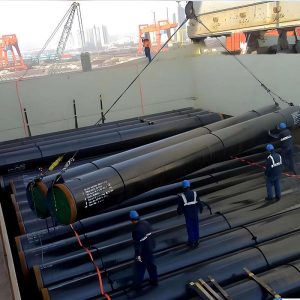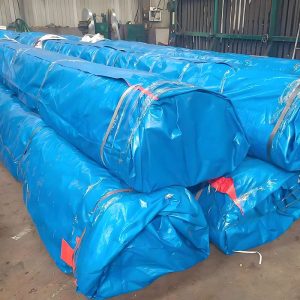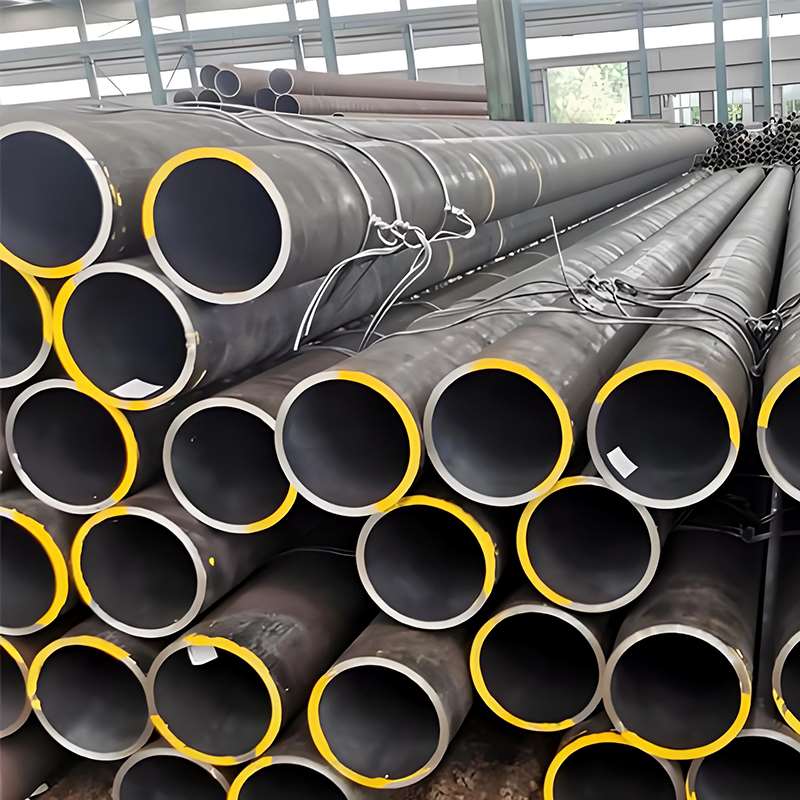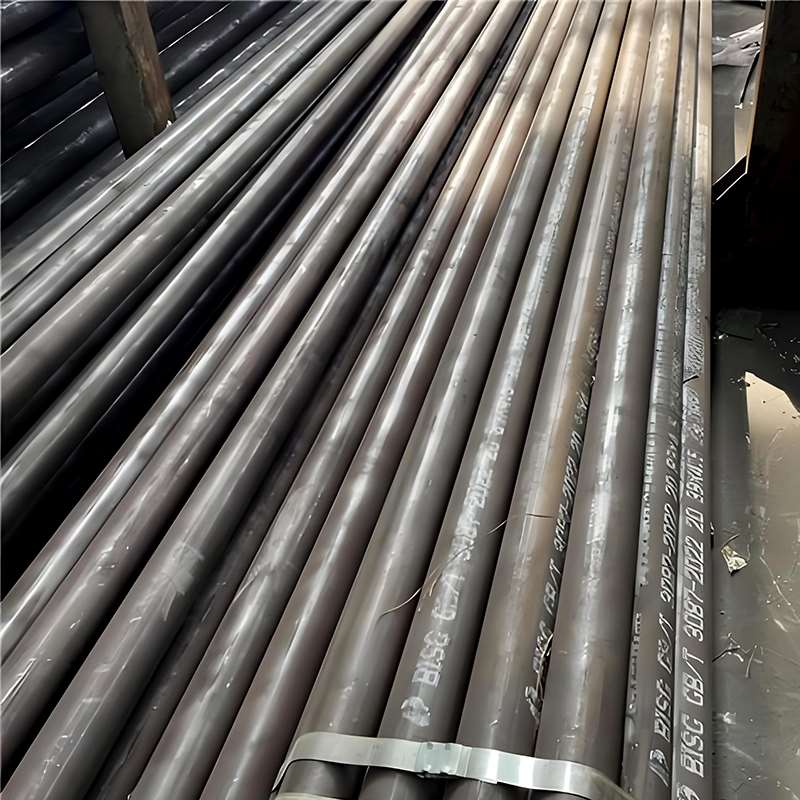
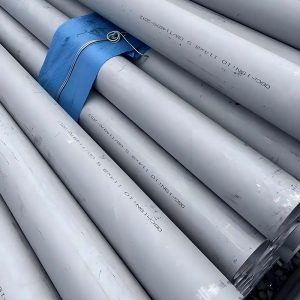
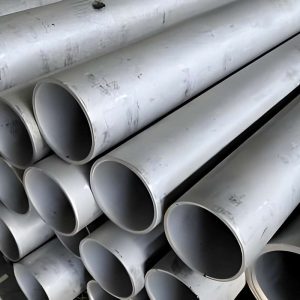
I. Overview of GB/T 8163 Seamless Steel Pipes
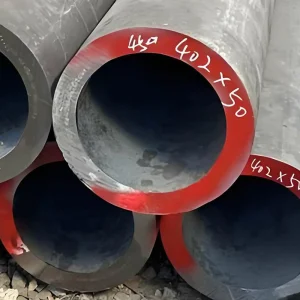
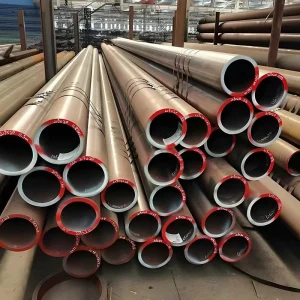
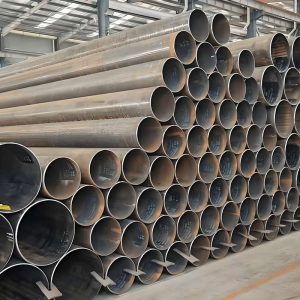
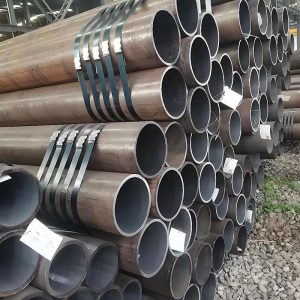
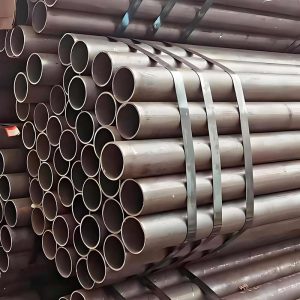
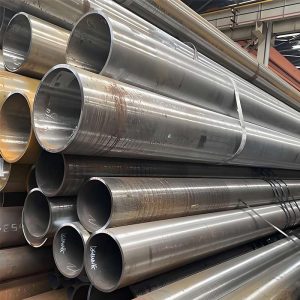
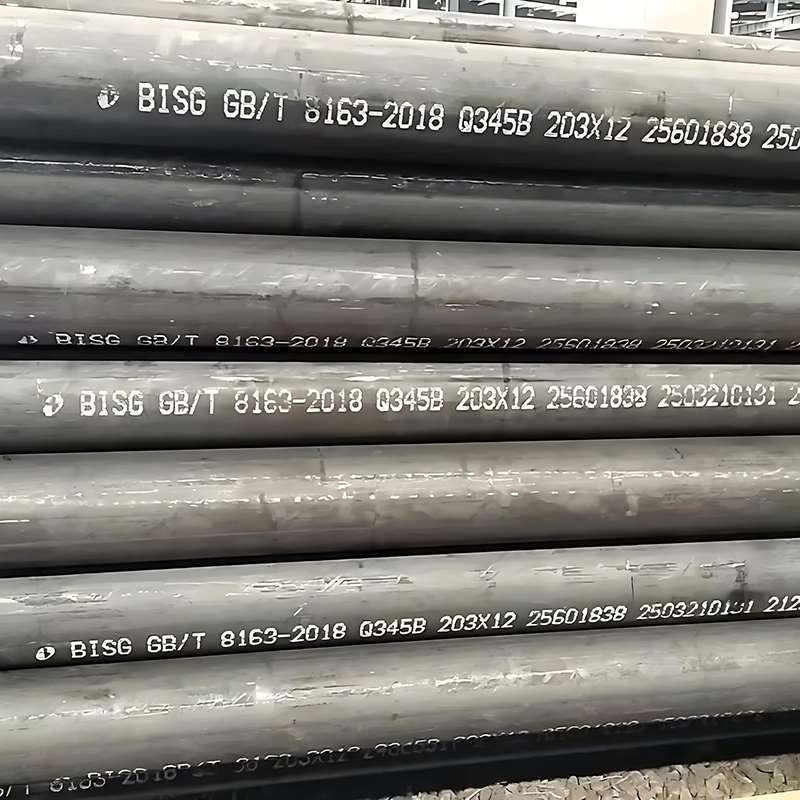
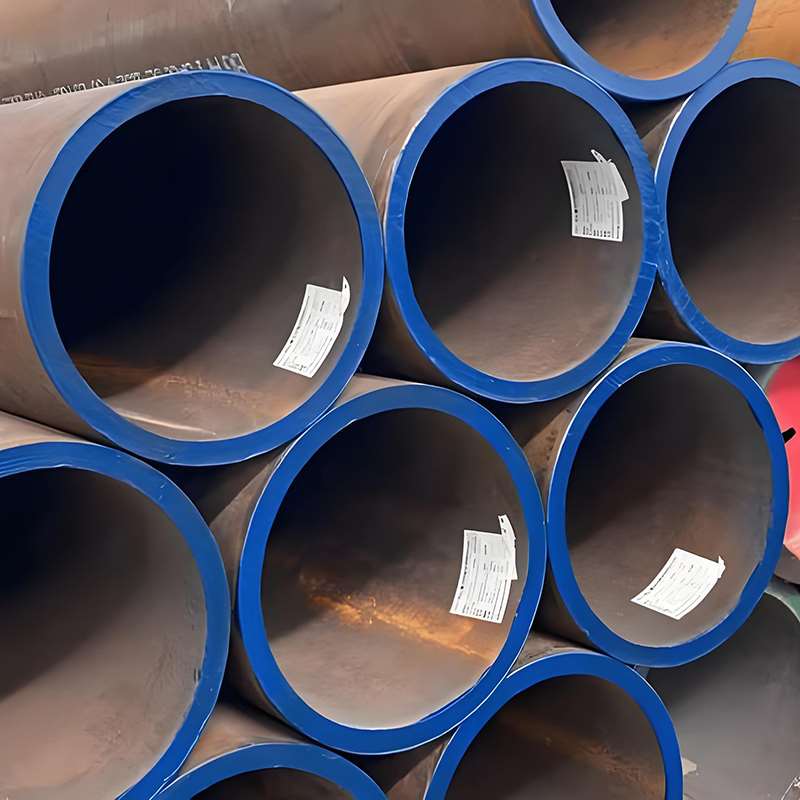
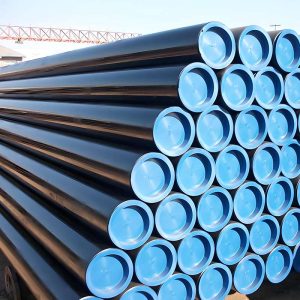
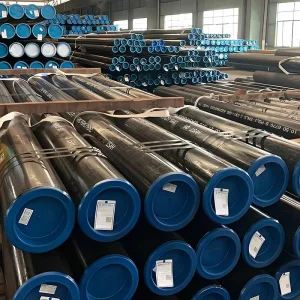
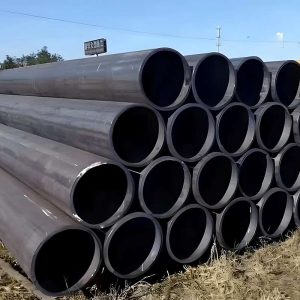
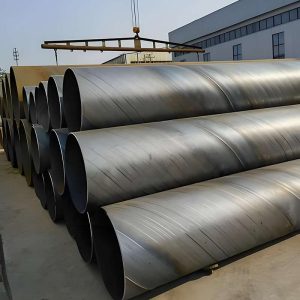
GB/T 8163 seamless steel pipes are carbon steel and low-alloy steel seamless pipes used for conveying fluids, as defined by the Chinese national standard. These pipes are manufactured using hot rolling or cold drawing processes, resulting in smooth inner and outer surfaces, uniform wall thickness, high dimensional accuracy, and stable mechanical properties.
They are primarily used in petroleum, chemical, machinery, hydraulic, boiler, and construction piping applications, suitable for conveying liquid media such as water, oil, and gas. They can also be used for mechanical structural components and engineering pipelines.
Key Features:
- High precision: Strict control of outer diameter, wall thickness, and tolerances
- Reliable strength: Stable yield strength, tensile strength, and elongation
- Good processing performance: Suitable for cutting, welding, bending, and forming
- Multiple steel grades available: Carbon steel and low-alloy steel to meet different working conditions
II. GB/T 8163 Seamless Steel Pipe Materials and Steel Grades
GB/T 8163 seamless steel pipes mainly use carbon steel and low-alloy steel. Different steel grades are selected according to the working conditions and pressure requirements. The following are common steel grades and their characteristics:
| Steel Grade / Material | Chemical Composition Features | Mechanical Properties | Typical Applications |
|---|---|---|---|
| 20# | Moderate carbon content, low sulfur and phosphorus | Yield strength ≈ 235 MPa, tensile strength 375–500 MPa, elongation ≥26% | General mechanical structures, low-pressure fluid transport |
| Q235 | Low carbon steel, easy to process | Yield strength 235 MPa, tensile strength 375–500 MPa, elongation ≥20% | Water supply, gas, low-pressure engineering pipelines |
| 16Mn | Medium carbon low-alloy steel, contains manganese | Yield strength 355 MPa, tensile strength 490–630 MPa, elongation ≥20% | Petroleum, chemical, pressure pipelines |
| 20Mn | Manganese-containing medium carbon steel | Yield strength 295–345 MPa, tensile strength 430–570 MPa, elongation ≥18% | High-strength mechanical structural parts |
| 20Cr | Alloy steel, contains chromium | Yield strength 355 MPa, tensile strength 600–800 MPa | Mechanical transmission shafts, heavy-duty structural parts |
| 20G / 35# / 45# | High-strength carbon steel / low-alloy steel | Yield strength 355–470 MPa, tensile strength 520–650 MPa, elongation ≥16–20% | Construction machinery, high-pressure hydraulic pipes, shaft components |
Material Selection Recommendations
- General fluid transportation: 20#, Q235 are sufficient, low cost, and easy to process.
- Medium and high-pressure pipelines: 16Mn or 20Mn, with better pressure and temperature resistance.
- Mechanical structural parts: 20Cr, 20G, 35#, 45#, suitable for load-bearing and stressed parts.
- Special working conditions: Customized steel grades or low-alloy steel can be selected according to project requirements.
III. GB/T 8163 Seamless Steel Pipe Chemical Composition and Mechanical Properties
i. Chemical Composition Table
| Steel Grade / Material | C (%) | Mn (%) | Si (%) | P (%) | S (%) | Other Elements |
|---|---|---|---|---|---|---|
| 20# | 0.17–0.24 | 0.30–0.60 | 0.17–0.37 | ≤0.035 | ≤0.035 | – |
| Q235 | 0.14–0.22 | 0.30–0.65 | ≤0.30 | ≤0.035 | ≤0.035 | – |
| 16Mn | 0.12–0.19 | 1.00–1.30 | 0.17–0.37 | ≤0.035 | ≤0.035 | – |
| 20Mn | 0.17–0.24 | 0.50–0.80 | 0.17–0.37 | ≤0.035 | ≤0.035 | – |
| 20Cr | 0.17–0.24 | 0.50–0.80 | 0.17–0.37 | ≤0.035 | ≤0.035 | Cr 1.0–1.3 |
| 20G / 35# / 45# | 0.17–0.45 | 0.50–0.90 | 0.17–0.37 | ≤0.035 | ≤0.035 | – |
ii. Mechanical Properties Table
| Steel Grade / Material | Yield Strength σs (MPa) | Tensile Strength σb (MPa) | Elongation δ (%) | Impact Toughness (J) |
|---|---|---|---|---|
| 20# | 235 | 375–500 | ≥26 | ≥27 |
| Q235 | 235 | 375–500 | ≥20 | ≥27 |
| 16Mn | 355 | 490–630 | ≥20 | ≥27 |
| 20Mn | 295–345 | 430–570 | ≥18 | ≥27 |
| 20Cr | 355 | 600–800 | ≥16 | ≥27 |
| 20G / 35# / 45# | 355–470 | 520–650 | 16–20 | ≥27 |
IV. GB/T 8163 Seamless Steel Pipe Corrosion Protection Measures
| Corrosion Protection Method | Description | Applicable Scenarios |
|---|---|---|
| Anti-rust Oil Coating | Apply anti-rust oil on the inner and outer surfaces to prevent rust during short-term storage or transportation | Conventional storage, short-term transport, indoor environments |
| Pickling | Remove surface oxides and impurities to improve coating adhesion | Long-term storage, pre-processing treatment |
| Hot-dip Galvanizing (Zinc Coating) | Apply a layer of zinc on the surface to enhance corrosion resistance | Outdoor pipelines, humid environments, mild chemical media |
| Epoxy / Protective Coating | Spray epoxy or polyester coating on the pipe surface to form a protective film | Highly corrosive environments, chemical pipelines, offshore pipelines |
| Plastic or PE Protective Layer | Wrap the pipe with plastic or a PE layer to isolate it from water and air | Buried pipelines, long-term outdoor storage |
| Cathodic Protection | Use electrochemical methods to inhibit steel corrosion | Oil, natural gas pipelines, offshore pipelines |
Corrosion Protection Selection Recommendations
- Indoor short-term storage or low-humidity environments: Rust-preventive oil or black oxide coating is sufficient.
- Long-term outdoor or humid environments: Hot-dip galvanizing or epoxy coating is recommended.
- Chemical or marine environments: Choose epoxy coating + regular maintenance.
- Buried pipelines: Plastic coating or cathodic protection can be used to ensure service life.