Products

Related News

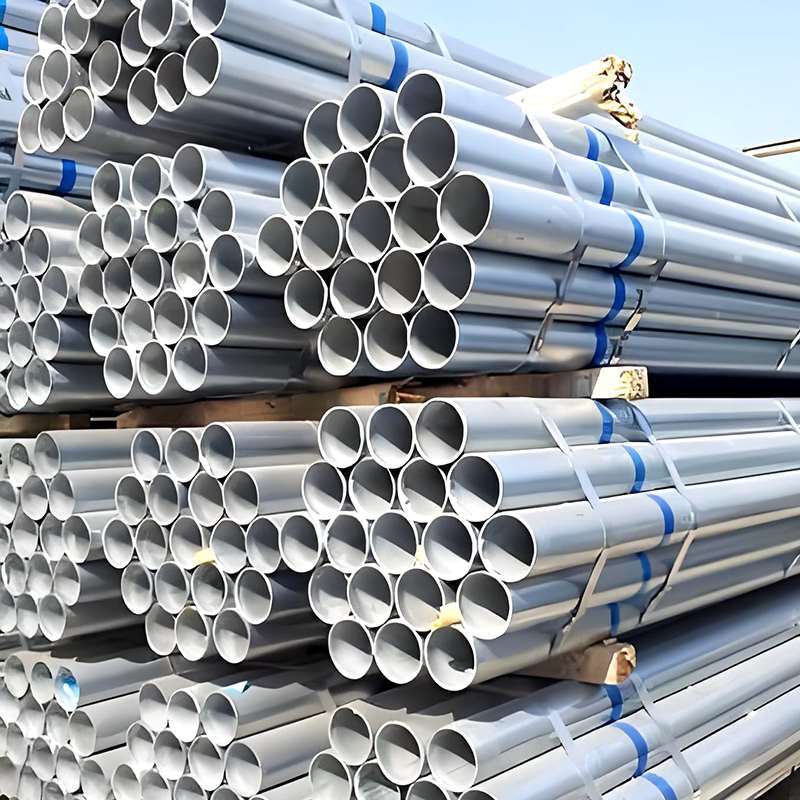
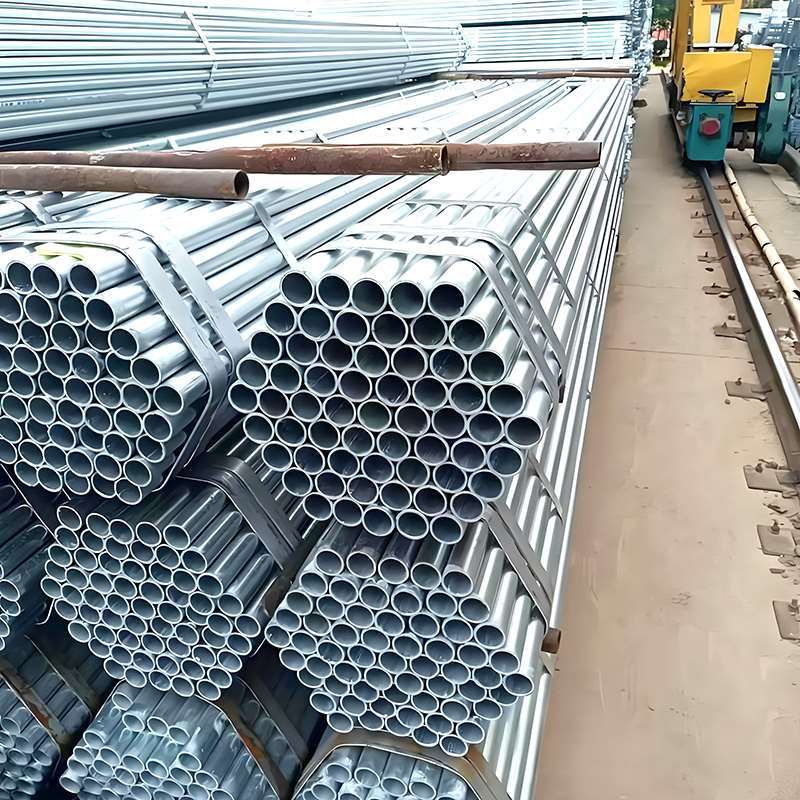
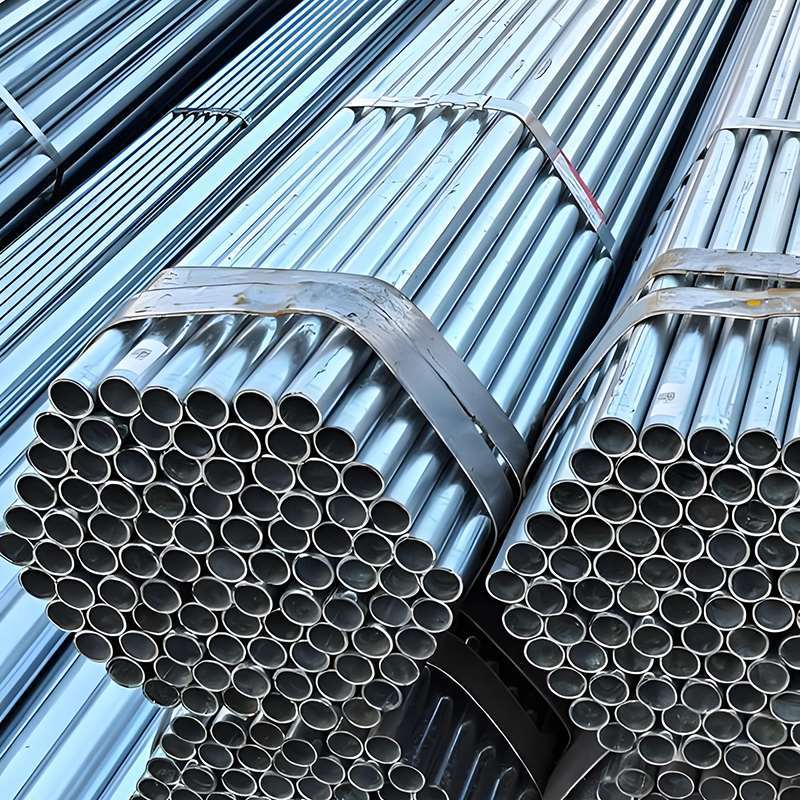
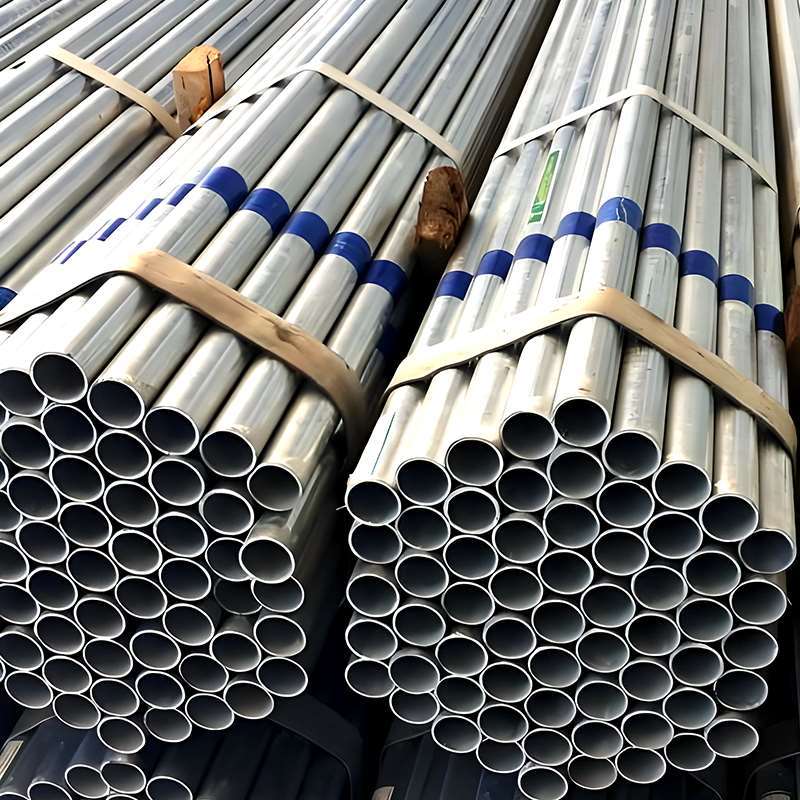
Hot-Dip Galvanized Carbon Steel Pipe

OD Range :

10 mm – 219.1 mm (expandable to 610 mm)

WT Range :

0.8 mm – 25 mm (commonly 2.0 – 4.5 mm)

Length :

4 000 – 12 000 mm

Tolerance :

Outer diameter tolerance ±1% (when D≤100 mm) or ±0.75% (D>100 mm), wall thickness tolerance ±10% (general grade) / ±8% (precision grade)

Material :

Q195、Q215、Q235、Q345、A53-A/B、A106-B

Standard :

GB/T 3091-2015、GB/T 13793-2016、ASTM A53/A53M、ASTM A123/A123M、EN 10240、ISO 1461

Application :

Steel structures for buildings, guardrails, curtain walls, water supply and drainage pipes, fire protection pipes, HVAC supports, photovoltaic supports, agricultural greenhouses, municipal guardrails, highway guardrails, power and communication towers, scaffolding, pile foundation casings, mechanical structures, etc.

I. Introduction to Hot-Dip Galvanized Carbon Steel Pipes

Hot-dip galvanized carbon steel pipes are corrosion-resistant steel pipes made from high-quality carbon steel pipes. The process involves pickling, fluxing, and immersion in a high-temperature zinc bath to uniformly coat the pipe with a zinc layer.

This process creates a dense zinc-iron alloy layer on both the inner and outer surfaces of the pipe, providing excellent corrosion resistance and adhesion. Compared to electro-galvanized pipes, hot-dip galvanized pipes have a thicker coating and a longer lifespan, making them particularly suitable for piping systems in water supply, fire protection, HVAC, and building drainage systems that are frequently exposed to humid or corrosive environments.

II. Main Parameters of Hot-Dip Galvanized Carbon Steel Pipes

ItemDescription
Product NameHot-Dip Galvanized Carbon Steel Pipe
MaterialQ195, Q235, Q345 or ASTM A53 / A106 carbon steel grades
Outside Diameter (OD)15 mm – 500 mm (common sizes: DN15 – DN500)
Wall Thickness (WT)1.5 mm – 12 mm
Length (L)6 m, 9 m, 12 m (custom lengths available)
Zinc Coating Thickness≥ 40 μm (up to 85 μm, meeting GB/T 3091 & ASTM A123)
Surface FinishBright silver, free of zinc lumps, skips and scratches
End FinishPlain End, Threaded with Coupling, Beveled End
StandardsGB/T 3091, ASTM A53, BS 1387, EN 10240
Connection TypeWelded, Threaded, Flanged
Main ApplicationsWater-supply lines, fire-protection systems, HVAC piping, building drainage, agricultural irrigation, structural supports, etc.
Working Pressure≤ 2.5 MPa (depends on OD & WT)
Surface TreatmentHot-dip galvanized inside & out, supplementary anti-rust sealing

III. Standards for Hot-Dip Galvanized Carbon Steel Pipes

National Standard (GB/T 3091): Welded Steel Pipes for Low-Pressure Fluid Transportation
American Standard (ASTM A53/A123): Technical Specifications for Black Pipes and Hot-Dip Galvanized Steel Pipes
British Standard (BS 1387): Welded Steel Pipes for Gas, Air and Water
European Standard (EN 10240): Requirements for Protective Coatings on the Inner and Outer Surfaces of Steel Pipes

IV. Main characteristics of hot-dip galvanized carbon steel pipes for water supply

(1) Strong Corrosion Resistance
The zinc layer forms a “sacrificial anode protection,” effectively preventing pipe wall corrosion even in the event of localized damage.

(2) High Pressure Bearing Capacity
The carbon steel substrate possesses excellent strength and toughness, capable of withstanding pressures up to 2.5 MPa, meeting the requirements of municipal water supply main pipes.

(3) Safe and Reliable Water Quality
Compliant with standards such as GB/T 3091 and ISO 65, the zinc layer, after passivation treatment, is not easily detached and does not pollute the water, making it suitable for drinking water pipelines.

(4) Long Service Life and Low Maintenance Costs
In normal environments, the service life can reach 20-30 years, significantly reducing subsequent maintenance and replacement costs.
Related Products

Nominal Diameter (DN) Outer Diameter (mm) Wall Thickness (mm) Theoretical Weight (kg/m) Common Length (m)
15 (1/2″) 21.3 2.8 1.27 6
20 (3/4″) 26.9 2.8 1.64 6
25 (1″) 33.7 3.2 2.44 6
32 (1-1/4″) 42.4 3.2 3.12 6
40 (1-1/2″) 48.3 3.5 3.83 6
50 (2″) 60.3 3.8 5.44 6
65 (2-1/2″) 76.1 3.8 6.91 6
80 (3″) 88.9 4.0 8.63 6
100 (4″) 114.3 4.0 11.18 6
125 (5″) 139.7 4.5 15.04 6
150 (6″) 168.3 4.5 18.18 6
200 (8″) 219.1 6.0 29.72 6
250 (10″) 273.0 6.5 38.82 6
300 (12″) 323.9 7.0 50.07 6
350 (14″) 355.6 8.0 63.04 6
400 (16″) 406.4 8.0 72.11 6
450 (18″) 457.0 9.0 85.78 6
500 (20″) 508.0 9.0 95.58 6
600 (24″) 610.0 10.0 120.10 6
Standard / 标准 Pipe Grade / 管材等级 Outer Diameter OD (mm) Wall Thickness WT (mm) Coating Thickness (μm) Tensile Strength σb (MPa) Yield Strength σy (MPa) Elongation δ5 (%) Remarks
GB/T 13793-2008 Q195, Q215, Q235 21.3 – 630 2 – 20 ≥ 60 270 – 410 145 – 245 ≥ 20 General structural, water, and gas pipelines
ASTM A53 / A120 Grade B 1/2″ – 24″ Schedule 10 – 40 ≥ 86 380 – 510 205 – 345 ≥ 20 Water, gas, and structural use
EN 10240 S235JR, S275JR 15 – 426 1.5 – 20 ≥ 55 360 – 510 235 – 275 ≥ 20 Hot-dip galvanized steel for structural purposes
JIS G3445 STK400, STK500 15 – 219 1 – 16 ≥ 50 400 – 550 245 – 355 ≥ 20 Water and gas supply pipes
ASTM A123 / A53 Carbon Steel Pipe 1/2″ – 24″ 2 – 20 70 – 100 380 – 510 205 – 345 ≥ 20 Hot-dip galvanizing coating requirement

Notes:

Standards: Commonly used domestic and international standards, including GB, ASTM, EN, and JIS.

Pipe Grade: Corresponding steel grade.

Outer Diameter and Wall Thickness: Commonly used specifications.

Coating Thickness: Minimum thickness of hot-dip galvanized layer (μm).

Mechanical Properties: Tensile strength, yield strength, and elongation.

Applications: Common applications or special requirements.


Raw pipe → Degreasing → Pickling → Cleaning → Fluxing → Drying → Hot-dip galvanizing → Cooling → Passivation → Inspection → Finished product

Process Process Description Purpose / Notes
Raw Pipe Preparation Select carbon steel pipes meeting standards (e.g., Q235, ASTM A53), then cut, straighten, and inspect Ensure accurate pipe dimensions and defect-free surface
Degreasing Remove oil and surface contaminants using alkaline solution Improve adhesion of subsequent coating
Pickling / Rust Removal Use diluted hydrochloric or sulfuric acid to remove scale and rust Make the pipe surface clean and smooth
Rinsing Rinse thoroughly with water to remove residual acid Prevent impurities from affecting coating quality
Flux Treatment Immerse in a mixed solution of zinc chloride and ammonium chloride Form a protective film and enhance zinc layer adhesion
Drying / Preheating Dry surface moisture from the pipe Prevent splashing of molten zinc during galvanizing
Hot-Dip Galvanizing Immerse in molten zinc at approximately 450–460°C Form Zn-Fe alloy layer and pure zinc layer
Cooling / Shaping Remove and allow natural cooling or water quenching Solidify coating and maintain uniform surface
Passivation Apply anti-rust passivation treatment Enhance corrosion resistance and prevent white rust
Inspection & Packaging Check coating thickness, adhesion, and appearance Ensure product quality meets standards before storage


Test Category Standard Requirement Main Method / Instrument Acceptance Criteria
Coating Thickness GB/T 13912-2020ISO 1461:2022 Magnetic thickness gauge (ISO 2178) Average ≥ 65 μm; Local ≥ 55 μm
Coating Adhesion GB/T 13912-2020ASTM A123 Bend test 180° / Hammer test No peeling or cracking
Appearance & Missed Coating GB/T 3091-2015ISO 1461 Visual inspection + 3× magnifier No missed coating, zinc lumps, or white rust
Dimensional Tolerance GB/T 3091-2015 Caliper, micrometer OD ± 0.5 mm; WT ± 10 %
Mechanical Properties GB/T 228.1-2021 Universal testing machine ReL ≥ 195 MPa; Rm ≥ 315 MPa; A ≥ 24 %
Chemical Composition Contract standard Optical emission spectrometer C ≤ 0.20 %; S, P ≤ 0.045 %
Uniformity GB/T 13912-2020 Thickness measurement – five-point method Coefficient of variation ≤ 15 %
Corrosion Resistance ASTM B117GB/T 10125 Neutral salt spray 720 h with no red rust
Hydrostatic Test GB/T 3091-2015 Hydrostatic or eddy current test 2.5 MPa for 5 s with no leakage
Packaging & Labeling GB/T 2102 Visual inspection Labels, batch number, and standard clearly marked


   ASTM A500 Structural Carbon Steel Pipe


   Seamless Carbon Steel Pipe Sea Freight

Common FAQs about Hot-Dip Galvanized Carbon Steel Pipe Water Supply Systems

(1) Can hot-dip galvanized carbon steel pipes truly provide long-term corrosion protection? What is their service life?

Yes. The thickness of the hot-dip galvanized layer is typically between 40 and 85 μm, forming a dense zinc-iron alloy layer that effectively blocks moisture and oxygen from contact.

In dry indoor environments, the service life is generally 30 to 50 years; in high-humidity or weakly acidic environments, the service life is approximately 20 to 30 years. With the addition of anti-corrosion coatings or cathodic protection, it can be extended to over 60 years.

Recommendation: Regularly check the coating condition at pipe joints to avoid prolonged immersion or electrochemical corrosion, which can significantly extend the service life.


(2) Why do some galvanized pipes start to rust after only a few years?

This is usually because the coating is substandard or the surface treatment is incomplete. For example, a zinc coating that is too thin (less than 30μm), has incomplete coating, or is not thoroughly pickled will all result in poor adhesion between the zinc layer and the substrate.

Solutions: Request a zinc coating thickness test report from the manufacturer when purchasing (compliant with GB/T 3091 or ASTM A123 standards).

Choose hot-dip galvanized products instead of electro-galvanized products, as hot-dip galvanized coatings are thicker and have stronger adhesion.

Avoid scratching the coating during transportation and installation.


(3) Can hot-dip galvanized carbon steel pipes be used directly in drinking water systems?

Yes, but they must meet drinking water safety standards. High-quality hot-dip galvanized pipes do not use zinc solutions containing lead or harmful impurities during production.

Precautions: A drinking water hygiene test report should be requested during procurement.

Pipes must be flushed and disinfected after installation to avoid residual impurities.

For long-term high-temperature water systems, it is recommended to use pipes lined with plastic or stainless steel to prevent scaling.


(4) What are the most easily overlooked quality issues when purchasing hot-dip galvanized pipes?

Common overlooked issues include:

Uneven coating thickness (thinner coating than outer coating);

Improper weld treatment leading to incomplete coating;

Large dimensional deviations affecting on-site installation coordination.

Recommendations:

Request sample testing or a third-party quality inspection report before purchasing;

Check the appearance for bulges, spots, or zinc peeling before installation.


(5) Is hot-dip galvanized carbon steel pipe more cost-effective than ordinary black pipe?

Although the unit price of hot-dip galvanized pipe is slightly higher than that of black pipe (approximately 10-20% higher), its longer maintenance-free period and stronger corrosion resistance result in a lower overall cost.

In water supply projects, black pipe typically begins to rust after 3-5 years, while galvanized pipe can be used stably for over 30 years, thus offering a greater advantage in terms of total life-cycle cost.


(6) How to select a reliable hot-dip galvanized carbon steel pipe supplier?

When purchasing, pay attention to the following points:

Does the supplier possess standardized production qualifications (GB/T 3091, ASTM A53 certification)?

Does the supplier have a complete galvanizing production line and testing equipment?

Can the supplier provide test reports on coating thickness, mechanical properties, adhesion, etc.?

Do the supplier provide after-sales service and technical support?