
In industrial pipeline procurement and engineering design, having a precise understanding of steel pipe dimensions and international standards is essential to ensuring the smooth progress of a project. LSAW steel pipes (Longitudinally Submerged Arc Welded pipes) are known for their large diameters and heavy wall thicknesses, but different applications have strict requirements for their outside diameter, wall thickness, length, and steel grade.
This article provides a comprehensive overview of the common size ranges of LSAW steel pipes, calculation methods, major standards (API 5L / ASTM), and practical selection recommendations when placing an order.
I. Standard Size Range of LSAW Steel Pipes
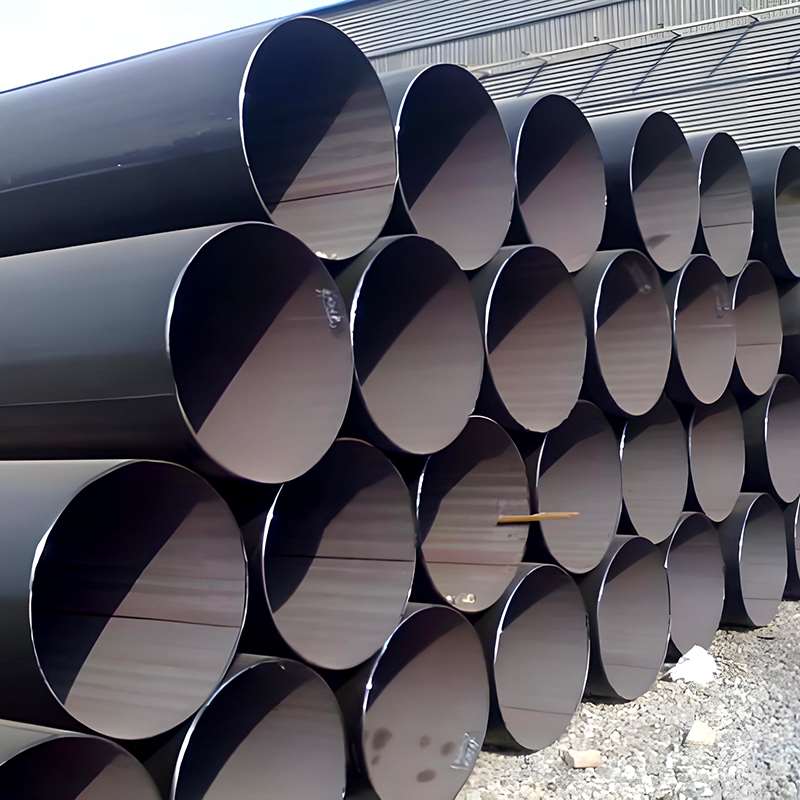
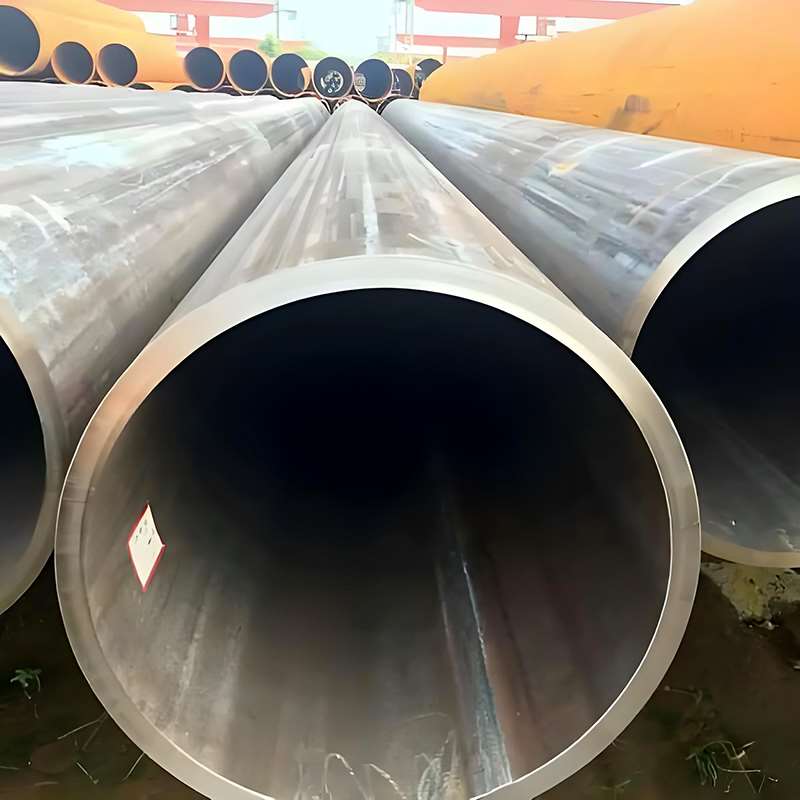
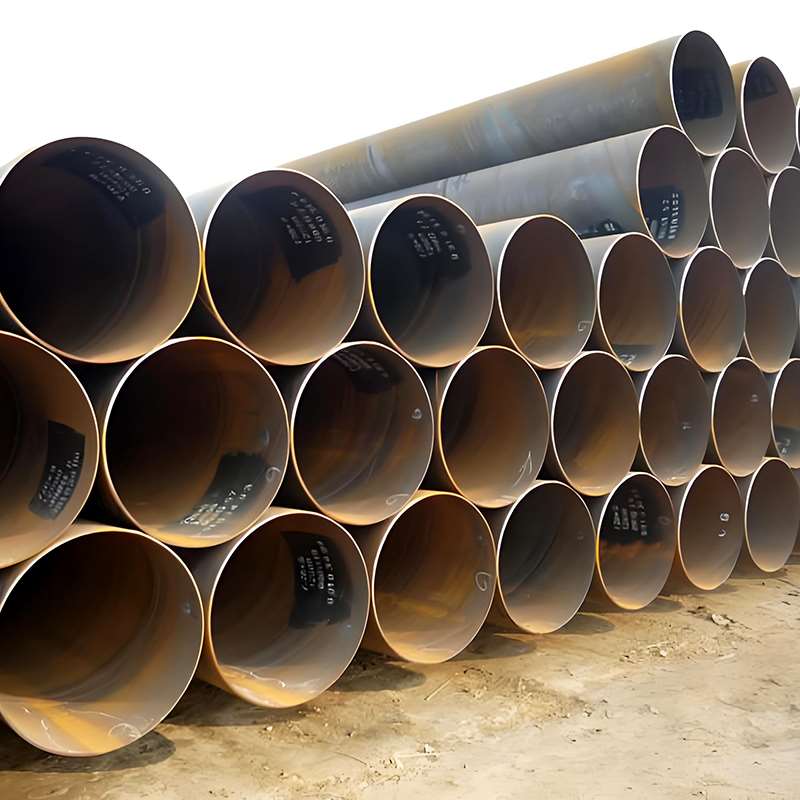
Compared with ERW (Electric Resistance Welded) pipes and seamless steel pipes, LSAW steel pipes are specifically designed for medium- to large-diameter and medium- to heavy-wall applications:
- Outside Diameter (OD): Typically ranges from 406 mm to 1,422 mm (16 inches to 56 inches). For certain special custom applications, sizes can exceed 60 inches (1,524 mm).
- Wall Thickness (WT): Typically ranges from 6.0 mm to 50 mm (0.236 inches to 1.97 inches), with wall thicknesses of up to 60 mm possible under extreme service conditions.
- Wall Thickness-to-Outside Diameter Ratio (WT/OD): Provides excellent flexibility and structural pressure-bearing capacity, making LSAW steel pipes suitable for high-pressure transmission pipelines.
II. Outer Diameter and Wall Thickness Specification Table
In engineering procurement, the standard dimensions of LSAW steel pipes are usually indicated by nominal pipe diameter (NPS / DN) and wall thickness grade (Schedule / WT).
| Nominal pipe diameter (NPS) | Outer diameter OD (mm) | SCH 20 / STD | SCH 40 | SCH 80 / XS | SCH 120 | SCH 160 |
| 16″ (DN400) | 406.4 | 7.92 | 12.70 | 16.66 | 23.83 | 30.96 |
| 18″ (DN450) | 457.2 | 7.92 | 14.27 | 19.05 | 29.36 | 34.93 |
| 20″ (DN500) | 508.0 | 9.53 | 15.09 | 20.62 | 32.54 | 38.10 |
| 22″ (DN550) | 558.8 | 9.53 | 15.88 | 22.22 | 34.93 | 41.28 |
| 24″ (DN600) | 609.6 | 9.53 (STD) | 17.48 | 24.61 (XS) | 38.89 | 46.02 |
| 26″ (DN650) | 660.4 | 9.53 (STD) | 12.70 (XS) | 17.48 | 28.58 | 42.00 |
| 28″ (DN700) | 711.2 | 9.53 (STD) | 12.70 (XS) | 15.88 | 31.75 | 45.00 |
| 30″ (DN750) | 762.0 | 9.53 (STD) | 12.70 (XS) | 17.48 | 33.32 | 48.00 |
| 32″ (DN800) | 812.8 | 9.53 (STD) | 12.70 (XS) | 17.48 | 35.71 | 50.00 |
| 34″ (DN850) | 863.6 | 9.53 (STD) | 12.70 (XS) | 17.48 | 38.10 | 52.00 |
| 36″ (DN900) | 914.4 | 9.53 (STD) | 12.70 (XS) | 19.05 | 40.49 | 55.00 |
| 40″ (DN1000) | 1016.0 | 9.53 (STD) | 12.70 (XS) | 20.62 | 44.45 | 58.00 |
| 42″ (DN1050) | 1066.8 | 9.53 (STD) | 12.70 (XS) | 22.22 | 46.02 | 60.00 |
| 48″ (DN1200) | 1219.2 | 9.53 (STD) | 12.70 (XS) | 25.40 | 50.00 | 62.00 |
| 52″ (DN1300) | 1320.8 | 9.53 (STD) | 12.70 (XS) | 25.40 | 52.00 | 65.00 |
| 56″ (DN1400) | 1422.4 | 9.53 (STD) | 12.70 (XS) | 25.40 | 55.00 | 68.00 |
III. Analysis of API 5L and ASTM Standards
1. Analysis of the API 5L Standard
Developed by the American Petroleum Institute (API), API 5L is specifically designed for long-distance, high-pressure pipelines used to transport oil, natural gas, and other fluids.
Two Product Specification Levels (PSL1 vs. PSL2):
- PSL1: The basic quality level, with relatively less stringent requirements for maximum chemical composition limits, impact toughness, and non-destructive testing. It is suitable for normal-temperature, low- to medium-pressure, or general-purpose fluid transportation.
- PSL2: The more stringent quality level. It requires low-temperature Charpy V-notch impact testing, stricter carbon equivalent limits to ensure weldability, and 100% non-destructive testing of both welds and the pipe body. PSL2 is specified for offshore engineering and high-pressure oil and gas pipelines.
Common Steel Grades:
- Basic grades: Grade B, X42, X46, X52
- High-strength grades: X60, X65, X70, X80
(The number following “X” represents the minimum yield strength in ksi. For example, X70 indicates a minimum yield strength of 70,000 psi / 485 MPa.) Higher-strength grades can maintain exceptionally high pressure-bearing capacity while allowing a reduction in wall thickness, thereby reducing the overall pipe weight.
2. Analysis of the ASTM Standard
Developed by the American Society for Testing and Materials (ASTM), ASTM standards are primarily intended for applications involving structural construction, piling, and pressure vessels.
| Standard | Typical Applications | Mechanical & Manufacturing Characteristics |
|---|---|---|
| ASTM A572 | Heavy structural steel, bridge columns, offshore piling | High-strength low-alloy niobium-vanadium structural steel (commonly Grade 50/60). Emphasizes high yield strength and performance in welded structures; hydrostatic testing is not required. |
| ASTM A671 | Piping for ambient- and low-temperature pressure service | Manufactured from pressure-vessel-grade steel plates that are formed and welded into pipe. Classified into various Classes (such as Class 12 and Class 22) according to temperature and pressure requirements. Hydrostatic testing and radiographic examination are mandatory. |
| ASTM A672 | Piping for moderate- and high-temperature, high-pressure service | Suitable for high-temperature and high-pressure plant piping and petrochemical facilities, with strict requirements for heat treatment conditions (such as annealing and normalizing) and non-destructive testing of welds. |
| ASTM A139 | General structural applications and water transmission | Covers large-diameter electric-fusion-welded and submerged-arc-welded steel pipe (Grades B–E), commonly used for municipal water transmission projects and foundation piling. |
3. Selection Differences between API 5L and ASTM Standards
- High-Pressure Oil and Gas Transportation ➔ API 5L (PSL2 grade, X52~X70 steel grade) is preferred.
- Load-Bearing Structures / Offshore Piling ➔ ASTM A572 Grade 50 is preferred.
- Power Plant and Petrochemical Pressure Pipelines ➔ ASTM A671 / A672 is preferred.