
In the oil and gas, water conservancy, and large-scale structural engineering sectors, choosing the right high-strength, high-pressure pipe is crucial. LSAW steel pipe is a key material for meeting the demanding requirements of large-diameter, high-pressure transportation and heavy-duty structural applications.
This article provides a comprehensive overview of LSAW steel pipes, including their definition, manufacturing process, key advantages, and major applications.
I. What Is LSAW Steel Pipe?
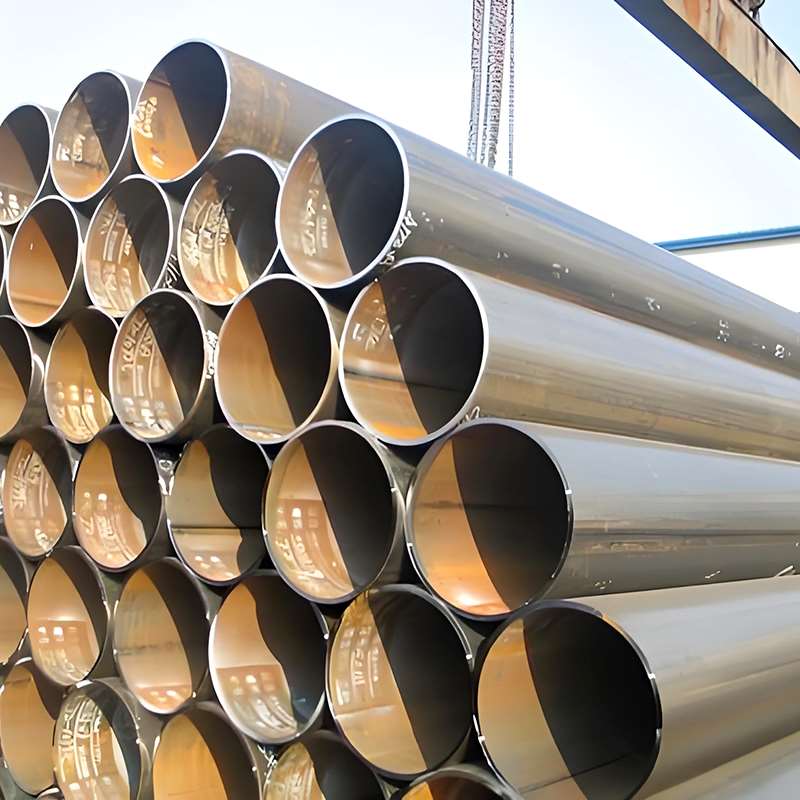
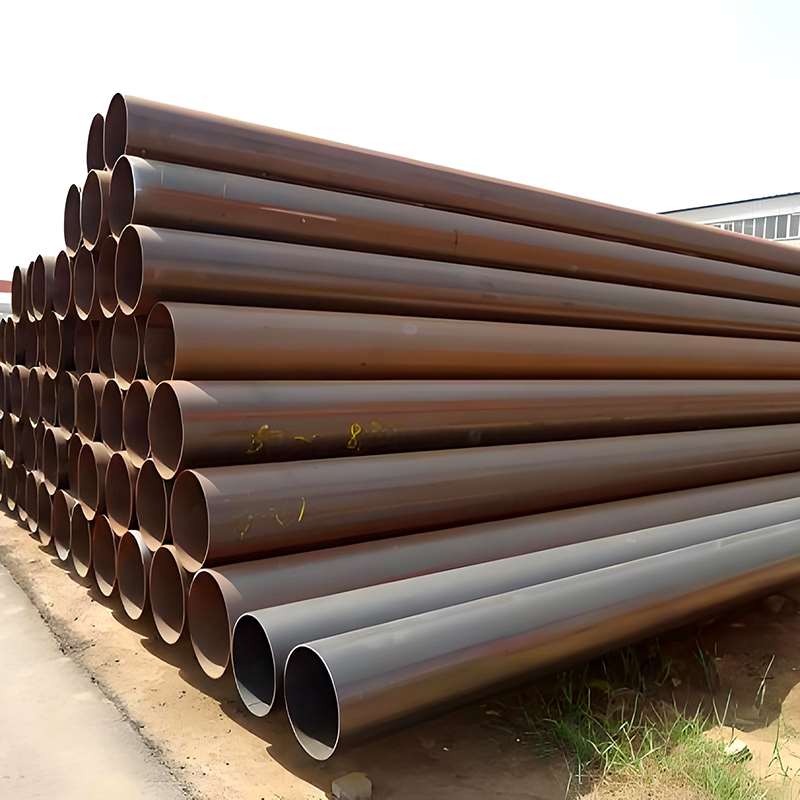
LSAW steel pipe is a longitudinally submerged arc welded pipe manufactured from medium- and heavy-gauge steel plates. The steel plate is formed into a pipe blank using a forming machine and then welded using double-sided submerged arc welding technology.
Its main characteristics include:
- Weld configuration: A single longitudinal straight seam.
- Size range: Typically large in diameter, generally ranging from 406 mm (16″) to 1,422 mm (56″) and above, with relatively thick walls that can exceed 60 mm.
- Pressure resistance: Excellent resistance to high pressure and impact, as well as outstanding low-temperature performance.
II. Manufacturing Process of LSAW Steel Pipe
The production process of LSAW steel pipe is highly rigorous and mainly consists of the following key steps:
Steel Plate Inspection and Preparation ➔ Edge Milling ➔ Pressure Forming ➔ Double-Sided Submerged Arc Welding ➔ Non-Destructive Testing (NDT) ➔ Mechanical Expansion / Hydrostatic Testing
1. Steel Plate Selection and Preparation
High-strength hot-rolled medium- and heavy-gauge steel plates that comply with standards such as API 5L and ASTM are selected. Before entering the plant, the plates undergo rigorous ultrasonic testing to ensure that there are no internal defects such as cracks or inclusions.
2. Plate Edge Milling
A double-sided edge milling machine is used to bevel and mill both longitudinal edges of the steel plate, ensuring precise edge dimensions and laying a solid foundation for subsequent welding quality.
3. JCOE / UOE Pressure Forming
There are currently two mainstream forming processes used internationally:
JCOE Forming: The steel plate is progressively pressed into a J shape ➔ C shape ➔ O shape, followed by expansion (E). This process offers high flexibility and is suitable for the production of multiple specifications in small batches.
UOE Forming: The edges of the steel plate are first press-bent, followed by U forming ➔ O forming, and finally mechanical expansion (E). This process offers high production efficiency and is suitable for large-volume production of standard specifications.
4. Submerged Arc Welding
Pre-welding: Gas-shielded welding is used for rapid tack welding and seam assembly.
Internal and External Welding: Multi-wire submerged arc welding technology is used to weld the pipe both internally and externally in sequence, ensuring full weld penetration, freedom from porosity, and sound fusion.
Hydrostatic Testing and Non-Destructive Testing: After welding, the steel pipes undergo 100% ultrasonic testing and X-ray testing. Each pipe is then subjected to a hydrostatic pressure test to ensure that it has no leakage or deformation under the design pressure.
III. Core Advantages of LSAW Steel Pipes
| Advantage | Detailed Description |
|---|---|
| Extra-Large Diameter and Thick Wall | Compared with other welded pipes, LSAW steel pipes can be manufactured with large outer diameters and thick walls, meeting the requirements of demanding and extreme operating conditions. |
| High Weld Quality | The submerged arc welding process is carried out under a layer of flux, resulting in no spatter and minimal oxidation. This produces dense, high-quality welds with mechanical properties close to those of the base metal. |
| Precise Geometric Dimensions | Full-length mechanical expansion eliminates internal residual stresses, resulting in high pipe roundness and straightness. |
| Uniform Stress Distribution | The longitudinal seam structure provides a simpler and more predictable stress state under internal pressure than spiral welded pipes, offering higher safety. |
IV. Common Applications
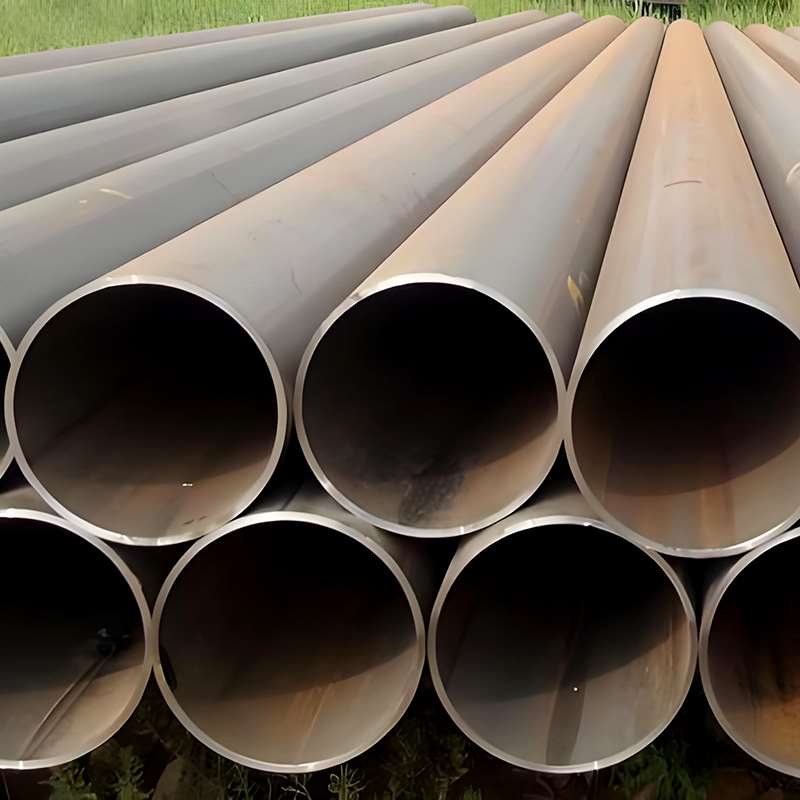
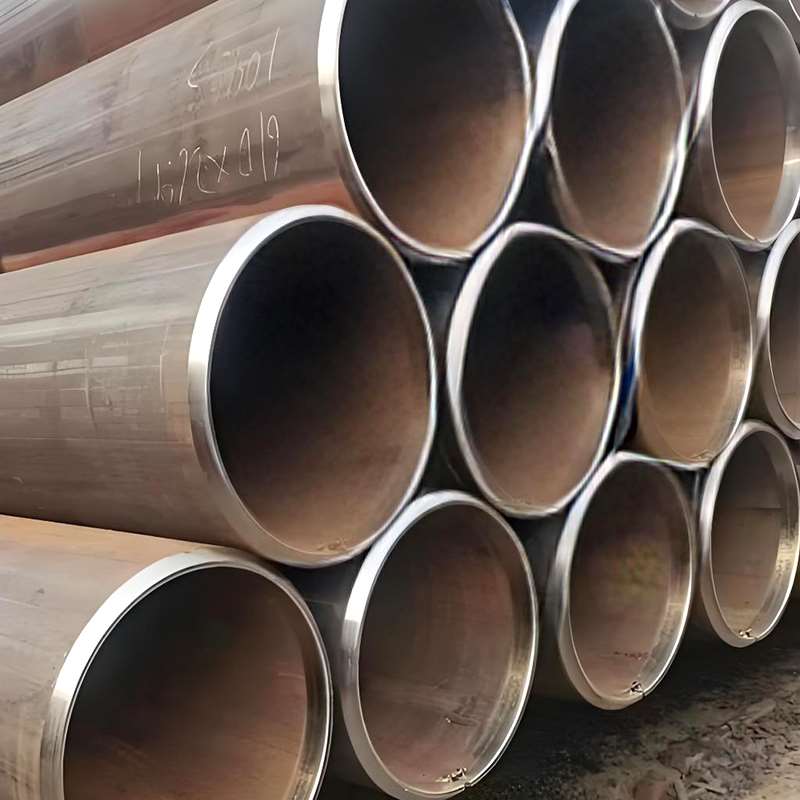
Onshore and Subsea Oil & Gas Transportation: Used as the primary pipe material for long-distance, high-pressure oil and gas pipelines, including onshore pipelines and shallow-water/deepwater offshore pipelines.
Offshore Platforms and Piling Projects: Used for offshore drilling platform jacket structures, steel pipe piles for deepwater terminals, and support columns for long-span bridges.
Water Conservancy and Urban Water Supply Networks: Used in large-scale water diversion projects and high-pressure main water supply and drainage networks.
Heavy-Duty Steel Structures: Used for large-span structural supports in airport terminals, sports stadiums, and other heavy-duty steel structures.
V. LSAW vs. Other Common Welded Pipes
When procuring steel pipes, LSAW is often compared with SSAW (Spiral Submerged Arc Welded Pipe) and ERW (Electric Resistance Welded Pipe).
| Feature | LSAW Steel Pipe | SSAW (Spiral Welded Pipe) | ERW (High-Frequency Longitudinally Welded Pipe) |
|---|---|---|---|
| Raw Material | Medium- and heavy-gauge steel plate | Hot-rolled steel coil | Hot-rolled steel coil |
| Weld Type | Single longitudinal straight seam | Spiral weld seam | Longitudinal electric resistance weld (without filler wire) |
| Outer Diameter & Wall Thickness | Large diameter and thick wall (up to 60 mm+) | Large diameter and medium wall thickness (typically ≤ 25 mm) | Small to medium diameter and relatively thin wall |
| Key Advantage | Highest pressure resistance and greater safety margin | Lower production costs and continuous production capability | High production efficiency and low cost |
| Typical Applications | High-pressure onshore/deepwater oil and gas trunk pipelines and heavy-duty structures | Onshore low- to medium-pressure water and gas transmission and piling | Low- to medium-pressure fluid transportation and structural applications |