
Evaluating the actual production capacity and bulk supply capability of an SSAW steel pipe manufacturer is one of the most critical steps in ensuring the on-time delivery of large-scale pipeline projects. Many buyers rely solely on the manufacturer’s brochure or website, where annual production capacity figures are often advertised. However, these numbers may not accurately reflect the supplier’s ability to fulfill large-volume orders within tight project schedules.
To determine whether an SSAW pipe manufacturer can reliably handle your order, you should evaluate four key aspects: documented production capacity, critical manufacturing bottlenecks, raw material supply capability, and quality inspection efficiency.
I. Verify the Manufacturer’s Claimed Production Capacity
An advertised annual production capacity of 300,000 tons, for example, typically represents the theoretical maximum output under ideal operating conditions—continuous production, no downtime, and manufacturing only one product specification.
To assess the manufacturer’s actual production capability, verify the following:
Number of Production Lines
Confirm how many SSAW production lines the factory operates. Multiple production lines enable the manufacturer to process large orders simultaneously and maintain production even when one line is under maintenance.
Delivery Records and Project References
Request shipment records for projects completed within the past year involving similar pipe diameters, wall thicknesses, and steel grades. Suppliers that can demonstrate successful deliveries to major oil & gas companies or large international pipeline projects generally have stronger large-scale production and delivery capabilities.
Business Licenses and Certification Scope
Verify the validity and scope of certifications such as ISO 9001, API 5L, and approvals from major classification societies. These certifications demonstrate that the manufacturer’s quality management system meets recognized international standards.
II. Identify the Critical Production Bottlenecks
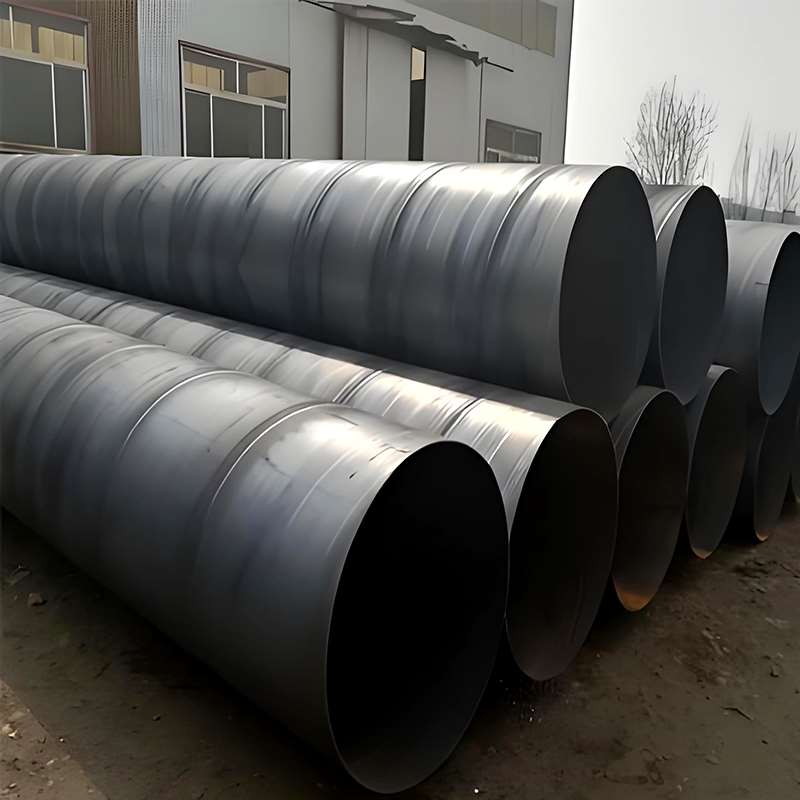
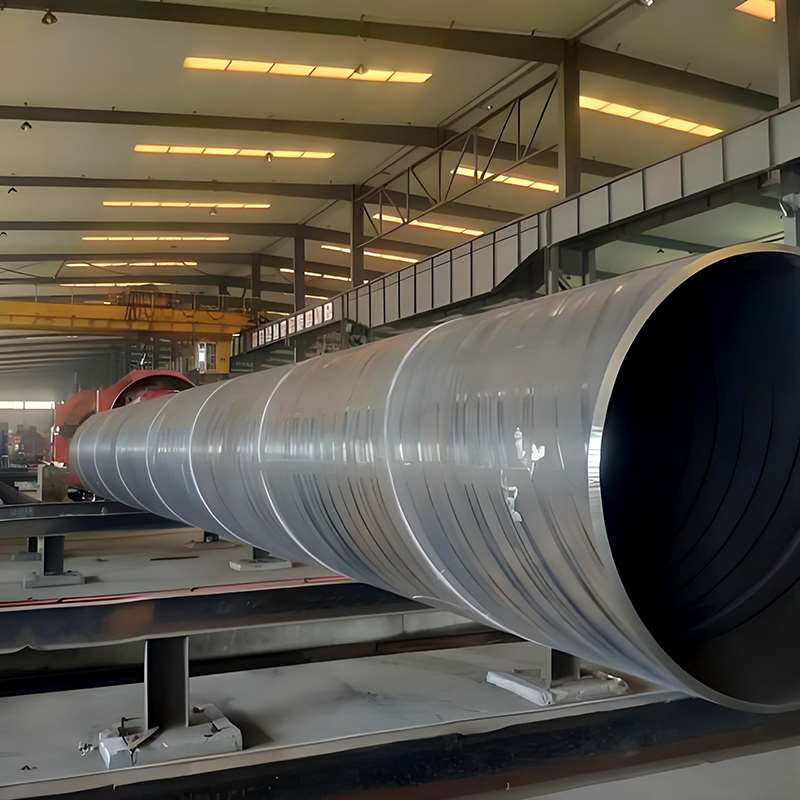
SSAW steel pipe manufacturing is a highly integrated production process. In practice, daily output is determined less by forming speed than by several key downstream bottlenecks.
1. Welding Efficiency
Submerged arc welding is one of the most important factors affecting production capacity. Since SSAW pipes have significantly longer weld seams than LSAW pipes, welding speed directly impacts overall output.
What to check:
Determine whether the manufacturer uses single-wire, tandem (double-wire), or multi-wire submerged arc welding systems. Tandem and multi-wire welding typically deliver 1.5 to 2 times the production efficiency of conventional single-wire welding.
2. Finishing and Non-Destructive Testing (NDT)
Production cannot continue efficiently if finished pipes accumulate while waiting for inspection. API 5L requires comprehensive inspection of pipeline steel pipes.
What to check:
Inspect the number and level of automation of online ultrasonic testing (UT) systems and industrial radiographic (X-ray) inspection equipment. If inspections rely primarily on manual testing, non-destructive testing is likely to become a major production bottleneck during large-volume orders.
3. Hydrostatic Testing Capacity
Every pressure-service steel pipe must undergo an individual hydrostatic pressure test before shipment.
What to check:
Evaluate the hydrostatic testing machine’s maximum test pressure, holding time, and testing cycle. If the factory operates only one aging hydrostatic testing unit, its daily production capacity will inevitably be constrained.
III. Evaluate Raw Material Availability and Supply Chain Strength
The primary raw material for SSAW steel pipes is hot-rolled steel coil. Therefore, a manufacturer’s ability to fulfill large orders depends not only on production capacity but also on the strength of its supply chain and financial resources.
Strategic Partnerships with Steel Mills
Manufacturers capable of supplying large-volume orders should maintain long-term procurement agreements with major steel producers. Without stable raw material sources, production may be delayed during periods of tight steel supply or market volatility.
On-Site Coil Inventory
During a factory audit, inspect the raw material warehouse. Well-established manufacturers typically maintain inventory of commonly used steel grades such as Q235B, Q345B (16Mn), and API 5L Grades X42 to X70, allowing production to begin immediately after an order is confirmed and reducing procurement lead times by approximately 7–15 days.
IV. Assess Coating and Post-Processing Capacity
If your project requires coated steel pipes—such as 3PE, FBE, coal tar epoxy, or cement mortar lining—the manufacturer’s coating capacity should be evaluated together with its pipe production capability.
A Common Risk
Many SSAW manufacturers produce only black steel pipes and outsource coating operations to third-party facilities. This additional transportation and handling not only increases logistics costs but also creates scheduling risks that can significantly delay project delivery.
Preferred Choice
Whenever possible, choose a manufacturer that provides a fully integrated production process, including pipe forming, welding, inspection, coating, and final shipment under one facility.
Four Practical Checks During a Factory Audit
An on-site factory inspection remains the most effective way to verify a manufacturer’s true production capability. During your visit, pay close attention to the following four areas:
- Inspect the warehouse: Check inventory levels of hot-rolled steel coils and finished pipes awaiting shipment.
- Inspect the production lines: Count how many forming machines are operating and determine whether single-wire or tandem welding is being used.
- Inspect the inspection facilities: Verify that the X-ray inspection room and online ultrasonic testing equipment are operating continuously.
- Review production records: Request access to raw material receiving logs, daily production reports, and quality inspection records. Compare the manufacturer’s actual average daily output over the past 30 days with your project schedule. Multiplying the verified daily production volume by the available production period provides a practical estimate of whether the supplier can deliver your order on time.