
I. Structural Construction Requirements
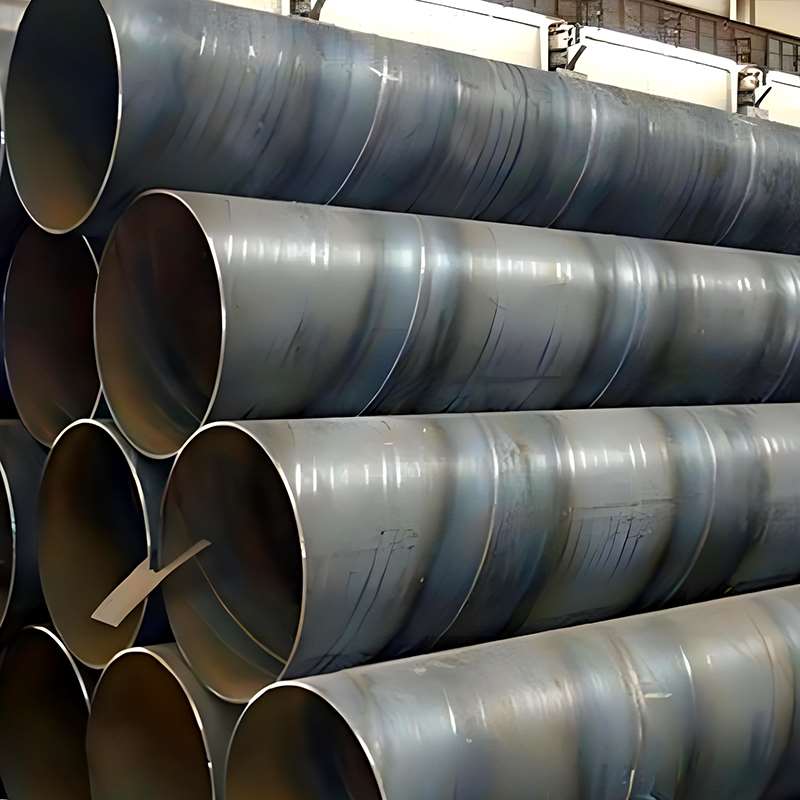
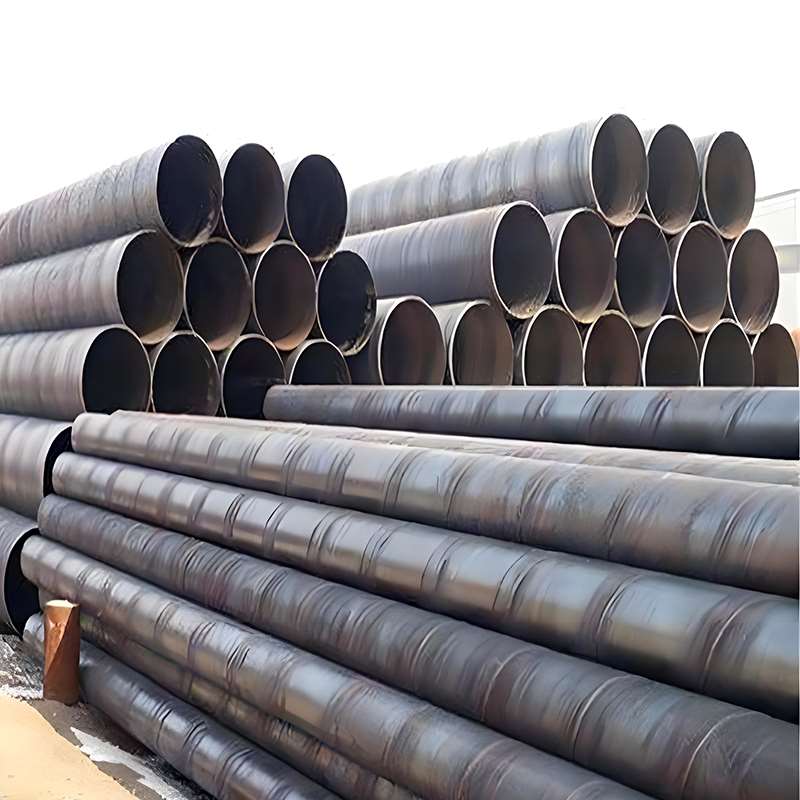
As modern construction projects continue to evolve toward larger spans, higher load-bearing capacity, and lightweight structural design, Spiral Steel Pipe for Structural Use has gradually become one of the key materials in steel structure engineering.
In applications such as stadiums, steel structure workshops, bridges, and large public buildings, project requirements extend beyond high structural strength and stability. Engineers and contractors also place increasing emphasis on construction efficiency, space utilization, and long-term service life.
Compared with traditional structural materials, spiral steel pipes offer significant advantages in load-bearing performance, torsional resistance, and overall structural stability. As a result, they are being increasingly adopted across a wide range of modern structural construction projects.
II. Structural Advantages of Spiral Welded Steel Pipes
(1) High Strength and Excellent Load-Bearing Capacity
Spiral welded steel pipes are commonly manufactured from high-strength steel grades such as Q235B and Q355B, offering excellent compressive strength, bending resistance, and torsional performance.
When used in large-scale structural applications, they can effectively enhance the overall safety and load-bearing reliability of the structure.
(2) Lightweight Structure with Reduced Foundation Load
Compared with conventional concrete structures, steel pipe structures have a significantly lower self-weight, which helps reduce foundation loads while also lowering transportation and installation costs.
For large-span buildings, minimizing structural dead weight is particularly critical to improving overall engineering efficiency and structural performance.
(3) Suitable for Columns and Structural Support Systems
Spiral steel pipes can be used not only for standard structural connections, but also directly as:
- Load-bearing columns
- Steel structure support systems
- Truss members
- Auxiliary bridge structures
Their circular cross-sectional design provides more uniform stress distribution, delivering superior stability under complex loading conditions.
III. Main Application Scenarios and Selection Recommendations for Structural Spiral Steel Pipes
Structural spiral steel pipes are widely used in modern steel structure engineering projects. Since different projects have varying requirements for load-bearing capacity, structural stability, wind resistance, and construction methods, pipe selection should not be based on price alone. Instead, it should be evaluated comprehensively according to actual working conditions and project requirements.
Below are practical selection recommendations based on common engineering applications.
1. Steel Structure Workshops
Application Features
Steel structure workshops typically require:
- Large interior space layouts
- Fewer internal support columns
- Fast construction and installation
- Long-term structural stability
Spiral steel pipes are commonly used for:
- Main structural columns
- Roof support systems
- Truss structures
Compared with conventional structural steel sections, circular steel pipe structures provide more uniform stress distribution and deliver a more modern architectural appearance.
Selection Recommendations
- Standard workshops: Q235B or Q355B is recommended
- Large-span workshops: Q355B is preferred
- Column structures: Increased wall thickness is recommended to improve stability
- Humid environments: Hot-dip galvanizing or FBE coating is recommended for corrosion protection
2. Stadiums and Large-Span Public Buildings
Application Features
Buildings such as stadiums and exhibition centers usually feature large-span designs and therefore require excellent bending resistance and torsional performance.
Circular steel pipe structures offer superior spatial load distribution, allowing for reduced intermediate supports and improved space utilization.
Selection Recommendations
- Large-diameter steel pipes are recommended
- Q355B or higher-grade steel materials are preferred
- Slenderness ratio control is critical
- Reinforced joint design is recommended for connection areas
3. Bridge Support Structures
Application Features
Bridge support structures are exposed to long-term operational stresses, including:
- Dynamic loads
- Wind loads
- Vibration
- Temperature fluctuations
As a result, high fatigue resistance and overall structural stability are essential requirements.
Selection Recommendations
- Medium to heavy wall thickness steel pipes are recommended
- Weld seams must undergo non-destructive testing (UT/RT)
- Fatigue-resistant performance should be prioritized
- Enhanced anti-corrosion protection is essential for outdoor applications
4. High-Rise Building Support Structures
Application Features
High-rise buildings must withstand not only substantial vertical loads, but also wind loads and seismic forces.
Structural spiral steel pipes are commonly used for:
- Core support structures
- External frame bracing systems
- Seismic-resistant support systems
Selection Recommendations
- Q355B or higher-grade steel is recommended
- Seismic performance and ductility design should be carefully considered
- Overall structural stability analysis is required
- Member slenderness ratio must be properly controlled
5. Outdoor Landscape Structures and Large Public Installations
Application Features
Typical applications include:
- Landscape corridor structures
- Airport structural systems
- Public art and architectural structures
These projects focus not only on structural performance, but also heavily emphasize architectural aesthetics.
Circular steel pipes provide a cleaner, more modern visual appearance while simplifying the overall structural design.
Selection Recommendations
- Priority should be given to dimensional and visual coordination
- Hot-dip galvanizing or industrial coating systems are recommended
- Weld seam grinding and surface finishing should be properly handled
- Wall thickness may be moderately reduced to improve cost efficiency where structurally permissible
Commonly Overlooked Factors in Structural Spiral Steel Pipe Selection
Many projects focus primarily on:
- Price
- Wall thickness
- Steel grade
However, the factors that truly determine long-term performance and service life are often:
| Commonly Overlooked Factors | Actual Impact |
|---|---|
| Structural Stability Design | May lead to structural deformation |
| Connection Joint Quality | Prone to cracking issues |
| Corrosion Protection System | Directly affects service life |
| Weld Seam Quality | Impacts overall structural safety |
| Slenderness Ratio Control | Affects buckling resistance and structural stability |
IV. Technical Parameter Table for Structural Spiral Steel Pipes
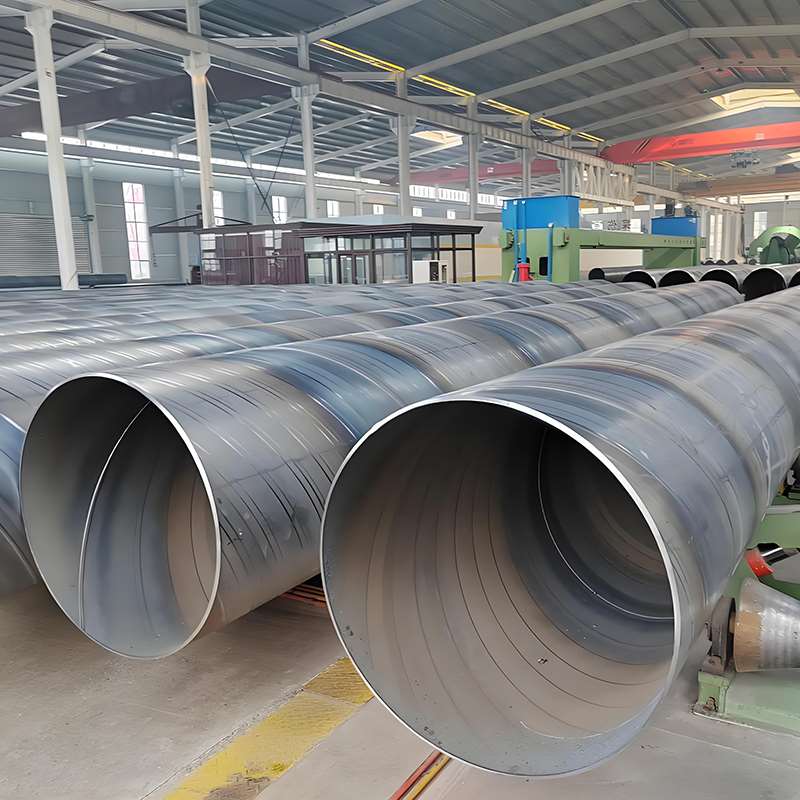
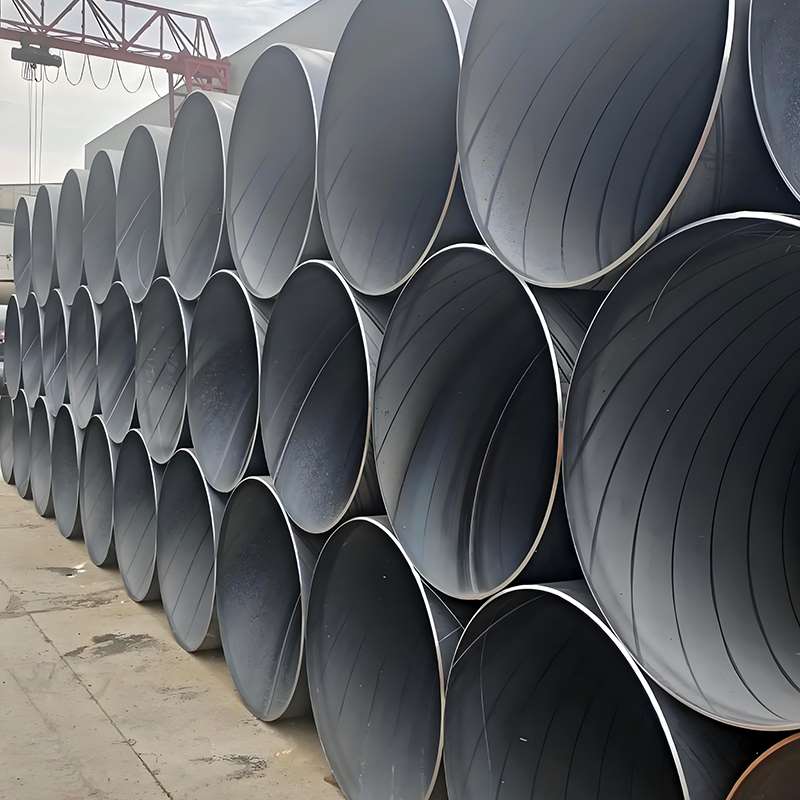
| Technical Item | Common Parameter Range | Technical Description |
|---|---|---|
| Product Type | Spiral Submerged Arc Welded Steel Pipe (SSAW) | Suitable for building structures and steel construction engineering |
| Common Material Grades | Q235B / Q355B / Q420B | Steel grade selection depends on structural load requirements |
| Outside Diameter Range | DN400 – DN3000 | Large-span structures typically use large-diameter steel pipes |
| Wall Thickness Range | 6mm – 25mm | Higher loads require greater wall thickness |
| Length Range | 6m – 18m (customizable) | Custom fixed-length production available according to project requirements |
| Manufacturing Process | Double-sided Submerged Arc Welding (DSAW) | Stable weld formation with high structural strength |
| Yield Strength | ≥235MPa / ≥355MPa | Varies according to steel grade |
| Tensile Strength | 370–630MPa | Depends on selected material grade |
| Weld Inspection | UT / RT Non-Destructive Testing | Ensures welds are free from cracks and defects |
| Ovality Tolerance | ≤ ±1% | Improves uniform stress distribution in structures |
| Straightness | ≤ L/1000 | Ensures installation accuracy and structural stability |
| Surface Treatment | Black coating / Anti-rust oil / Sandblasting | Selected based on service environment |
| Anti-Corrosion Systems | FBE / Hot-Dip Galvanizing / 3PE | Recommended for outdoor or corrosive environments |
| Connection Method | Welded Connection | Most commonly used in structural engineering applications |
| Application Environment | Building structures / Bridges / Workshops | Suitable for load-bearing and support structures |
| Applicable Standards | API 5L / ASTM A252 / GB/T 9711 | Can be manufactured according to project specifications |
V. Structural Spiral Steel Pipe Selection – Frequently Asked Questions (FAQ)
Q1: Should structural spiral steel pipes use Q235B or Q355B?
The selection depends on project load requirements and structural design conditions.
Generally:
- Q235B: Suitable for standard workshops, light-duty structures, and general support applications
- Q355B: Recommended for large-span structures, high-rise buildings, bridge supports, and medium-to-high strength engineering projects
In many cases where deformation occurs during later service life, the issue is not steel failure, but insufficient material strength reserve.
For projects involving:
- Large spans
- Dynamic loads
- High wind loads
- Seismic requirements
Q355B is generally the preferred choice.
Q2: Is a thicker wall always better for structural spiral steel pipes?
Not necessarily.
While increasing wall thickness does improve load-bearing capacity, it also introduces several drawbacks:
- Increased self-weight
- Higher material cost
- More difficult welding and fabrication
- Greater foundation load requirements
The correct approach is to design based on a comprehensive evaluation of:
- Load conditions
- Span length
- Slenderness ratio
- Structural stability
rather than assuming “thicker is always safer.”
In many structural failures, the root cause is actually:
- Insufficient stability design
- Improper joint detailing
rather than inadequate wall thickness.
Q3: Can spiral steel pipes be used as load-bearing columns?
Yes. In fact, they are widely used as load-bearing columns in modern steel structure engineering.
Typical applications include:
- Steel structure workshops
- Stadiums
- Airports
- Exhibition halls
- Large-span public buildings
Circular steel pipe sections provide more uniform stress distribution and superior torsional resistance compared with many traditional steel sections.
However, it is important to note that column design must include:
- Structural stability calculations
- Slenderness ratio control
- Joint strength analysis
Steel pipe strength alone is not sufficient for safe structural design.
Q4: Why are more large-scale buildings using circular steel tubes instead of H-beams?
Circular steel tubes offer clear advantages under complex loading conditions, including:
- Better torsional resistance
- More uniform stress distribution
- Improved structural stability
- Lower wind resistance
- More modern architectural appearance
They are especially advantageous in:
- Large-span structures
- Space truss systems
- Curved architectural designs
However, H-beams still maintain advantages in cost efficiency and construction convenience for conventional frame structures. Therefore, the two are not direct substitutes, but rather complementary structural solutions.
Q5: What is the most commonly overlooked quality issue in structural spiral steel pipes?
Many users focus only on:
- Wall thickness
- Price
- Steel grade
However, the factor that most directly affects structural safety is often:
Weld quality
Defects such as:
- Lack of fusion
- Porosity
- Cracks
can lead to fatigue failure under long-term loading.
Therefore, for critical engineering projects, it is essential to:
- Conduct UT (Ultrasonic Testing) or RT (Radiographic Testing) non-destructive inspection
- Verify not only whether testing is performed, but also the inspection coverage and acceptance standards
Q6: How should anti-corrosion systems be selected for outdoor structural projects?
Selection depends on environmental conditions.
For general outdoor environments:
- Anti-rust paint systems
- Epoxy coatings
- Hot-dip galvanizing
For humid or coastal environments:
- Hot-dip galvanizing + topcoat system
- FBE (Fusion Bonded Epoxy) coating
- Heavy-duty anti-corrosion systems
Many steel structures fail not due to insufficient strength, but due to long-term corrosion leading to wall thickness loss.
Therefore, anti-corrosion service life design is often just as critical as structural design itself.