
The construction of long-distance oil and gas pipelines faces multiple technical and economic challenges, including large diameters, high pressures, complex terrain, and requirements for long-term operational reliability. For oil and gas trunk lines, the pipe material not only serves the function of transporting the medium but also bears the responsibility for structural safety and durability.
Therefore, globally, API 5L standard submerged arc welded (SSAW) line pipe remains the preferred choice for long-distance pipelines.
This article provides a systematic analysis of the industry value of SSAW pipes from the perspectives of technical advantages, cost-effectiveness, and engineering suitability.
I. Core Advantages
i. Large-Diameter Forming Capability
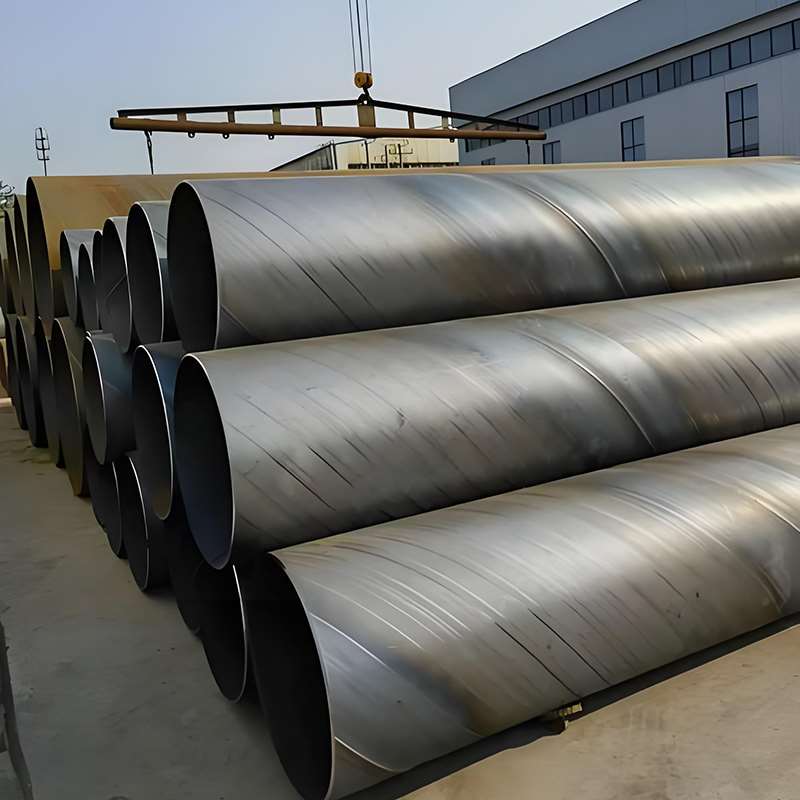
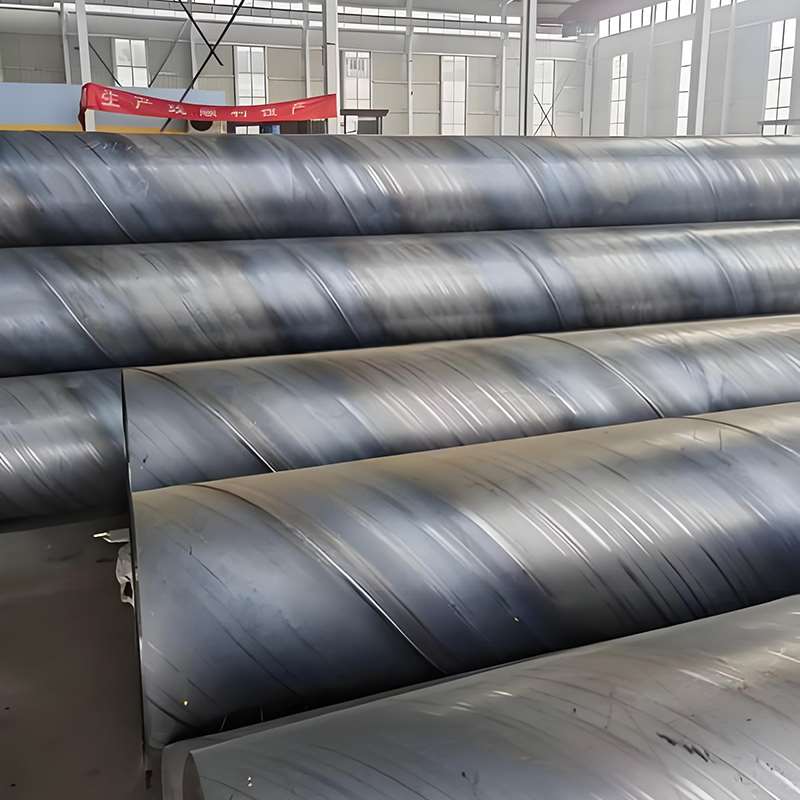
The manufacturing process of SSAW pipes gives them a distinct advantage in producing large-diameter pipe sections.
Through the spiral forming and submerged arc welding of hot-rolled steel strips, SSAW pipes can easily achieve diameters ranging from 323 mm to 2,500 mm and beyond, with wall thicknesses reaching 40 mm or more.
The spiral weld runs along the length of the pipe. Compared to line-seam submerged arc welded (LSAW) pipes, SSAW pipes feature longer welds, but stress is distributed more evenly along the weld, thereby reducing the risk of localized stress concentration.
For trunk lines transporting high-pressure natural gas or crude oil, this ensures the overall stability and crack resistance of the pipeline.
ii. Stress Distribution and Crack Resistance
The stress characteristics of the spiral weld are central to the technical advantages of SSAW pipes.
Under internal pressure, the spiral weld bears stress distribution along the spiral direction, reducing stress concentration points while enhancing the pipe’s ability to withstand radial and circumferential pressures. Combined with the high strength grades of modern steels (such as API 5L X65–X80), SSAW pipes demonstrate excellent low-temperature toughness and resistance to brittle fracture.
Furthermore, by controlling welding process parameters, resistance to hydrogen-induced cracking (HIC) and stress corrosion cracking (SSCC) can be enhanced, providing reliable assurance for the operation of long-distance pipelines in high-sulfur environments or cold regions.
iii. Cost-Effectiveness
In large-diameter and long-distance transmission projects, SSAW pipes offer higher material utilization than LSAW pipes.
Spiral welding allows for the use of narrower steel strips, reducing raw material waste while minimizing the number of welds and welding labor hours, thereby lowering production costs.
On the construction side, the weight of SSAW pipes is relatively manageable, facilitating mechanized lifting and welding, accelerating pipeline installation progress, and reducing on-site construction costs.
iv. Adaptability to Complex Terrain
Due to the combination of spiral welds and the pipe’s inherent toughness, SSAW pipes can be installed in environments with significant terrain variations.
They allow for a certain bending radius, reducing the reliance on pre-bent pipes or on-site hot bending operations, thereby lowering construction risks.
In high-temperature desert environments, low-temperature mountainous regions, or permafrost areas, SSAW pipes demonstrate high adaptability regarding thermal expansion, low-temperature brittle fracture, and stress concentration, ensuring the overall safety of the pipeline.
v. Compliance with API 5L Standards
The API 5L specification strictly defines the chemical composition, mechanical properties, and inspection criteria for pipe materials.
Modern SSAW pipes meet the requirements of PSL1 and PSL2, including chemical composition consistency, yield strength, impact toughness, and pass rates for non-destructive testing (UT, RT, and HIC testing).
Standardized production and strict quality control have led to widespread recognition of SSAW pipes in cross-border pipelines, oil and gas trunk lines, and major energy projects.
II. Comparative Analysis
Compared to other types of pipes, SSAW pipes offer distinct advantages in the construction of long-distance trunk lines:
- Seamless Pipes: Seamless pipes perform exceptionally well under high-pressure, small-diameter conditions; however, their production of large-diameter pipes is limited by hot-rolling capabilities, resulting in high production costs and significant material consumption, making them unsuitable for large-diameter long-distance transmission pipelines.
- LSAW Pipes (Long-Seam Submerged Arc Welded): In LSAW pipes, the welds run in a straight line along the pipe’s length, resulting in significant localized stress concentration. Their low-temperature toughness is slightly inferior to that of SSAW pipes. For large-diameter or non-standard-wall-thickness applications, production processes are limited, delivery cycles are long, and construction adaptability is inferior to that of SSAW pipes.
- ERW Pipes (Electric Resistance Welded): Suitable for small- to medium-diameter, low-pressure transmission applications. When used for long-distance oil and gas trunk lines, limitations in weld reliability and pipe diameter prevent them from meeting the requirements of high-pressure, large-diameter, and complex terrain conditions.
In summary, SSAW pipes are irreplaceable for large-diameter, long-distance, high-pressure, and complex terrain applications.
III. Engineering Applications
- Long-distance Oil and Gas Pipelines: In large-scale domestic and international oil transmission networks, SSAW pipes are commonly used to transport crude oil and natural gas. With diameters exceeding 1,200 mm and pressure ratings ranging from X60 to X80, these pipelines span hundreds to thousands of kilometers, ensuring stable transportation and low maintenance costs.
- Cross-Border Pipeline Projects: In long-distance pipeline projects in Central Asia, the Middle East, and North America, SSAW pipes enable continuous laying over long distances due to their high material utilization, weld reliability, and ease of construction, thereby reducing transportation and on-site construction risks.
- Installation in Complex Terrain: In environments such as high-temperature deserts, permafrost in mountainous regions, and river valleys, the toughness of SSAW pipes’ spiral welds and the adaptability of the pipe body effectively resist thermal expansion, geological subsidence, and low-temperature brittleness, ensuring long-term operational safety.
Recommended Reading: API 5L SSAW Line Pipe