
Carbon steel pipes are one of the most commonly used pipe materials in industrial, construction, oil and gas, and water conservancy projects.
The pressure and temperature that pipes withstand vary under different operating conditions.
Choosing the wrong pipe material can not only affect its service life but also pose safety hazards.
Therefore, pressure and temperature are important reference indicators for selecting carbon steel pipes.
I. The Importance of Pressure in Carbon Steel Pipe Selection
Pressure is a core factor in pipeline design.
The higher the internal pressure the pipe withstands, the greater the strength required of the pipe material.
Common pressure levels can be divided into low pressure, medium pressure, and high pressure.
- Low-pressure pipelines: Such as indoor water supply and HVAC systems, where the pressure is low, ERW carbon steel pipes or galvanized pipes are sufficient.
- Medium-pressure pipelines: Such as urban water supply and general industrial pipelines, SSAW spiral welded pipes can be selected, balancing strength and cost-effectiveness.
- High-pressure pipelines: Such as oil and gas long-distance transmission pipelines and high pressure boiler pipes (carbon steel boiler tubes), seamless carbon steel pipes or LSAW straight seam welded pipes are recommended to ensure pressure safety.
Pressure level directly determines the thickness, steel grade, and manufacturing process of the pipe material.
Especially in boilers and high-pressure hot water systems, selecting the appropriate carbon steel boiler tube is crucial, ensuring both pipeline safety and extended service life.
II. The Influence of Temperature on Carbon Steel Pipe Selection
Temperature is another critical factor.
High temperatures can affect the toughness and corrosion resistance of the pipe material, while low temperatures can lead to brittle fracture.
When selecting pipe materials, it is essential to determine the appropriate type of pipe based on the actual operating temperature.
For ambient to medium temperatures: ERW carbon steel pipes and SSAW carbon steel pipes are suitable for most industrial and construction applications.
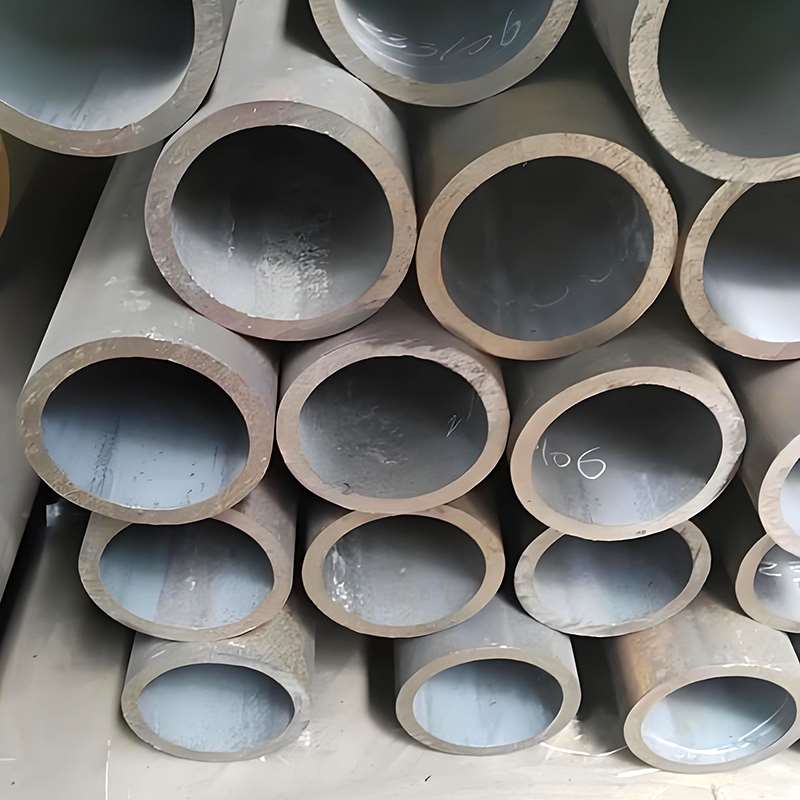
For high-temperature applications: such as steam pipes, boiler tubes, and high-temperature oil pipelines, seamless pipes or carbon steel pipes conforming to ASTM A106 standards should be selected.
When the pipeline is subjected to both high pressure and high temperature, seamless pipes should be prioritized to ensure safety and reliability.
III. Method for Selecting Pipe Materials Based on Combined Pressure and Temperature
In practical selection, one cannot consider pressure or temperature in isolation, but rather must consider both factors comprehensively.
The selection principles are as follows:
- High pressure, high temperature conditions → Seamless carbon steel pipe or ASTM A106 pipe
- Medium pressure, medium temperature conditions → SSAW or LSAW welded pipe
- Low pressure, normal temperature conditions → ERW carbon steel pipe or galvanized steel pipe
The table below can be used as a reference:
| Service Condition | Pressure | Temperature | Recommended Pipe Type |
|---|---|---|---|
| Low Pressure, Ambient Temperature | ≤ 1.0 MPa | ≤ 100 °C | ERW Pipe / Galvanized Pipe |
| Medium Pressure, Medium Temperature | 1–10 MPa | 100–300 °C | SSAW Pipe / LSAW Welded Pipe |
| High Pressure, High Temperature | ≥ 10 MPa | ≥ 300 °C | Seamless Carbon Steel Pipe / ASTM A106 |
IV. Other Influencing Factors
The following factors should also be considered during selection:
- Pipe diameter: Welded pipes are preferred for large-diameter long-distance pipelines.
- Corrosive environments: For seawater, chemical liquids, or underground pipelines, galvanized pipes or carbon steel pipes with coating can be used.
- Economics: Material costs and ease of construction need to be considered. While seamless pipes are suitable for high-pressure and high-temperature conditions, they are more expensive.
- Construction and processing: Welded pipes are easy to cut and weld, resulting in shorter construction periods; seamless pipes are more difficult to process but have higher pressure resistance.
V. Application Examples
1. Low-Pressure Water Piping
In indoor water supply or HVAC systems, the pressure is low, and the construction environment is usually simple.
ERW carbon steel pipes are recommended.
Reasons: High dimensional accuracy, uniform wall thickness, fast construction, easy cutting and welding, and low cost.
Usage suggestions: Suitable for mass construction and standardized projects; anti-corrosion treatment can extend service life.
2. Medium-Pressure Oil Pipelines
For urban water supply or general industrial oil pipelines, the pipe diameter is relatively large, and the conveying pressure is moderate.
SSAW spiral welded pipes are recommended.
Reason: Suitable for large-diameter, long-distance transportation; the strength meets medium-pressure requirements, and the price is more economical than seamless pipes.
Usage suggestions: Pay attention to weld quality and anti-corrosion treatment during construction to ensure long-term stable operation.
3. High-Temperature Steam Pipelines
In boilers, power plants, or industrial steam systems, pipelines withstand high-temperature and high-pressure fluids.
ASTM A106 grade B seamless carbon steel pipe are recommended.
Reason: Seamless structure, strong pressure bearing capacity, and excellent high-temperature resistance, ensuring safe pipeline operation.
Usage suggestions: Select the appropriate pipe diameter and wall thickness based on calculations, and regularly inspect the pipeline condition to ensure long-term safety.