
I. Overview of BS 1387 Standard
Standard Name: BS 1387 – Specification for screwed and socketed steel tubes and for plain end steel tubes suitable for welding or for screwing to BS 21 pipe threads
Standard Type: British Standard, applicable to threaded steel tubes, socketed steel tubes, and welded or straight-end steel tubes.
Main Applications: Construction, structural supports, liquid and gas pipelines, mechanical equipment pipe racks, etc.
Scope of Application:
Threaded tubes: For screw-connectable piping systems
Socketed tubes: For easy connection of sleeve ends
Straight ends: Suitable for welding or threading
Pressure Rating: Medium and low pressure piping systems
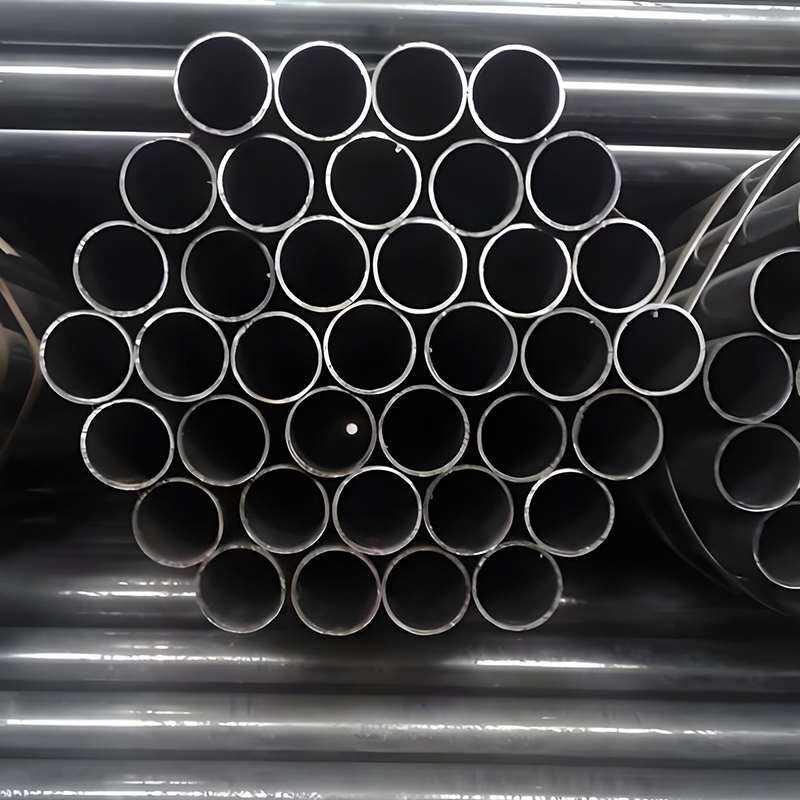
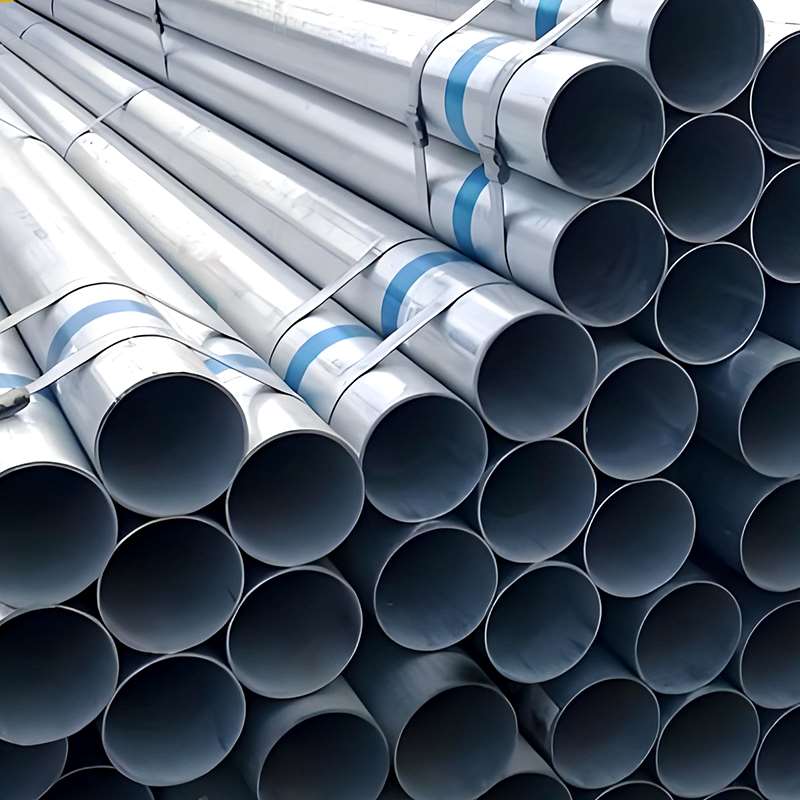
II. BS 1387 Carbon Steel Welded Pipes: Chemical Composition and Mechanical Properties
i. Chemical Composition Table
| Element | Content Range | Function / Description |
|---|---|---|
| Carbon (C) | ≤0.25–0.30% | Controls steel hardness and strength, ensures weldability |
| Manganese (Mn) | 0.30–1.50% | Improves tensile strength and toughness |
| Sulfur (S) | ≤0.04% | Reduces brittleness, ensures welding performance |
| Phosphorus (P) | ≤0.04% | Reduces brittleness, improves corrosion resistance |
| Silicon (Si) | 0.10–0.30% | Enhances elasticity and tensile strength |
ii. Mechanical Properties Table
| Mechanical Property | Reference Requirement | Description |
|---|---|---|
| Yield Strength σy (MPa) | 210–250 MPa | Ensures the pipe does not undergo permanent deformation under working pressure |
| Tensile Strength σu (MPa) | 350–500 MPa | Guarantees overall pipe strength and safety |
| Elongation A (%) | ≥20% | Provides sufficient plasticity for welding and on-site fabrication |
| Elastic Modulus E (GPa) | 200 | Reference for structural stiffness, useful for design calculations |
| Impact Toughness (optional) | ≥27 J (20°C) | Ensures the pipe does not become brittle in low-temperature environments |
III. BS 1387 Specifications and Dimensions of Carbon Steel Welded Pipes
| Nominal Diameter DN (mm) | Outer Diameter OD (mm) | Wall Thickness WT (mm) | Length per Piece (m) | Theoretical Weight (kg/m) | Remarks |
|---|---|---|---|---|---|
| 15 | 21.3 | 2.6 | 6 | 1.7 | Small diameter pipe |
| 20 | 26.9 | 2.8 | 6 | 2.3 | — |
| 25 | 33.7 | 3.2 | 6 | 3.2 | — |
| 32 | 42.4 | 3.6 | 6 | 4.5 | — |
| 40 | 48.3 | 3.6 | 6 | 5.3 | — |
| 50 | 60.3 | 3.6 | 6 | 7.5 | Common medium diameter pipe |
| 65 | 76.1 | 4.0 | 6 | 11.0 | — |
| 80 | 88.9 | 4.0 | 6 | 13.5 | — |
| 100 | 114.3 | 4.5 | 6 | 20.0 | — |
| 125 | 139.7 | 5.0 | 6 | 28.0 | — |
| 150 | 168.3 | 5.6 | 6 | 38.0 | — |
| 200 | 219.1 | 6.0 | 6 | 55.0 | Large diameter pipe |
| 250 | 273.0 | 7.0 | 6 | 80.0 | — |
| 300 | 323.9 | 7.5 | 6 | 110.0 | — |
IV. BS 1387 Carbon Steel Pipe Application Areas and Selection Guide
i. Main Application Areas
BS 1387 standard pipes are mainly medium and low pressure carbon steel pipes, suitable for the following scenarios:
(1) Piping Systems
Water supply pipes, drainage pipes, gas pipes, steam pipes, hydraulic pipes
Suitable for residential, commercial and industrial piping systems
Threaded or sleeved ends can be selected for easy connection
(2) Machinery and Support Systems (Light Structures)
Small equipment supports, machinery supports, pipe supports
Suitable for bearing lighter loads, mainly used for auxiliary support rather than load-bearing large building structures
(3) General Industrial Use
Plant and workshop piping, low-pressure gas or liquid transportation
Weldable or can be connected with threaded/sleeved fittings
ii. Selection Reference Guide
(1) Determine the Application
Pipeline Transportation → Select pipe diameter, wall thickness, and end type (threaded, sleeve, straight end)
Lightweight Supports or Mechanical Assistance → Select small to medium diameter pipes to ensure they can withstand local loads
(2) Pipe Diameter and Wall Thickness
Small Diameter (DN15–DN50): Residential and small industrial piping
Medium Diameter (DN65–DN100): Commercial or medium-sized industrial piping
Large Diameter (DN125–DN200+): Large industrial piping or steam transportation
Wall thickness should be selected based on working pressure and strength requirements; standards provide reference values.
(3) Material Grade
Carbon steel (standard water supply, gas supply, drainage)
Low alloy steel (corrosion resistant or light load high strength requirements, customizable)
(4) End Type
Threaded end: convenient for pipe connection
Sleeve end: easy to disassemble and maintain
Straight pipe end: suitable for welding or on-site processing
(5) Corrosion Protection and Surface Treatment
Outdoor or humid environment → Hot-dip galvanizing or painting recommended
Indoor non-corrosive environment → Black pipe or ordinary carbon steel pipe can be used
iii. Practical Selection Steps
Determine the pipe’s intended use or support purpose.
Identify pipe diameter and wall thickness, referring to the pressure rating.
Select the end type (threaded/sleeve/straight end).
Determine the material grade (carbon steel/low alloy steel).
Determine the corrosion protection method.
Verify that the supplier complies with BS 1387 standards and the Material Test Certificate (MTC).
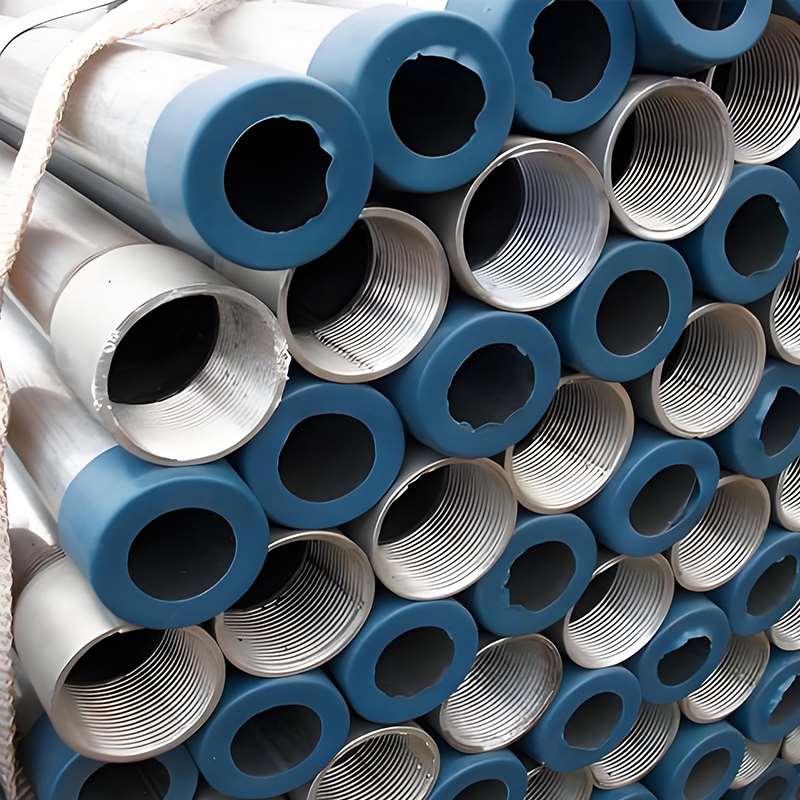
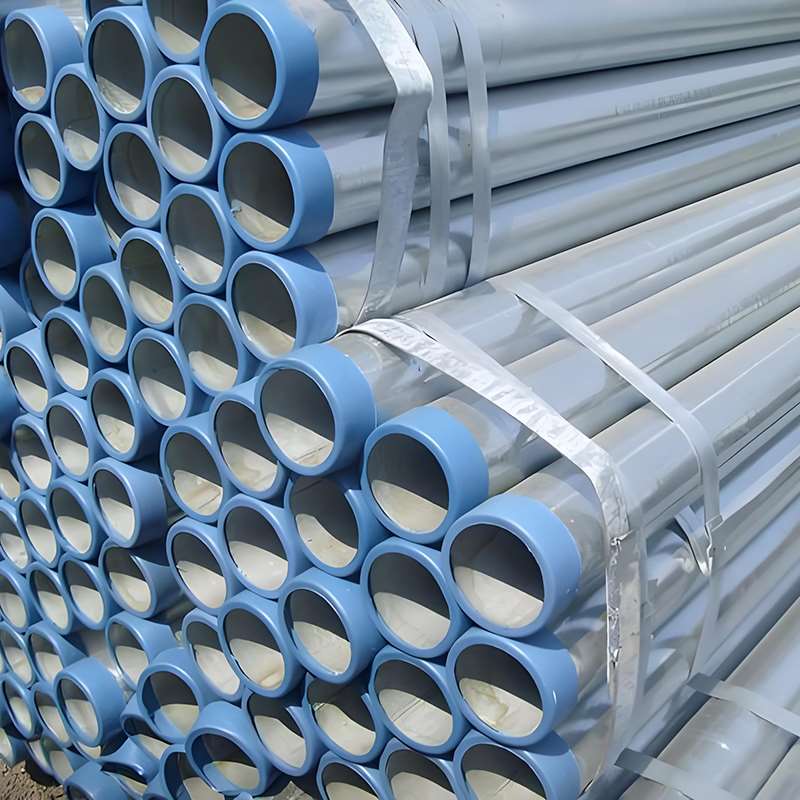
V. BS 1387 Carbon Steel Pipe Testing Standard Table
| Test Category | Test Item | Test Method / Standard | Acceptance Criteria / Parameters | Remarks / Notes |
|---|---|---|---|---|
| Chemical Composition | Carbon (C) | Optical Emission Spectroscopy (OES) or chemical analysis | ≤0.25–0.30% | Controls steel hardness and weldability |
| Manganese (Mn) | Optical Emission Spectroscopy (OES) | 0.30–1.50% | Improves strength and toughness | |
| Sulfur (S) | Optical Emission Spectroscopy (OES) | ≤0.04% | Reduces brittleness, ensures weldability | |
| Phosphorus (P) | Optical Emission Spectroscopy (OES) | ≤0.04% | Improves corrosion resistance, reduces brittleness | |
| Silicon (Si) | Optical Emission Spectroscopy (OES) | 0.10–0.30% | Increases elasticity and strength | |
| Mechanical Properties | Yield Strength σy | Tensile Test | 210–250 MPa | Ensures safe working stress of the pipe |
| Tensile Strength σu | Tensile Test | 350–500 MPa | Ensures overall strength | |
| Elongation A | Tensile Test | ≥20% | Ensures plasticity and weldability | |
| Impact Toughness (Optional) | Charpy Impact Test | ≥27 J (20°C) | Prevents brittle fracture at low temperatures | |
| Dimensional Tolerance | Outer Diameter OD | Vernier Caliper / Micrometer | In accordance with standard table tolerances | Based on nominal diameter and standard size |
| Wall Thickness WT | Vernier Caliper / Ultrasonic Gauge | In accordance with standard table tolerances | Ensures pipe pressure capacity | |
| Length L | Measure coil or straight pipe | ±50 mm (typical 6 m) | Length can be customized | |
| Straightness | Straightening Measurement | Deviation ≤0.5% per 6 m | Ensures ease of installation | |
| Weld & Surface Inspection | Weld Quality | Visual / Magnetic Particle Testing (MPT) | Welds uniform, no cracks, porosity, slag, incomplete penetration | Ensures pipe safety |
| Surface Defects | Visual / Ultrasonic Test | Smooth and flat, no pits, scratches, or cracks | Ensures aesthetics and construction convenience | |
| Anti-Corrosion Layer Thickness (e.g., galvanized/painted) | Magnetic Thickness Gauge / Pull-off Test | Uniform coverage, no peeling, thickness meets design requirements | Extends service life of the pipe |