
I. Standard Overview
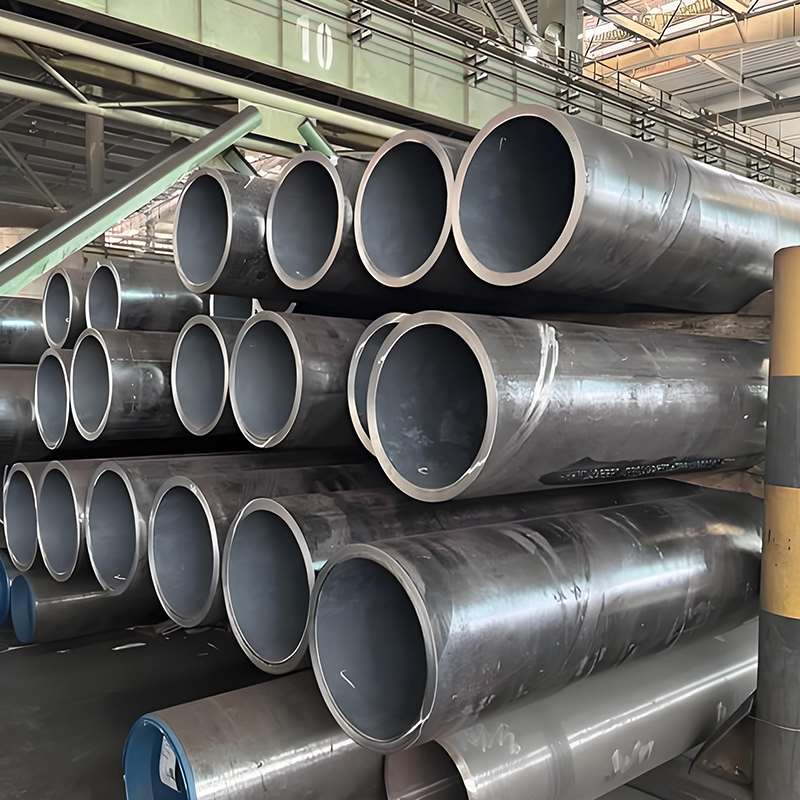
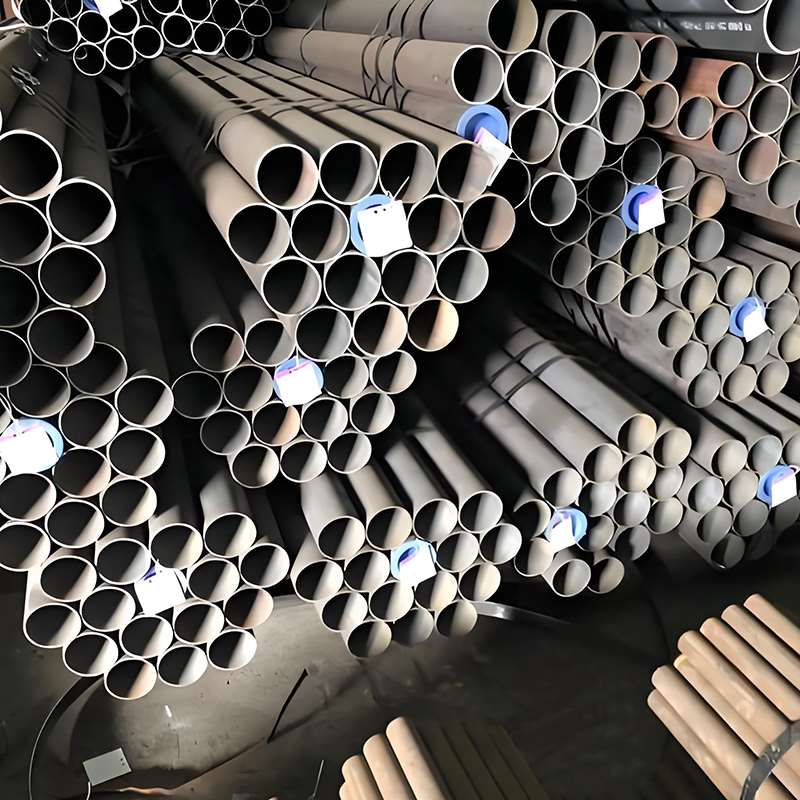
ASTM A333 is an international standard from the American ASTM International, specifically designed for steel pipes used in cryogenic services, including seamless and welded steel pipes. This standard applies to piping systems used to transport liquefied gases, cryogenic liquids, natural gas, and cryogenic process fluids in cryogenic environments, ensuring the toughness and resistance to brittle fracture of the pipes under cryogenic conditions.
II. Characteristics of ASTM A333 Steel Pipes
(1) High Low-Temperature Toughness
The steel pipes undergo rigorous low-temperature impact testing to ensure they will not fracture brittlely in low-temperature environments, making them suitable for liquefied gas, cryogenic liquid, and natural gas pipelines.
(2) Diverse Pipe Types
Seamless Pipes: Uniform structure, strong resistance to internal pressure, suitable for high-pressure, low-temperature operating conditions.
Welded Pipes: Economical and practical, suitable for medium- and low-pressure pipelines, with weld quality meeting low-temperature standards.
(3) Reliable Pressure Resistance
According to different grades (Grade 1, 3, 6), yield strength, tensile strength, and elongation all meet the design requirements for cryogenic fluid transportation.
(4) Wide range of applications
Liquefied petroleum gas (LPG), cryogenic liquids, natural gas, cryogenic process fluid transportation
Industrial cryogenic process pipelines, refrigeration systems, liquefied natural gas (LNG) facilities
(5) Clear grade distinctions
Grade 1: Low-pressure, conventional cryogenic pipelines
Grade 3: Medium-to-high-pressure cryogenic pipelines
Grade 6: For use in high-pressure or extremely low-temperature environments
(6) High safety
Complies with the chemical composition and mechanical performance requirements of ASTM A333 standards, ensuring safe and reliable use of pipelines under cryogenic conditions.
III. Chemical Composition and Mechanical Properties
i. Chemical Composition
| Steel Grade | C (%) | Mn (%) | P (%) | S (%) | Si (%) | Description |
|---|---|---|---|---|---|---|
| Grade 1 | ≤ 0.30 | 0.27–0.90 | ≤ 0.035 | ≤ 0.035 | ≤ 0.10 | Standard low-temperature service |
| Grade 3 | ≤ 0.30 | 0.27–0.90 | ≤ 0.035 | ≤ 0.035 | ≤ 0.10 | Medium to high-pressure low-temperature pipelines |
| Grade 6 | ≤ 0.30 | 0.27–0.90 | ≤ 0.035 | ≤ 0.035 | ≤ 0.10 | High-pressure or ultra-low temperature environments |
ii. Mechanical properties
| Steel Grade | Yield Strength (MPa) | Tensile Strength (MPa) | Elongation (%) | Low-Temperature Impact Toughness |
|---|---|---|---|---|
| Grade 1 | ≥ 205 | 330–480 | ≥ 20 | −29℃, Charpy V-notch ≥ 27 J |
| Grade 3 | ≥ 240 | 400–520 | ≥ 20 | −29℃, Charpy V-notch ≥ 27 J |
| Grade 6 | ≥ 275 | 450–550 | ≥ 20 | −51℃, Charpy V-notch ≥ 27 J |
IV. ASTM A333 Low Temperature Steel Pipe Specification Dimensions
| NPS(inch) | OD(mm) | WT(mm) | Schedule | Theoretical weight kg/m |
| 1/2 | 21.3 | 2.77–4.78 | SCH 10–80 | 2.2–4.5 |
| 3/4 | 26.7 | 2.87–5.54 | SCH 10–80 | 3.0–5.7 |
| 1 | 33.4 | 3.38–6.55 | SCH 10–80 | 4.3–8.0 |
| 1 1/4 | 42.2 | 3.56–7.11 | SCH 10–80 | 5.6–11.0 |
| 1 1/2 | 48.3 | 3.68–7.62 | SCH 10–80 | 6.7–13.5 |
| 2 | 60.3 | 3.91–9.27 | SCH 10–80 | 9.2–19.5 |
| 2 1/2 | 73.0 | 4.19–9.53 | SCH 10–80 | 12.0–24.5 |
| 3 | 88.9 | 4.55–11.13 | SCH 10–80 | 16.0–34.0 |
| 4 | 114.3 | 4.78–12.70 | SCH 10–80 | 21.0–49.0 |
| 6 | 168.3 | 5.54–15.09 | SCH 10–80 | 33.0–84.0 |
| 8 | 219.1 | 6.35–20.64 | SCH 10–160 | 50.0–150.0 |
| 10 | 273.0 | 7.11–22.23 | SCH 10–160 | 74.0–210.0 |
| 12 | 323.9 | 7.92–25.40 | SCH 10–160 | 100.0–280.0 |
V. Production Process Flow
i. Seamless Steel Pipe Production Flow
(1) Hot-rolled Seamless Steel Pipe Flow
Steel billet → Heating → Forging → Drilling → Hot rolling sizing → Heat treatment (annealing/normalizing) → Dimensional correction → Surface treatment → Inspection → Finished product warehousing
(2) Cold-drawn Seamless Steel Pipe Flow
Hot-rolled billet → Pickling → Cold drawing sizing → Annealing → Dimensional correction → Surface treatment → Inspection → Finished product warehousing
ii. Welded Steel Pipe Production Process
(1) ERW (High Frequency Resistance Welding) Steel Pipe Process
Steel strip → Forming → High Frequency Resistance Welding → Straightening → Dimensional Correction → Heat Treatment (Optional) → Surface Treatment → Inspection → Finished Product Warehousing
(2) LSAW / SSAW (Longitudinal/Spiral Welding) Steel Pipe Process
Steel plate → Leveling → Forming → Longitudinal/Spiral Welding → Straightening → Heat Treatment (Optional) → Dimensional Correction → Surface Treatment → Inspection → Finished Product Warehousing
VI. Low Temperature Performance and Application Reference
i. Low Temperature Performance
| Pipe Grade | Minimum Service Temperature | Low-Temperature Toughness Description |
|---|---|---|
| Grade 1 | −29℃ | Suitable for general low-temperature liquid and natural gas pipelines |
| Grade 3 | −50℃ | Suitable for medium- to low-temperature pressure pipelines, LPG, and low-temperature process pipelines |
| Grade 6 | −101℃ | For high-pressure, low-temperature service, LNG, and ultra-low-temperature chemical process pipelines |
ii. Typical Applications
| Application Scenario | Recommended Grade | Notes |
|---|---|---|
| Low-temperature natural gas pipelines | Grade 1 / 3 | Depends on ambient temperature and pressure |
| Liquefied petroleum gas (LPG) pipelines | Grade 3 | Ensures safe transport under medium to low temperatures |
| Liquefied natural gas (LNG) pipelines | Grade 6 | Used under ultra-low temperature conditions, withstands high pressure |
| Low-temperature chemical process pipelines | Grade 3 / 6 | Chemical liquids can reach −50℃ or lower |
VII. Testing Standards
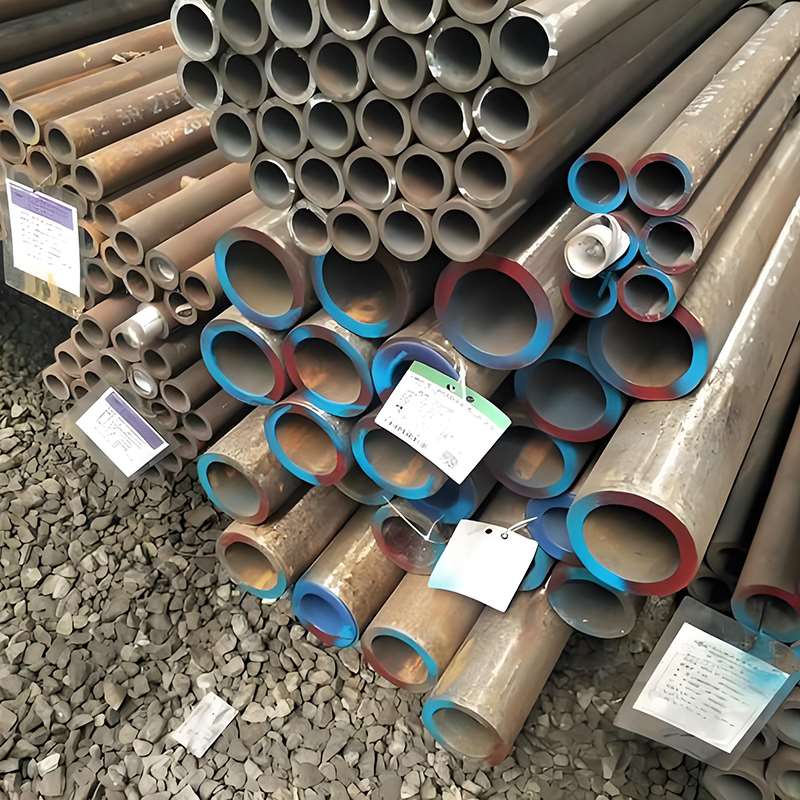
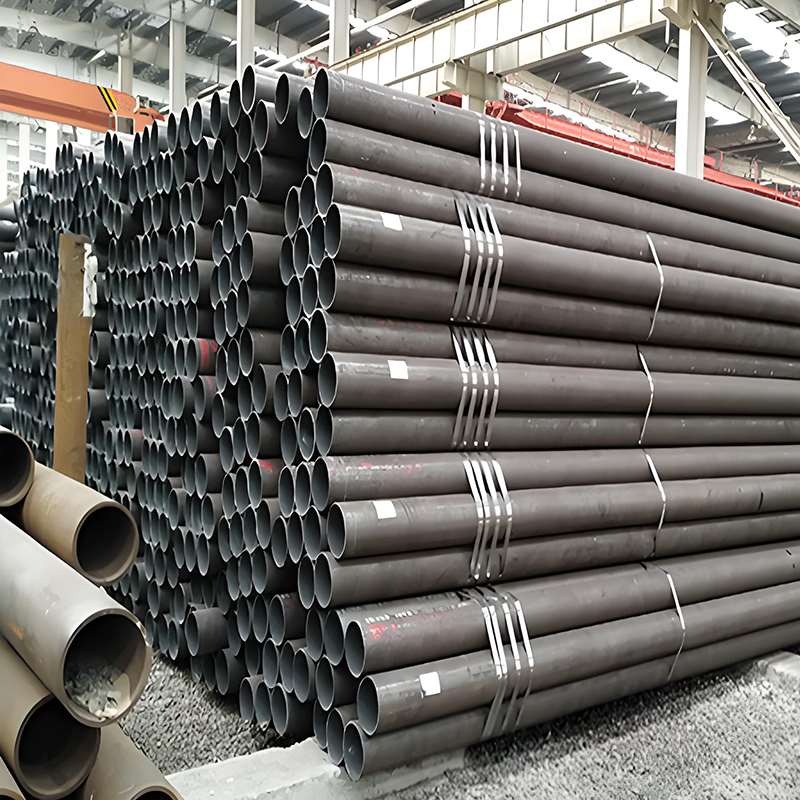
ASTM A333 steel pipes undergo rigorous testing before leaving the factory to ensure that their low-temperature toughness, dimensional accuracy, and mechanical properties meet the standard requirements.
| Inspection Category | Inspection Item | Method / Standard | Acceptance Criteria |
|---|---|---|---|
| Chemical Composition | C, Mn, P, S, Si | Spectral Analysis / Chemical Analysis | Meet ASTM A333 grade limits |
| Mechanical Properties | Yield Strength, Tensile Strength, Elongation | Tensile Test | ≥ Standard requirements (see mechanical properties table) |
| Low-Temperature Impact | Charpy V-notch Impact | ASTM A333 Low-Temperature Impact Test | Grade 1 ≥ −29℃, Grade 3 ≥ −50℃, Grade 6 ≥ −101℃, each sample ≥ 27 J |
| Appearance & Dimensions | Outer Diameter, Wall Thickness, Ovality, Length | Measuring Tools / Calibration Instruments | Meet standard tolerances and deviation requirements |
| Weld Quality (for welded pipes) | Weld Appearance, Weld NDT | Magnetic Particle / Ultrasonic Testing | No cracks, pores, or weld defects |
| Surface Treatment | Anti-Rust / Anti-Corrosion Coating Thickness | Thickness Gauge / Visual Inspection | Coating uniform, thickness meets process requirements |
VIII. ASTM A333 Cryogenic Steel Pipe Selection and Procurement Recommendations
i. Pipe Type Selection
Seamless Pipe: Uniform wall, high low-temperature toughness, strong pressure resistance → Preferred for high-pressure and extremely low-temperature applications
Welded Pipe (ERW / LSAW / SSAW): Low cost, weld seam requires inspection → Suitable for medium-low pressure and general low-temperature applications
ii. Steel Grade Selection
| Temperature Range | Recommended Grade | Description |
|---|---|---|
| −29℃ | Grade 1 | General low-temperature natural gas and LPG pipelines |
| −50℃ | Grade 3 | Liquefied petroleum gas (LPG) and low-temperature process pipelines |
| −101℃ | Grade 6 | Liquefied natural gas (LNG) and high-pressure low-temperature process pipelines |
iii. Wall Thickness, Pipe Diameter, and Corrosion Protection Selection
Wall Thickness: Thick-walled pipes are suitable for high-pressure applications; thin-walled pipes are suitable for low-pressure applications.
Pipe Diameter: For small diameters (≤6″), seamless or welded pipes are acceptable; for large diameters (>6″), LSAW/SSAW or seamless pipes are preferred.
Corrosion Protection: Light corrosion protection is sufficient for indoor applications; for outdoor or humid environments, FBE/epoxy or hot-dip galvanized pipes are recommended.
iv. Procurement Considerations
Certification: ASTM A333 Material Certification (MTC) required.
Dimensions: Verify NPS, outer diameter, wall thickness, and port type.
Welds: Welded pipes must undergo ultrasonic or magnetic particle testing.
Common Misconceptions: Selecting lower grades for low-temperature applications; neglecting weld inspection or corrosion protection → Safety hazards.
v. Simple Selection Logic
Based on temperature and pressure → Select Grade and Pipe Type
Based on pipe length and fluid pressure → Select Wall Thickness and Pipe Diameter
Based on environment → Select Corrosion Protection Coating
Check certifications, dimensions, weld seams, and test reports during procurement
Simply remember: Low temperature and high pressure → Seamless high-grade; Ordinary low temperature → Welded pipe is economical and feasible