
I. What is ASTM A795 Fire Sprinkler Pipe?
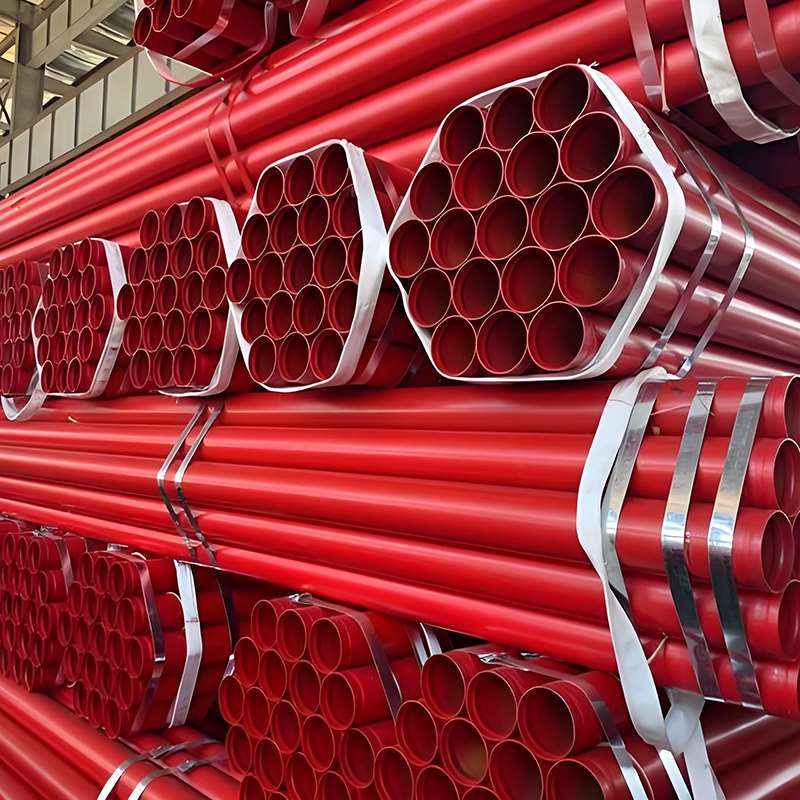
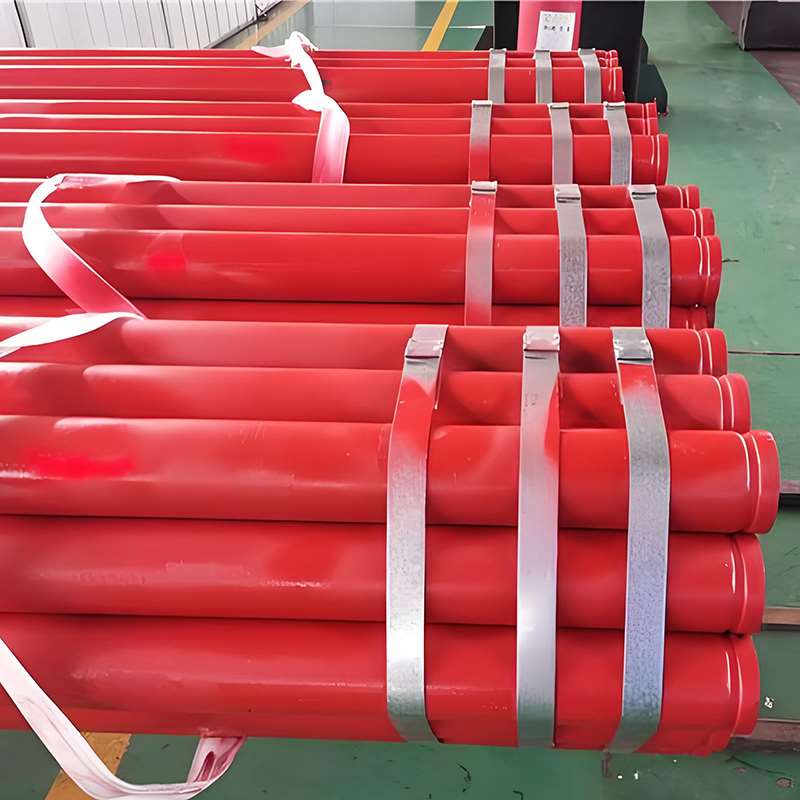
ASTM A795 fire sprinkler pipes are specialized steel pipes manufactured according to the American ASTM A795 standard for fire protection systems. They are used in automatic sprinkler systems in buildings to ensure a stable and safe supply of firefighting water during a fire.
These pipes are typically made of welded or seamless steel pipes, and can be made from either black steel or hot-dip galvanized steel. They possess good strength, pressure resistance, and reliability, and are widely used in fire sprinkler and fire hydrant systems in commercial buildings, industrial plants, and high-rise buildings.
II. ASTM A795 Standard Requirements
i. Manufacturing Requirements
| Item | Requirement Description |
|---|---|
| Manufacturing Process | ERW (Electric Resistance Welded), furnace welded, or seamless steel pipe |
| Raw Material | Steel strip or steel billet meeting ASTM requirements |
| Pipe Type | Welded steel pipe or seamless steel pipe |
| Size Range | NPS 1/2″ – 10″ |
| Pipe End Type | Plain end, threaded end, or grooved end |
| Surface Condition | Black steel pipe or hot-dip galvanized steel pipe |
| Weld Requirement | Weld seam must be continuous, uniform, and free from visible defects |
| Forming Process | Cold forming or hot forming is acceptable |
2. Inspection Requirements
| Item | Requirement Description |
|---|---|
| Visual Inspection | The surface must be free from cracks, laps, laminations, and other defects |
| Dimensional Inspection | Outside diameter, wall thickness, and length must comply with standard tolerances |
| Weld Inspection | Weld seams must be inspected (visual inspection or non-destructive testing) |
| Hydrostatic Test | Each pipe must pass a hydrostatic pressure test |
| Flattening Test | Welded pipes must undergo a flattening test |
| Material Inspection | Chemical composition and mechanical properties must meet ASTM requirements |
| Marking Inspection | Marking must include standard number, specification, and manufacturer identification |
3. Pressure Requirements
| Item | Requirement Description |
|---|---|
| Hydrostatic Test | Each pipe must be tested one by one using hydrostatic pressure testing |
| Test Pressure | Typically 1.5 times the design pressure (varies according to specification) |
| Holding Time | The pipe must be held under specified pressure for a certain period without leakage |
| Pressure Resistance Performance | Must ensure long-term stable operation in fire sprinkler systems |
| Operating Pressure Range | Low to medium-high pressure fire protection systems |
| Safety Requirement | No permanent deformation or leakage is allowed |
| Applicable Systems | Wet pipe systems, dry pipe systems, and pre-action sprinkler systems |
III. ASTM A795 Grade A vs Grade B vs Grade C: Differences & Applications
| Item | Grade A | Grade B | Grade C |
|---|---|---|---|
| Minimum Yield Strength | ≥ 205 MPa | ≥ 240 MPa | ≥ 275 MPa |
| Minimum Tensile Strength | ≥ 330 MPa | ≥ 400 MPa | ≥ 450 MPa |
| Elongation | ≥ 20% | ≥ 20% | ≥ 20% |
| Maximum Carbon Content (C) | ≤ 0.25% | ≤ 0.30% | ≤ 0.30% |
| Maximum Manganese Content (Mn) | ≤ 0.95% | ≤ 1.20% | ≤ 1.20% |
| Pressure Capacity | Standard | Higher | High-pressure grade |
| Suitable Pressure System | Low-pressure fire system | Medium to high-pressure fire system | High-pressure fire system |
| Common Applications | Small building fire protection | Commercial building fire protection | Industrial and large-scale projects |
| Weldability | Excellent | Excellent | Good |
| Cost | Low | Medium | High |
| Market Usage Rate | Low | Most commonly used | Relatively low |
| Recommended Applications | General sprinkler systems | Mainstream fire protection projects | High-rise / large industrial fire systems |
A Simple Overview
- Grade A: Basic grade, suitable for standard low-pressure fire protection systems
- Grade B: Offers the best overall performance and is the most common grade of ASTM A795 fire sprinkler pipe on the market
- Grade C: Higher strength, suitable for large-scale, high-pressure fire protection projects
Which grade is most commonly used in engineering projects?
Grade B is the most widely used
because it excels in:
- Strength
- Cost
- Workability
- Compatibility with fire protection systems
III. ASTM A795 Pipe Dimensions & Sizes
| NPS (inch) | Outer Diameter OD (mm) | Wall Thickness Range WT (mm) | Common Schedule | End Form | Notes |
|---|---|---|---|---|---|
| 1/2 | 21.3 | 2.3 – 3.6 | SCH 10, 40 | PE / BE | Indoor low-pressure fire pipe |
| 3/4 | 26.7 | 2.3 – 3.6 | SCH 10, 40 | PE / BE | — |
| 1 | 33.4 | 2.6 – 4.0 | SCH 10, 40 | PE / BE | — |
| 1½ | 48.3 | 2.8 – 4.8 | SCH 10, 40 | PE / BE | — |
| 2 | 60.3 | 3.2 – 5.0 | SCH 10, 40 | PE / BE | — |
| 2½ | 73.0 | 3.6 – 5.5 | SCH 10, 40 | PE / BE | — |
| 3 | 88.9 | 3.6 – 6.3 | SCH 10, 40, 80 | PE / BE | — |
| 4 | 114.3 | 4.0 – 7.1 | SCH 10, 40, 80 | PE / BE | — |
| 5 | 141.3 | 4.8 – 8.0 | SCH 40, 80 | PE / BE | — |
| 6 | 168.3 | 4.8 – 9.3 | SCH 40, 80 | PE / BE | High pressure or long pipe sections |
| 8 | 219.1 | 5.5 – 12.7 | SCH 40, 80 | PE / BE | — |
| 10 | 273.0 | 6.3 – 12.7 | SCH 40, 80 | PE / BE | — |
| 12 | 323.9 | 7.1 – 15.0 | SCH 40, 80 | PE / BE | — |
IV. Manufacturing Process of ASTM A795 Fire Sprinkler Pipe
The manufacturing of ASTM A795 Standard ERW fire sprinkler pipe follows a precise industrial production line to ensure strength, weld quality, and fire safety performance.
Production Flow:
Uncoiling → Leveling → Shearing → Forming (Cold Bending / Hot Rolling) → High-Frequency Welding (ERW) → Weld Bead Removal → Sizing and Straightening → Cutting to Length → Non-Destructive Testing (NDT) → Dimensional Inspection → Anti-corrosion Treatment (Galvanizing / Coating) → Finished Product Storage
Key Process Optimization Points
- Forming Process
Steel strip is gradually formed into a round pipe through multiple roll stands, ensuring stable geometry for welding. - ERW Welding Process
High-frequency electric resistance welding ensures a continuous and strong weld seam, which is critical for fire sprinkler applications. - Non-Destructive Testing (NDT)
Each pipe is tested using ultrasonic or eddy current inspection to ensure weld integrity. - Surface Protection
Pipes may be supplied as:
Black steel pipe
Hot-dip galvanized steel pipe
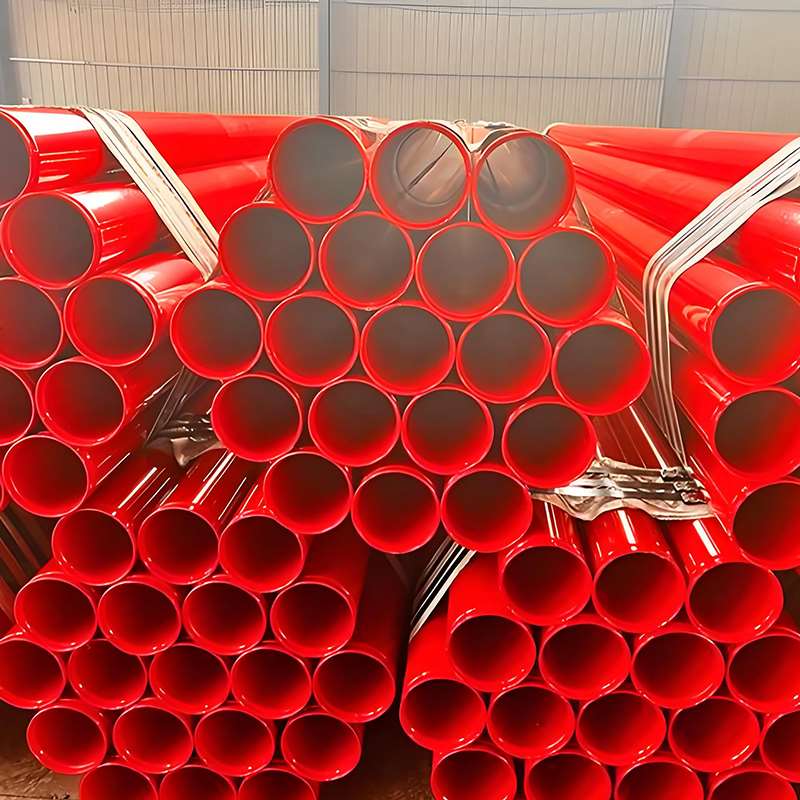
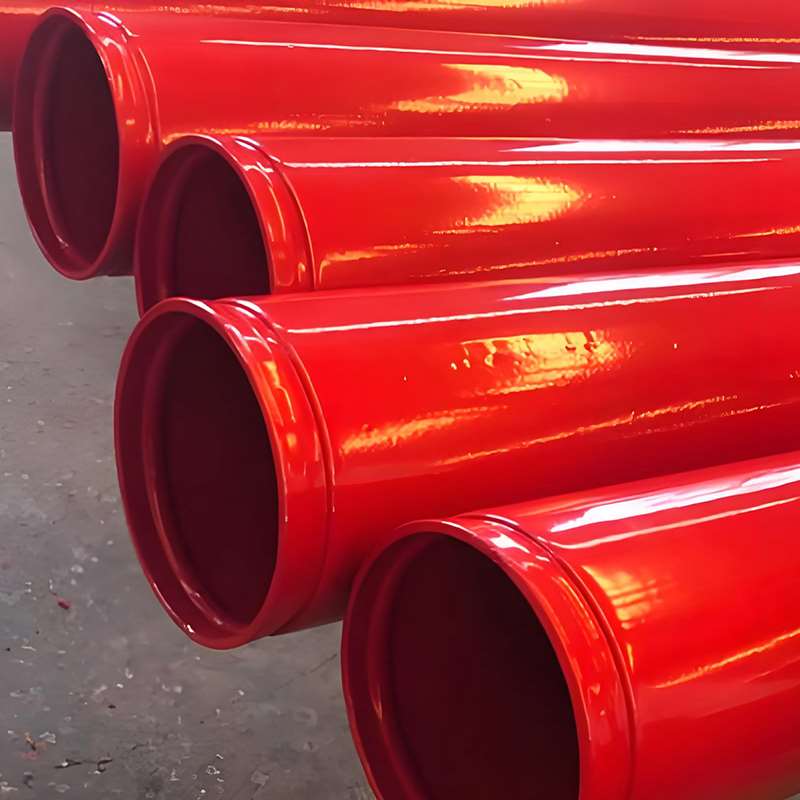
Red painted fire sprinkler pipe (identification coating, not structural requirement)
V. Corrosion Protection and Coating
i. Types of External Corrosion Protection Treatment
| Type | Description | Applicable Environment | Durability / Historical Experience |
|---|---|---|---|
| Black Coating | Pipe surface coated with anti-rust oil or black protective paint | Indoor, dry environments | Medium service life; generally meets indoor fire pipe requirements |
| Hot-Dip Galvanized | Pipe immersed in molten zinc to form a galvanized layer | Outdoor, humid, or corrosive environments | Zinc coating thickness ≥ 65 μm; high durability, service life over 20 years |
ii. Corrosion Resistance Thickness and Durability
Black Coating: General thin-film protection, suitable for dry indoor environments; prone to oxidation in humid and hot environments.
Hot-dip Zinc: Zinc layer thickness ≥65μm, strong corrosion resistance, suitable for outdoor or humid and hot environments, effectively extending the service life of the pipe.
VI. ASTM A795 Fire Pipe Testing Items and Acceptance Standards
| Inspection Category | Inspection Item | Method / Standard | Acceptance Criteria |
|---|---|---|---|
| Chemical Composition | Carbon (C) | Spectral Analysis / Chemical Analysis | ≤ 0.30% |
| Chemical Composition | Manganese (Mn) | Spectral Analysis / Chemical Analysis | 0.27–0.90% |
| Chemical Composition | Phosphorus (P) | Spectral Analysis / Chemical Analysis | ≤ 0.035% |
| Chemical Composition | Sulfur (S) | Spectral Analysis / Chemical Analysis | ≤ 0.035% |
| Chemical Composition | Copper (Cu) | Spectral Analysis / Chemical Analysis | ≤ 0.20% |
| Mechanical Properties | Yield Strength (MPa) | Tensile Test | Grade A ≥ 205, Grade B ≥ 240, Grade C ≥ 275 |
| Mechanical Properties | Tensile Strength (MPa) | Tensile Test | Grade A ≥ 330, Grade B ≥ 400, Grade C ≥ 450 |
| Mechanical Properties | Elongation (%) | Tensile Test | ≥ 20% |
| Appearance | Surface Defects | Visual Inspection | Smooth, no cracks, pits, or weld spatter |
| Weld | Weld Integrity | Ultrasonic Testing (UT) / Eddy Current Testing (ECT) | No lack of penetration, no cracks |
| Dimensions | Outer Diameter (OD) | Vernier Caliper / OD Gauge | ±1% |
| Dimensions | Wall Thickness (WT) | Ultrasonic Thickness Measurement | ±10% |
| Dimensions | Ovality | OD Gauge | ≤ 1.5% |
| Dimensions | Pipe End Flatness | Gauge / Visual Inspection | PE / BE meets end form requirements |
| Anti-Corrosion (Hot-Dip Galvanized Pipe) | Zinc Coating Thickness | Magnetic Thickness Gauge | ≥ 65 μm |
| Anti-Corrosion (Hot-Dip Galvanized Pipe) | Adhesion | Bend / Cross-Cut Test | No peeling or cracking |
| Anti-Corrosion (Hot-Dip Galvanized Pipe) | Appearance | Visual Inspection | Uniform, no blistering or flaking |
VII. Application Scenarios and Selection Recommendations
i. Application Scenarios
| Application Scenario | Recommended Grade | Anti-Corrosion Type | Description |
|---|---|---|---|
| Indoor fire water pipe | Grade A | Black Coating | Indoor, dry environment, low pressure, cost-effective |
| Indoor humid environment | Grade B | Hot-Dip Galvanized | Requires moisture resistance and rust protection for long-term use |
| Outdoor fire pipelines | Grade B | Hot-Dip Galvanized | Outdoor environment, corrosion resistance prioritized, suitable for long pipe runs |
| Fire hydrant pipelines | Grade B or C | Hot-Dip Galvanized | Withstands high pressure or frequent use, ensures system reliability |
| Sprinkler systems / Industrial fire pipes | Grade B | Hot-Dip Galvanized + Coating (optional epoxy) | Medium to high pressure or special corrosion environments, dual protection |
ii. Selection Recommendations
(1) Determine the Application
Fire water pipes (indoor/outdoor)
Sprinkler system
Fire hydrant piping
(2) Determine the Pressure Rating
Grade A → General indoor low-pressure system
Grade B → Medium-high pressure, long pipe section
Grade C → High pressure or special environment
(3) Select Pipe Diameter and Wall Thickness
Calculate based on flow rate, pipe length and system pressure
Low-pressure system → SCH 10–40
High-pressure system → SCH 40–80
(4) Select the Port Type
PE (Plain End) → Flange or welded end treatment
BE (Beveled End) → Direct welded connection
(5) Determine the Corrosion Protection Type
Indoor dry → Black coating
Indoor damp / Outdoor → Hot-dip galvanizing
Special environment → Hot-dip galvanizing + epoxy coating or other corrosion-resistant treatment
iii. Quick Selection Reference Table
| Service Environment | Pipe Grade | Wall Thickness / SCH | End Form | Anti-Corrosion Type | Notes |
|---|---|---|---|---|---|
| Indoor, low pressure | Grade A | SCH 10–40 | PE / BE | Black Coating | Cost-effective |
| Indoor, humid | Grade B | SCH 10–40 | PE / BE | Hot-Dip Galvanized | Corrosion protection prioritized |
| Outdoor pipelines | Grade B | SCH 40–80 | BE | Hot-Dip Galvanized | Weather-resistant, strong corrosion protection |
| Fire hydrant pipelines | Grade B / C | SCH 40–80 | BE | Hot-Dip Galvanized | High-pressure systems |
| Industrial sprinkler | Grade B | SCH 40–80 | BE | Hot-Dip Galvanized + Epoxy | Dual protection, special corrosion resistance |
VIII. ASTM A795 Fire Sprinkler Pipe FAQ
1. What is the difference between ASTM A795 fire sprinkler pipe and ASTM A53 steel pipe?
ASTM A795 is a steel pipe standard specifically designed for fire sprinkler systems, with a greater emphasis on pressure resistance, weld quality, and hydrostatic testing requirements in fire protection systems. ASTM A53, on the other hand, is a standard for general-purpose steel pipes with a broader range of applications, including water, gas, and structural uses.
In short:
- ASTM A795 = Specialized fire sprinkler pipe
- ASTM A53 = General-purpose industrial steel pipe
In fire protection engineering, ASTM A795 typically better meets project acceptance requirements.
2. Should black steel pipes or galvanized steel pipes be used for fire sprinkler systems?
This mainly depends on the application environment:
| Application Environment | Recommended Type |
|---|---|
| Indoor dry environment | Black steel pipe |
| Humid environment | Hot-dip galvanized steel pipe |
| Basement or high-corrosion environment | Galvanized pipe or additional anti-corrosion treatment |
| Long-term stagnant water systems | Galvanized steel pipe is more suitable |
Black steel pipes are less expensive, while galvanized steel pipes offer better corrosion resistance and generally have a longer service life.
3. Why are many ASTM A795 fire protection pipes red?
Red is not a mandatory requirement of the ASTM A795 standard; rather, it is a color used for identification in fire protection systems.
Typically:
- ASTM A795 pipe body = black steel pipe or galvanized steel pipe
- Red sections = fire protection identification paint applied later
This makes it easier to identify fire protection piping during installation, maintenance, and fire safety inspections.
4. Are ASTM A795 ERW welded fire sprinkler pipes safe?
Yes, they are safe. Modern ERW (Electrical Resistance Welding) technology is widely used in the production of fire sprinkler pipes.
High-quality ERW fire sprinkler pipes typically feature:
- Continuous, stable welds
- Good pressure resistance
- Passed hydrostatic testing
- Non-destructive testing (NDT)
Currently, most commercial building fire sprinkler systems use ERW fire sprinkler pipes.
5. How to Select the Appropriate Wall Thickness for ASTM A795 Pipes?
Wall thickness is typically determined based on the following four factors:
- System operating pressure
- Pipe diameter
- Project specifications
- Installation method
| System Type | Common Wall Thickness |
|---|---|
| Standard sprinkler system | Sch 10 / Sch 40 |
| Medium to high-pressure fire protection system | Sch 40 |
| Industrial fire protection system | Sch 80 or thicker |
6. How long do ASTM A795 fire sprinkler pipes last?
Under normal conditions:
- Black steel fire sprinkler pipes: Approximately 15–25 years
- Hot-dip galvanized fire sprinkler pipes: Approximately 30 years or more
Actual service life may also be affected by the following factors:
- Water quality
- Humidity
- Presence of standing water over extended periods
- Corrosion protection
- Maintenance practices
Regular flushing and inspections can significantly extend the service life of a fire sprinkler system.